Smart home technology in luxury properties has moved well past the experimental stage. A 2017 survey found that 80 percent of new home shoppers chose to include smart home upgrades — a clear signal that technology has become as fundamental to high-end properties as architecture and finishes. For LA luxury homeowners, though, standard upgrades fall short of the mark. Privacy-first architecture, climate-specific automation, and discreet integration define what the most exclusive properties in Southern California expect from home technology today.
This guide examines what sets LA luxury smart homes apart in 2026 — from AI-powered climate management and advanced security systems to property value considerations and thoughtful implementation. Homeowners will come away with a clear understanding of how well-executed automation protects investments while maintaining the discretion that high-end real estate demands.
What Makes LA Luxury Smart Homes Different in 2026
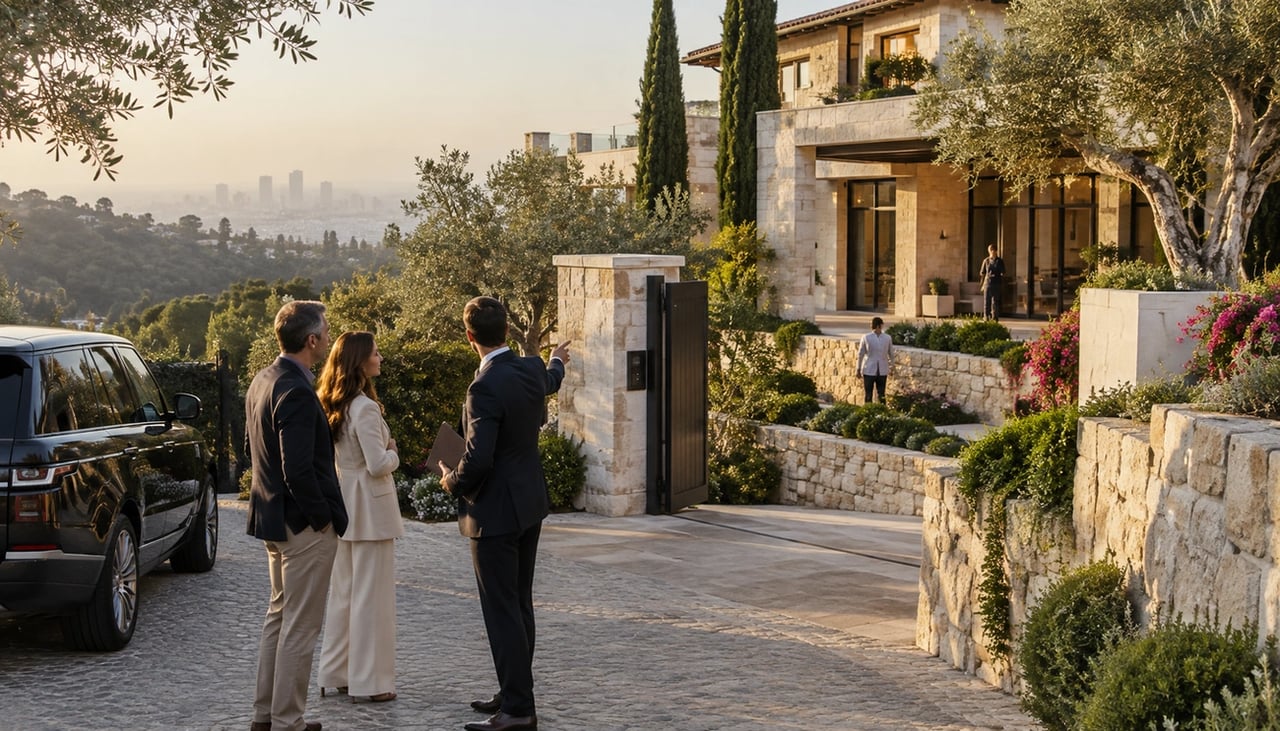
High-end properties in Los Angeles operate within a different framework than standard residential real estate. Transactions unfold through private channels where discretion matters as much as square footage. Technology integration in these homes reflects the same principles: sophistication without visibility, protection without compromise.
Privacy-First Architecture and Discreet Integration
49% of connected device owners have experienced privacy or security problems, and 75% of households express concern about data protection. For high-net-worth families, those figures translate into tangible risks — not just to personal data, but to physical safety and financial security. Thermostats map presence patterns. Security cameras create behavioral profiles. The devices meant to protect a home can quietly expose it.
The solution lies in local storage systems that remove cloud vulnerabilities entirely. Network-attached storage keeps surveillance footage within the home network, eliminating third-party servers that create data exposure risks. Professional installations rely on end-to-end encryption within the home network, so security holds even during internet outages, with access limited to authorized family members and trusted staff.
Physical integration follows the same logic. In a well-appointed Mediterranean villa or a clean-lined contemporary residence, technology earns its place by disappearing — televisions concealed behind artwork, speakers flush-mounted to preserve wall integrity, charging stations built into furnishings. Achieving this level of cohesion requires architects, builders, interior designers, and technology professionals working together from the earliest stages of planning, not as an afterthought.
Property Value Protection Through Strategic Automation
Smart features move markets. Homes with these systems can sell for up to 5% more than comparable properties without them, and properties with smart security systems and energy-efficient appliances have sold 10% faster than similar homes in their areas.
At the luxury level, the measure of quality is not how many systems a home includes but how seamlessly they work together. Discerning buyers expect climate, shading, security, access control, entertainment, and wellness settings to function as one cohesive environment. When the technology feels architectural rather than installed, the value proposition is evident.
Climate-Specific Requirements for Southern California Homes
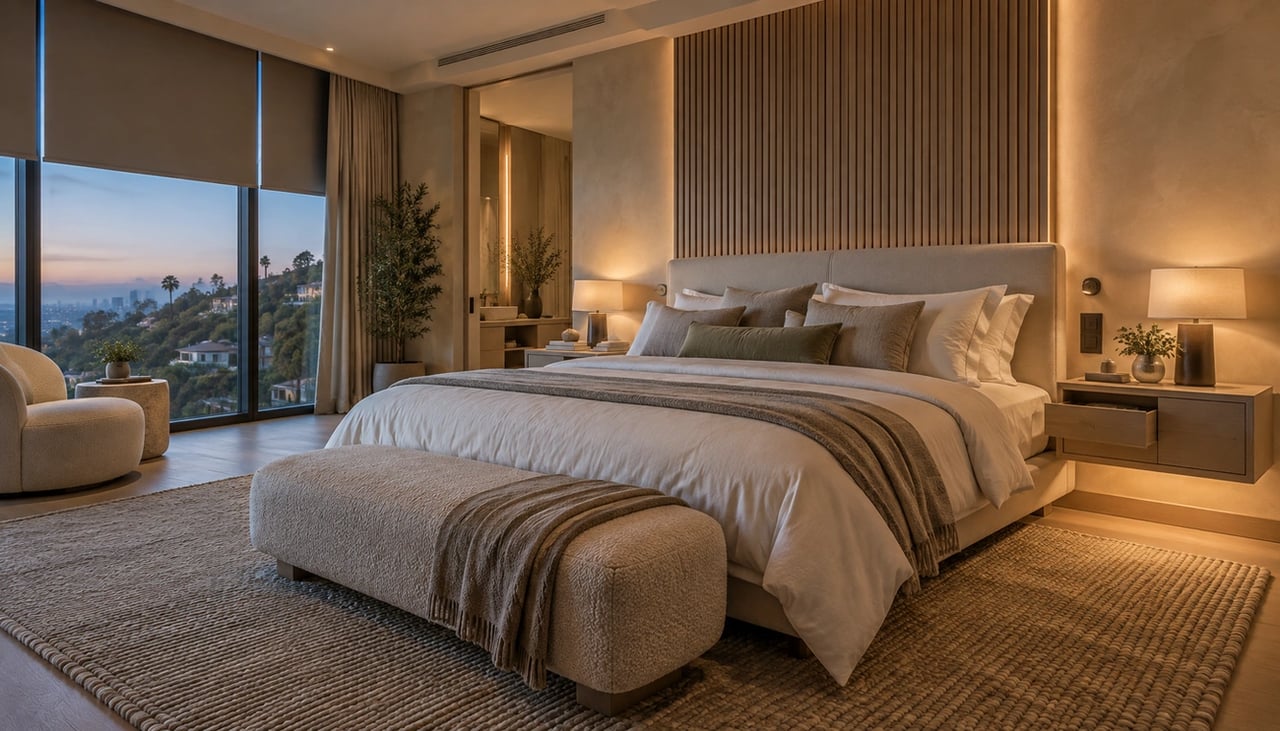
Southern California's climate calls for automation that responds intelligently throughout the day. Professionally integrated motorized shades manage daylight, glare, privacy, and heat without any manual input. When shading and lighting work in coordination, the home maintains a comfortable atmosphere from morning to evening.
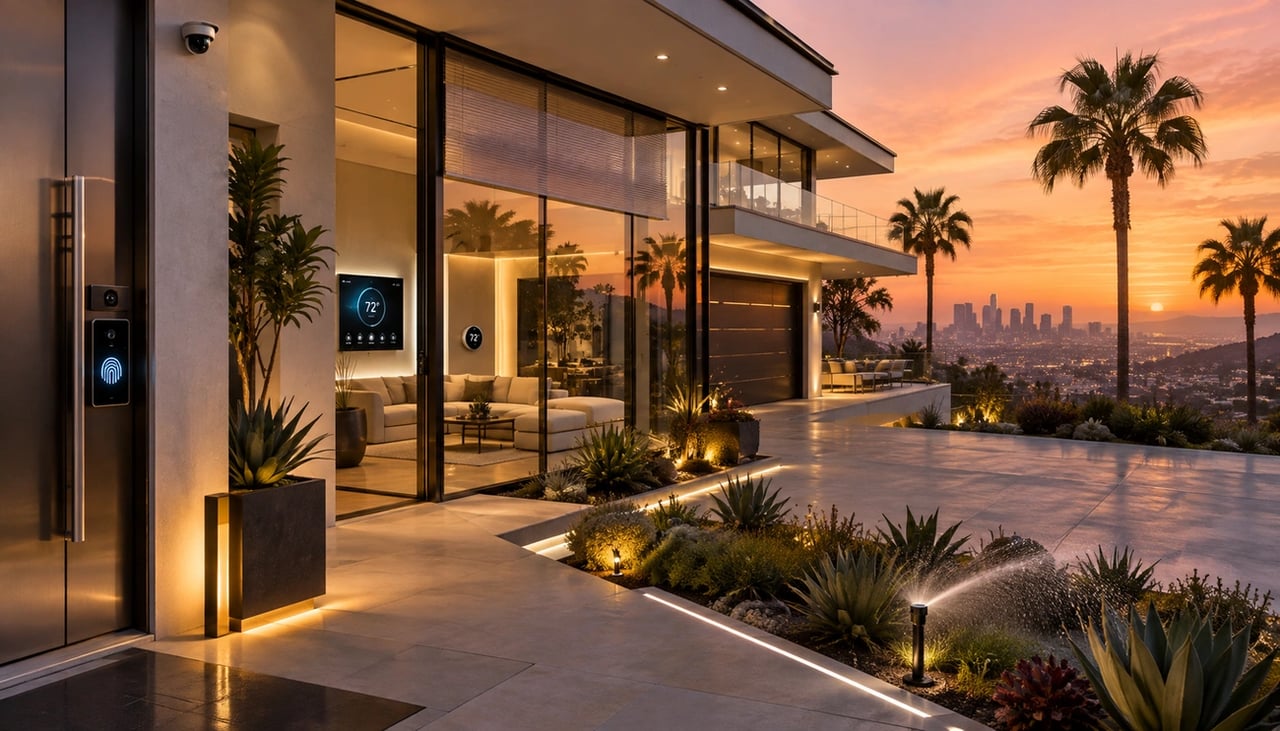
Water conservation is equally important in a region defined by drought. Smart irrigation systems activate only when conditions warrant it, and occupancy sensors power down unused rooms to reduce consumption. These systems also align with California's building electrification priorities and programs like the California Energy-Smart Homes Program — making responsible automation both a lifestyle choice and a sound investment.
The Technologies Reshaping High-End LA Properties

Image Source: LuxuryForSale.Properties
Performance, not novelty, drives technology decisions at this level. The systems earning a place in high-end LA homes in 2026 deliver measurable results across climate management, security, whole-home integration, and resource conservation.
AI-Powered Climate and Energy Management
AI climate systems analyze weather forecasts, occupancy patterns, and historical usage to determine efficient heating and cooling strategies across multiple zones. One family documented a 28% reduction in monthly energy costs after switching to an AI thermostat that stopped conditioning unoccupied rooms during the day. Monitoring devices like Emporia Vue 3 and Sense Energy Monitor take this further — identifying energy-hungry appliances, flagging unusual consumption spikes, and projecting monthly bills based on real-time usage trends.
Advanced Security Systems Beyond Traditional Monitoring
Current AI-powered cameras do far more than record. They distinguish between delivery personnel, family members, animals, and potential threats. Facial recognition alerts notify homeowners only when an unrecognized individual appears, while package detection comes paired with theft-risk alerts. Video analytics eliminate the noise — blowing branches and passing cars no longer trigger false alarms, so every alert carries weight. Biometric entry systems using fingerprint or retina scanning remove key vulnerabilities entirely.
Whole-Home Integration Platforms That Actually Work
Control4 launches its next-generation OS in 2026 with a redesigned interface and a new Routines feature that simplifies automation scheduling. Savant's Smart Budget technology manages electrical output without requiring expensive utility service upgrades. Crestron Home OS version 4.4 adds sustainability insights and weather-based automation to an already capable platform.
Water Conservation and Drought-Response Automation
Smart irrigation controllers connect to weather forecasts and soil moisture sensors, reducing water use by up to 50% compared to traditional systems. Flow regulators on faucets and showers cut consumption by 30 to 50%. Water leak detection addresses waste that accounts for up to 10% of annual water bills — a meaningful figure on an estate-sized property.
Investment Considerations for Luxury Homeowners
"Properties with smart home features generate more viewing requests, achieve higher offers, and record shorter marketing periods than comparable properties without intelligent building technology." — Engel & Völkers, Real estate company
Financial returns from luxury home automation deserve the same careful analysis applied to architectural decisions. High-net-worth homeowners who approach these systems strategically find measurable gains in resale performance, risk mitigation, and long-term cost management.
Which Smart Home Features Affect Resale Value
Buyer demand for smart homes is well documented. 79% of homebuyers want smart homes, with many willing to pay an average premium of 7.7% on house prices to secure these features. NAR reports confirm smart home features can enhance resale by up to 5%. In luxury markets, homes with comprehensive smart systems command 3-5% higher resale prices — translating to $36,000–$60,000 in added value on a $1.2 million property.
Of all smart home investments, integrated security systems deliver the strongest return, recovering 70–80% of installation costs at resale. A $15,000 system installed by certified technicians carries the kind of buyer confidence that supports premium pricing without negotiation. For clients who love to entertain or simply want a home that works as beautifully as it looks, finding the right property makes all the difference. If you are considering a purchase or beginning your search, Christina Pope would be delighted to help. 📞 310-404-9931 ✉️ [email protected]
Insurance Premium Reductions and Risk Mitigation
Smart safety systems also reduce carrying costs. California homeowners with eligible monitoring systems qualify for 10% discounts on water and theft coverage and 5% on fire coverage. Across carriers, premium reductions typically range from 5% to 20% depending on installed devices and policy terms.
Long-Term Maintenance and System Obsolescence Planning
Not all automation investments age well. The Wink smart home hub — a $70 device — required users to pay an additional $4.99 monthly to continue functioning after a platform change. Luxury homeowners committing $50,000 or more to bespoke automation face real exposure when systems lack scalability or depend on specialized technicians for routine updates. Selecting platforms with open architecture and strong manufacturer track records is as important as the technology itself.
Implementation Strategy for Existing Luxury Properties
"There will come a day when there are no control systems. Devices will start to interact more directly." — Jeff Galea, CEO of Boca Tech and Automation
Retrofitting a finished luxury home calls for a level of planning that goes well beyond selecting equipment. The starting point is always an honest assessment — existing electrical systems, wall construction, network conditions, and how the household actually functions day to day.
Starting With Core Infrastructure
Professional design teams document lighting loads, electrical panel capacity, network coverage, and the specific locations where technology can quietly disappear into architectural details. Electrical capacity warrants careful review early, since lighting control panels, motorized treatments, and charging infrastructure all compete for panel space and circuit planning. For a 5,000-square-foot residence, investment in luxury home automation typically begins around six figures, excluding lighting control and dedicated theater systems. Enterprise-grade networking, hardwiring for permanent devices, and a robust infrastructure foundation make the difference between a system that performs reliably and one that frustrates.
Working With Estate Management Teams
Phased implementation suits finished homes well. Kitchen renovations and landscape projects create natural opportunities to run conduit, low-voltage cabling, and shade power — preparing pathways for future controls without disturbing completed spaces. The incremental cost of adding infrastructure during active construction remains modest against the alternative of reopening finished walls later.
Regulatory Compliance in High-End Neighborhoods
Wireless systems preserve pristine finishes without wall chasing or visible clutter, making them particularly well-suited to completed interiors. Site surveys identify interference risks before installation begins rather than after. Opening early conversations with HOAs about non-invasive approaches tends to build the trust that prevents complications down the line.
Coordinating With Architects and Interior Designers
Technology earns its place alongside lighting, landscape, and interiors as a design discipline in its own right. When architects, interior designers, electricians, and builders work together from the outset, technology supports the finished environment rather than working against it. For clients who place equal value on how a home looks and how it performs, that coordination is what separates a thoughtful result from a compromised one. If you are considering a purchase or beginning your search for a property where design and technology work in harmony, Christina Pope would be glad to assist. Christina Pope 📞 310-404-9931 ✉️ [email protected]
Conclusion
Smart home technology, when done well in LA luxury properties, becomes invisible — and that is precisely the point. The difference between a well-automated estate and one that simply has smart gadgets comes down to privacy-first architecture, climate-responsive systems, and the quality of integration. Feature count means very little at this level. What matters is whether the technology feels like it belongs.
Homeowners who approach automation as a design discipline — coordinating with architects, designers, and trusted technology professionals from the outset — protect their investment while creating homes that perform as beautifully as they look. The results are measurable: stronger resale premiums, reduced insurance costs, and properties that attract serious buyers. For those operating in California's most exclusive real estate market, that kind of thoughtful execution is no longer optional. It is simply expected.
Key Takeaways
LA luxury homeowners are embracing smart home technology not as a novelty, but as a strategic investment that protects property value while addressing privacy, climate, and security concerns unique to Southern California's high-end market.
• Privacy-first systems eliminate cloud vulnerabilities: 49% of smart device owners experience security issues; luxury homes now use local storage and end-to-end encryption to protect family data and behavioral patterns.
• Smart features boost resale value by 5-7.7%: Integrated security systems recover 70-80% of installation costs, while comprehensive automation adds $36,000-$60,000 to $1.2M properties in luxury markets.
• AI-powered climate management cuts energy costs by 28%: Systems analyze weather forecasts and occupancy patterns to optimize heating, cooling, and water use—critical for California's drought conditions.
• Strategic implementation preserves architectural integrity: Successful luxury automation requires coordination with architects and designers from the start, ensuring technology disappears into finishes rather than competing with them.
• Insurance discounts reach 10-20% with smart safety systems: California homeowners receive measurable premium reductions on water, theft, and fire coverage when installing eligible monitoring systems.
The future of luxury smart homes isn't about adding more gadgets—it's about creating invisible, integrated ecosystems that enhance daily living while protecting your investment and privacy in an increasingly connected world.
FAQs
Q1. How do luxury smart homes in LA protect homeowner privacy in 2026? Luxury smart homes prioritize privacy through local storage systems that eliminate cloud vulnerabilities, keeping surveillance footage and data within the home network rather than on third-party servers. These systems use end-to-end encryption and allow only authorized family members to access information, addressing the fact that 49% of connected device owners have experienced privacy or security problems.
Q2. Do smart home features actually increase property resale value? Yes, smart home features can increase resale value by 5-7.7% on average, with homes selling up to 10% faster than comparable properties. Integrated security systems offer the highest return on investment, recovering 70-80% of installation costs at resale. In luxury markets, comprehensive automation can add $36,000-$60,000 to a $1.2 million property's value.
Q3. Can smart home systems reduce insurance premiums for luxury homeowners? Smart safety systems provide measurable insurance premium reductions. In California, eligible smart home monitoring systems can offer 10% discounts on water and theft coverage and 5% on fire coverage. Overall, insurance discounts typically range from 5% to 20% depending on the installed devices and carrier policies.
Q4. What are the main challenges when retrofitting existing luxury homes with smart technology? The primary challenges include preserving pristine finishes while installing infrastructure, ensuring adequate electrical capacity for new systems, and avoiding proprietary systems that create obsolescence risks. Successful retrofits require coordination with architects and designers, phased implementation during renovations, and investment in robust networking infrastructure to support integrated systems.
Q5. How do AI-powered climate systems benefit luxury homes in Southern California? AI climate systems analyze weather forecasts, occupancy patterns, and historical usage to optimize heating and cooling across multiple zones, resulting in energy cost reductions of up to 28%. For Southern California specifically, these systems coordinate with motorized shades and smart irrigation to address drought conditions, reducing water use by up to 50% while maintaining comfortable indoor environments.