Specialty Car Collection West Hollywood curates a 33-vehicle inventory that includes a 2017 Ferrari LaFerrari Aperta and a 1991 Ferrari F40, each hand-selected to meet exacting standards. Owners who bring such machines home quickly realize that a standard garage simply does not do them justice; the space must earn what it holds.
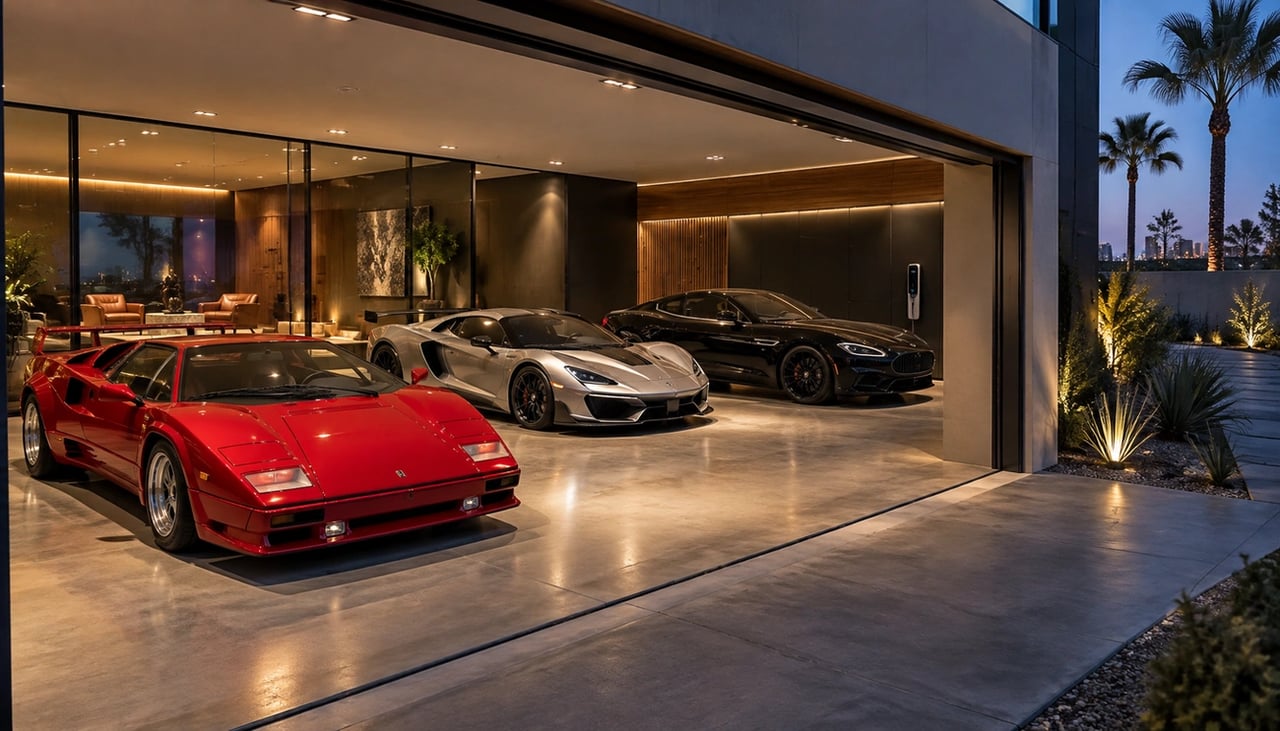
West Hollywood collectors are responding to that reality by treating their garages the way a luxury car showroom treats its floor — curated lighting, museum-quality finishes, and enough room for each vehicle to command its own presence. The result is something well beyond storage, worthy of celebrity car collections and rare exotic car collections alike.
This article looks at why collectors are putting serious thought and investment into gallery-style garages, how those design choices draw from dealership sensibility, and what buyers should consider before purchasing a West Hollywood property built for serious collecting.
Why West Hollywood Collectors Want Private Gallery-Style Garages
Luxury real estate in Los Angeles follows a rhythm all its own. Deals rarely start with a public listing — they begin in private conversations, built on relationships and careful timing. For someone assembling a specialty car collection in West Hollywood, that same quiet logic applies: visibility matters less than precision, and the right property, much like the right car, often comes through access rather than exposure.
How High-End Los Angeles Real Estate Differs from the Open Market
Compass Private Exclusive, the largest pre-market network in California, generates a steady volume of listings that never appear on Zillow. Properties above USD 5 million in Beverly Hills, Bel Air, Holmby Hills, and Malibu regularly move through this channel, with sellers requiring buyer verification before any showing. Industry estimates put 15 to 20 percent of luxury sales above USD 3 million as off-market — a share that climbs further once prices cross the USD 10 million mark.
Why Many Significant Property Deals Stay Off-Market
Los Angeles earned its reputation as the birthplace of off-market deals in the 1980s and 1990s, when celebrities needed to keep eager fans away from their front doors. That instinct never faded. Private sales across collectibles grew even as public auctions slowed; Sotheby's and Christie's saw private sales rise 4 and 5 percent, totaling USD 2.40 billion, while combined public auction sales fell 19 percent. Classic cars reflect the same pattern — RM Sotheby's private sales division has more than quadrupled in four years and now accounts for nearly a third of its revenue.
Privacy, Timing, and Strategic Positioning for Car Collection Owners
That discretion extends to how collectors hold their vehicles as well. Buying under a personal name leaves purchase prices and dates publicly searchable, while an LLC structure keeps that information private. With roughly 43 million collector vehicles in the US carrying a combined insurable value near USD 1 trillion, that layer of protection carries real weight.
Local Insight: Christina Pope, Sotheby's International Realty, EliteResidenceInternational.com
Christina Pope, a Global Real Estate Advisor with Sotheby's International Realty, built her practice on relationships rather than transactions, connecting clients to properties — many of which never reach the public market. For buyers seeking a setting worthy of celebrity car collections or a showroom-caliber home for exotic car collections, that approach matters; discretion shapes the deal just as much as the design of the space itself.
How a Specialty Car Collection Shapes Garage Design
Owning rare machines is one thing. Presenting them well is another matter entirely. Collectors building a specialty car collection West Hollywood hold their garages to the same standard as a luxury car showroom — and that standard shapes every design decision from the floor up.
From Specialty Car Collection's Curated Inventory to a Personal Display
A dealership showroom gives each Ferrari, Lamborghini, or Rolls-Royce room to breathe, never crowding model against model. Homeowners now ask designers for that same discipline. Research on showroom sales supports the instinct: customers regard fewer displayed vehicles as more exceptional, and a leaner count raises the likelihood of a purchase. For a home garage, that thinking turns four or five cars into true focal points rather than a crowded row — precisely the effect collectors want for celebrity car collections and exotic car collections alike.
Lighting, Finishes, and Spacing Inspired by a Luxury Car Showroom
Three lighting layers — ambient, task, and accent — work in concert to eliminate shadows and direct attention where it belongs. A focused pool of light on a single vehicle pulls the eye forward while the rest of the space recedes, a technique long used in automobile showrooms. Designers typically target 20 to 50 footcandles depending on whether the bay serves as a workshop or purely a display space. Polished concrete and resin floors stand up to oil drips from vintage engines while keeping the overall look gallery-grade. Car lifts bring select vehicles to eye level, making them display pieces rather than parked cars. Glass walls allow a car collection to be appreciated from multiple angles without a door ever opening.
Room for Private Viewing and Time with Guests
Owners are increasingly folding lounges, bars, home theaters, and race simulators directly into the garage, so the space works as a personal retreat just as naturally as it works for entertaining. One project placed a sunken seating area and bar beside a glazed wall overlooking a pool, keeping a Ferrari F40 in view from both rooms at once. The collection stops being something to visit occasionally and becomes part of the texture of daily life.
Why Display Spaces Also Need Expert Car Care
A gallery-style garage only holds its value if the cars inside stay in showroom condition. That requires systems most driveways are simply not built to support.
Climate Control and Ventilation for Exotic Car Collections
Humidity between 40 and 50 percent keeps rust and mold at bay, while temperatures held between 55°F and 85°F protect against fading paint, degraded rubber, and evaporated fluids. Cold snaps thicken fluids, drain batteries, and flatten tires; for exotic car collections, HEPA-filtered ventilation and programmable climate systems are not optional extras — they are essentials.
Safe Access for Driving, Deliveries, and Service
Low-clearance vehicles call for hydraulic lift gates rather than ramps. Scraping an undercarriage or bumper during loading is a common mistake, and rarely a cheap one. Soft tie-downs replace chains for the same reason, keeping suspension and paintwork protected through every pickup and service run.
Security That Protects Cars Without Drawing Attention
Biometric access, license plate recognition, and heat-sensitive fire sprinklers now work alongside standard CCTV. The goal is thorough protection that stays discreet — a luxury car showroom setup that guards the collection without advertising it.
Planning for EV Charging and Hybrid Models
Level 2, 240-volt charging requires a dedicated circuit and a licensed electrician. Permits under NEC Article 625 are often required before any installation begins, so this is worth confirming early in the property search rather than after the purchase.
How a Gallery-Style Garage Affects the Property Search
The right property for a specialty car collection West Hollywood rarely reveals itself in listing photos. Square footage looks straightforward on paper, but permits, zoning rules, and ceiling heights tell a more honest story about what a space can actually become.
Checking space, permits, and conversion limits before buying
A three-car garage costs between USD 32,000 and USD 65,000 to build from scratch, depending on size and finish level. Converting existing square footage into a showroom-style bay still requires a building permit, compliance with current codes, and in many cities, proof of replacement parking before work begins. Lot size, ceiling height, ventilation, and egress requirements all factor into whether a garage can legally become something more than storage. Buyers who skip that due diligence often discover the limitations only after closing.
Weighing personal appeal, build costs, and future resale
Los Angeles sits at the low end nationally for garage value, with homes carrying just a 3.5 percent premium compared to a 12 percent national average. Even so, 85 percent of homebuyers rate garage storage as a priority, and a well-built garage typically returns 64 to 81 percent of its cost. For collectors who want a home that suits both their cars and their lifestyle, the value is less about resale math and more about finding a property built for the way they actually live. Christina Pope (310-404-9931) works with exactly that kind of buyer, matching clients to spaces where the garage is as considered as every other room in the house.
Neighborhood Blurbs
Bel Air
Bel Air's larger parcels leave room for a garage planned as a destination, not an afterthought. Recent luxury coverage describes garages designed around the collection, with glass walls, museum-grade lighting, polished floors, and climate control. Christina Pope advises collectors to study how a property's grounds could accommodate a gallery-style space, whether through an existing structure or a thoughtful addition, and to confirm what's permitted early. A great garage shouldn't have to compete with the guest house for square footage. Bel Air guide →
Beverly Hills
Beverly Hills sits right next to West Hollywood, so collectors who start the search there often widen it. A flat, well-located lot can suit a display garage that connects to the main home, such as the glass-walled concept Square Mile describes, where cars sit within the living space. Christina Pope, with deep international experience in the Dubai luxury market, advises buyers to look at how an existing garage could be reimagined, and to ask what an upgrade would involve before falling for the chandelier. Beverly Hills guide →
Hollywood Hills
The Hollywood Hills have the drama, but steep lots and narrow roads make the garage a design puzzle. That is the honest pivot: a gallery garage here depends heavily on the site, including access, grade, and what the structure can support. Christina Pope advises collectors to measure first and fall in love second, checking turning radius, ramp slope, and permitting for any change. When a hillside garage does work, it can feel like a private museum with a view. Hollywood Hills guide →
Brentwood
Brentwood's established lots give collectors a calm setting for a thoughtfully built showcase garage. The details that matter most, per Outlook Luxe, are lighting, flooring, and climate control that regulates temperature and humidity to protect paint, leather, and mechanical parts. Christina Pope advises buyers to inspect a garage the way they would a wine cellar: look at ventilation, electrical capacity, and floor condition before the finishes. Add EV charging and the space becomes future-ready as well as photogenic. Brentwood guide →
Pacific Palisades
For collectors considering Pacific Palisades, the gallery-garage question often intersects with rebuilding. A new or renovated plan can build the display space, power, and ventilation in from the start, but timelines and permits vary by property, so Christina Pope advises engaging an architect and contractor early. It is a chance to design the garage as a feature instead of squeezing it into leftover space. Pacific Palisades guide →
Hidden Hills
Hidden Hills is a natural conversation for collectors who need space, since large lots can support an expansive garage or a dedicated structure. The honest note is that the community has its own rules, so Christina Pope advises buyers to confirm what is allowed before planning a showcase. Where space and approvals align, a gated setting can give a collection room to breathe. Think of it as a parking space with an exhibition permit. Hidden Hills guide →
Malibu
Malibu collectors weigh style against salt air, humidity, and coastal conditions. A sealed, climate-controlled garage can matter more here, since Outlook Luxe highlights regulating temperature and humidity to protect a car's paint, leather, and mechanical parts. Christina Pope advises buyers to ask about ventilation, moisture management, and structural condition, and to confirm what coastal permitting allows before planning an expansion. A great Malibu garage keeps the ocean air outside and the cars pristine inside. Malibu guide →
Looking for a home with room for your collection? Christina Pope, Senior Global Real Estate Advisor (CA DRE# 02022142), can be reached at 310.404.9931 or through Contact. Explore Global Listings, request a Home Valuation, see Relocation support, read the Blog, or learn more About Christina.
Conclusion
West Hollywood collectors understand that a car worthy of a showroom deserves a home built to the same standard. The garages that reflect that conviction — thoughtfully lit, carefully controlled, and discreetly secured — are the natural result of owners who take both their collections and their privacy seriously.
Finding a property capable of supporting that vision takes the kind of access and judgment that only comes through trusted relationships. Christina Pope of Sotheby's International Realty brings exactly that, working with clients who expect precision and who know that the right space, like the right car, rarely comes through ordinary channels.
Key Takeaways
• Pursue off-market luxury properties through trusted relationships to gain privacy, timing advantages, and access to collector-ready homes not publicly listed.
• Design garages as curated galleries: limit vehicle density, layer ambient, task, and accent lighting, and choose durable, museum-quality finishes.
• Protect exotic vehicles with 40–50% humidity, stable 55–85°F temperatures, filtered ventilation, discreet security, and safe low-clearance access.
• Plan for entertaining by integrating lounges, bars, simulators, or glass viewing walls that make the collection part of everyday living.
• Verify permits, zoning, ceiling height, egress, parking rules, and EV-charging requirements before buying or converting a property.
FAQs
Q1. Why are West Hollywood car collectors choosing gallery-style garages?
These spaces combine car storage with showroom-style displays, privacy, and room for entertaining. Thoughtful lighting and generous spacing let owners enjoy each vehicle as a centerpiece.
Q2. What design features make a garage feel like a luxury car showroom?
Layered lighting, durable polished concrete or resin floors, and ample space between cars create a curated look. Glass walls and seating areas can make the collection visible from adjoining living spaces.
Q3. What climate conditions help protect a specialty car collection?
Maintain humidity between 40% and 50% and stable temperatures within 55°F to 85°F. Filtered ventilation helps support a clean, controlled storage environment.
Q4. What should buyers check before creating a gallery-style garage?
Check zoning, permits, ceiling height, ventilation, access, and emergency exit requirements. Confirm whether garage conversions require replacement parking and whether the electrical system can support EV charging.
Q5. Does a gallery-style garage increase a home's resale value?
A well-built garage can add value, but owners should not expect to recover every dollar spent. Garage projects typically return 64% to 81% of their cost, and highly customized features may appeal mainly to fellow collectors.