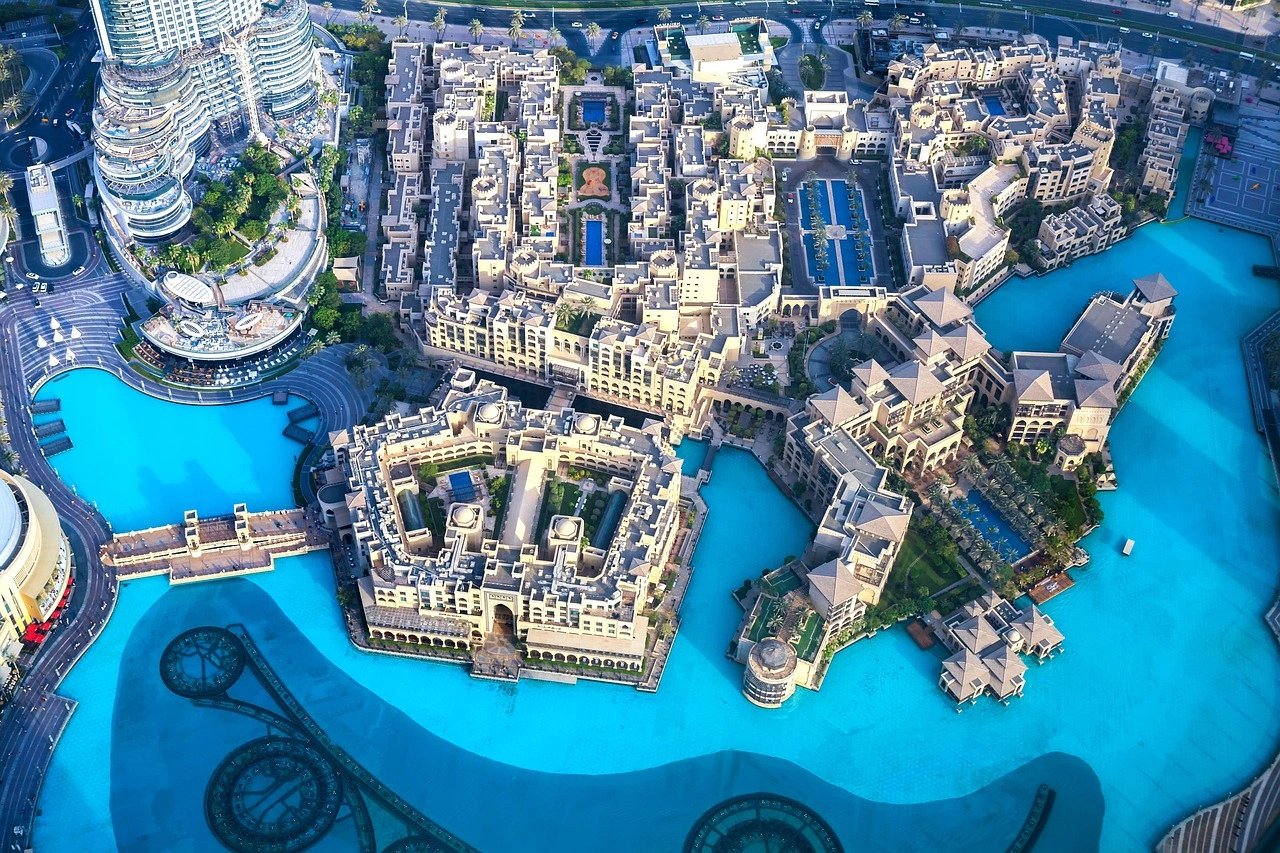
Real estate investors worldwide watched Iranian missile strikes damage Dubai's iconic Burj Al Arab and Fairmont The Palm Hotel, signaling a new era of geopolitical risk for the city's luxury market. Dubai's real estate posted record sales of $187 billion across 215,000 transactions in 2025, but the recent crisis has forced a strategic reassessment. The port and free-trade zone account for 36% of Dubai's GDP. With 88% of the population being expats, vulnerability to regional instability carries global implications. Real estate agents, commercial real estate brokers and institutional investors are now evaluating how this crisis reshapes investment strategies in one of the world's most ever-changing luxury markets. This analysis gets into immediate market impacts, what real estate investors need to think over and the long-term outlook for UAE luxury properties.
How the Crisis is Reshaping Dubai's Luxury Real Estate Market
"Dubai gains 3 crisis-driven wealth waves: COVID, Ukraine, now Middle East capital." — Sanjit Banerjee, Expert at SMS Realty; commentator on Dubai real estate market resilience
Transaction velocity slowed within 48 to 72 hours following the strikes. Real estate brokers report clients delaying signings until clarity emerges. Site visits have moderated compared to January levels. One broker noted a client backing out of a deal, while several others requested postponed closures. The effect extends beyond individual transactions. The suspension of trading on the Abu Dhabi and Dubai stock exchanges on March 2 and 3 marks an unprecedented regulatory response.
Indian nationals and non-resident Indians account for roughly 25-30% of offshore residential transactions in certain micro-markets. They are seeking greater certainty before deploying fresh capital. The branded and luxury villa markets face heightened sensitivity to these shifts in safety perception. A Dubai-based developer confirmed luxury buyers remain active but noted discussions have become more detailed, with no one rushing to close.
Then many companies temporarily suspended operations for a week to assess the situation. Construction activity continues without disruption, and project pipelines remain unaffected. The effect remains sentiment-driven rather than structural. Core demand drivers like population inflows and business relocations stay intact, along with residency reforms and sustained global wealth migration. No data on capital outflows has emerged yet.
What Global Real Estate Investors Need to Know Right Now
Energy market disruption compounds real estate uncertainty. War in the Persian Gulf cut traffic through the Strait of Hormuz to near standstill. Commercial vessels stopped transit except Iranian and Chinese-flagged ships due to jumped insurance premiums. Natural gas prices surged 45-50% in Europe and Asia following attacks on Qatar LNG facilities. Oil price forecasts range from $80 to beyond $110 and create volatility that affects capital allocation decisions.
These conditions moved Dubai's market structure in a fundamental way. Strategic capital now drives about 40% of transactions and marks a departure from speculation-led dynamics that characterized 2014. Regulatory frameworks strengthened under Dubai Land Department oversight. Contract registration operates within defined timelines and escrow accounts follow milestone-based release mechanisms. This regulatory depth reshaped Dubai's risk profile for institutional investors.
Tax residency considerations carry renewed significance. UAE maintains zero personal income tax, zero capital gains tax and zero inheritance tax. London imposes 28% capital gains tax. Tax residency requires either 183 days physical presence or 90 days with valid residence permit and permanent residence or employment. The process takes about one month, with certificates valid for one year.
Duration determines market effect. Buyers focus on net yields, supply-pipeline concentration and developer delivery consistency. This reflects disciplined capital allocation replacing excitement-led entry.
Long-Term Investment Outlook for UAE Luxury Properties
Market fundamentals separate short-term volatility from structural positioning. Knight Frank anticipates prime segment appreciation around 3% through 2026, with mainstream markets averaging 1% growth. Cushman & Wakefield projects more robust expansion between 5-8% for the same period. This reflects divergent views on demand absorption capacity.
Supply dynamics warrant attention. Forecasts indicate 70,537 residential units will deliver in 2027. This represents a 98% increase above the five-year average of 35,531 units annually. Such concentration creates localized pressure points in communities where similar product types cluster. Luxury and off-plan sectors demonstrate resilience with annual capital growth rates between 6-10% though. They remain competitive with top-tier global markets while maintaining zero-tax advantages.
The regulatory architecture is different from 2008. Strong oversight through RERA and Dubai Land Department provides structural safeguards that were absent during the previous crisis. Mandatory escrow systems and transparent contract registration mechanisms add to this protection. The market moved from speculation-driven dynamics toward end-user participation and long-term residency appeal.
Strategic capital now prioritizes medium to long-term holding strategies and rental income stability. Quality assets in established communities matter more. Professional forecasters expect sustainable performance rather than explosive growth. Success depends on location-specific analysis and realistic yield expectations increasingly.
The right home makes all the difference if you love to entertain. I'd be delighted to help you find spaces designed for effortless hosting if you're beginning your search or thinking over a purchase in the near future. Christina Pope 📞 310-404-9931 ✉️ [email protected]
Conclusion
Dubai's luxury market faces geopolitical headwinds, yet the fundamentals differ from 2008. Regulatory safeguards, zero-tax advantages, and strategic capital allocation provide resilience absent in previous cycles. Success depends on patience, location-specific due diligence, and realistic yield expectations rather than speculative timing for real estate investors. The crisis accelerated a change already underway: Dubai's transformation from excitement-driven transactions to disciplined, long-term value creation. Those who recognize this difference will find chances where others see only volatility.
Key Takeaways
The UAE-Iran crisis has created immediate market volatility in Dubai's luxury real estate sector, but underlying fundamentals remain stronger than previous downturns, offering strategic opportunities for informed investors.
• Transaction velocity slowed 48-72 hours post-crisis with buyers delaying closings, but construction continues uninterrupted and no structural damage to market fundamentals has occurred.
• Strategic capital now drives 40% of transactions versus speculation-led dynamics of 2014, supported by stronger regulatory frameworks and mandatory escrow systems through Dubai Land Department.
• UAE's zero-tax advantage remains intact (no income, capital gains, or inheritance tax) while energy market disruption creates broader regional uncertainty affecting capital allocation decisions.
• Supply surge of 70,537 units expected in 2027 (98% above five-year average) will create localized pressure, making location-specific analysis critical for investment success.
• Long-term outlook favors patient investors with Knight Frank projecting 3% prime segment growth through 2026, as the market shifts from excitement-driven to disciplined, yield-focused strategies.
The crisis accelerates Dubai's evolution from speculative trading to sustainable value creation, rewarding investors who prioritize regulatory stability, tax efficiency, and realistic return expectations over short-term market timing.
FAQs
Q1. How quickly did Dubai's luxury real estate market react to the UAE-Iran crisis? Transaction activity slowed within 48 to 72 hours following the missile strikes, with buyers delaying closings and requesting postponements. However, construction projects continued without disruption, and the impact has been primarily sentiment-driven rather than structural, with core demand drivers remaining intact.
Q2. What makes Dubai's current market situation different from the 2008 real estate crisis? Today's market benefits from significantly stronger regulatory oversight through RERA and Dubai Land Department, mandatory escrow systems, and transparent contract registration mechanisms that weren't present in 2008. Additionally, strategic capital now drives approximately 40% of transactions compared to the speculation-led dynamics that characterized the previous crisis.
Q3. What are the tax advantages for real estate investors in the UAE compared to other global markets? The UAE maintains zero personal income tax, zero capital gains tax, and zero inheritance tax. In comparison, markets like London impose 28% capital gains tax. Tax residency in the UAE requires either 183 days of physical presence or 90 days with a valid residence permit, and the certification process takes approximately one month.
Q4. What is the projected growth outlook for Dubai's luxury real estate market? Knight Frank anticipates prime segment appreciation of around 3% through 2026, while Cushman & Wakefield projects more robust growth between 5-8% for the same period. The luxury and off-plan sectors demonstrate annual capital growth rates between 6-10%, remaining competitive with top-tier global markets while maintaining zero-tax advantages.
Q5. Should investors be concerned about the upcoming supply increase in Dubai's residential market? Forecasts indicate 70,537 residential units will deliver in 2027, representing a 98% increase above the five-year average. While this creates localized pressure points in communities with similar product clustering, success will depend on location-specific analysis and focusing on quality assets in established communities rather than broad market timing.