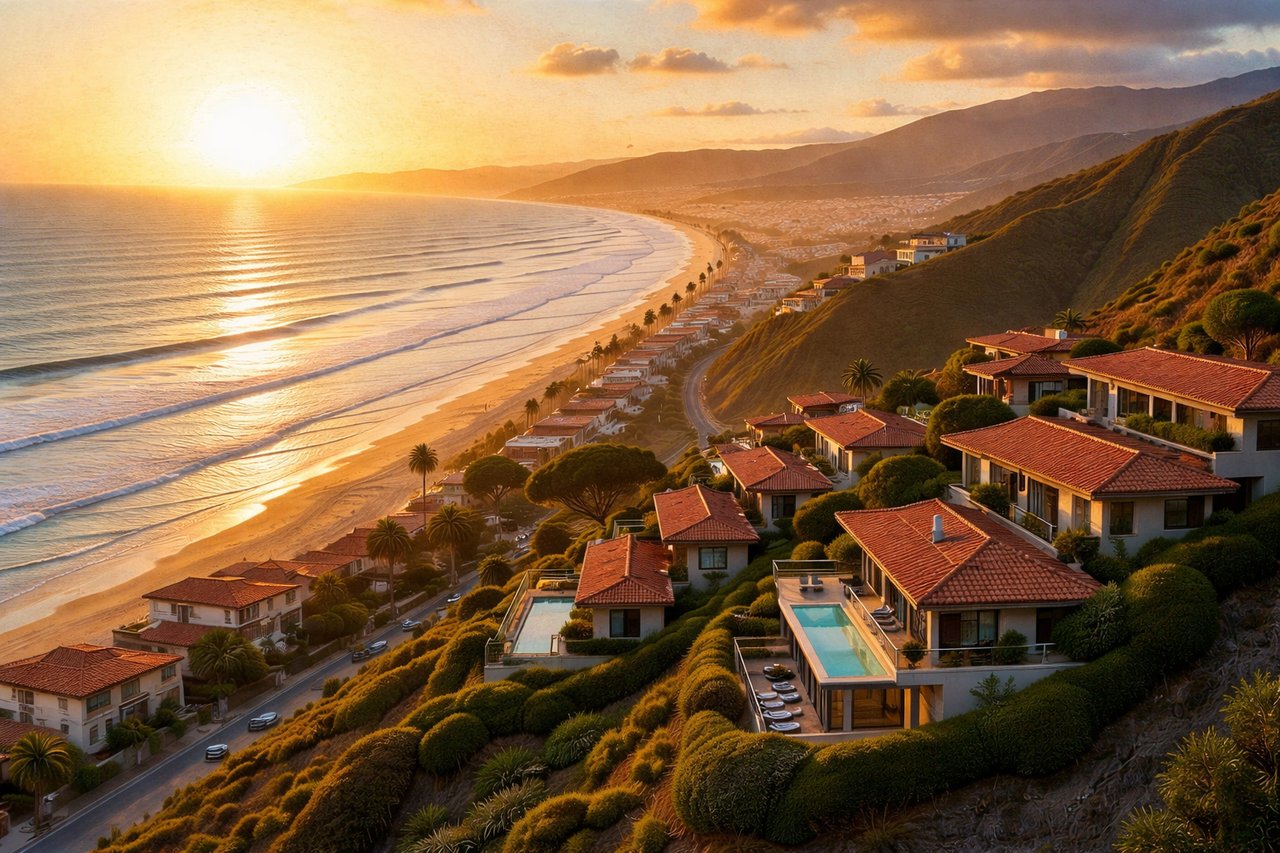
Understanding where Pacific Palisades matters at the time of comparing Los Angeles luxury markets. Pacific Palisades presents coastal living with an average sales price of $3.97 million, whereas Malibu commands $5.65M and Hidden Hills operates at $9.35M. Pacific Palisades sits on Los Angeles's Westside between the Santa Monica Mountains and the Pacific. It is located near both coastal recreation and major business districts. This geographic advantage allows wealthy residents to adapt their lifestyle with each season and move between beach access and mountain trails while making property decisions based on timing rather than headlines.
Where is Pacific Palisades in California and what defines its location
Pacific Palisades occupies a specific corridor along California's coast, positioned 20 miles west of downtown Los Angeles. The neighborhood sits within the city's Westside region and creates a residential enclave defined by natural boundaries that limit development and concentrate property values.
Position between Santa Monica and Malibu
Geographic identity comes from the neighborhood's borders. Brentwood marks the eastern edge, while the unincorporated community of Topanga defines the western boundary. Santa Monica lies to the southeast and places Pacific Palisades north of this coastal city. Santa Monica Bay forms the southwestern border, and the Santa Monica Mountains create the northern boundary.
Will Rogers State Beach along the Pacific Ocean follows the southern boundary. The western edge terminates at the Castellammare area near the J. Paul Getty Museum. Riviera Country Club's periphery lines up with the northeast boundary. These geographic constraints create what amounts to a peninsula of development pressed between ocean and mountains.
The neighborhood covers 24.31 square miles in total area and comprises 22.84 square miles of land and 1.47 square miles of water. The Palisades coastline extends three miles in length. This compact footprint concentrates residential development within natural topographic limits that prevent sprawl.
Santa Monica Mountains to Pacific Ocean geography
Terrain rises from sea level at the coast to Temescal Peak at 2,126 feet elevation. This vertical gradient creates distinct climate zones compressed within the neighborhood's 22.84 square miles of land area. Canyons and mountain ridges generate the panoramic vistas characteristic of Pacific Palisades and offer views across ocean shoreline and forested canyons.
The Santa Monica Mountains themselves form a coastal range that extends 40 miles east to west, from the Hollywood Hills to Point Mugu in Ventura County. Pacific Palisades sits within this range, where rugged terrain meets the Pacific Ocean. The mountains create a barrier between the San Fernando Valley to the north and the Los Angeles Basin to the south.
Ocean proximity produces cooler temperatures than inland Los Angeles communities. Marine influence moderates seasonal temperature swings and creates microclimates that change with elevation and canyon orientation. This geographic positioning between mountain and ocean establishes the environmental conditions that define year-round outdoor living patterns.
Proximity to major LA business districts
Pacific Palisades sits 7 miles west of the UCLA campus and positions itself within reach of Westwood's commercial center and the university's employment base. The 20-mile distance from downtown Los Angeles translates to commute times that vary with traffic patterns but maintain connection to the city's central business district.
Access to Pacific Palisades occurs through three main entrance points: Sunset Boulevard, Temescal Canyon, and Chautauqua. This limited number of access routes concentrates traffic flow and reinforces the neighborhood's enclave character. The controlled access maintains the residential atmosphere while connecting to Santa Monica's business districts to the south and the Westside employment corridor to the east.
The geographic position creates what amounts to a residential retreat with selective connectivity. Residents access coastal amenities, mountain recreation, and business centers without residing in the density of central Los Angeles. Natural boundaries that define where Pacific Palisades is located in California establish the lack that drives its real estate dynamics simultaneously.
The neighborhoods and districts within Pacific Palisades
Distinct neighborhoods within Pacific Palisades create microcosms of wealth concentration. Each operates according to unwritten protocols about timing, access and transaction privacy. The most important property movements occur through relationships rather than listings, where discretion determines chance.
Riviera and Castellammare hillside areas
Alphonzo Bell Sr. purchased 22,000 acres from the Santa Monica Mountain Park Company in 1923 and launched The Riviera as an exclusive residential district. The oil magnate partnered with Frank Garbutt of the Los Angeles Athletic Club and offered land in exchange for constructing the club facility. Bell subdivided adjacent parcels across Sunset Boulevard into The Riviera Residential Planning District. He employed landscape architect Mark Daniels to design stone curbs, granite gutters and palm-lined streets accommodating both pedestrians and equestrians.
Streets derive their names from Italian and French Riviera locations: Amalfi, San Remo, Corsica, Napoli, Monaco and Sorrento. Sunset Boulevard divides the neighborhood into Upper and Lower sections. Upper Riviera properties command views spanning downtown Los Angeles to the Pacific. The original tract contains approximately 125 parcels built between the 1920s and 1950s and displays Period Revival and Ranch architectural styles. The neighborhood now has roughly 700 homes on larger lots with wide streets and deep setbacks.
Ronald and Nancy Reagan relocated to Amalfi Drive in 1953 and later moved to San Onofre until Reagan's 1980 presidential election. Their former residence sold for $5.2 million in 2013. Castellammare Drive marks the hillside terrain where land movement and topographic challenges shape development patterns.
The Village commercial center
Rick Caruso developed Palisades Village during the 2010s to refresh what had been characterized as a run-down commercial district. The three-acre, 125,000-square-foot shopping center houses 42 businesses designed to resemble an American main street with smaller storefronts and mid- to high-end boutiques. Gensler's architectural design earned LEED Gold Certification through water efficiency, energy conservation and green materials.
The Village Green sits at 15280 Sunset Boulevard between Swarthmore and Antioch Avenues. Donations and volunteer labor maintain it. The privately owned park features 77 different tree and plant species addressing light and noise pollution concerns. Storefronts surround the Green, which hosts community events like movie nights and farmers markets.
The center has eight luxury rental homes, a specialty grocer, creative office spaces and a restored 1948 cinema. Palisades Village expects to reopen in summer 2026 after extensive repairs following recent events. Village data shows that 35% of regular customers previously resided in Pacific Palisades, while 65% lived outside the neighborhood.
Huntington Palisades
Street names throughout Huntington derive from Spanish words suggested by the tract's original engineer: Corona Del Mar, Frontera, Pampas Ricas, La Cruz and Camarosa. Chapala references Mexico's largest lake, while Ocampo refers to a mining town. The neighborhood sits south of The Village and enables residents to walk to the commercial center, park and library.
The median sale price reached $6.6 million in 2021, with an average of $7.2 million and $1,557 per square foot. This represents a 146% increase in median price and 76% increase in per-square-foot value compared to 2011 figures. The Huntington Palisades Property Owners' Corporation enforces CC&Rs and oversees construction projects. Annual dues based on lot size rarely exceed a few hundred dollars. Corona del Mar Park operates as a private recreational area for residents and overlooks the Pacific Ocean.
Rustic Canyon
Rustic Canyon occupies eastern Pacific Palisades along Rustic Creek. Sunset Boulevard borders it to the north, Chautauqua Boulevard to the west, lower Santa Monica Canyon to the south, and Amalfi Drive and Mesa Road to the east. The narrow canyon maintains a cooler, more humid microclimate than surrounding Los Angeles areas. Coastal fog appears throughout the year. Winter lows rarely drop below 35°F and summer highs rarely exceed 80°F.
Rustic Creek remains one of the few waterways in developed Los Angeles not channeled through concrete until its confluence with Santa Monica Creek. Coast live oaks, California sycamores, eucalyptus species and ornamental trees create heavy woodland cover. The neighborhood consists of single-family homes without commercial development. Residences designed by Lloyd Wright, Richard Neutra, Craig Ellwood, Ray Kappe and Moore Ruble Yudell occupy canyon properties.
Alphabet Streets
Methodist ministers founded the Alphabet Streets in 1921 and named roads after the founders in alphabetical sequence: Albright, Bashford, Carey, Drummond, Embury, Fiske, Galloway, Hartzel, Iliff (no J street exists) and concluding with Kagawa. The neighborhood begins in the north village and runs north to south then west to east. The narrow street layout reflects 1920s design constraints and was originally planned for modest two-bedroom, one-bath homes.
Lot sizes range from 5,200 to 6,500 square feet, with select corner lots extending to 7,200-7,500 square feet. Land prices reach $468 per square foot, placing a 6,500-square-foot lot at $3 million for dirt alone. Finished homes sell upwards of $12 million. Nearly 900 properties occupy the Alphabet Streets and have transformed from homes under 1,000 square feet into luxury properties spanning 2,000 to 9,000 square feet. Proximity to Caruso Village positions the neighborhood within walking distance of shops, restaurants and a movie theater.
Spring: launching the outdoor season
Spring activates the coastal and mountain infrastructure that defines where Pacific Palisades is located between ocean access and Santa Monica Mountains trails. The season bridges dormant winter patterns with summer's peak outdoor use. It creates specific windows for recreation and property transactions that residents use.
Beach access patterns begin
Recovery efforts from the January 2025 fire allowed Pacific Coast Highway through the burn area to reopen to public traffic by the end of May. The state deployed more than 100 trucks and excavators to clear debris. Crews removed over 1,200 truckloads daily from the roadway. One lane in each direction operates with a 25-mile-per-hour speed limit between Chautauqua Boulevard and Carbon Beach Terrace. Flashing red signals mark the intersections.
Will Rogers State Beach serves as the main coastal access point for most Pacific Palisades neighborhoods. Lifeguards return to seasonal stations. Volleyball courts see regular use, and the paved strand accommodates morning bike traffic. Short drives or walks from residential areas to trailheads or coast access make quick outdoor breaks standard rather than exceptional.
Beach patterns shift from isolated winter walks to regular afternoon sessions. Families arrive with bikes, volleyballs and picnic equipment on weekends. The strand supports longer rides as temperatures moderate. Coastal access operates at near-summer capacity without peak-season crowds by the time May arrives.
Trail conditions after winter rains
Trail reopening follows a staged progression based on damage assessment and repair priorities. Los Liones Trail and lower Will Rogers receive priority attention from State Parks crews. This includes Betty Rogers Trail and routes within the historic zone. Many impacted trails require clearing rockfall and removing slough. Crews must re-expose trail tread and then build drainage controls.
Temescal Canyon sustained major slope failures and extensive landslide material that prevented near-term reopening. Active landslides continued during damage assessments in rain conditions. Volunteer work in burn areas cannot commence until April. Replanting operations extend beyond summer months.
Fire Roads become available before single-track trails. The landscape presents a drastically altered appearance. Hillsides burned to brown-gray tones, and rain carved channels and deep erosion patterns into slopes. Burned tree stalks stand without surrounding brush or shade cover. Grass and clover begin regenerating, but the brush layer that provided shade remains absent.
Trail access directly changes property tour patterns. Buyers evaluating where Pacific Palisades is located relative to outdoor amenities schedule viewings to include trail proximity assessments. Properties near operational trailheads command attention from buyers who prioritize immediate access over future projections.
Property tours and buyer activity increase
Spring brings the largest pool of active buyers in Pacific Palisades. March through late May generates the most interest. Families target this window to complete purchases before the next school year begins. Pleasant weather supports extended showing schedules and open house attendance.
Well-prepared spring listings benefit from stronger competition among buyers and faster transaction momentum. Sellers who want to capture school-year movers list properties in early spring. This supports late spring or early summer closings that match typical relocation schedules.
Best listing days fall on Thursday or Friday to maximize weekend viewing activity. Broker tours launch right after properties go active. At least one open house follows during the first weekend. Private appointments then dominate scheduling for qualified buyers.
The spring concentration of buyer activity creates measurable market velocity absent in other seasons. Properties positioned to capture family buyers moving for school proximity or outdoor lifestyle access see compressed negotiation timelines. Families prioritize securing housing before academic calendars begin. Spring transactions carry urgency that sellers recognize and price accordingly.
Summer: peak outdoor living and entertainment
June through August transforms where Pacific Palisades is located into a corridor of calculated outdoor activity. Residents time their beach visits, trail runs, and social gatherings around tourist patterns rather than against them. The season just needs strategic planning for those who maintain year-round routines in an area that attracts seasonal visitors seeking the same coastal and mountain access.
Beach clubs and coastal activities
Will Rogers State Beach operates as the primary coastal destination and attracts swimmers, surfers, and volleyball players to its spacious shoreline. Ample parking and direct Pacific views establish the beach as a hub for both structured and casual activities. Sunrise Surf Academy conducts lessons for beginners and experienced surfers throughout summer months and offers instruction under consistent California sun.
Beach camps target families with children ages 4½ to 14 and provide up to 40 different activities daily. Programming has team sports, water instruction, and specialized skill development, with no prior ocean experience required. Transportation services operate from Mar Vista and Cheviot Hills pickup locations. This eliminates Pacific Coast Highway traffic concerns for families outside the immediate Palisades area.
The Palisades Recreation Center functions as a community activity hub year-round. Summer intensifies use of tennis courts, basketball facilities, swimming pools, and yoga programs. Facilities accommodate all age groups and serve both fitness-focused adults and family outings. Exclusive venues like Riviera Country Club provide members-only golf access amid architectural and natural landscapes.
Mountain trail use in early mornings
Los Leones Trail sees concentrated use before 8 a.m. during summer months. The three-mile ascent to Parker Mesa Overlook offers minimal shade. Early starts become necessary to avoid midday heat exposure. Hikers departing at sunrise complete the route before temperatures climb and secure parking in small lots at the trailhead base.
Trail networks through Temescal Canyon and Will Rogers State Historic Park connect to Topanga State Park's 36 miles of wilderness routes. Varied terrain spans meadows and oak forests with ocean overlook points. The Santa Monica Mountains' extensive trail system allows residents to select routes based on desired elevation gain, distance, and shade availability.
Morning trail sessions concentrate between 6 a.m. and 9 a.m. Temperatures remain moderate at the time and marine layer presence provides cloud cover. Residents familiar with seasonal patterns schedule mountain activities for early hours and reserve beach time for late afternoon when coastal temperatures moderate.
Evening outdoor gatherings
The Pacific Palisades Farmers Market operates every Sunday from 8 a.m. to 1 p.m. near Swarthmore Avenue and Sunset Boulevard at Palisades Village's northern entrance. Local farmers, artisans, and chefs present organic produce, artisanal breads, and specialty foods. The market serves as a weekly community gathering point where residents source fresh ingredients while connecting with neighbors.
Evening hours activate outdoor dining and residential entertainment. Mild summer weather supports gatherings on private terraces and patios equipped with outdoor heating elements for temperature control as sun sets. Cultural programming expands during summer months, with community events scheduled around predictable weather patterns.
Tourist influx and local adaptation
Residents adjust beach access timing to avoid peak tourist hours between 11 a.m. and 4 p.m. on weekends. Locals schedule coastal activities for early mornings or post-5 p.m. sessions when day visitors depart. Trail usage follows similar patterns, with residents claiming early morning slots before tourist arrivals.
Parking availability decreases during summer weekends. This prompts residents in walkable distance to reach beaches and village areas on foot. Those who need vehicle access target weekday mornings or late afternoons when competition for spaces diminishes. This seasonal rhythm establishes unwritten protocols about timing that separate year-round residents from temporary visitors seeking the same amenities that define where Pacific Palisades is located between ocean and mountains.
Fall: preferred season for serious buyers
Transactions in high-end markets operate through channels invisible to casual observers. The most strategic property movements in areas like Pacific Palisades unfold through relationships fostered over years. Discretion determines access before listings ever reach public platforms. Fall emerges as the season when serious buyers recognize timing advantages that summer crowds and spring urgency obscure.
Comfortable weather for property tours
September through November delivers optimal conditions to review properties where Pacific Palisades sits between coastal and mountain terrain. Marine layer patterns stabilize and produce consistent visibility to assess ocean and canyon views from hillside properties. Temperatures moderate from summer peaks without winter's occasional storm systems that interrupt scheduled viewings.
The Kelley Westbrook Group observed reliable market activity moving into fall 2024. They noted that despite a slight dip in home sales, the market remained competitive for buyers and sellers. A marginal uptick in inventory provided more options for prospective buyers during this season. This increase in available homes helped balance market dynamics and made conditions slightly less competitive for those entering during fall months.
The Federal Reserve's decision to cut interest rates by 0.5% brought the average 30-year fixed mortgage rate to around 6.2%, down from its peak of 7.79% in October 2023. Lower borrowing costs propelled higher demand and made ownership more available during fall transaction windows.
Reduced competition from seasonal residents
Summer's tourist concentration dissipates after Labor Day. Beach parking returns to manageable levels. Trail access no longer requires dawn departures to secure spaces. Properties scheduled for tours accommodate extended viewing sessions without competing against vacation schedules or weekend crowds seeking coastal amenities.
Serious buyers review neighborhoods without seasonal noise. The character of where Pacific Palisades in California operates year-round becomes apparent when temporary visitors depart. Residents walking to Palisades Village, morning trail users and weekday beach access patterns reveal the authentic rhythm absent during peak months.
School year begins and family focus
Academic calendars establish fall as a deadline rather than a target. Families who missed spring's competitive window or delayed summer decisions face pressure to secure housing before Thanksgiving. School-age children's enrollment needs create urgency that sellers recognize in pricing and negotiation flexibility.
Properties near top-rated schools see concentrated attention from relocated executives and professionals who prioritize educational access. The school year's commencement shifts family buyer focus from exploration to execution and compresses decision timelines.
Cultural calendar expands
Fall programming activates community spaces as summer's beach-centric activities transition indoors. Farmers markets continue weekly operations. Cultural events scheduled around predictable weather patterns draw year-round residents rather than seasonal visitors. The difference between temporary and permanent community members becomes clear through participation patterns in local gatherings and civic programming.
Winter: quiet luxury and strategic opportunities
Luxury real estate operates through private conversations rather than public listings. The most meaningful transactions unfold within trusted circles where discretion carries as much weight as value. Those who understand this market know visibility remains secondary to precision. Strategic opportunities surface in winter for buyers who recognize timing advantages that busier periods obscure.
Marine layer patterns and microclimates
Winter daytime temperatures average 61°F in areas where Pacific Palisades is located, with evening readings dropping to 55°F. December registers as the coldest month at 59°F. February and March follow at 61°F. Precipitation concentrates in December with two days of rainfall, matching March's pattern.
The coastal microclimate produces conditions distinct from inland Los Angeles communities. Marine layer dynamics press against the Santa Monica Mountains and create temperature differentials between beach-level properties and hillside residences separated by mere miles. Winter brings bright days with soft light and a relaxed coastal backdrop absent during summer's harsher sun exposure.
Southern California's microclimate patterns depend on mountains separating coastal zones from interior valleys. High pressure systems compress the marine layer to 500 feet and prevent marine air from crossing smaller hills. Coastal areas maintain average temperatures in the mid-60s. Locations 15 to 30 miles inland reach 100+ degrees during peak microclimate season. Winter reverses this pattern and stabilizes coastal temperatures while inland areas experience greater swings.
Holiday hosting in mild weather
December through February weather supports outdoor entertaining without summer's tourist concentration or spring's variable conditions. Properties with outdoor heating systems accommodate evening gatherings at 55°F. The mild climate allows hosts to use terrace and patio spaces for holiday events while maintaining comfortable conditions for guests.
Lowest tourist presence
Beach parking lots operate below capacity throughout winter months. Trail access requires no advance planning or dawn departures. Pacific Palisades California intersects ocean and mountain terrain. This becomes apparent without seasonal visitor patterns obscuring year-round rhythms. Residents move through village areas, coastal paths and hiking routes without competing for access or accommodating tourist schedules.
Off-market opportunities emerge
Holiday timing creates conditions where sellers prefer noninvasive, private transactions. Agents maintain pipelines of properties not yet listed. Sellers prepare homes or wait for more advantageous timing. Developers sell directly to save on commissions, staging costs and preparation time.
Off-market inventory increases in Pacific Palisades during winter months as sellers prioritize discretion over maximum exposure. Buyers working with agents who have connections access properties before public listings emerge. They secure opportunities through relationships rather than market competition.
Property amenities that serve year-round living
Properties where Pacific Palisades is located between ocean and mountains require design solutions that address microclimates, seasonal temperature moves, and variable marine layer patterns. Architecture adapted to this terrain prioritizes natural climate control over mechanical systems. Energy consumption drops while comfort remains consistent throughout the year.
Orientation for natural light and breeze
A 19-foot entryway opens to floor-to-ceiling windows that frame mountain views and flood interiors with natural light. Skylights and clerestory windows create airy spaces, with skylights brightening open kitchen-dining-living areas. Large glass panels blur boundaries between indoor and outdoor spaces. Floor materials extend from interior rooms to exterior patios for visual continuity.
Controlled cross ventilation and top hot air escape mechanisms provide passive cooling. Vented staircases act as light wells and facilitate air movement through multi-level homes. This passive approach reduces reliance on air conditioning during moderate temperature months.
Outdoor heating and cooling features
Double cooling cantilever trellises provide shade over living and bedroom floors. Automated thermostats and zoning systems optimize energy use and maintain specific temperatures in different areas. Smart climate control allows residents to pre-condition spaces before gatherings or adjust settings remotely.
Outdoor heating elements extend usable terrace and patio hours during cooler evenings. These systems support year-round outdoor entertaining where Pacific Palisades California's climate permits outdoor dining most months.
Landscaping for seasonal interest
Plants selected for Mediterranean climate conditions provide structured gardens with color throughout the year. Landscaping specifications require 100% drought-tolerant, non-invasive, and fire-retardant species. Landscape design keeps homes cooler in summer and warmer in winter through strategic plant placement.
Storage for recreational equipment
Climate-controlled storage units maintain temperatures between 55 and 80 degrees Fahrenheit. These spaces accommodate seasonal items including sports equipment and decorations. Properties near beaches and trails require dedicated storage for surfboards, bikes, and hiking gear that residents rotate based on seasonal activity patterns.
Market dynamics across seasons
Market cycles in high-end coastal communities follow patterns invisible to casual observers. Pacific Palisades sits between ocean and mountains. This creates market dynamics distinct from inland Los Angeles areas. Seasonal shifts affect lifestyle and transaction velocity alike.
Price stability versus transaction volume
Spring gets the highest buyer activity. Holidays reduce market momentum. Properties in Pacific Palisades maintain a median sold price of $3.25 million, a 12% year-over-year decrease. Days on the market average 42 to 47 days. 65% of homes sell within 30 days. The sale-to-list price ratio sits at 95%, which indicates consistent pricing discipline. 45% of transactions close below asking price. This reflects a balanced market where neither buyers nor sellers dominate negotiations.
Seller motivation patterns
Price reductions appear in over 30% of land listings as sellers adjust expectations. Average sales prices run 10% below original list prices. This suggests market testing followed by strategic repricing. More than one-third of lots still attract multiple bidders, which demonstrates persistent need despite price adjustments.
Buyer demographics by season
Spring and summer attract families who prioritize school calendars and immediate occupancy. Fall and winter draw strategic buyers seeking reduced competition and better negotiation positioning.
Professional guidance for optimal timing
Timing decisions need clarity on goals and understanding current opportunities. Mortgage rate changes directly affect affordability calculations. This alters both days on market and list-to-sale ratios across price tiers.
Conclusion
Pacific Palisades functions as more than a coastal enclave. The geography between Santa Monica Mountains and Pacific Ocean creates distinct seasonal rhythms that wealthy residents understand and use to their advantage. They time beach access, trail use, and property decisions according to patterns rather than impulse.
Optimal market entry depends on matching personal priorities with seasonal advantages. Spring captures family buyers and competitive energy. Fall delivers serious transactions with reduced tourist interference. Winter opens off-market channels for those who value discretion over public exposure.
Advisors who understand these cycles transform timing from guesswork into strategy. This positions buyers and sellers to act when conditions suit specific objectives rather than generic market headlines.
Key Takeaways
Pacific Palisades offers a unique coastal luxury lifestyle where geography drives both living patterns and real estate strategy. Understanding seasonal dynamics helps residents and investors maximize this exclusive location's benefits.
• Strategic Location: Pacific Palisades sits between Santa Monica Mountains and Pacific Ocean, 20 miles west of downtown LA, creating natural boundaries that limit development and concentrate property values at $3.97M median.
• Seasonal Market Timing: Spring attracts competitive family buyers, fall offers serious transactions with less competition, and winter provides off-market opportunities for discreet buyers seeking strategic advantages.
• Year-Round Outdoor Access: Residents adapt activities seasonally - early morning mountain trails in summer, strategic beach timing to avoid tourists, and comfortable property tours during fall's optimal weather conditions.
• Neighborhood Diversity: Five distinct areas from hillside Riviera ($7.2M average) to walkable Alphabet Streets ($12M+ homes) offer different lifestyle experiences within the same coastal-mountain geography.
• Climate-Driven Design: Properties feature passive cooling, outdoor heating systems, and drought-tolerant landscaping to maximize year-round outdoor living in Mediterranean microclimates between ocean and mountains.
The most successful Pacific Palisades residents and investors recognize that timing decisions around recreation, entertaining, and property transactions should align with predictable seasonal patterns rather than react to market headlines or tourist schedules.
FAQs
Q1. Is Pacific Palisades considered a wealthy neighborhood? Pacific Palisades ranks among Los Angeles's most affluent residential areas, with a median home value of approximately $3.97 million and an average individual income of $135,206. The community attracts successful professionals, business owners, and entertainment industry figures who value the area's coastal location, excellent schools, and natural beauty between the Santa Monica Mountains and Pacific Ocean.
Q2. How does Pacific Palisades compare to other luxury LA neighborhoods like Beverly Hills? While both are exclusive areas, they serve different preferences. Beverly Hills Gateway properties reach median values near $13 million, significantly higher than Pacific Palisades' $5.5 million median. Pacific Palisades offers a more relaxed, community-oriented atmosphere with direct beach and mountain access, whereas Beverly Hills provides a more urban luxury experience with high-end shopping and dining concentrated in a smaller area.
Q3. What makes Pacific Palisades attractive for families relocating to Los Angeles? The neighborhood combines safety, strong public and private schools, and abundant outdoor recreation within a tight-knit community. Families appreciate the walkable Village area, proximity to beaches and hiking trails, and the ability to raise children in a less ostentatious environment compared to some other wealthy LA areas. The geography creates natural boundaries that maintain a small-town feel despite being part of Los Angeles.
Q4. What are the main challenges of living in Pacific Palisades? Traffic represents the primary concern, with limited access routes creating congestion during peak hours—commutes to other LA areas can take significantly longer than the actual distance suggests. The neighborhood also has limited cell service in some areas, high property costs, and a relatively homogeneous demographic. Getting in and out of the Palisades requires planning, especially during school drop-off and pick-up times.
Q5. How does the seasonal climate affect daily life in Pacific Palisades? The coastal microclimate produces cooler temperatures than inland LA, with winter daytime averages around 61°F and marine layer fog common in mornings. This creates ideal conditions for year-round outdoor activities, though residents adapt their schedules—early morning trail hikes in summer to avoid heat, strategic beach timing to avoid tourist crowds, and outdoor entertaining that takes advantage of mild evenings most of the year.