The Stahl House Los Angeles stands as one of the most photographed residences in architectural history, yet it raises a fundamental question: how does one maintain privacy in a home defined by transparency? Designated a Historic-Cultural Monument in 1999 and ranked among Los Angeles' top 10 houses in a 2008 Los Angeles Times survey, this 2,200-square-foot landmark exemplifies a challenge facing Hollywood Hills homeowners. Iconic properties demand visibility, but luxury living requires discretion just as much. This piece gets into how Case Study House #22 and Hollywood Hills homes like it achieve both goals through thoughtful design. Readers will find architectural techniques that enable transparent structures to protect privacy, from elevation strategies to material choices, and understand how Pierre Koenig's approach to Case Study House 22 continues influencing contemporary designs that balance exposure with seclusion.
Why Hollywood Hills Homes Must Balance Exposure and Discretion
The Geography of Visibility
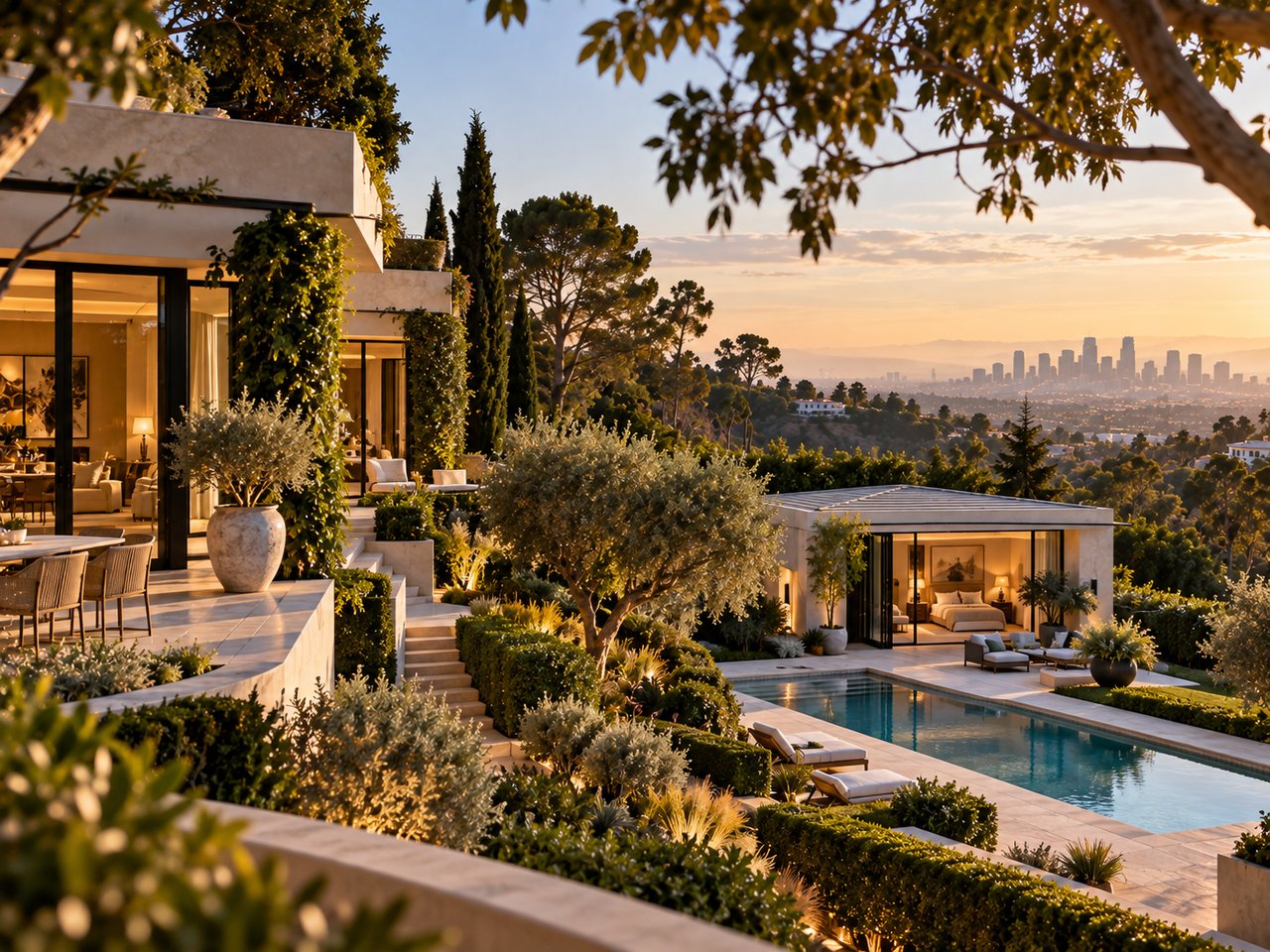
The Santa Monica Mountains create a distinctive architectural challenge. Properties perch on ridges and offer commanding views of the Los Angeles Basin below. This elevation transforms homes into visible landmarks. Residents gain what one industry professional describes as a "godlike" vantage point. They look out at millions while remaining "invisible to everyone below". This paradox defines hillside living.
Terrain filters unwanted attention. Narrow, winding roads and steep inclines deter casual visitors and create protective layers around properties. Homes along Mulholland Drive face special review to present themselves to the scenic corridor, despite these natural barriers. The same geography that offers privacy also demands careful thought about sightlines and public visibility.
Cultural Significance vs Personal Privacy
Case Study House #22 exemplifies the tension between architectural fame and private living. Julius Shulman's 1960 photograph earned recognition from Time Magazine as one of the most influential images in the publication's history. The property appeared in films including the Columbo pilot and Galaxy Quest. The Stahl family faced the "heartfelt and very difficult decision" to list the home after 65 years of family stewardship.
Celebrity ownership and architectural significance create competing pressures. Properties with famous former owners command premium prices and attract substantial buyer interest. High-profile locations draw attention from tour groups and photographers. This makes privacy evaluation a must during property searches.
Market Expectations for Iconic Properties
Hollywood Hills attracts entertainment industry professionals and entrepreneurs seeking both proximity to work and retreat from public life. The median sales price reached $1.38 million in the 90068 ZIP Code based on 33 sales and marked a 15.2% year-over-year increase.
Buyers expect properties that deliver views and seclusion at once. One agent notes that "buyers looking for views and privacy can find refuge in the hills". Competition remains intense because of limited inventory at desirable price points. Properties carrying architectural significance or celebrity associations operate under different market rules. Discretion and cultural cachet drive value beyond standard luxury metrics.
Architectural Elements That Enable Dual-Purpose Design
Floor-to-Ceiling Glass with Strategic Placement
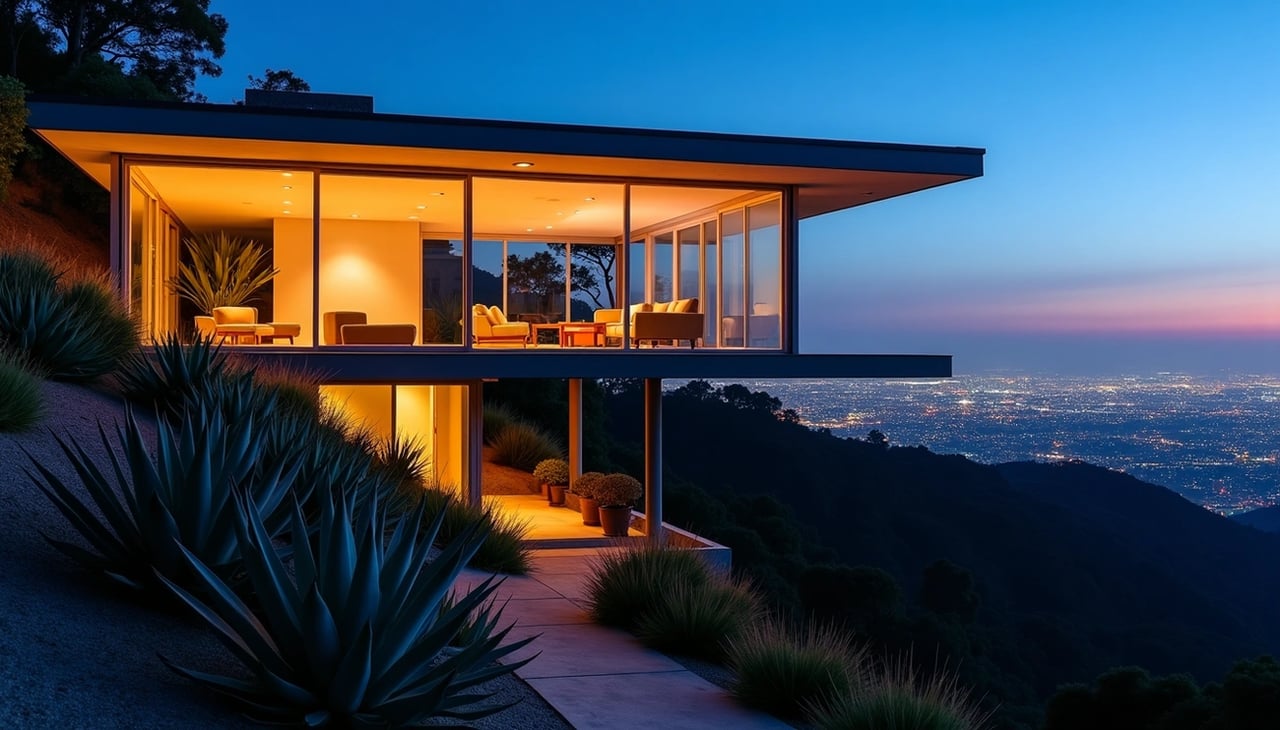
Glass walls maximize views while creating exposure challenges. Case Study House #22 addressed this through orientation rather than opacity. Large 20-foot-wide panes formed walls facing the cityscape and represented the largest glass accessible to more people at the time. Koenig positioned these expansive panels toward the view, not neighboring properties. His architecture wasn't meant to be looked at but looked through, a philosophy that moved attention outward rather than inward.
Floor-to-ceiling glass creates visual continuity between interior and exterior environments. Exterior brightness produces reflectivity that obscures interiors unless observers stand close at specific angles during daylight hours. The relationship reverses at night when interior lighting transforms glass into transparent barriers and requires layered lighting strategies.
Elevation and Terrain as Privacy Tools
Hillside architecture delivers inherent privacy through elevation. Elevated living will give seclusion while maintaining open views downward. Slopes offer built-in privacy and sound buffering with framed views. Grade changes become privacy devices rather than obstacles.
Multi-level designs follow natural contours instead of fighting terrain. Cantilevered forms minimize excavation and preserve topography. Split-level configurations allow interiors to follow slopes without excessive structural lifting.
Outdoor Spaces That Shield While Showcasing
The Stahl House pool sits between the L-shaped wings and functions as both a physical buffer and a visual corridor to the city beyond. This positioning separates living spaces while maintaining sightline continuity. Massive steel roof decking enabled dramatic overhangs that extended over pool hardscape and created shaded transition areas.
Deeper balcony lines shift viewing angles and prevent interiors from reading as stages when doors open. Outdoor zones become privacy layers rather than exposure points.
Structural Innovation in Case Study House #22
Prefabricated steel components followed a modular grid, pre-cut and fabricated offsite. This skeletal frame created a structure that appeared impossibly light. The entire frame erected in one day with five workers showed how industrial methods achieved both architectural purity and improved efficiency. Steel framing enabled the L-plan division between bedrooms and communal spaces, wrapped around a turquoise pool poised above the city.
Creating Invisible Boundaries in Transparent Homes
Layered Access Points and Circulation
Entry points should be minimized to create primary traffic flow that acts as a gatekeeper to interior spaces. This approach maintains welcoming zones and establishes protected areas deeper within the home. Glass houses achieve spatial hierarchy without visible barriers when multiple access layers function independently.
Acoustic and Visual Separation Techniques
Laminated glass consists of layers bonded with acoustic interlayers like polyvinyl butyral. These absorb vibrations and reduce sound transmission. Double glazing creates air-filled spaces between panes and prevents sound travel. Thicker glass provides better soundproofing through increased mass.
Visual separation relies on material opacity variations. Transparent surfaces allow full visual connection and create physical separation. Translucent surfaces create partial visual separation. Frosted or etched glass diffuses sunlight evenly and fills rooms with brightness while blocking clear views. These treatments work well in transitional spaces where privacy remains critical without sacrificing natural light.
The Role of Landscaping in Privacy Control
Evergreen trees like arborvitae maintain foliage year-round and ensure consistent screening. Layered planting compositions use upper canopy trees for distance screening and mid-story evergreens for density. This graduated approach prevents harsh edges and allows light and air flow. Strategic placement near windows blocks sightlines without blocking sunlight.
How Light and Shadow Manage Exposure
Light and shadow define architectural space beyond mere illumination. Contrast between brightness and darkness boosts spatial depth and emphasizes relationships between form and void. Shadow acts as an intentional design element that guides movement and focuses attention. Carefully placed openings and filtered light create dim environments where illumination guides perception without exposing interiors during daylight.
Protecting Privacy Without Sacrificing Architectural Identity
"You must know when to stop and not overdo anything…I had to suppress the idea of building something egotistical that says, 'Look at me, here I am sitting on top of this hill as a great house…'" — Pierre Koenig, Influential midcentury modern architect who designed Case Study House #22 in Hollywood Hills
### Maintaining Iconic Status While Living Privately
The Stahl House remains a family-owned property despite its fame. The family preserved it as the Stahls left it. Architecture enthusiasts can experience the space and its spectacular views firsthand through tours the family offers. This model shows how iconic properties can serve dual purposes and compromise neither function.
Design Decisions That Serve Both Goals
Koenig used fixed metal screens in Case Study House #21 to manage sun and heat without altering the roof outline. These Koolshade panels allow air and light passage while reducing direct exposure. Where neighbors create tight conditions, designers add planting screens or louvers to maintain open sightlines without feeling exposed.
Learning from Pierre Koenig's Approach
Case Study House #21, completed in 1959, used steel and glass with controlled planning and tight landscape integration. Koenig left space between the exterior steel frame and interior surface for wires, insulation, and services. His projects displayed steadfast belief that architecture could improve life for all through Modernism.
The right home makes all the difference if you love to entertain. I'd be delighted to help you find spaces designed for luxury living and effortless hosting if you're thinking over a purchase in the near future or beginning your search. Christina Pope  310-404-9931
  [email protected]
Future-Proofing Privacy in Glass Houses
Privacy screens use translucent materials that diffuse light. They create soft interior glow while blocking exterior views. Reflective coatings mirror exterior surroundings and make it difficult for outsiders to see inside during daylight. Smart glass transitions between transparent and opaque states with electrical voltage application. It offers privacy on demand without blinds or curtains.
Conclusion
Transparency doesn't require vulnerability at the time designers understand elevation, material selection, and strategic placement. Case Study House #22 proves that glass walls can showcase views without sacrificing seclusion, given that terrain and orientation create natural privacy layers. These architectural principles remain relevant for contemporary Hollywood Hills properties. Homes can maintain iconic status while protecting the lives lived within them through smart glass technology or traditional screening methods. The balance exists when you design with intention.
Key Takeaways
Hollywood Hills homes face a unique architectural challenge: creating transparency for stunning views while maintaining privacy from public attention. Here are the essential strategies that make this balance possible:
• Elevation is your greatest privacy tool - Hillside positioning naturally shields homes from ground-level viewing while preserving panoramic city views below.
• Strategic glass placement beats opacity - Orient large windows toward views, not neighbors, and use terrain contours to control sightlines without sacrificing transparency.
• Layer your privacy defenses - Combine landscaping screens, acoustic glass, and graduated access points to create invisible boundaries that protect without blocking light.
• Smart materials enable privacy on demand - Modern solutions like electrochromic glass and reflective coatings allow instant privacy control while maintaining architectural integrity.
• Design with restraint, not ego - Following Pierre Koenig's philosophy, successful hillside homes enhance the landscape rather than dominating it, achieving iconic status through thoughtful integration.
The key insight: True luxury in glass architecture comes from feeling completely private while remaining visually connected to the world beyond. When executed properly, transparent homes become sanctuaries that showcase both the view and the art of living well.
FAQs
Q1. Which Hollywood Hills neighborhood is considered the most desirable? The Bird Streets area above the Sunset Strip stands out as one of the most prestigious neighborhoods in the Hollywood Hills, attracting high-profile residents and commanding premium prices due to its prime location, privacy, and spectacular views.
Q2. How do Beverly Hills and Hollywood Hills differ in character and appeal? Beverly Hills represents classic old-Hollywood glamor with palm-lined streets, manicured lawns, and generational estates, while Hollywood Hills offers a more rugged, creative atmosphere with winding roads, dramatic city views, and diverse architectural styles that appeal to entertainment industry professionals and entrepreneurs.
Q3. Can you maintain privacy in a glass-walled home on a hillside? Yes, privacy is achievable in transparent hillside homes through strategic design elements including elevation advantages, careful window orientation toward views rather than neighbors, layered landscaping, and modern solutions like smart glass technology that allows privacy control without sacrificing natural light or architectural integrity.
Q4. What makes Case Study House #22 architecturally significant? Case Study House #22, also known as the Stahl House, is one of the most photographed residences in architectural history, designated a Historic-Cultural Monument in 1999. Its innovative use of floor-to-ceiling glass, cantilevered steel construction, and strategic positioning demonstrates how transparent architecture can balance iconic visibility with functional privacy.
Q5. How does terrain help protect privacy in Hollywood Hills homes? The steep slopes and elevated positioning of Hollywood Hills properties create natural privacy barriers by placing homes above street-level sightlines, while narrow winding roads deter casual visitors. This elevation allows residents to enjoy panoramic views outward while remaining largely invisible to observers below.