What draws Upstart Co-Lab, impact investors, and creative visionaries alike to Hollywood Hills is a story worth understanding from the model behind the organization itself, to the landmark success of investments like Upriver Studios, to what makes this particular market so well-suited for those who build with both purpose and profit in mind.
The Upstart Co-Lab Creative Economy Model
"We connect capital with creative people who make a profit and make a difference." — Laura Callanan, Founding Partner of Upstart Co-Lab
Laura Callanan launched Upstart Co-Lab in 2015, drawing on her experience as senior deputy chairman of the National Endowment for the Arts. What she found was a striking gap: impact investing had reached USD 8.70 trillion in assets under management in the U.S., yet barely 0.3 percent of that capital was directed toward what investors categorized as "arts and culture". The USD 877 billion American creative economy was, for the most part, being passed over.
Callanan built a classification system spanning 145 industries under the North American Industry Classification System, organized around five pillars: ethical fashion, sustainable food, social impact media, other creative businesses, and creative places. The economics are equally persuasive every USD 1.00 spent within the creative economy generates USD 2.50 in broader economic wealth.
Creative places hold particular significance within this model. Luxury real estate in Los Angeles moves through private conversations and trusted relationships, where discretion carries real weight. Christina Pope at Sotheby's International Realty and EliteResidenceInternational.com knows this market well, meaningful transactions unfold quietly, and timing matters more than visibility.
Since its launch, Upstart Co-Lab has mobilized USD 23 million in capital and assembled a member community representing USD 1 billion in investment capacity, bringing together families, foundations, and cultural institutions around carefully vetted opportunities. A 2018 partnership with the Local Initiative Support Corporation produced the NYC Inclusive Creative Economy Fund, which raised USD 6.20 million to support affordable creative workspaces across the city.
Why Hollywood Hills Attracts Creative Visionaries and Impact Investors
Luxury real estate in Los Angeles moves through private conversations and trusted circles, where discretion carries weight. Christina Pope at Sotheby's International Realty and EliteResidenceInternational.com understands this market well meaningful transactions unfold quietly here, and timing matters more than visibility. Nearly 25% of luxury deals now close without ever touching the Multiple Listing Service.
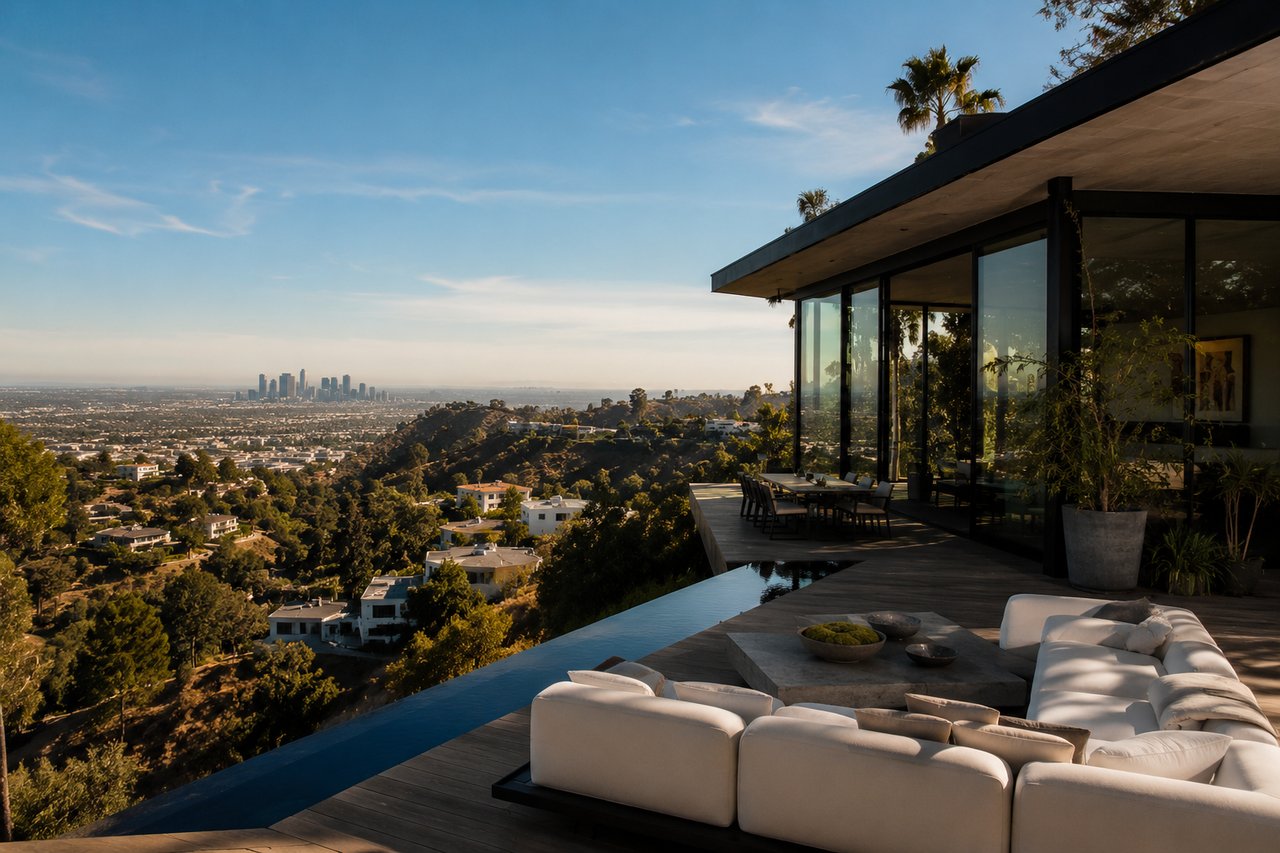
The architecture of Hollywood Hills does much of the explaining. Natural light shifts throughout the day, creating conditions ideally suited to visual projects. Sound-sensitive design keeps recording sessions free from interference, while writers find the kind of quiet that city living rarely offers. Gates open to reveal nothing from the street below, and privacy is woven into every sightline and material choice not added as an afterthought, but built into the fabric of the homes themselves.
The demographics reflect this creative concentration. Among residents aged 25 and older, 54.8% hold four-year degrees. The median household income reached USD 69,277, and population density remains among the lowest in the city at 3,063 people per square mile a rarity in Los Angeles.
Proximity to major studios keeps commute times short while keeping professionals close to the networks that matter. Properties with celebrity history carry additional appeal, commanding higher prices and drawing sustained investor interest.
For those who love to entertain, the right home makes all the difference. Whether a purchase is on the near horizon or the search is just beginning, Christina Pope would be delighted to help find spaces designed for elevated living and effortless hosting.  310-404-9931
  [email protected]
Success Stories: From Upriver Studios to Hollywood Hills Investments
"To meet this moment, we will need financial communities and fine art communities, pension fund managers and performing artists, all working in collaboration. Fortunately, thanks to organizations like Upstart Co-Lab and their partners Nesta’s Arts & Culture Finance and Fundación Compromiso, impact investors are already spurring just that." — Darren Walker, President, Ford Foundation
Proven results carry more weight than projections in both luxury real estate and high-value creative investments. Upstart Co-Lab's portfolio reflects exactly that outcomes that are measurable, repeatable, and worth studying.
Mary Stuart Masterson and Beth Davenport founded Upriver Studios in 2016, converting a 101,000 square-foot warehouse in New York's Hudson Valley into Class A sound stages. HBO Max's Pretty Little Liars: Original Sin became the facility's first client when it opened in 2021, and by 2022, the studio had generated nearly 200 jobs while attracting USD 57 million in film and television production spending to the region.
The ambitions extend well beyond those early milestones. The studio expects to create 2,000 local jobs within five years, with many crew positions offering pathways to union roles that pay between USD 75,000 and USD 200,000 annually with full benefits. Environmental responsibility runs throughout the operation LED lighting grids and 100 percent solar-sourced electricity reduce carbon emissions by 30 percent compared to conventional sound stages.
Laura Callanan joined Upriver's board in 2019, bringing strategic planning support and coordinating investor site visits. Since 2016, Upstart Co-Lab has mobilized USD 45 million toward an equitable creative economy, with its Inclusive Creative Economy Strategy targeting a USD 100 million portfolio.
Christina Pope at Sotheby's International Realty recognizes how the right investment, made at the right moment, builds lasting value. For guidance on properties with strong appreciation potential, reach out at 310-404-9931 [email protected].
Conclusion
The creative economy and the communities it shapes — including Hollywood Hills — reward those who understand both the numbers and the nuance. Visionaries who choose to put down roots here are not simply buying property; they are positioning themselves within an ecosystem where proximity, privacy, and purpose reinforce one another.
Luxury real estate in this market has always moved through trusted relationships. Christina Pope at Sotheby's International Realty and EliteResidenceInternational.com brings the expertise and the connections to help clients find not just a home, but the right one — a space that reflects how they live and what they value. Reach out at 310-404-9931 [email protected].
Key Takeaways
The creative economy is rapidly becoming a powerhouse sector, yet remains significantly underfunded by impact investors despite its massive scale and proven returns.
Key insights for investors and creative professionals:
• The creative economy employs 330 million people globally and generates $877 billion in the U.S. alone, with every dollar invested creating $2.50 in economic wealth—yet receives only 0.3% of impact investment capital.
• Hollywood Hills offers strategic advantages beyond prestige: purpose-built creative infrastructure, direct studio access, and 54.8% of residents holding four-year degrees create an ecosystem where proximity drives opportunity.
• Upriver Studios demonstrates the model's viability, transforming a warehouse into a $57 million production hub that created 200 jobs while reducing carbon emissions by 30% through sustainable practices.
• Women and BIPOC entrepreneurs dominate creative sectors, representing 35% and 38% of ownership respectively, making the creative economy a critical pathway for equitable wealth building.
• Off-market luxury transactions now account for 25% of high-end deals, emphasizing that success in both creative real estate and impact investing depends on trusted relationships and strategic positioning rather than public visibility.
The intersection of creative industries and impact investing presents a compelling opportunity for those who recognize that cultural capital and financial returns are not mutually exclusive they're complementary forces driving sustainable economic growth.
FAQs
Q1. What is Upstart Co-Lab and what does it do? Upstart Co-Lab is an organization founded in 2015 by Laura Callanan that connects impact investors with creative economy businesses. It mobilizes capital to support creative industries including ethical fashion, sustainable food, social impact media, and creative places—helping entrepreneurs who generate both profit and positive social impact. Since its launch, the organization has mobilized $45 million and built a member community representing $1 billion in investment capacity.
Q2. Why is Hollywood Hills particularly attractive to creative professionals and investors? Hollywood Hills offers purpose-built architecture with natural lighting ideal for visual projects, sound-sensitive design for recording work, and privacy features that protect creative professionals. The area has 54.8% of residents holding four-year degrees, provides proximity to major entertainment studios, and offers networking opportunities within the industry. Additionally, 25% of luxury real estate transactions happen off-market, creating exclusive investment opportunities.
Q3. How large is the creative economy and why does it matter for investors? The creative economy generates $877 billion in the U.S. alone and employs 330 million people globally. It demonstrates a powerful economic multiplier where every $1 invested generates $2.50 in economic wealth. Despite representing 10% of the projected world economy, the sector receives only 0.3% of impact investment capital, presenting a significant untapped opportunity for investors seeking both financial returns and social impact.
Q4. What is the Upriver Studios success story? Upriver Studios transformed a 101,000 square-foot warehouse in New York's Hudson Valley into Class A sound stages, attracting $57 million in production spending and creating nearly 200 jobs. The facility uses sustainable practices including LED lighting and 100% solar-sourced electricity, reducing carbon emissions by 30% compared to conventional stages. It expects to create 2,000 local jobs within five years, with many offering union positions paying $75,000 to $200,000 annually.
Q5. Why are women and BIPOC entrepreneurs important to the creative economy? Women and BIPOC entrepreneurs represent a significant portion of creative economy ownership, with 35% of all women-owned businesses and 38% of BIPOC-owned businesses operating in this sector. This makes the creative economy a critical pathway for equitable wealth building and demonstrates why impact investors focused on diversity and inclusion should prioritize this sector for investment opportunities.