Wealthy neighborhoods in Los Angeles are experiencing a fundamental change in how luxury living space is defined. Indoor outdoor living has evolved from a design preference to an essential feature in the most affluent neighborhoods in Los Angeles. California's year-round Mediterranean climate and changing buyer expectations drive this evolution. One square foot of outdoor space commands 25 to 50 percent of interior space value in urban luxury markets, and this makes exterior design a strategic investment. This piece gets into how upscale neighborhoods in Los Angeles are integrating continuous indoor-outdoor design, from architectural systems to high-value amenities that define modern luxury living.
How Geography and Climate Drive Indoor Outdoor Living in LA's Most Affluent Neighborhoods
Physical geography dictates how luxury properties function in the most affluent neighborhoods in Los Angeles. Climate patterns and terrain elevation create conditions that make indoor outdoor living not just possible but practical throughout the calendar year. These geographic factors shape architectural decisions, property values and lifestyle expectations in ways that distinguish wealthy neighborhoods in Los Angeles from luxury markets elsewhere.
Year-Round Mediterranean Weather Eliminates Seasonal Limitations
Los Angeles operates under a Mediterranean climate characterized by hot, dry summers and mild, wet winters. This climate type exists in only five regions worldwide. All are positioned between 30 and 35 degrees latitude on west-facing continental coasts. Southern California maintains conditions suitable for indoor outdoor living year-round and removes the seasonal constraints that limit outdoor space functionality in other luxury markets.
Summer temperatures in Los Angeles County range from the low 90s to low 100s during August and September. Winter months bring mild conditions rather than freezing temperatures and allow outdoor spaces to remain operational without winterization requirements. This climatic stability means upscale neighborhoods in Los Angeles can justify substantial outdoor amenity investments that generate returns throughout the year rather than remaining dormant for multiple months.
Temperature variations within the region create microclimatic advantages for specific neighborhoods. Pacific Palisades and Brentwood maintain cooler conditions through ocean breezes. Inland wealthy neighborhoods in Los Angeles experience temperature variations reaching 30 degrees during summer months. These differences influence architectural approaches. Coastal properties prioritize open-air exposure while hillside estates incorporate more controlled ventilation systems.
Hillside Topography Creates Natural Privacy Layers
Terrain elevation provides inherent privacy advantages that flat urban lots cannot replicate. Brentwood spans the western Santa Monica Mountains and offers both hillside privacy and commercial access through multiple upscale hubs. This topographic positioning allows properties to achieve seclusion without geographic isolation, a combination valued in affluent neighborhoods in Los Angeles.
Hillside placement creates natural sight line interruptions that reduce the need for artificial screening elements. Properties situated on elevated terrain gain unobstructed views outward while limiting external visibility inward. This geographic privacy layer supports more expansive glass installations and open-air designs without compromising discretion.
The vertical dimension of hillside properties also influences how indoor outdoor living spaces are configured. Multi-level outdoor zones can be terraced into slopes and create distinct entertainment areas, wellness zones and viewing platforms at different elevations. This three-dimensional use of space maximizes outdoor functionality within constrained footprints common in upscale neighborhoods in Los Angeles.
Coastal Proximity and Ocean Views Shape Design Priorities
Distance from the Pacific Ocean alters design priorities and material selection. Coastal properties must address salt air corrosion and marine fog while capturing the visual and experiential qualities that justify premium pricing. The most effective approach dissolves boundaries between interior and outdoor living through retractable glass walls and disappearing pocket sliders that extend living space toward water views.
Ocean views drive specific architectural decisions around threshold positioning and sight line optimization. Camera positions showing both interior and outdoor space demonstrate the integration quality that coastal buyers expect. Infinity pools positioned to merge with ocean horizons represent sought-after features in Malibu and similar coastal areas.
Pacific Palisades attracts buyers seeking ocean proximity without sacrificing cultural access, with median home values reaching $3.80 million. The neighborhood provides Mediterranean weather with pristine beaches and extensive parklands across its 24-square-mile area. Malibu properties offer complete privacy with Pacific views. Oceanfront estates command $10.00-50 million for expansive grounds and unobstructed coastal views.
Architectural Features That Define Continuous Indoor Outdoor Living in Upscale Neighborhoods
Structural systems decide if indoor outdoor living functions as an authentic lifestyle or remains a superficial design gesture. The most affluent neighborhoods in Los Angeles just need technical solutions that dissolve boundaries while maintaining climate control, security and acoustic performance.
Disappearing Glass Wall Systems and Floor-to-Ceiling Windows
Folding glass wall systems are the foundations for continuous transitions in upscale neighborhoods in Los Angeles. These systems fold accordion-style and provide 90% clear openings. Traditional sliders block 50% of the opening even when ajar. Bifolding doors can be installed with up to seven panes that slide and fold in one direction, with pane sizes that reach three meters tall and a maximum of 1.2 meters wide.
Sliding pocket door systems represent another approach. They couple thin framing with doors that slide into a hidden pocket and create a disappearing glass wall. Properties seeking maximum effect can use sinking glass facades that drop entire walls below floor level at the press of a button. This creates open apertures. Vertical sash systems lift entire glass walls upwards in panes that reach 12 square meters and slide over fixed glazing or solid wall structures.
Floor-to-ceiling windows flood spaces with natural light and break down barriers between indoors and outdoors. You can create these expansive glass features by combining windows in large configurations with designs that minimize framing between units. Wealthy neighborhood properties in Los Angeles use these systems to frame panoramic views and capture natural light throughout the day. Interiors feel larger without adding square footage.
Material Continuity from Interior to Exterior Spaces
Material selection creates visual continuity that reinforces spatial connection. Natural stone bridges exterior and interior with sophistication and forms continuous flow between environments. Stone appears in entry flooring, great room fireplaces, kitchen hoods and staircases. Exterior applications include pillars, archways and water features.
Flooring materials carry from interior to exterior through large-format tile, natural stone or composite decking options. Travertine, limestone, textured concrete and large-format porcelain tiles transition well while resisting weather exposure. Light stone surfaces in exterior spaces echo the material language of interior entries and ensure cohesive transitions that feel intentional.
Covered Outdoor Rooms with Retractable Systems
Motorized retractable systems extend outdoor space functionality through seasonal variations. These systems open and close via motorization, with custom roofs that close when weather deteriorates. Retractable enclosures divide into three or more sections, with one-third fixed and two-thirds retractable.
Retractable patio screens accommodate openings that reach 24 feet wide by 16 feet high, with manual or motorized operation options. Multiple screen materials provide insect protection, shade or weather control depending on specific requirements. These systems recede into hoods or wall fixtures when not deployed and preserve original outdoor space design.
Aligned Floor Heights and Smooth Transitions
Floor alignment eliminates physical barriers that disrupt movement between spaces. Modern systems install with flush tracks recessed into floors. This removes trip hazards and creates continuous flow from hardwood to decking. Ceiling lines, trim details and lighting elements extend outside and create enclosure in outdoor spaces while reinforcing architectural language.
Pocketing or telescoping doors paired with flush thresholds and matching ceiling treatments make transitions feel effortless. Deep roof overhangs, shaded breezeways and continuous flooring materials guide the eye. They encourage flow from inside to outside.
Outdoor Amenities Wealthy Buyers Expect in 2026
Amenity expectations in upscale Los Angeles neighborhoods have changed from optional upgrades to non-negotiable features. Properties lacking specific outdoor infrastructure face valuation penalties in the most affluent Los Angeles neighborhoods, where buyers assess outdoor space functionality with the same scrutiny applied to interior finishes.
Infinity Pools with View-Oriented Placement
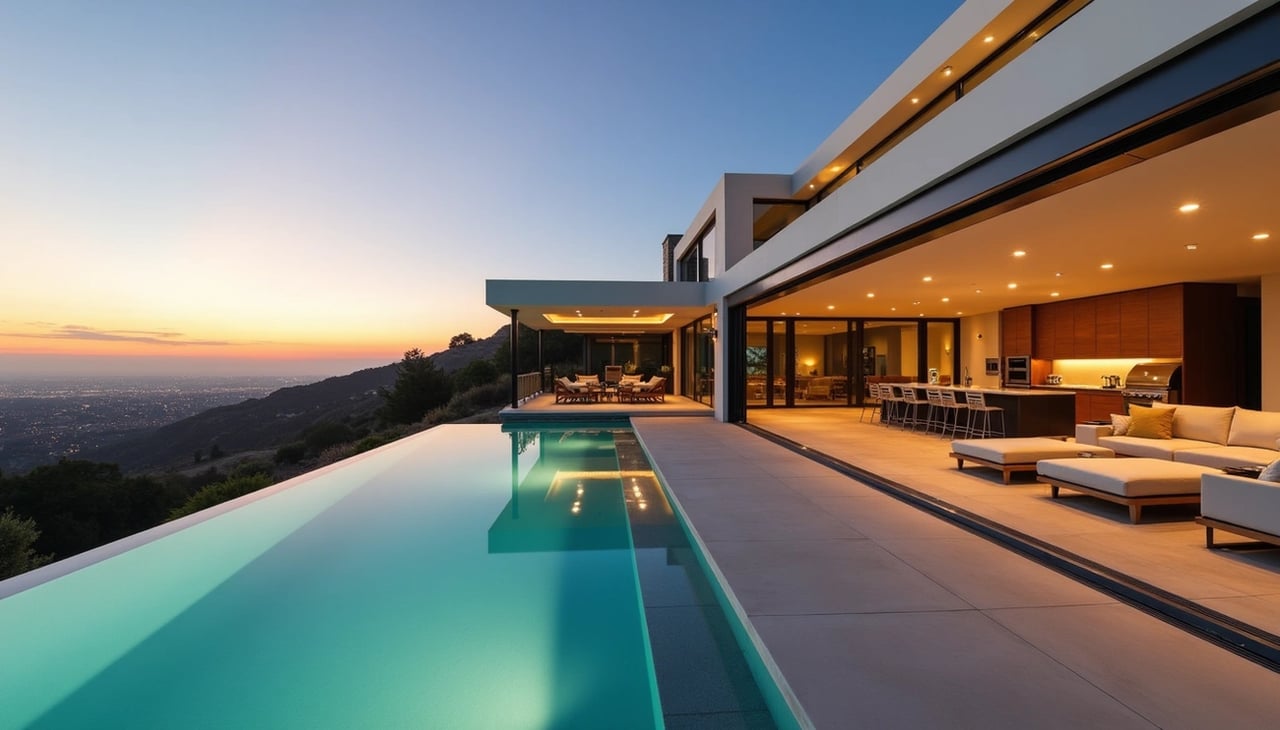
Infinity pools function as architectural centerpieces that orient entire properties toward views. Shawn Elliot, president of the ultra-luxury division at Nest Seekers International, notes that infinity pools "give you a feeling of endlessness and are a place for your mind to wander". These pools act as the axis for yard design and sightline planning. Negative-edge horizons create visual continuity between water surfaces and distant ocean or city views.
Luxury pool designs now serve multiple roles: training, lounging, and restoration. Sun shelves with in-water loungers create shallow conversation areas. Integrated spas extend seasonal usability. Properties in wealthy Los Angeles neighborhoods proportion pools to architectural lines and home sightlines. They prioritize stone coping, porcelain pavers, and subdued waterline finishes over novelty treatments.
Chef-Grade Outdoor Kitchens Beyond Simple Grilling
Outdoor kitchens have evolved into culinary suites with dedicated prep, cooking, bartending, and cleanup zones. Demand for outdoor living spaces has risen 50% since 2020. Outdoor kitchens remain a sought-after upgrade. These installations now include pizza ovens, wine refrigerators, sinks, and extensive food preparation areas that transform patios into equipped culinary hubs.
Weatherproof cabinetry constructed from 304-grade stainless steel provides durability in coastal and hillside environments. Powder-coated finishes carry five-year limited warranties, while cabinet boxes receive lifetime coverage. Drawers feature double-wall construction with full-extension under-mount glides and soft-close technology. The right home makes all the difference for those who love to entertain. If you're thinking about a purchase in the near future or beginning your search, I'd be delighted to help you find spaces designed for elevated living and effortless hosting. Christina Pope  310-404-9931
  [email protected]
Wellness Zones with Saunas and Cold Plunge Integration
Wellness features have transitioned from day-spa novelty to daily ritual infrastructure in affluent Los Angeles neighborhoods. Saunas, cold plunges, outdoor showers, and yoga platforms integrate as serene, private moments within broader landscape plans. Cold plunges position near pools, covered terraces, or wellness hallways to make thermal contrast cycles easier.
Designers choreograph wellness zones around privacy, sunlight angles, and adjacency considerations. They use screening plantings and water sound to create restorative atmospheres. Materials with natural texture—stone, wood, and plant massings—support calmer experiences. These features change how properties function and transform yards from entertainment venues into daily wellness environments.
Fire Features and All-Weather Entertaining Areas
Fire features in 2026 emphasize clean lines and architectural integration rather than rugged esthetics. Gas fire pits lead this shift because they ignite quickly, maintain consistent output, and install safely on both decks and patios. Low-profile fire bowls with smooth concrete finishes mirror luxury hotel courtyards.
Modern patios incorporate fire pits, fireplaces, and infrared heaters with soft lighting to create year-round comfort. Fire remains a magnetic focal point that draws conversation and fosters relaxation beyond summer months. Strategic placement near outdoor kitchens creates smooth entertainment zones where ambient flame lighting improves food presentation.
Smart Technology and Automated Lighting Systems
App-based control over lighting, audio, irrigation, and shading represents baseline expectations rather than premium features. Smart systems allow homeowners to control outdoor environments from smartphones. Automated pergolas respond to sunlight and furniture incorporates built-in charging stations. The emphasis shifts toward simplicity and reliability over complexity.
Specified systems disappear into architecture through in-grade fixtures for circulation safety, dimmable layers for mood adjustment, and weather-adaptive automation. Technology serves moments without dominating them. Outdoor lighting systems offer remote control, automation, and adaptive responses to environmental changes while contributing to energy conservation.
Market Value Impact of Indoor Outdoor Living Investments
Luxury real estate in the most affluent neighborhoods in Los Angeles operates through private networks where discretion matters as much as valuation. Properties trading hands within trusted circles generate public listings in rare cases, yet these transactions establish pricing measures that shape broader market expectations. Christina Pope—Sotheby's International Realty, EliteResidenceInternational.com guides these relationships where timing and strategic positioning determine outcomes.
Price Per Square Foot Valuations for Outdoor Space
Outdoor space commands 25 to 50 percent of interior space value in urban luxury markets. A 500-square-foot terrace can add $375,000 to $750,000 to properties priced at $1,500 per interior square foot. Well-laid-out outdoor spaces increase home value by 10 to 15 percent on average. Outdoor living expands usable square footage in areas where space carries premium pricing.
ROI on Specific Outdoor Improvements
Retractable glass walls deliver 60 to 80 percent ROI, whereas outdoor kitchens yield 100 to 200 percent returns in high-end markets. Patios increase home value by 8 to 12 percent, with new installations recovering up to 95 percent of costs. Fire features return 60 to 70 percent. Pools add 56 percent plus accelerated sale timelines.
What Affluent Neighborhoods in Los Angeles Buyers Prioritize
Around 23 percent of consumers rank outdoor spaces as their most desired feature, with 89 percent of builders reporting buyers link outdoor living to health. Sixty percent of homeowners plan outdoor investments in 2026. The right home makes all the difference for those who love to entertain. If you're thinking about a purchase in the near future or beginning your search, I'd be delighted to help you find spaces designed for refined living and effortless hosting. Christina Pope 310-404-9931 [email protected]
Neighborhood-Specific Approaches to Indoor Outdoor Living Design
Geographic positioning shapes how indoor outdoor living translates into daily practice in the most affluent neighborhoods of Los Angeles. Each area develops distinct design languages rooted in topography, view orientation, and cultural expectations that define local luxury standards. Christina Pope—Sotheby's International Realty, EliteResidenceInternational.com understands these nuanced priorities that distinguish one neighborhood's approach from another.
Pacific Palisades: Coastal-Influenced Open-Air Spaces
Living rooms and kitchens open to patios through large sliding, folding, or pocket glass doors. Alfresco dining becomes part of normal routine. Terraced yards replace single lawns in canyon settings and create private pathway systems with built-in BBQs, outdoor kitchens, pools, and spas on single-family lots. Drought-tolerant plants, drip irrigation, and smart controllers maintain water-efficient landscapes under California's Model Water Efficient Landscape Ordinance.
Beverly Hills: Polished Entertaining Zones with Urban Access
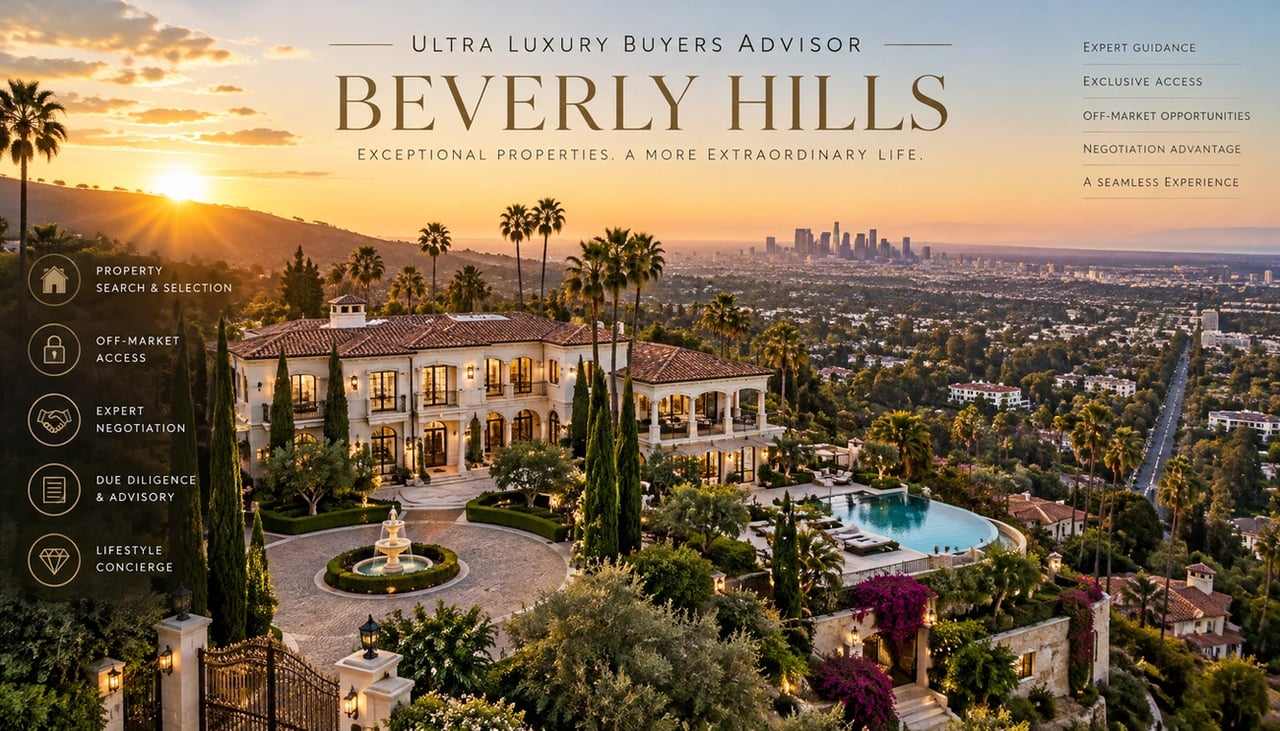
Beverly Hills properties feature Mediterranean and French-style mansions with complex facades, lush gardens, and long driveways that establish luxury credentials. Outdoor entertaining infrastructure has wine cellars, wet bars, and resort-like pools designed for large-scale gatherings. Floor-to-ceiling windows frame city and ocean views from properties in Trousdale Estates and hillside locations.
Bel Air: Estate-Scale Privacy Through Terrain
Cantilevered architecture floats above hills and offers Downtown Los Angeles and ocean views from gated, tree-lined hillside estates. Retractable glass walls dissolve boundaries throughout homes and open to multi-level terraces for entertainment and relaxation. Wellness levels have fitness suites, steam rooms, saunas, and 73-foot swimming pools in indoor-outdoor configurations. Recent estates feature automated glass doors spanning 18,240 square feet, three professional-grade kitchens, Turkish hammams, and private hillside vineyards.
Hollywood Hills: Hillside Integration and Panoramic Views
Multi-level homes integrate into terrain to capture city and canyon views through large glass walls, cantilevered balconies, and tiered patios. Properties feature infinity-edge pools, fire pits, hammock chairs, and panoramic mountain perspectives. Expansive glass walls and smooth indoor-outdoor flow support flexible staging in open-concept living spaces.
Conclusion
Luxury real estate in Los Angeles operates through private conversations and trusted relationships rather than public listings. The most important indoor-outdoor living transformations happen within these discrete circles. Architectural precision and timing matter more than market visibility. Properties that integrate smooth transitions between interior and exterior spaces command premiums in 2026. Outdoor square footage delivers returns in affluent neighborhoods. Geographic advantages and climate stability have made indoor-outdoor living a necessity. Evolving buyer expectations reinforce this trend. Christina Pope—Sotheby's International Realty, EliteResidenceInternational.com guides this specialized market where access and discretion determine outcomes.
Key Takeaways
Wealthy Los Angeles neighborhoods are transforming luxury living through strategic indoor-outdoor integration that delivers measurable returns and year-round functionality.
• Outdoor space commands 25-50% of interior value - Well-designed terraces can add $375K-$750K to luxury properties • Retractable glass walls deliver 60-80% ROI while outdoor kitchens yield 100-200% returns in high-end markets • Mediterranean climate enables year-round use - eliminating seasonal limitations that constrain outdoor investments elsewhere • Disappearing glass systems are essential - folding walls create 90% clear openings versus 50% with traditional sliders • Neighborhood geography shapes design priorities - coastal proximity, hillside privacy, and view orientation drive specific approaches
The shift from optional amenity to essential infrastructure reflects changing buyer expectations where outdoor functionality receives the same scrutiny as interior finishes. Properties lacking seamless indoor-outdoor integration face valuation penalties in Los Angeles' most affluent neighborhoods.
FAQs
Q1. Is 2026 a favorable time to invest in Los Angeles luxury real estate? The Los Angeles luxury market in 2026 shows genuine rebalancing with projected home sales reaching 274,400 units, representing a 2% increase from the previous year. Median prices are expected to hit a record $905,000, indicating continued strength in high-end neighborhoods where indoor-outdoor living features command premium valuations.
Q2. Which Los Angeles neighborhoods attract the wealthiest buyers? The most affluent neighborhoods in Los Angeles include Beverly Park, Beverly Hills, Bel Air, Holmby Hills, and Hidden Hills. These areas feature properties with sophisticated indoor-outdoor living designs, estate-scale privacy, and premium amenities that define luxury living standards in Southern California.
Q3. What return on investment can homeowners expect from outdoor living improvements? Outdoor living investments deliver substantial returns in luxury markets. Retractable glass walls provide 60-80% ROI, while outdoor kitchens yield 100-200% returns. Well-designed outdoor spaces can increase overall home value by 10-15%, with outdoor square footage commanding 25-50% of interior space value.
Q4. How does Los Angeles' climate support year-round outdoor living? Los Angeles operates under a Mediterranean climate with hot, dry summers and mild, wet winters, enabling outdoor space functionality throughout the year. This climatic stability eliminates seasonal limitations found in other luxury markets, allowing homeowners to justify substantial outdoor amenity investments that generate continuous returns.
Q5. What outdoor amenities do luxury buyers prioritize in 2026? Wealthy buyers expect infinity pools with view-oriented placement, chef-grade outdoor kitchens with full culinary suites, wellness zones featuring saunas and cold plunges, architectural fire features, and smart technology systems with automated lighting. These amenities have transitioned from optional upgrades to essential features in high-end properties.