Essential Considerations for Bel Air Pool Investments
Bel Air's infinity pool market operates on different principles than standard residential installations. Buyers encounter costs exceeding $300,000 for properly engineered systems, far above the $80,000 to $150,000 typical elsewhere. This premium reflects complex catch basin requirements and hillside engineering that Bel Air's terrain demands.
Property values benefit substantially when these pools achieve architectural excellence. Well-executed installations add 5-15% to estate values and command 54% price premiums, though success depends entirely on panoramic view integration and superior finishes. The investment fails when buyers overlook maintenance realities - faster evaporation, higher energy consumption, and dual circulation systems that require professional expertise rather than standard pool service.
Timing and representation matter considerably for resale success. Late winter and early spring attract the most qualified buyers, while specialized luxury brokers who access private networks deliver better results than public marketing approaches. Buyers who prioritize view quality, architectural integration, and privacy considerations over pool dimensions make superior purchasing decisions, as these elements determine whether the feature enhances or diminishes the estate's appeal.
Success requires viewing these installations as architectural statements rather than swimming amenities. Execution quality and market positioning determine whether the substantial investment delivers proportional returns in Bel Air's discerning luxury market.
The Bel Air Pool Investment Reality
Standard infinity edge pools cost between $80,000 to $150,000, yet Bel Air buyers routinely encounter figures exceeding $300,000. The question discerning estate purchasers face isn't simply cost, but whether these architectural features justify their premium in this specific market. Luxury inground pools can raise property values by 5% to 15%, though infinity installations run 30-50% higher than regular pool designs.
Estate purchasers must examine construction realities, maintenance obligations, and buyer expectations that differ significantly from standard residential markets. This analysis explores what Bel Air purchasers should evaluate before acquiring pool properties, how sellers maximize their investment value, and when these features enhance rather than diminish estate worth.
Infinity edge pool cost in Bel Air: What you'll actually pay
Construction complexity separates Bel Air infinity pools from standard installations found elsewhere. The vanishing edge wall and catch basin alone add $15,000 to $30,000 depending on length and site conditions. Homeowners planning these features should expect total project costs that reflect this specialized engineering, not conventional pool pricing models.
Base construction costs for luxury estates
Concrete infinity pools in this market range from $100,000 to $130,000 for the primary structure, while fiberglass options fall between $90,000 and $110,000. These figures represent shell construction before site preparation, finishes, or equipment upgrades. The structural requirements differ substantially from conventional designs. Reinforced walls handle continuous water flow, demanding precision calculations that prevent long-term failures. Labor expenses constitute 25% to 50% of total costs, reflecting the skilled professionals required for proper installation.
The catch basin system: Bel Air's hidden expense driver
The catch basin functions as the engineering core that creates the vanishing effect. Building this secondary containment structure costs $25,000 to $35,000 regardless of terrain advantages. The system requires a secondary pump setup priced at $3,000 to $5,000 for pump, plumbing, and auto-leveling controls. Additional structural engineering for retaining and weir wall design adds $2,000 to $5,000. Automated cleaning systems for the catch basin represent another expense frequently overlooked during initial planning, though debris naturally collects in this component as surface water flows over the edge.
Site-specific factors that increase costs
Bel Air's hillside topography creates variables that alter project budgets significantly. Rocky or clay-heavy soil increases excavation costs by 20% to 40%. Expansive clay soil demands additional engineering to prevent shifting that could compromise the pool shell and weir wall integrity. Geotechnical surveys costing $1,500 to $3,000 identify these conditions before construction begins. Slope reinforcement and retaining structures add thousands more on properties requiring artificial grade modification or enhanced structural support.
Premium finishes and materials expected in this market
Glass tile or natural stone facing on overflow walls ranges from $3,000 to $10,000. The choice between vinyl liners and glass mosaic finishes represents a cost multiple of three or four on identical structures. High-end installations incorporate materials matching estate architecture rather than standard plaster applications. These selections reflect buyer expectations in luxury markets where finishes signal quality and attention to detail.
Pool Value Impact in Bel Air's Estate Market
Architectural pools deliver solid returns in Bel Air's estate market, though the relationship between investment and appreciation hinges on execution quality and buyer preferences. The value equation goes beyond simple calculations, as transaction patterns across comparable luxury properties demonstrate.
Estate Valuation Impact of Infinity Pools
Infinity pools boost property values by 5% to 15% in luxury markets where architectural excellence sets listings apart. These features serve as baseline expectations rather than optional upgrades. Estates without pools encounter marketability hurdles, as affluent buyers view incomplete outdoor programs as significant drawbacks. Architectural integration determines value contribution more than pool presence alone. Seamless designs featuring imported tile, marble, and custom stone finishes command premium positioning.
Investment Returns: Infinity vs. Traditional Pool Costs
Infinity pools require 25% to 50% more investment than traditional designs of identical dimensions[151]. This premium reflects engineering complexity and specialized labor needs. Quality infinity installations return 40% to 60% of construction costs in immediate property value increases. The National Association of Realtors documents 56% average return on investment for luxury inground pools. Affluent markets where pools represent expected amenities see properly permitted installations recoup 50% to 70% of construction expenses at resale.
Current Market Premiums for Pool Properties
Pool properties command a 54% price premium as of April 2025, with median values reaching $247 per square foot compared to $204 for estates without pools. Properties featuring infinity edges with panoramic views generate higher premiums, as the pool becomes the defining architectural statement that differentiates the estate from comparable listings.
When Infinity Pools Decrease Property Appeal
Maintenance demands deter certain buyer segments, particularly those reluctant to manage complex catch basin systems long-term. Pools that consume excessive yard space on smaller lots reduce perceived usable outdoor area, converting the feature from asset to liability.
Buyer Priorities: What Sophisticated Purchasers Examine
Discerning buyers approach infinity pool estates with specific criteria that separate exceptional properties from merely expensive ones. These purchasers understand that execution quality determines whether the feature enhances their lifestyle or becomes a burden.
View Quality and Property Position
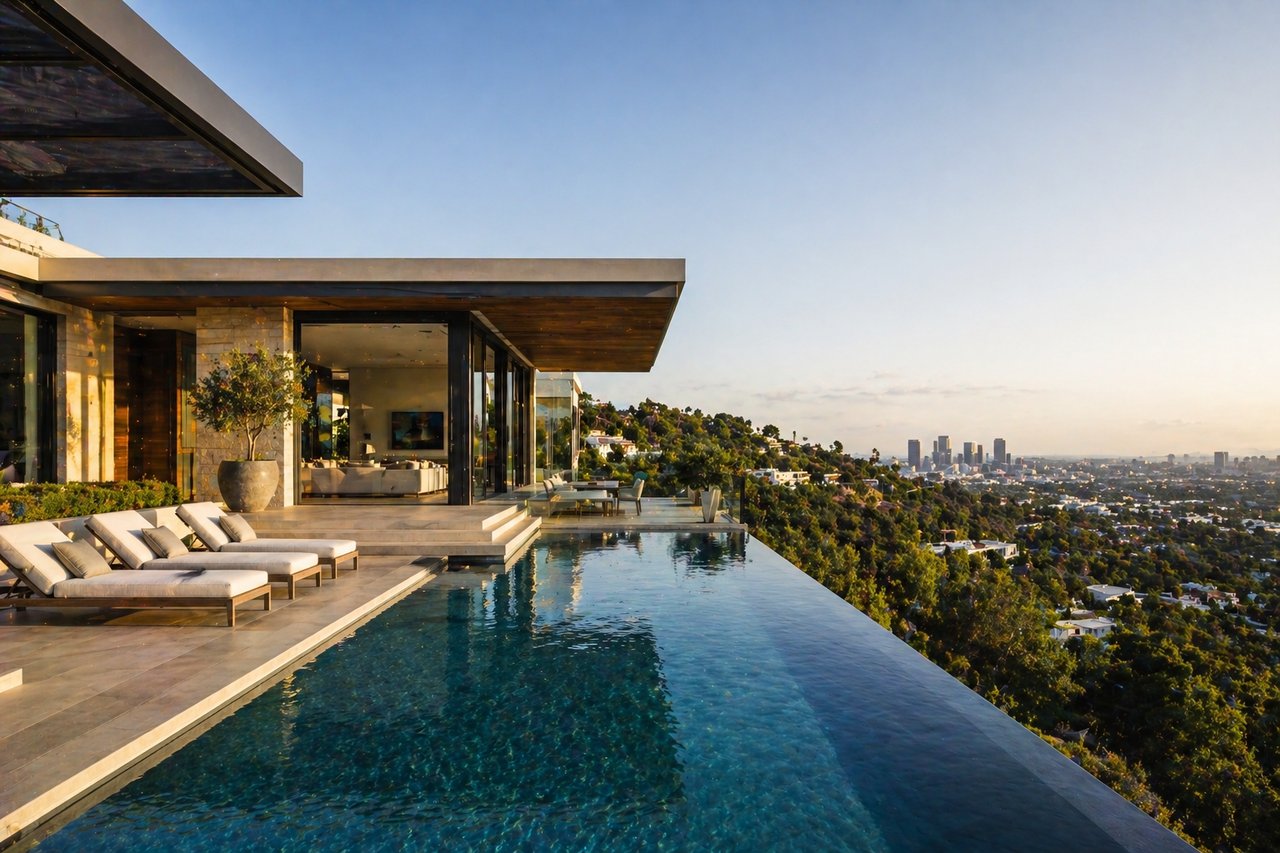
The sunset orientation matters more than pool dimensions or tile selection. Smart buyers recognize that golden hour reflections create the visual drama that justifies the investment. The surrounding landscape must enhance the infinity effect rather than compete with it. Properties where power lines, neighboring structures, or inappropriate plantings interrupt sightlines fail to deliver the intended experience. Buyers look for vanishing edges that face natural vistas—rolling hills, mature trees, or open sky—that extend the pool's visual reach.
Ongoing Costs and Service Requirements
Water evaporation occurs faster with continuous overflow systems, creating higher utility bills that some buyers find surprising. The dual pump system works harder than traditional pools, raising monthly energy expenses substantially. Heated infinity pools compound these costs since moving water loses heat faster than still surfaces. Chemical usage increases because evaporation concentrates minerals, requiring more frequent adjustments. Professional maintenance becomes necessary rather than optional, as catch basin cleaning and dual circulation systems demand specialized knowledge.
Architectural Harmony with the Estate
Exceptional installations feel integral to the property's design rather than added later. Materials and finishes should echo the home's architectural language—natural stone with contemporary estates, classic tile with traditional styles. The pool must anchor the outdoor living area, creating seamless flow between interior and exterior spaces.
Privacy and Site Configuration
Balancing panoramic views with personal seclusion challenges hillside properties. Effective privacy solutions serve multiple purposes—blocking wind, reducing noise, and screening neighboring properties while preserving the infinity effect. Site configuration determines whether landscaping and screening can be incorporated without compromising the visual continuity that makes these pools worthwhile.
Strategic positioning: How sellers maximize pool-related value
Luxury real estate in Los Angeles operates through private conversations, timing, and access rather than public headlines. The most significant transactions unfold quietly within trusted circles, where discretion carries as much weight as infinity edge pool cost considerations. For those who understand this world, visibility remains secondary to precision.
Timing the market for pool properties
Late winter and early spring attract luxury buyers receiving year-end bonuses from finance and tech sectors. Fall brings serious purchasers refocusing after summer travel, often seeking to close before fiscal year-end. Pool properties with exceptional outdoor features perform strongest during these windows when seasonal advantages align with buyer behavior patterns.
Documentation that increases buyer confidence
Professional pool inspection certifications and maintenance records demonstrate operational integrity. Sellers providing detailed construction documentation, engineering specifications, and permit histories reduce buyer hesitation during due diligence periods. Comprehensive records signal quality stewardship that justifies premium positioning.
Working with specialized luxury brokers
Elite agents maintain vetted broker-to-broker networks more powerful than MLS exposure. These professionals access high-net-worth clients through family offices and wealth manager relationships. Their personal credibility directly impacts perceived value, as luxury transactions depend on storytelling ability and exclusive property access.
Off-market opportunities in Bel Air
Private exclusives offer privacy, controlled showings, and protection from public price scrutiny. Targeted outreach through established luxury networks surfaces qualified buyers without prolonged exposure. Confidentiality agreements and pre-qualification requirements filter serious prospects, creating exclusivity that can justify premium pricing.
Conclusion
Infinity pools in Bel Air represent substantial investments, with costs exceeding $300,000 for premium installations. These features deliver measurable returns when properly executed, typically adding 5% to 15% to estate values. Indeed, the decision extends beyond construction expenses to encompass maintenance obligations, architectural integration, and market positioning. Buyers evaluating pool properties should examine view quality, ongoing costs, and privacy considerations. Sellers maximize value through strategic timing, comprehensive documentation, and partnerships with specialized brokers who navigate luxury transactions with discretion and precision.
FAQs
Q1. How much does an infinity edge add to the total pool cost? An infinity edge typically adds $20,000 to $50,000 to a standard in-ground pool, bringing the total cost to $80,000-$150,000 for basic installations. In luxury markets like Bel Air, costs frequently exceed $300,000 due to complex engineering requirements, premium finishes, and challenging hillside terrain that demands specialized construction techniques.
Q2. Do infinity pools actually increase property value? Yes, infinity pools can increase property values by 5% to 15% in luxury markets where they're considered premium features. Well-designed infinity installations typically return 40% to 60% of construction costs in immediate property value increases. In warm-climate luxury markets, these pools are often expected amenities that make properties more appealing to high-end buyers.
Q3. Are infinity pools more expensive to maintain than regular pools? Yes, infinity pools require significantly higher maintenance costs. Water evaporation occurs faster due to continuous overflow, increasing refill frequency and water bills. Energy consumption rises as pumps work harder to maintain flow over the edge, and chemical usage increases correspondingly. The dual circulation system and catch basin require professional pool service rather than standard maintenance.
Q4. What makes infinity pools on slopes so expensive to build? Sloped terrain requires extensive excavation, often down to bedrock, followed by filling with compacted gravel to create a stable foundation. The catch basin system alone costs $25,000-$35,000, and hillside properties may need additional retaining structures, geotechnical surveys ($1,500-$3,000), and specialized engineering. Rocky or clay-heavy soil can increase excavation costs by 20% to 40%.
Q5. When do infinity pools hurt rather than help resale value? Infinity pools can decrease property appeal when they consume disproportionate yard space on smaller lots, reducing usable outdoor area. They may also deter buyers unwilling to manage complex maintenance requirements or those concerned about ongoing costs. Properties where the pool lacks proper architectural integration or doesn't capture quality views may see diminished returns on the investment.