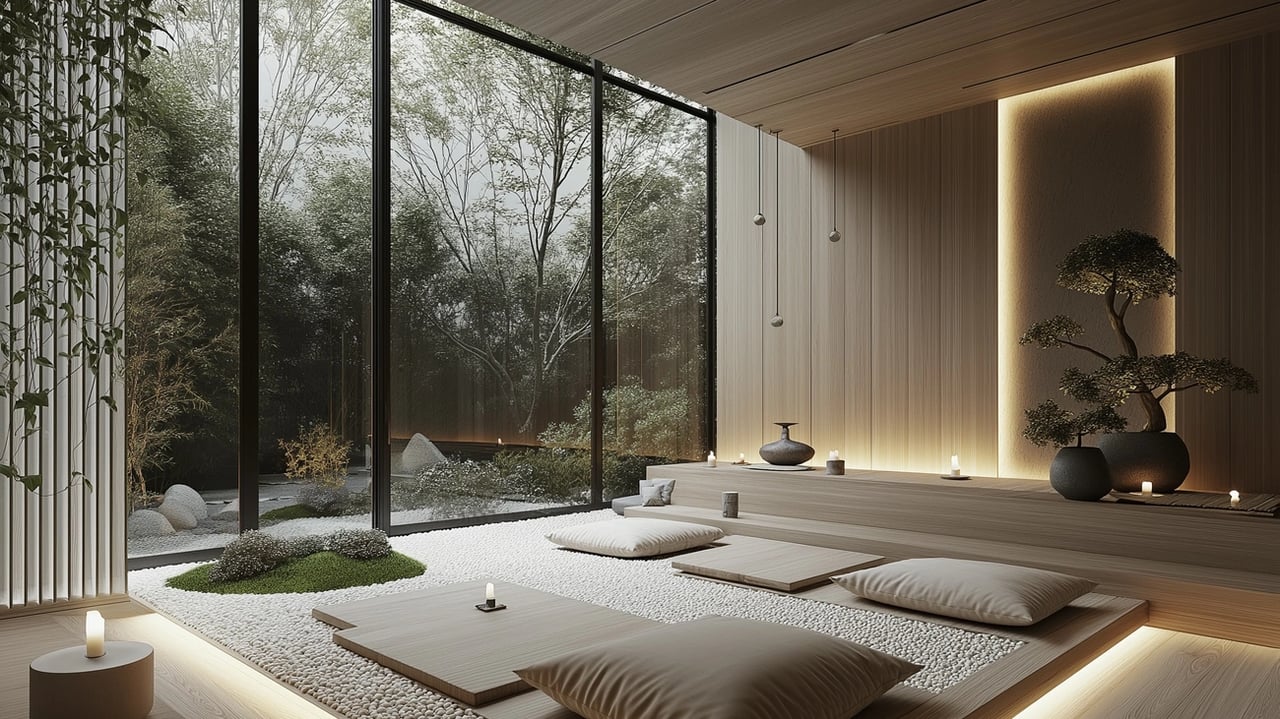
Wellness real estate delivers substantial price premiums across today's market. Properties designed around health and wellbeing consistently sell for 10-25% more than standard homes. Buyers from every market segment now prioritize these features above traditional amenities.
The numbers tell a compelling story. The global wellness industry reached $6.32 trillion in 2023—a 25% jump since 2019 that surpassed both sports and pharmaceutical industries combined. The wellness real estate segment alone hit $584 billion in 2024 and projects to double, reaching $1.1 trillion by 2029. This 20% annual growth over five years proves wellness features have shifted from nice-to-have luxuries to must-have necessities that directly boost property values.
Properties centered around wellness principles show resale values 10-25% higher than comparable homes. Commercial buildings with wellness certifications command rental premiums of 4.4-7.7% per square foot. The America at Home Study, which surveyed 6,000 consumers nationwide, confirms wellness has become the primary purchase driver for homebuyers.
Property owners, investors, and buyers who understand this shift position themselves ahead of a market that rewards health-focused living environments. The economic factors behind these premiums, the specific features driving higher values, evolving buyer expectations, and future development directions reveal why wellness real estate has become one of the most profitable sectors in today's property market.
The economic case for wellness real estate
"Wellness absolutely drives value" — Teri Slavik-Tsuyuki, Co-chair of the Global Wellness Institute's Wellness Communities and Real Estate Initiative and founder of the America At Home Study
Financial performance data reveals why wellness real estate attracts serious investors and homeowners. The numbers show substantial growth alongside superior returns compared to traditional properties.
Wellness real estate market growth 2019–2025
Market expansion has been remarkable. The sector doubled from $225.20 billion in 2019 to $584 billion in 2024, posting a 19.5% annual growth rate that outpaces global construction by nearly four times—construction grows at just 5.5% annually. Projections point to $1.10 trillion by 2029.
North America leads with 44% of global market share. The United States alone captures 41% of worldwide wellness real estate, with the US market hitting $181 billion in 2023. This dominance reflects American buyers' early adoption of health-focused living environments.
Price premiums and resale value
Buyers treat wellness features as essential rather than optional. This shift drives meaningful price advantages for properties built around health principles.
Market data consistently shows mid-to-upper tier wellness-focused homes selling for 10-25% above comparable standard properties. Florida's Babcock Ranch provides a clear example—this planned community centered on health, wellness, and sustainability achieves resale prices 12% higher than neighboring developments. These premiums demonstrate buyers' willingness to pay more for spaces that support their wellbeing.
Rental yield and investment potential
Commercial wellness properties deliver equally strong financial results. Office buildings with wellness certifications earn rental premiums of 4.4-7.7% per square foot. Major metropolitan markets like Washington D.C., Boston, and Phoenix can see premiums reaching 30% above average.
Higher rental rates represent just one advantage. Wellness properties maintain superior occupancy levels, secure longer lease terms, experience less tenant turnover, and achieve greater satisfaction scores. These benefits strengthen cash flow stability and asset values, improving critical investment metrics including ROI, NOI, and IRR.
Smart developers and investors recognize wellness real estate as more than a market trend. The sector offers proven financial advantages across multiple performance measures, making it a sound investment strategy with measurable returns.
Six key wellness features that increase home value

Image Source: Sotheby's International Realty
Specific wellness features create measurable increases in property values. Buyers recognize these elements as investments in their health and quality of life, not mere luxury additions.
1. High-end HVAC with air purifying system
Advanced HVAC systems equipped with air purification technology form the foundation of wellness-focused homes. These systems trap up to 95% of particles between 1.0 and 3.0 microns and inactivate 99% of select viruses and bacteria. Whole-house purification protects every room rather than limiting coverage to single spaces. Installation costs range from $1,000 to $3,000, yet buyers treat this investment as essential infrastructure. Market data shows 22% of buyers actively seek homes with whole-house, always-on air filtration.
2. Whole-house water filtration
Clean water throughout the home has become standard for discerning buyers. Whole-house filtration systems purify water at every tap and shower. Homeowners save approximately $500 annually by eliminating bottled water purchases, creating both financial returns and environmental benefits. These systems also extend the life of plumbing fixtures and appliances by preventing mineral damage. Real estate professionals note that water filtration systems justify higher asking prices and accelerate sales timelines.
3. Wellness rooms inside the house
Dedicated wellness spaces have evolved from temporary pandemic solutions to permanent home features. These rooms serve multiple purposes—home gyms, meditation retreats, music studios—providing private sanctuaries for self-care. Design elements include natural materials, adjustable lighting, and acoustic treatments. The most valuable wellness rooms integrate advanced air and water filtration to optimize the health benefits.
4. Natural materials and toxin-free finishes
Health-conscious homes feature materials that actively improve indoor environments. Clay plaster walls maintain humidity levels between 40-70% while naturally filtering ozone and airborne irritants. Cork flooring resists antimicrobial growth and mold, untreated wood finished with beeswax or natural oils avoids chemical off-gassing, and jute rugs prevent allergen accumulation. These materials deliver wellness benefits while adding warmth and organic texture to interior spaces.
5. Smart home tech for health monitoring
Health monitoring technology represents the cutting edge of residential wellness. Integrated sensors track sleep patterns, activity levels, and behavioral data throughout the home. Smart thermostats, programmable shower systems, and radiant floor heating now monitor both comfort and health metrics. Nearly half of adults use some form of smart home technology, with water management systems showing the strongest growth due to their mold prevention capabilities.
6. Outdoor spaces and community trails
Access to nature provides both health benefits and property value increases. Homes near quality parks command 8-20% higher values. Proximity to trails and green spaces reduces stress hormones, improves air quality, and strengthens community bonds. Developments with walking paths, gardens, and trail networks support residents' physical and mental wellbeing while maintaining superior property values over time.
Shifting buyer expectations in 2025
"the 'wellness premium' is real. Buildings with standout amenities, especially those that feel like a wellness retreat, tend to sell faster and command higher prices." — Kirsten, Wellness real estate expert (context implies industry professional)
Homebuyers today treat wellness features the same way previous generations viewed basic utilities—as non-negotiable necessities. The wellness real estate market has moved far beyond wealthy early adopters into everyday home searches across all price points.
What buyers want in wellness homes
The America at Home Study reveals wellness as the primary purchase motivator nationwide. Buyers consistently rank modern kitchens for healthy cooking (29%), energy efficiency (25%), clean water filtration systems (22%), and always-on air purification (22%) among their top requirements. Community features matter equally: access to nature for outdoor activities leads buyer wishlists at 54%, followed by walkability to casual eateries (49%) and trail networks (48%).
Trade-offs buyers are willing to make
Buyers now prioritize wellness over square footage in ways that would have seemed impossible just five years ago. Many gladly accept smaller homes or eliminate garages entirely to secure spaces that support their health and lifestyle goals. Real estate professionals see this shift daily: "I have clients who won't even look at a building unless it has a sauna, cold plunge or steam room...they're willing to sacrifice square footage to get it".
Generational trends and lifestyle alignment
Younger buyers fuel this market transformation with their wallets and preferences. Gen Z and millennials contribute over 41% of annual wellness spending despite representing only 36% of adults. Both generations prioritize sleep and health, though Gen Z ranks appearance improvement third while millennials focus on mindfulness. Developers already plan for Gen Alpha, who will expect homes that seamlessly integrate work, learning, and leisure spaces.
These generational differences create distinct market segments, each with specific wellness priorities that drive purchasing decisions and justify premium pricing across the wellness real estate spectrum.
The future of wellness real estate design
Wellness real estate has moved past luxury amenities to become fundamental infrastructure. Properties now shape how residents live, work, and connect with their communities. This shift mirrors society's broader move toward preventative health.
Wellness real estate trends 2025
Brain-friendly buildings lead current innovation, using neuro-architecture that boosts mental clarity and emotional resilience. AI-integrated wellness ecosystems take this further—imagine your house functioning as your wearable device. These smart environments learn resident patterns, monitor air quality and sleep cycles, then suggest personalized health improvements. Mixed-use developments position wellness as their core foundation, seamlessly integrating residential, commercial, and recreational spaces.
Climate-adaptive and sustainable homes
Extreme weather drives developers to create residences built for resilience. Climate-adaptive homes include self-shading terraces, energy-efficient glazing, insulated building envelopes, and UV-proof materials that regulate indoor temperatures. Forward-thinking developments like Dubai's Knightsbridge dedicate 70% of space to green areas, integrating solar panels, water conservation systems, and smart irrigation.
Co-living and affordable wellness models
The global co-living market hit $7.82 billion in 2024 and projects to reach $16.05 billion by 2030. Shared living models pool resources for community spaces, fitness facilities, and wellness amenities efficiently. These arrangements deliver affordable luxury while building social connections—especially attractive to younger generations who value wellness experiences over material ownership.
Global wellness real estate expansion
North America holds 40% market share currently, while the Middle East and Africa region shows the fastest growth at 14.62% annually. Markets worldwide shift focus from amenities to infrastructure—wellness becomes standard rather than selling point. Developers adopt certification systems like WELL and Fitwel as institutional investors channel more capital toward health-driven assets.
Conclusion
Wellness real estate stands as the most significant housing market transformation of this decade. The sector has moved from luxury niche to essential standard, with properties designed for health and wellbeing now commanding premium prices across every market level.
This shift goes deeper than market statistics. Homebuyers have fundamentally redefined what makes a property valuable. They choose advanced air purification, whole-house water filtration, dedicated wellness spaces, and natural materials over traditional amenities. Many willingly accept smaller square footage or skip garage space to secure these health-focused features—a choice that would have seemed impossible just five years ago.
The market continues to evolve with brain-friendly architecture, AI-integrated wellness systems, and climate-adaptive designs. These innovations expand wellness real estate beyond current definitions while addressing growing concerns about health resilience and environmental sustainability.
North America leads this transformation, yet rapid expansion in other regions signals wellness real estate will become a global standard. Co-living models and innovative approaches make wellness-focused living accessible across different price points, ensuring this trend reaches beyond affluent buyers.
Property owners who recognize this fundamental shift position themselves at the forefront of a market that rewards spaces designed for human flourishing. Wellness real estate delivers a clear value proposition: homes that actively enhance occupants' health and wellbeing. This transformation has permanently altered buyer expectations and property valuations, creating opportunities for those who understand that the future of real estate centers on wellness.
Key Takeaways
The wellness real estate market has exploded from $225 billion in 2019 to $584 billion in 2024, with properties commanding 10-25% price premiums as health-conscious features become essential rather than luxury add-ons.
• Wellness drives significant value: Properties with wellness features achieve 10-25% higher resale values and rental premiums of 4.4-7.7% per square foot in commercial buildings.
• Six key features boost home values: High-end HVAC with air purification, whole-house water filtration, dedicated wellness rooms, natural materials, smart health monitoring, and outdoor spaces.
• Buyer priorities have shifted dramatically: 29% prioritize modern kitchens for healthy cooking, while many sacrifice square footage or garages for wellness amenities like saunas and air purification.
• Market growth is accelerating globally: The sector grows at 19.5% annually (4x faster than construction) and is projected to reach $1.1 trillion by 2029, expanding beyond luxury into mainstream markets.
• Future innovations focus on brain-friendly design: AI-integrated wellness ecosystems, climate-adaptive homes, and co-living models are making wellness features more accessible while maintaining premium valuations.
This transformation reflects a fundamental shift where homes are viewed as active contributors to health and wellbeing, justifying substantial price premiums across all market segments.
FAQs
Q1. How much higher are prices for wellness-focused real estate in 2025? Wellness-focused residential properties are commanding 10-25% higher prices than standard homes in 2025. This premium reflects the growing demand for homes designed with health and wellbeing features.
Q2. What are some key wellness features that increase home value? Some key wellness features that increase home value include high-end HVAC systems with air purification, whole-house water filtration, dedicated wellness rooms, natural materials and toxin-free finishes, smart home tech for health monitoring, and access to outdoor spaces and community trails.
Q3. How has the wellness real estate market grown in recent years? The wellness real estate market has experienced extraordinary growth, expanding from $225.20 billion in 2019 to $584 billion in 2024. It's projected to reach $1.10 trillion by 2029, growing at an annual rate of 19.5%, which is nearly four times faster than the overall global construction growth rate.
Q4. What are homebuyers prioritizing in wellness-focused properties? Homebuyers are prioritizing features such as modern kitchens for healthy cooking, energy efficiency, clean water filtration systems, and always-on air purification. At the community level, access to nature for outdoor activities, walkability to casual eateries, and trail networks are highly desired.
Q5. How is the future of wellness real estate design evolving? The future of wellness real estate design is evolving to include brain-friendly buildings incorporating neuro-architecture, AI-integrated wellness ecosystems, climate-adaptive and sustainable homes, and co-living models that offer affordable luxury with built-in social connections. There's also a growing focus on certification systems like WELL and Fitwel in development projects.