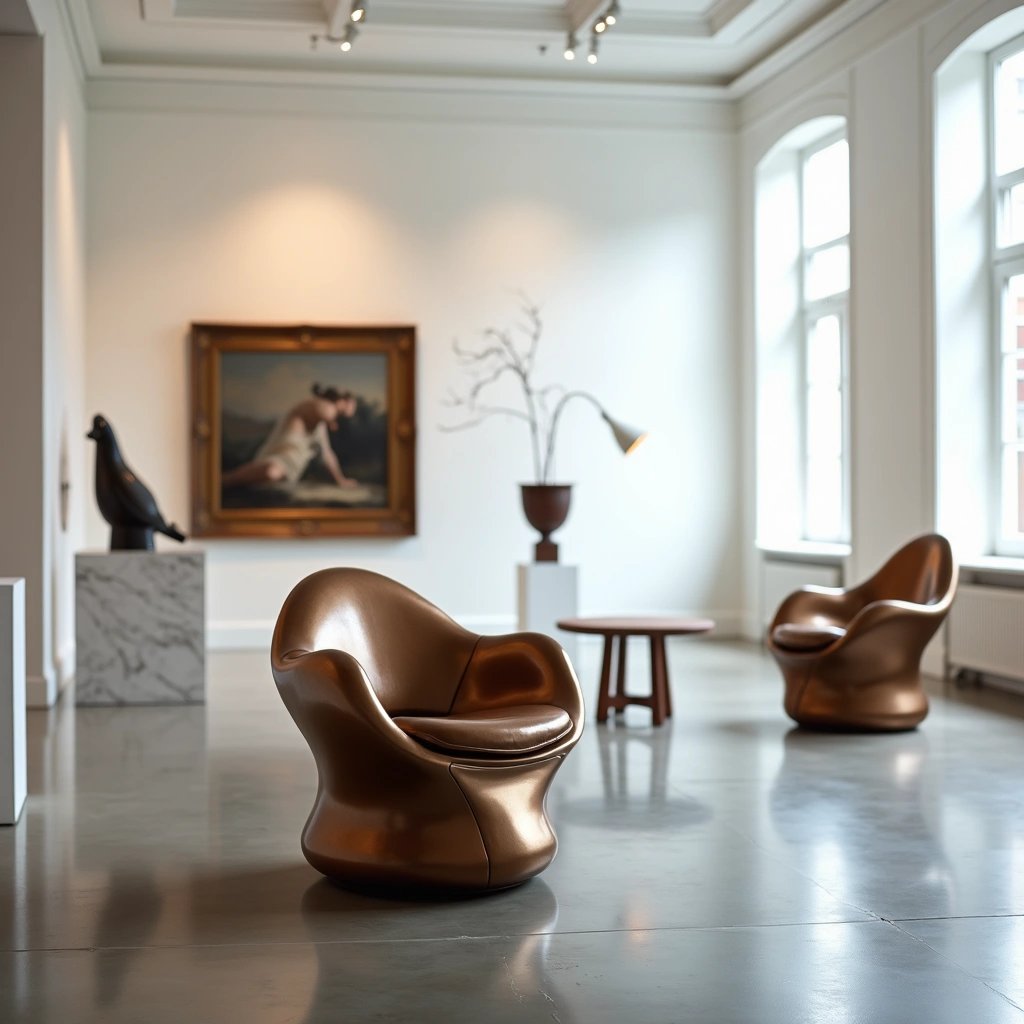
Design collecting has evolved, as evidenced by a bronze chair by Wendell Castle that sold for over half a million dollars. Limited-edition furniture now commands prices rivaling blue-chip paintings. Collectors view pieces like the Marc Newson Lockheed Lounge as cultural artifacts worthy of investment. Over the last several years, the world of high-end interiors has moved from trend-driven consumption to collecting with purpose. Traditional art is no longer the sole focus. Bespoke and limited-edition furniture emerges as a new frontier. This piece explores the investment case for original furniture and how to identify pieces worth collecting. It also examines strategies for building a portfolio where craftsmanship meets cultural legacy.
The Investment Case for Original Furniture Over Fine Art
"The returns of fine art have been significantly overestimated, and the risk, underestimated." — Arthur Korteweg, Former associate professor of finance at Stanford Graduate School of Business
The Investment Case for Original Furniture Over Fine Art
The antiques and collectibles market stood at USD 150.2 billion in 2025 and projects growth to USD 229.7 billion by 2035. This represents a 4.4% compound annual growth rate. Original furniture has showed appreciation patterns that challenge traditional art investment assumptions in this expanding sector.
A Jean Prouvé chair purchased for USD 30,000 in 2005 commanded USD 350,000 by 2023. Eames lounge chairs appreciated over 300% in the last decade. Art furniture overall experienced a 200% price increase across auction houses during the same period. These figures illustrate returns that match or exceed many fine art categories.
The furniture market operates on different principles than speculative art trading. Pieces add value within five to ten years rather than requiring decades of holding periods. Clients at auction houses now average purchases around €500,000. This positions design collecting alongside art markets in terms of transaction values.
The second-hand luxury goods sector will grow from USD 44.70 billion in 2023 to USD 98.30 billion by 2031 and includes authenticated furniture. Online furniture resale alone reached USD 34 billion in 2023, with projections hitting USD 56 billion by 2030. So this infrastructure supports liquidity that plagued alternative asset classes.
Limited production runs distinguish furniture investments from mass-produced decorative items. Works exist as signed editions of three to five pieces. This creates limited supply that drives appreciation independent of broader market movements.
Identifying Collectible Design Worth Investing In
"On trend means there’s a higher demand, which means there’s a higher perceived value (and actual price tag)." — Ellen LeComte, Owner of Amsterdam Modern
Three criteria separate collectible furniture from quality pieces: rarity, authorship, and intentionality. Most collectible works exist in editions of 8, 12, or 20. Each carries the signature of a named creator. Pieces add value within five to ten years when quality and provenance unite.
Auction houses that focus on 20th-century design see limited editions range from €20,000 to €300,000 on average. Rare historical classics can reach several million euros. Some of the rarest classic pieces have seen prices rise by 25 to 50 percent, and some 20th-century iconic works have doubled in value.
Italian manufacturer Cassina demonstrates this dynamic. Franco Albini designed the Veliero bookshelf in 1940 as a unique piece. Cassina reintroduced it in 2011, and it achieved collectible status with values in Asia from SGD 72,512. Gaetano Pesce's Sessantuna project produced 61 unique tables. Some now command market values of €30,000 to €40,000.
Authentication parallels fine art verification. Legitimate pieces carry numbered editions and artist signatures. Detailed provenance records accompany them. Certificates must specify materials, production methods, and edition size. Production techniques help identify counterfeits: hand-welded joints versus machine assembly, specific material treatments, or signature construction details unique to each designer's practice.
Building Your Furniture Investment Strategy
Successful furniture investment requires access to specialized channels where museum-quality pieces circulate. Online auctions have become primary sourcing venues, especially since the pandemic accelerated digital platforms. Platforms like 1stDibs and Chairish now feature over 1,050,575 vintage and pre-owned items. Chairish adds more than 1,000 new pieces daily. Auction houses specializing in 20th-century design, such as Phillips, John Moran, and Clars, handle works by celebrated designers including Hans Wegner, Finn Juhl, George Nakashima, and Gio Ponti.
Maximum bids should be set before auctions to prevent emotional overspending. Budget discussions should occur beforehand for acquisitions exceeding USD 10,000 to avoid surprises. Sourcing specific pieces often requires patience. Locating particular items can take years. Aggregator sites like LiveAuctioneers enable geographic sorting and help identify nearby auction houses carrying preferred styles.
Design fairs offer direct access to emerging makers and those with years of experience. The Salone Internazionale del Mobile in Milan, scheduled for April 13-18, 2027, presents prototypes and breakthroughs from global manufacturers. The International Contemporary Furniture Fair in New York attracts 38,000 attendees representing 9,000 companies. Participants plan to spend an average of USD 597,000 following the event. Collective Design and NYCxDesign draw over 170,000 visitors across hundreds of events.
Strategic acquisitions create environments where design collecting becomes part of daily experience. This works well when building collections that boost living spaces designed to entertain and host guests. Christina Pope can help find such spaces. Contact: 310-404-9931 or [email protected].
Conclusion
Design collecting offers investors tangible returns paired with everyday utility. Pieces appreciate while enhancing living spaces. This creates portfolios where cultural significance meets functional beauty. Smart collectors recognize that furniture investments outperform many traditional assets, especially when you have rarity and provenance. The right home makes all the difference for those who love to entertain. Spaces designed for high-quality living benefit from well-planned acquisitions. Contact Christina Pope at 310-404-9931 or [email protected] to find properties where design collecting becomes part of daily experience.
Key Takeaways
Design collecting has emerged as a compelling alternative to traditional fine art investment, offering both esthetic value and practical utility while demonstrating impressive appreciation rates.
• Original furniture delivers superior returns: Jean Prouvé chairs appreciated from $30,000 to $350,000 (2005-2023), while Eames lounges gained 300% in a decade—matching or exceeding many fine art categories.
• The collectibles market is booming: Antiques and collectibles will grow from $150.2 billion (2025) to $229.7 billion by 2035, with furniture resale alone projected to reach $56 billion by 2030.
• Rarity drives value: Investment-grade pieces exist in limited editions of 3-20, with authenticated works at major auction houses averaging €500,000 and rare classics reaching millions.
• Strategic sourcing is essential: Access specialized channels like Phillips auctions, 1stDibs, and design fairs (Milan's Salone, ICFF New York) where museum-quality pieces circulate and appreciation occurs within 5-10 years.
Unlike traditional art that hangs on walls, collectible furniture serves dual purposes appreciating in value while enhancing daily living spaces. This combination of investment potential and functional beauty makes design collecting particularly attractive to younger investors seeking usable assets with strong cultural relevance and liquidity.
FAQs
Q1. Is buying art a smart investment compared to traditional assets like stocks? Art generally isn't recommended as a primary investment vehicle unless you're purchasing high-value pieces. Traditional investments like stocks offer better liquidity, lower transaction costs, and more predictable returns. Art requires specialized knowledge, involves high selling commissions (often 50%), has limited liquidity, and appreciation is never guaranteed. Most experts suggest buying art you love first, with any potential appreciation being a bonus rather than the primary goal.
Q2. What price range should I consider if I want collectible furniture with investment potential? Investment-grade furniture typically starts around $10,000 to $30,000, with serious collectors focusing on pieces in the $20,000 to $300,000 range at specialized auction houses. Limited editions of 3-20 pieces from recognized designers show the strongest appreciation potential. Pieces under $1,000 rarely appreciate significantly, as the market for lower-priced items is saturated and lacks the scarcity that drives value growth.
Q3. How do I identify furniture pieces that will hold or increase in value? Look for three key factors: rarity (limited editions with numbered certificates), recognized designer authorship with documented provenance, and quality craftsmanship with authentic materials. Pieces should have gallery representation, appear at major design fairs, and show a clear price trajectory in auction records. Authentication is crucial—legitimate collectible furniture includes artist signatures, edition numbers, and detailed production documentation.
Q4. Where should I buy collectible furniture to ensure authenticity and value? Specialized auction houses like Phillips, John Moran, and Clars are primary sources for authenticated pieces. Online platforms such as 1stDibs and Chairish offer extensive inventories with daily additions. Major design fairs like Milan's Salone Internazionale del Mobile and New York's International Contemporary Furniture Fair provide access to emerging designers and established makers. Always verify provenance and request certificates of authenticity before purchasing.
Q5. How long does it typically take for collectible furniture to appreciate in value? Quality furniture pieces with proper provenance typically add value within 5 to 10 years, which is faster than many traditional art investments. Some iconic pieces have shown dramatic appreciation—for example, Jean Prouvé chairs increased from $30,000 to $350,000 between 2005 and 2023, while Eames lounge chairs appreciated over 300% in a decade. However, appreciation depends on designer recognition, rarity, and market demand at the time of resale.