The Rise of Private Rooftop Farming in Los Angeles Real Estate
"Rooftop farming is fast becoming an urban necessity." — Earth5R, Organization promoting urban rooftop agriculture
Luxury real estate in Los Angeles operates on principles that extend beyond market listings and public sales data. The most important property innovations often emerge within private circles, where discretion shapes decisions as much as square footage. Rooftop farming represents one such development and is quietly gaining traction among buyers who prioritize long-term value over immediate visibility.
Los Angeles County maintains over 750 farms across 69,224 acres. This establishes an agricultural foundation that high-end residential properties now build upon vertically. Urban rooftop farming converts previously unused space into functional assets and delivers measurable environmental returns. These installations absorb rainwater and prevent stormwater runoff. They provide habitat for insects and birds and cool air temperatures. Black roofs absorb heat during the day and radiate it at night. This makes cities hotter than rural areas, whereas rooftop farming lowers roof temperatures and surrounding air.
Green roofs increase property values while supporting biodiversity and filtering air pollution. The benefits extend to mitigating stormwater runoff and easing overflow. This addresses infrastructure concerns that affect property longevity. A food roof farm offers returns that compound over time rather than depreciate for buyers who understand that discretion and capability define modern luxury.
What Luxury Buyers Are Actually Building
"All we’re trying to do is get as good as the farmers were a hundred years ago." — Bob Sr., Founder of The Chef’s Garden
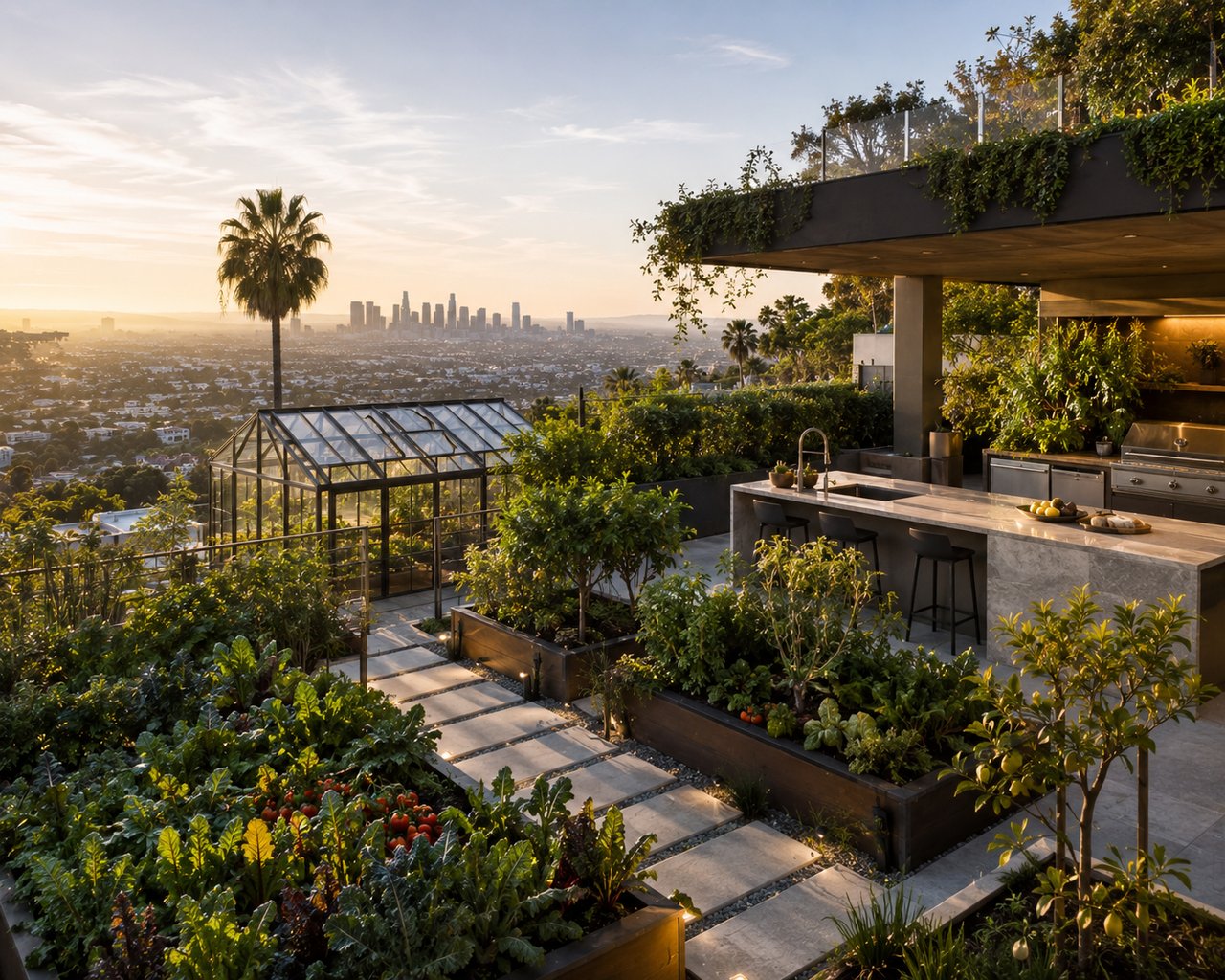
High-end installations center on edible gardens designed around heirloom varieties and seasonal harvesting patterns. The architecture and natural elements of each property shape these gardens, created for homeowners, developers, and award-winning chefs who require fresh ingredients steps from their kitchens. Farmscape has completed hundreds of edible garden projects. Costs range from $15,000 to $200,000 depending on complexity, drainage requirements, and structural engineering needs.
Chef's gardens prioritize accessibility through elevated wooden walkways that provide stable footing while reaching into beds. Dense blocks replace traditional rows in plant arrangement and allow faster harvesting of leafy greens like endive, arugula, and kale. Tall, see-through crops such as leeks line pathways and maximize space without blocking access to plants behind them.
Drip irrigation systems deliver water to root zones directly and reduce usage by up to 50% compared to conventional methods. Seasonal adjustments and professional monitoring prevent dry spots and overwatering in these systems.
Some buyers install container farms built inside shipping containers to meet larger production goals. One Oakland rooftop farm spans 40,120 square feet across multiple buildings and produces over 20,000 pounds of food annually. The installation cost approximately $32 per square foot.
Why This Investment Makes Sense for Discerning Buyers
Property value data from high-end neighborhoods reveals that rooftop gardens add 10-25% more value to luxury homes. This appreciation stems from the perception of reclaimed usable space and valuable amenity features that require modest expenditure. Properties featuring rooftop amenities command a USD 0.20 per square foot increase in unit rent prices. This translates to substantial annual revenue gains for investment-focused buyers.
A food roof farm delivers ongoing cost reductions beyond market positioning. Maintaining a culinary garden costs less than purchasing equivalent produce from markets and provides food security when supply chains face disruption. Southern California's climate supports year-round vegetable cultivation and allows continuous harvests in any season rather than periodic yields.
These installations offer educational value that extends beyond nutrition for families. Children who participate in gardening develop responsibility and teamwork. Outdoor spaces transform into living classrooms. Note that luxury properties retain value during economic downturns due to their affluent buyer base. This makes rooftop farming additions strategic for long-term holds.
The right home makes all the difference if you love to entertain. I'd be delighted to help you find spaces designed for raised living and effortless hosting if you're thinking about a purchase in the near future or beginning your search. Christina Pope  310-404-9931
  [email protected]
Conclusion
Rooftop farms and chef's gardens go beyond looks. These installations deliver measurable returns through property appreciation and year-round harvests that commercial markets cannot match. Buyers who prioritize capability over visibility will see such investments compound value rather than depreciate. The right home makes all the difference for those who love to entertain. Christina Pope would be delighted to help find spaces designed for sophisticated living and seamless hosting at 310-404-9931 or [email protected].
Key Takeaways
Luxury homebuyers in Los Angeles are transforming rooftops into productive food farms and chef's gardens, shifting from traditional amenities to functional, self-sufficient spaces that deliver measurable long-term value.
• Rooftop farms yield 3,600-6,000 pounds of produce annually while adding 10-25% to property values through functional amenities that reduce costs and enhance market positioning.
• Installation costs range from $15,000 to $200,000 depending on complexity, with drip irrigation systems reducing water usage by 50% compared to conventional methods.
• Southern California's year-round growing climate enables continuous harvests of restaurant-quality produce, providing food security and cost savings over purchasing from markets.
• Environmental benefits include stormwater management, air cooling, and biodiversity support, addressing infrastructure concerns while creating educational spaces for family engagement.
• Properties with rooftop amenities command $0.20 per square foot rent increases, making these installations particularly strategic for investment-focused buyers seeking long-term appreciation.
These installations represent a fundamental shift in luxury real estate priorities—from visible status symbols to capable, productive assets that compound value over time while offering privacy, control, and measurable returns.
FAQs
Q1. How much produce can a rooftop farm actually generate annually? A well-designed rooftop farming system can yield between 3,600 to 6,000 pounds of produce annually, depending on the size and complexity of the installation. This substantial output provides luxury homeowners with restaurant-quality ingredients year-round while reducing dependency on commercial markets.
Q2. What is the typical cost range for installing a chef's garden or rooftop farm? Installation costs for edible gardens and rooftop farms typically range from $15,000 to $200,000, depending on factors such as complexity, drainage requirements, structural engineering needs, and the sophistication of irrigation systems. Despite the initial investment, these installations often add 10-25% to property values.
Q3. How do rooftop farms impact property values in luxury real estate? Rooftop gardens and farming installations typically add 10-25% more value to luxury homes. Properties featuring rooftop amenities also command approximately $0.20 per square foot increase in unit rent prices, making them strategically valuable for both personal use and investment purposes.
Q4. Can you grow vegetables year-round in Southern California? Yes, Southern California's climate supports year-round vegetable cultivation, allowing continuous harvests across all seasons rather than periodic yields. This climate advantage enables luxury homeowners to maintain consistent access to fresh produce throughout the entire year.
Q5. How much water do rooftop farm irrigation systems save? Drip irrigation systems used in rooftop farms deliver water directly to plant root zones, reducing water usage by up to 50% compared to conventional watering methods. These systems require seasonal adjustments and professional monitoring to maintain optimal efficiency and prevent issues like dry spots or overwatering.