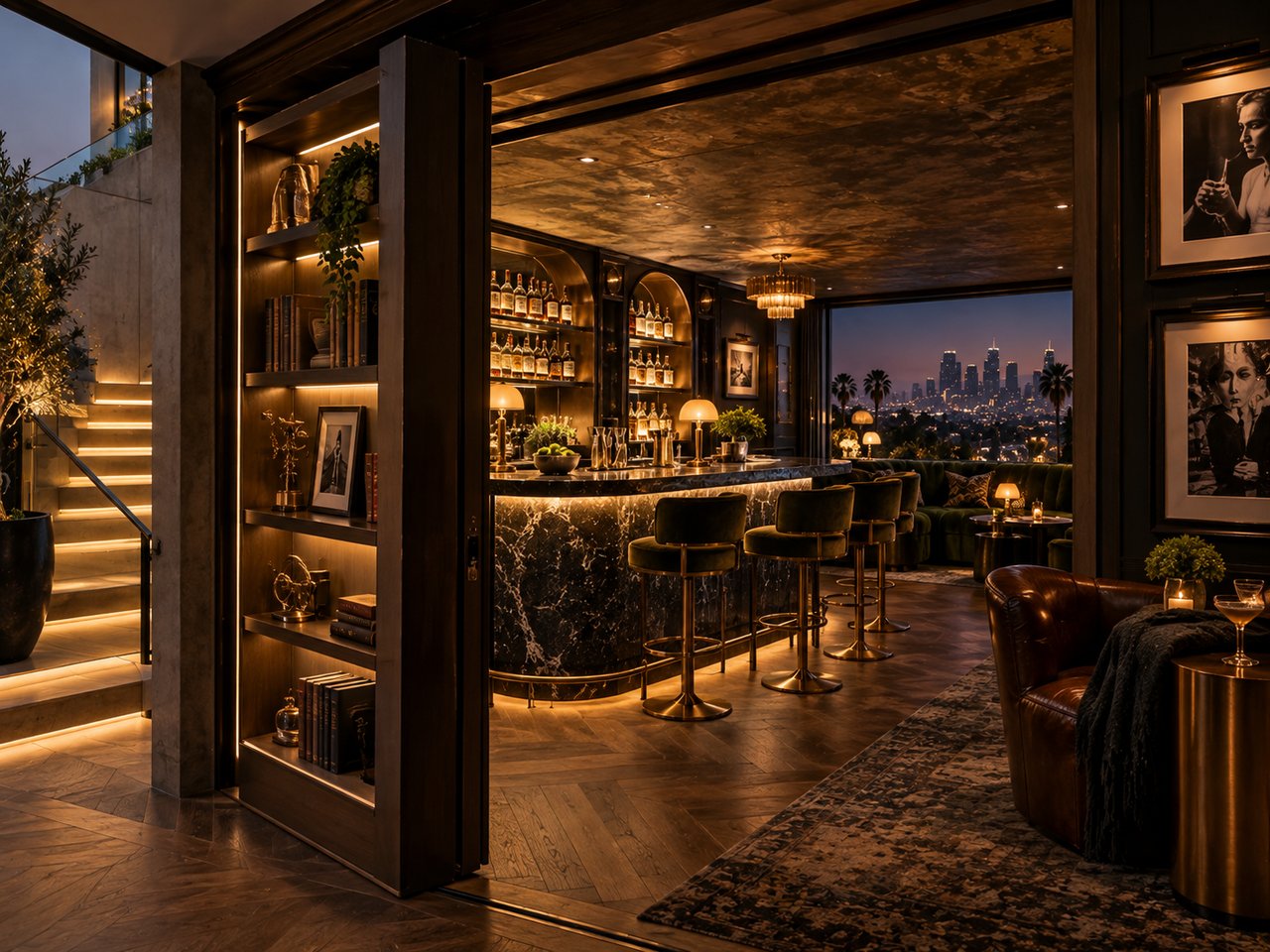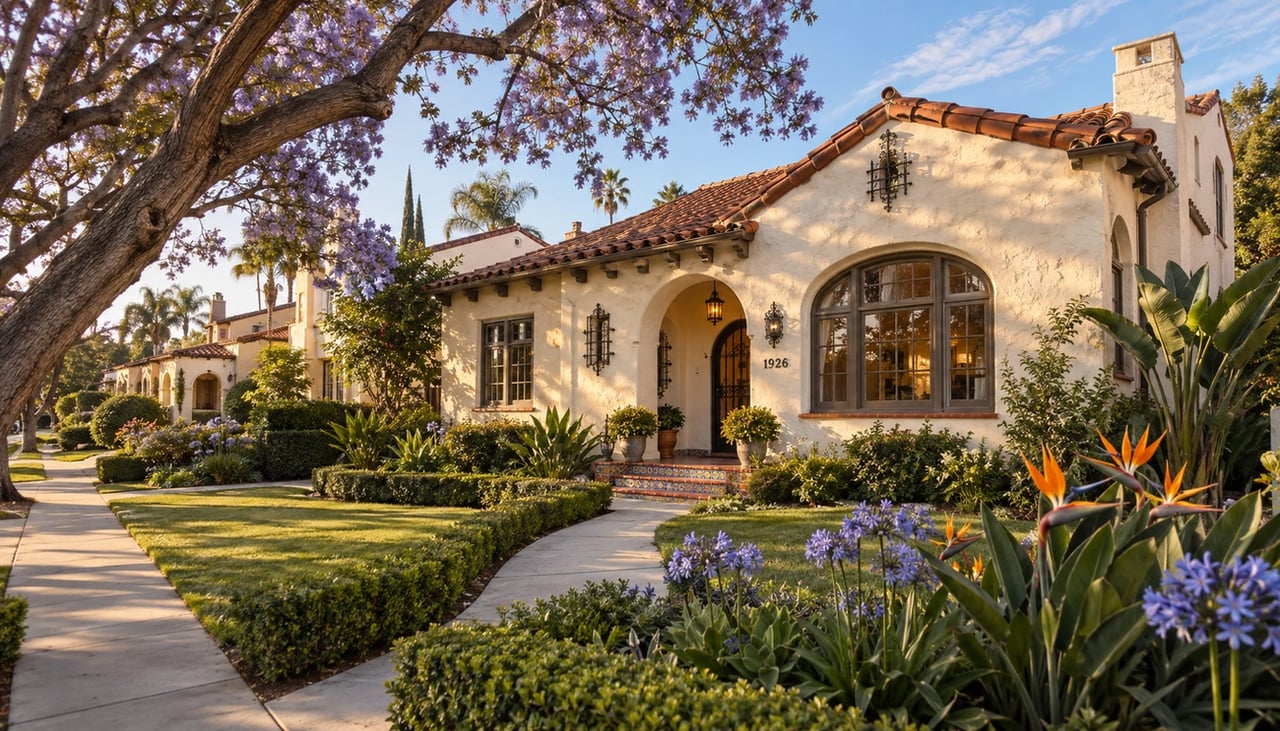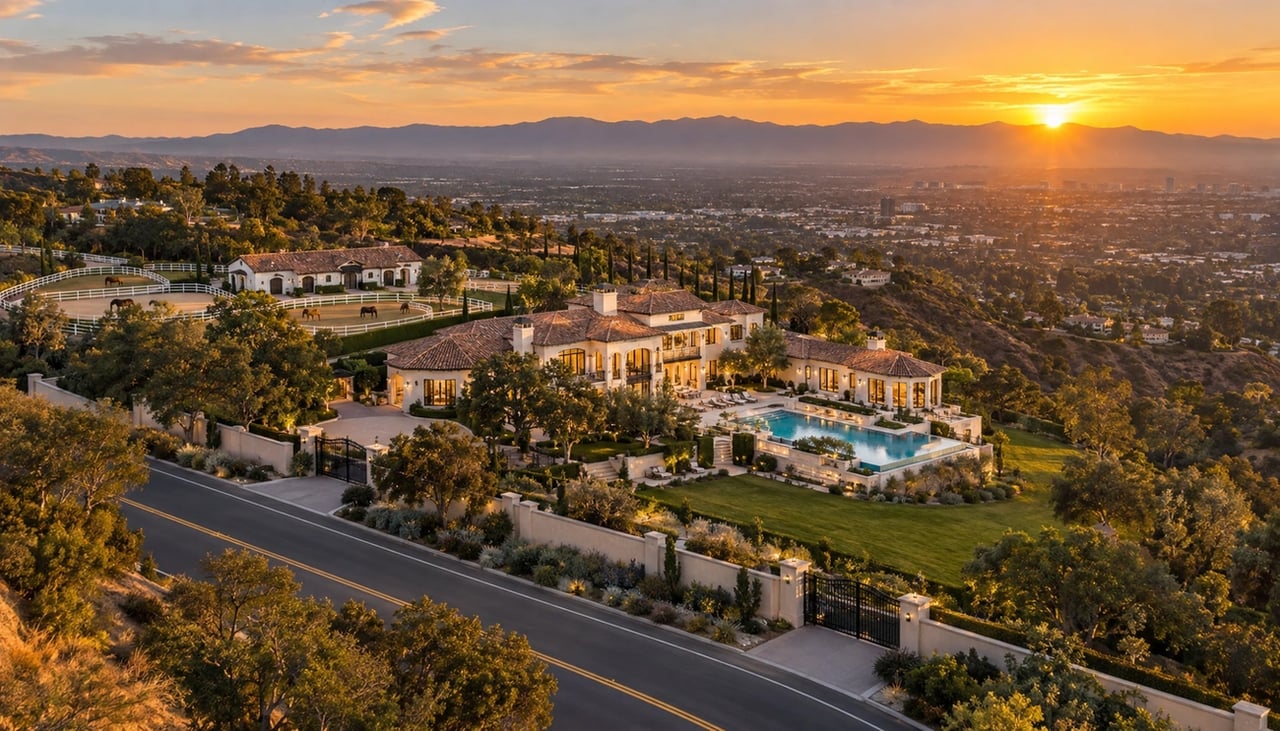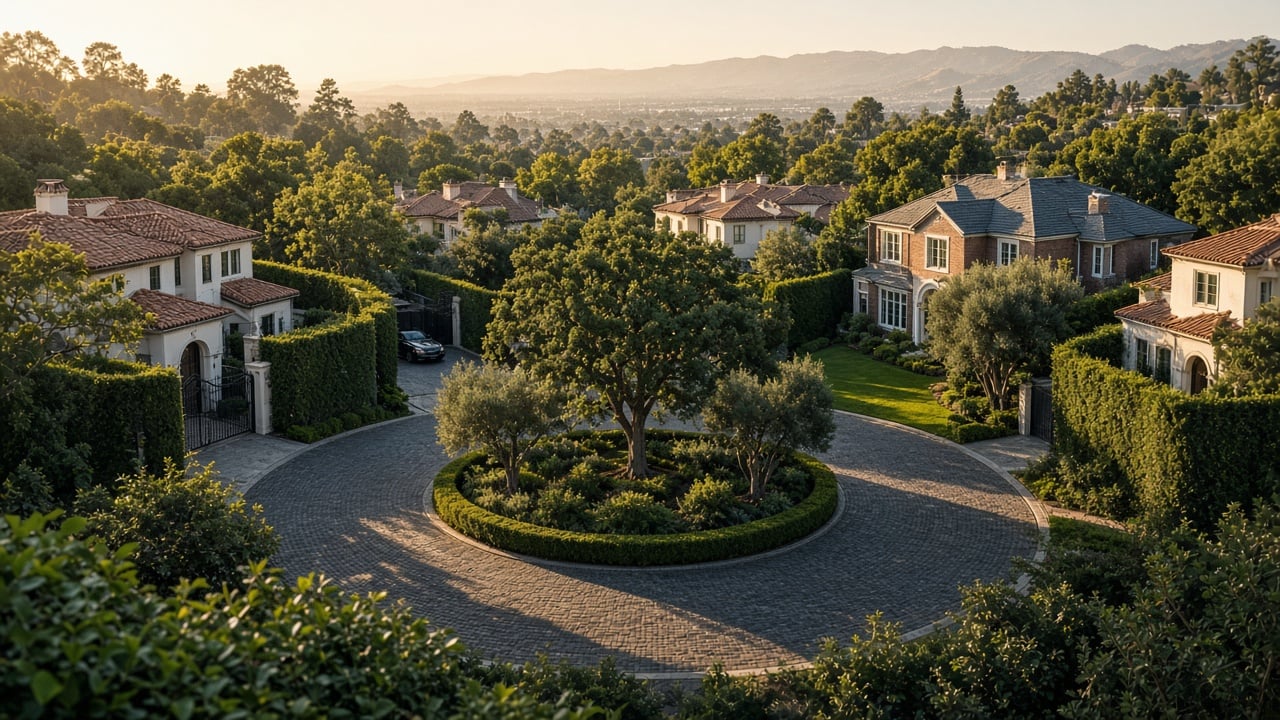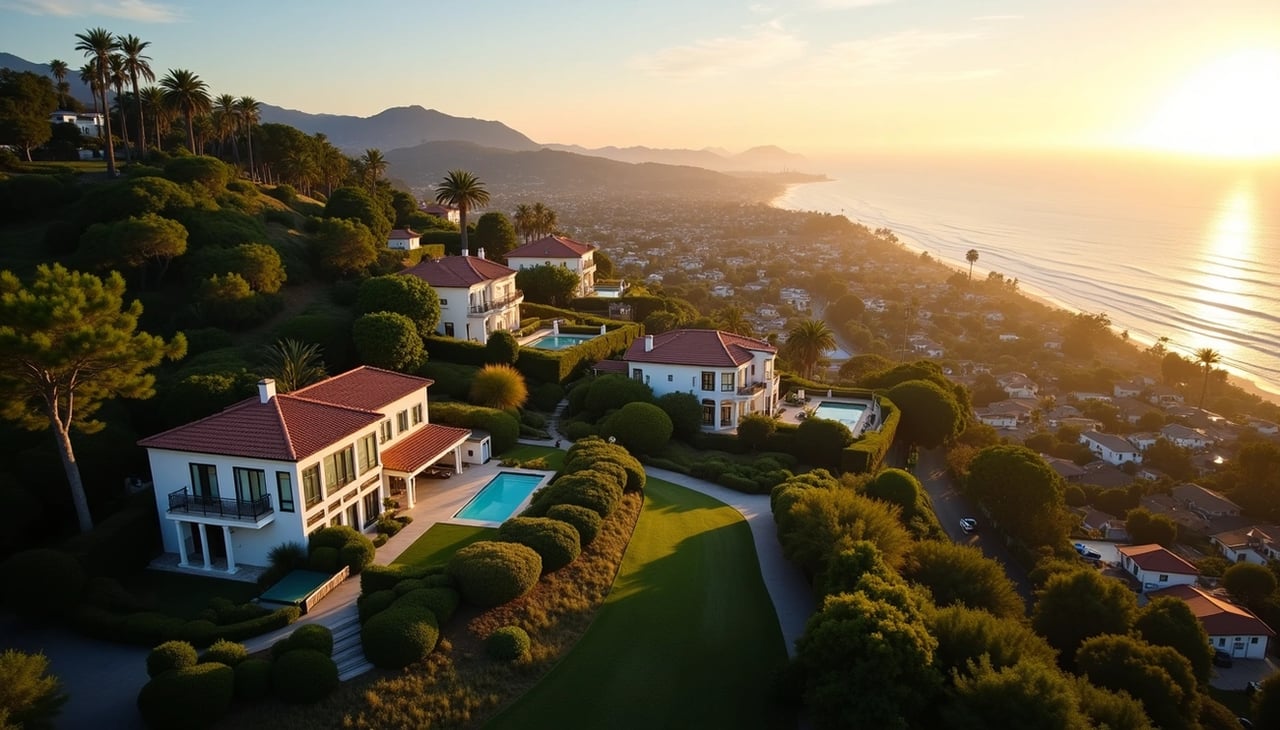
The choice between Bel Air vs Beverly Hills isn't shaped by public listings but by private conversations and smart timing. Luxury real estate in Los Angeles operates within trusted circles where discretion matters as much as valuation. Beverly Hills commands a median listing price of $3.9 million, while Bel Air ranges from $4 million to $8 million, and Pacific Palisades averages $3.97 million. Each neighborhood offers distinct advantages: hillside estate privacy and walkable urban luxury, or coastal village living. Buyers who understand these differences can line up their property selection with lifestyle priorities and long-term investment goals.
The Three Neighborhoods at a Glance
Geographic positioning shapes how luxury unfolds across these three markets. Bel Air occupies hillside terrain north of Sunset Boulevard, Beverly Hills straddles the flatlands and foothills between Hollywood and the coast, and Pacific Palisades stretches along bluffs and canyons where the Santa Monica Mountains meet the Pacific Ocean. Each location delivers a different relationship between privacy, accessibility and natural setting.
Bel Air: Hillside Privacy and Estate Living
Bel Air spans about 9,900 acres within the Bel Air-Beverly Crest Community Plan area, positioned north of Sunset Boulevard, east of the I-405 and south of Mulholland Drive. The neighborhood works as a collection of hillside enclaves rather than a single gated district. Topography, lot scale and mature landscaping that screens properties from public view create privacy.
The area is divided into three sub-neighborhoods. East Gate Bel Air, also known as Old Bel Air, has estates built before World War II along South Beverly Glen and Sunset Boulevard. Many lots were combined to create grand properties with extensive outdoor space. West Gate Bel Air centers on the Sunset Boulevard and Bellagio Road intersection, rebuilt after a 1963 fire. Upper Bel Air offers smaller lots with canyon, ocean or city views and convenient access to Mulholland Drive.
Commercial activity stays limited. The neighborhood has small pockets of retail along upper Roscomare Road, Beverly Glen Circle and near Sepulveda Boulevard and Moraga Drive. Estate properties often have guest houses, pool houses, detached garages, pools, tennis courts and extensive grounds. Architectural styles range from Spanish Colonial Revival and Mediterranean Revival to Mid-Century Modern and Late Modern designs, with work by prominent architects like Wallace Neff, Paul Williams, Richard Neutra and John Lautner.
Beverly Hills: Walkable Luxury and Social Energy
Beverly Hills combines residential prestige with urban convenience. The Flats, located between Sunset Boulevard and Santa Monica Boulevard, offers wide, palm-lined streets and walkable access to Rodeo Drive, fine dining and world-class shopping. Residents structure mornings around Beverly Gardens Park, local cafés and boutique fitness studios.
Trousdale Estates sits in the hills above Beverly Hills and has panoramic views of the Los Angeles skyline, Pacific Ocean and Santa Monica Mountains. The neighborhood showcases mid-century architecture and modern luxury homes with floor-to-ceiling glass walls and infinity pools. Beverly Park, divided into North and South sections, operates as a guard-gated community with massive estate properties on multi-acre lots and offers 24/7 security and a no-fly zone.
Social interaction defines daily patterns. Networking happens over lunch at restaurants, while evenings revolve around dining at establishments and cultural events at venues like the Wallis Annenberg Center for the Performing Arts. Green spaces have Beverly Gardens Park with its lily pond and Beverly Hills Sign, plus Roxbury Park and Will Rogers Memorial Park.
Pacific Palisades: Coastal Village Between Ocean and Mountains
Pacific Palisades covers 23,431 acres with about 27,000 residents across 9,400 homes. The neighborhood sits about 20 miles west of downtown Los Angeles, bounded by Brentwood to the east, Topanga to the west, Santa Monica to the southeast and the Santa Monica Mountains to the north. Six major canyons wind from the mountains to the sea and create panoramic vistas of ocean shoreline, forested canyons and mountain landscapes.
The commercial district has about 500 retail shops, service businesses and professional offices centered on Palisades Village, a retail development with boutiques, restaurants and community programming. The 3-mile coastline has Will Rogers State Beach, Sunset Point Beach and Ginger Rogers Beach. Parks in the Santa Monica Mountains National Recreation Area sit above the community and have Will Rogers State Historic Park.
Mean summer temperature reaches 69.2 degrees, while mean winter temperature averages 56.1 degrees. The area receives about 14.93 inches of annual precipitation, mainly between November and March. Sub-neighborhoods have the Riviera, with streets named after French and Italian Riviera locations, and Palisades Highlands in the upper Santa Ynez Canyon that has gated communities and access to Topanga State Park trailheads.
Real Estate Market: Pricing, Architecture, and Property Types
Pricing structures in these three markets reflect different value propositions rather than simple affordability tiers. The variance between neighborhoods comes from lot scale, architectural pedigree, and the balance between access and seclusion. To understand these differences, you need to look beyond list prices to the complete ownership picture.
Median Home Prices Across Bel Air, Beverly Hills, and Pacific Palisades
Beverly Hills maintains a median listing price of $5.80M with year-over-year appreciation of 8.75%. Recent sales data shows 36 homes closed between January and March 2026 at a median sold price of $3.88M and an average of $6.98M. Homes took an average of 72 days to close and sold at 91.26% of list price. This shows negotiation room of about $600K on a $7M listing.
Pacific Palisades shows a median sale price of $3.00M, down 49.2% year-over-year, with a median listing price of $3.50M. The median price per square foot stands at $1,234. Sub-neighborhood pricing varies widely: Marquez Knolls averages $2.10M, Huntington Palisades reaches $6.90M, and The Riviera commands $17.90M. Homes sell in 64 days on average, with the sale-to-list price ratio at 95.3%.
Bel Air presents a median sale price of $3.10M, down 38.8% since last year, though the median listing price reaches $7.50M. The median price per square foot is $1.40K. Properties sell in 79 days on average at 95.6% of list price. Pricing ranges from $1.00M to $2.50M in Bel Air Glen to $4.50M to $20.00M in Bel Air Crest Custom Homes within gated communities.
Architectural Styles and Lot Sizes
Beverly Hills recognizes over 100 Master Architects, including Paul R. Williams, Frank Lloyd Wright, and Richard Neutra, whose structures require specialized review for alterations. Mediterranean Revival, mid-century modern, and formal European estates demonstrate stronger long-term value retention compared to hybrid designs. Architectural authenticity outperforms imitation in appraisal strength.
Bel Air estates range from 4,000 to over 30,000 square feet on parcels from one to ten acres or more. Architectural styles include Mediterranean Revival, Traditional, Modern, and French Chateau. Lower Bel Air features the most expensive homes due to proximity to Sunset Boulevard. Higher elevations offer panoramic views despite smaller lots.
Pacific Palisades showcases three dominant styles: Mediterranean with red-tiled roofs and stucco exteriors centered around courtyards, Craftsman featuring exposed beams and blended materials, and Modern architecture with geometric forms and vast glass walls. Lot sizes vary by sub-neighborhood: Alphabet Streets range from 5,200 to 7,500 square feet, Upper North Village spans 5,000 to 40,000 square feet, and New Palisades Village averages 4,500 to 8,000 square feet.
Property Tax Considerations and HOA Fees
Beverly Hills property taxes operate at an effective rate of about 1.18% to 1.22%. The annual tax bill on a $3.50M home amounts to $41,300. Beverly Hills avoids Measure ULA, unlike properties in Los Angeles, and faces only the 0.11% Los Angeles County Transfer Tax whatever the sale price.
Pacific Palisades carries a higher effective tax rate of 1.64%, though the average homeowner pays $25,000 a year due to the gap between assessed value and market value. The median tax bill in ZIP code 90272 is $20,049.
HOA fees in Bel Air communities range from $275 to $295 monthly in Bel Air Glen, $395 to $419 in Bel Air Skycrest, and $900 to $940 in Bel Air Crest Custom Homes. These fees cover gated security, landscaping of shared spaces, and maintenance of common amenities.
Lifestyle and Daily Amenities: Shopping, Dining, and Entertainment
Daily patterns reveal more about neighborhood character than property specs alone. The difference between Bel Air vs Beverly Hills becomes clear when you look at where residents shop for groceries, meet clients for lunch, or spend Saturday evenings. Access to amenities shapes routines and social networks, which ended up determining quality of life.
Beverly Hills: Rodeo Drive and the Golden Triangle
Rodeo Drive anchors the Golden Triangle. Wilshire Boulevard and Santa Monica Boulevard bound it, with Canon Drive and Beverly Drive flanking the sides. The three-block stretch houses over 100 boutiques in architect-designed flagships. Chanel's multi-floor location stands as the largest in North America. Hermès, Cartier, Loewe, and Harry Winston maintain exclusive pieces available only on Rodeo Drive.
Two Rodeo Drive offers European-style shopping with cobblestone walkways and houses Tiffany & Co., Richard Mille, and Versace. The Rodeo Collection spans 70,000 square feet across 45+ luxury boutiques, salons, and cosmetic-medical practices. House of Bijan operates appointment-only and serves royal families, celebrities, and five former U.S. presidents.
The retail experience extends to dining. Gucci Osteria da Massimo Bottura delivers Michelin-starred Italian cuisine inside the Gucci boutique. The 208 Rodeo Restaurant has served upscale bistro fare since 1991. The Hideaway, tucked within the Rodeo Collection, offers coastal Mexican cuisine. Miura Beverly Hills provides intimate omakase rooted in traditional Edomae sushi.
Pacific Palisades: Palisades Village and Coastal Dining
Palisades Village will reopen in 2026 as the neighborhood's commercial center. It features over 40 curated boutiques, dining experiences, and entertainment. The luxury cinema screens Netflix releases and family programming alongside filmmaker discussions. Eight female-owned businesses and first-to-brick-and-mortar retailers distinguish the tenant mix.
Coastal dining options capitalize on oceanfront positioning. Mastro's Ocean Club serves high-quality steaks and seafood in modern surroundings. Gladstones, celebrating 50 years of operation, offers fresh seafood paired with cocktails in an open-air setting steps from the beach. Giorgio Baldi delivers authentic Italian dining after 30 years as a family-owned establishment.
Bel Air: Private Club Culture and Estate Entertaining
Bel-Air Country Club, founded in 1925, operates as a private members-only facility. It has an 18-hole course designed by George C. Thomas Jr. and William Bell, which Tom Doak refined in 2005. The club features seven lighted tennis courts, a state-of-the-art fitness center, and a 25-yard heated swimming pool. Four dining venues serve members and are complemented by seasonal events and family programming.
Wolfgang Puck at Hotel Bel-Air provides world-class dining in a garden setting. Residents who prefer on-estate entertaining can arrange catered experiences. The right home makes all the difference for those who love to entertain. If you're thinking over a purchase in the near future or beginning your search, I'd be delighted to help you find spaces designed for raised living and effortless hosting. Christina Pope  310-404-9931
  [email protected]
How Proximity to Entertainment Districts Is Different
Beverly Hills residents walk to the Wallis Annenberg Center for Performing Arts and access theater, music, and dance without driving. Bel Air properties sit minutes from the Getty Center, Westwood theaters, and Century City's retail complex. Pacific Palisades centers entertainment around the Bay Theater at Palisades Village and outdoor coastal activities rather than traditional cultural venues.
Privacy, Security, and Community Character
Security concerns in luxury real estate unfold through private channels rather than public marketing campaigns. High-net-worth buyers review neighborhoods based on access protocols, emergency response capabilities, and knowing how to maintain confidentiality during ownership. The difference between Bel Air vs Beverly Hills becomes evident when looking at how each area structures privacy, manages visitor flow, and balances seclusion with convenience.
Gated Access and Security Levels
Bel Air functions as a collection of gated enclaves rather than a single secured district. The area has guard-gated subdivisions with staffed entries and HOA communities with controlled access and patrols. Estate streets are shaped by private roads without continuous gates. Security models vary. Some communities rely on 24/7 guarded entry and roving patrols. Estate sections combine association oversight with neighborhood watch programs. Properties attract attention due to sprawling layouts and secluded locations. This requires custom security plans that address unique vulnerabilities.
Beverly Hills operates its own police department with response times averaging under three minutes. The city emphasizes responsive municipal services and active residential environments. It balances accessibility with security. Gated communities such as Beverly Park employ internal security forces. Estates integrate biometric scanners and license plate recognition systems with discreet residential security teams. Controlled access reduces casual traffic without eliminating the need for complete security planning.
Pacific Palisades lacks high concentrations of master-planned gated communities but offers private properties through geography and architecture. Blufftop locations prevent through-street access and limit traffic to local residents. Upper Riviera homes sit behind private gates, extensive landscaping, and long setbacks. Castellammare's semi-private streets and lack of cut-through traffic create self-contained security.
Walkability vs. Seclusion
Beverly Hills maintains a walkability score of 75, meaning most errands can be accomplished on foot. The city also received a transit score of 60 and a bike score of 53. This infrastructure supports daily routines centered on retail districts and public spaces.
Bel Air emphasizes intentional privacy over walkability. Social life centers around estate entertaining and private clubs rather than street-level activity. Pacific Palisades balances these approaches: Alphabet Streets offer village walkability, while the Riviera and Highlands lean toward privacy and space.
Tourist Activity and Public Visibility
Beverly Hills experiences steady foot traffic from shoppers and tourists. Rodeo Drive functions as both a luxury retail and tourist destination. This increases public visibility. Bel Air remains purely residential with minimal outside visitors. Pacific Palisades maintains a family-friendly, small-town character supported by active civic groups that preserve area integrity.
The Balance Between Social Connection and Discretion
Beverly Hills supports community engagement through the Beverly Hills Community Alliance and local events. Bel Air delivers seclusion through gated estates and limited social infrastructure beyond private clubs. Pacific Palisades residents participate in the Fourth of July parade, Sunday farmers markets, and community clean-up days.
Christina Pope
Sotheby's International Realty 310-404-9931 [email protected]
EliteResidenceInternational.com
Outdoor Living: Parks, Trails, and Recreational Access
Outdoor recreation access separates these neighborhoods as much as architectural styles or price points. The debate between Pacific Palisades vs Beverly Hills often centers on whether residents want trail and beach access right away or prefer manicured urban parks within walking distance. Bel Air delivers a third model, where outdoor living happens on private estate grounds rather than shared public spaces.
Pacific Palisades: Beach and Mountain Access Right Away
Will Rogers State Historic Park spans 186 acres with multiple hiking trails that connect to the Backbone Trail system. This system extends nearly 67 miles across the Santa Monica Mountains. Temescal Gateway Park serves as the main trailhead for canyon loops. The 3.4-mile Temescal Canyon Loop features a waterfall and bay views. Los Liones Trail climbs from canyon to ridge with routes ranging from 2.5 to 7.8 miles depending on turnaround points.
Beach access functions as an extension of daily life rather than a weekend destination. Will Rogers State Beach provides volleyball courts, the Marvin Braude Bike Trail, restrooms and direct PCH access. The Palisades Recreation Center offers tennis, basketball, swimming and yoga, though operations remain limited following the 2025 fire.
Beverly Hills: Urban Parks and Manicured Green Spaces
Beverly Hills maintains 15 parks with more than 87 acres of green space. Beverly Gardens Park stretches 1.9 miles along Santa Monica Boulevard and features walking paths, rose gardens and the iconic Beverly Hills Sign. Franklin Canyon Park delivers over five miles of hiking trails, a lake and shaded picnic areas surrounded by native landscapes. Greystone Mansion occupies 18.3 acres of manicured lawns and formal gardens with city views.
Bel Air: Scenic Canyon Views and Private Grounds
Bel Air puts private outdoor amenities ahead of public parks. Estate properties feature pools, tennis courts and grounds designed for entertaining rather than shared recreation. Getty View Trail offers 1.3 miles with 220 feet of elevation gain and Sepulveda Canyon views. Stone Canyon Overlook on Mulholland Drive provides ADA-accessible trails with reservoir and mountain panoramas.
Investment Potential and Long-Term Value
Investment decisions in high-end Los Angeles real estate unfold through private networks where timing and access matter more than public listings. Transactions happen within trusted circles, where discretion shapes value as much as location. Buyers who understand this market know that precision outweighs visibility.
Market Demand and Resale Liquidity
Beverly Hills maintains strong resale liquidity due to global brand recognition and limited inventory. Properties attract domestic and international buyers seeking stable assets. Luxury homes continue to trade in economic cycles of all types. Bel Air experiences selective liquidity. Ultra-luxury estates require longer marketing timelines, but listings command top pricing. Pacific Palisades showed resilient buyer interest post-fire, with 170 land parcels selling in 35 days on average during early 2025 recovery.
Appreciation Trends in Bel Air vs Beverly Hills vs Pacific Palisades
Bel Air properties gained 150% to over 300% from the 1990s through early 2000s, averaging 4% to 8% annual appreciation. Beverly Hills experienced 1% to 2.5% appreciation in 2025, with projections of 2% to 4% for 2026. Pacific Palisades median prices dropped 33% post-fire to $2.40M, though coastal and bluff parcels returned to pre-fire pricing by mid-2025.
Rental Income Opportunities
Pacific Palisades rental pricing ranges from $7,950 to $9,750 monthly, reflecting coastal buyer interest. Beverly Hills rental properties deliver strong monthly income, especially when you have fully furnished luxury homes near Rodeo Drive. Bel Air supports high rental rates for executive and entertainment professional accommodations.
Which Neighborhood Lines Up With Your Investment Goals
Beverly Hills suits investors prioritizing liquidity and global recognition. Bel Air rewards long-term holders seeking privacy and estate appreciation. Pacific Palisades offers coastal lifestyle with rebuilding opportunities creating entry points at adjusted pricing.
Christina Pope
Sotheby's International Realty 310-404-9931 [email protected]
EliteResidenceInternational.com
Comparison Table
Bel Air vs Beverly Hills vs Pacific Palisades: Detailed Comparison
Luxury real estate in Los Angeles isn't driven by headlines—it's shaped by private conversations, timing and access. The most meaningful transactions unfold quietly within trusted circles, where discretion carries as much weight as value. Those who understand this world know that visibility is secondary to precision. Timing is everything.
Christina Pope | Sotheby's International Realty | EliteResidenceInternational.com
| Attribute | Bel Air | Beverly Hills | Pacific Palisades |
|---|---|---|---|
| Median Listing Price | $7.50M | $5.80M | $3.50M |
| Median Sale Price | $3.10M | $3.88M | $3.00M |
| Price Range | $4M - $8M | $3.9M median | $3.97M average |
| Price per Square Foot | $1,400 | Not specified | $1,234 |
| Year-over-Year Change | -38.8% | +8.75% | -49.2% |
| Average Days on Market | 79 days | 72 days | 64 days |
| Sale-to-List Price Ratio | 95.6% | 91.26% | 95.3% |
| Property Tax Rate | ~1.18-1.22% (estimated) | 1.18% - 1.22% | 1.64% |
| Typical Lot Sizes | 1-10+ acres | Varies by sub-area | 4,500 - 40,000 sq ft (varies by sub-neighborhood) |
| Home Square Footage | 4,000 - 30,000+ sq ft | Varies | Varies by sub-neighborhood |
| HOA Fees | $275 - $940/month (gated communities) | Not specified | Not specified |
| Walkability Score | Low (privacy-focused) | 75 (most errands on foot) | Mixed (village areas walkable, hillside areas private) |
| Primary Character | Hillside estate privacy, seclusion | Walkable urban luxury, social energy | Coastal village between ocean and mountains |
| Security Model | Gated enclaves, private roads, 24/7 guards in some communities | City police (sub-3 min response), gated communities like Beverly Park | Geographic privacy, blufftop locations, semi-private streets |
| Architectural Styles | Mediterranean Revival, Traditional, Modern, French Chateau | Mediterranean Revival, Mid-Century Modern, Formal European | Mediterranean, Craftsman, Modern |
| Notable Architects | Wallace Neff, Paul Williams, Richard Neutra, John Lautner | Paul R. Williams, Frank Lloyd Wright, Richard Neutra (100+ Master Architects) | Not specified |
| Beach Access | None (inland hillside) | None (inland) | Immediate (3-mile coastline with multiple beaches) |
| Mountain/Trail Access | Getty View Trail, Stone Canyon Overlook | Franklin Canyon Park (5+ miles of trails) | Will Rogers State Historic Park, Temescal Gateway Park, Los Liones Trail |
| Commercial District | Limited (small pockets along Roscomare, Beverly Glen) | Rodeo Drive, Golden Triangle (100+ boutiques) | Palisades Village (40+ boutiques, reopening 2026) |
| Dining Scene | Private club culture, Wolfgang Puck at Hotel Bel-Air | Rodeo Drive restaurants, Gucci Osteria, Miura Beverly Hills | Mastro's Ocean Club, Gladstones, Giorgio Baldi |
| Social Pattern | Estate entertaining, private clubs (Bel-Air Country Club) | Street-level activity, walkable retail, cultural venues | Village community events, farmers markets, family-friendly |
| Tourist Activity | Minimal (residential only) | High (Rodeo Drive destination) | Low to moderate (family-friendly, small-town character) |
| Rental Income Range | High rates to house executives | Substantial monthly income, especially furnished luxury | $7,950 - $9,750/month |
| Investment Profile | Long-term appreciation, ultra-luxury estates, selective liquidity | Strong resale liquidity, global brand recognition, stable in any market condition | Coastal lifestyle, post-fire rebuilding opportunities |
| Historical Appreciation | 150-300% (1990s-early 2000s), 4-8% annual average | 1-2.5% (2025), projected 2-4% (2026) | -33% post-fire, premium parcels recovered by mid-2025 |
| Land Area | ~9,900 acres | Not specified | 23,431 acres |
| Population/Homes | Not specified | Not specified | ~27,000 residents, 9,400 homes |
| Climate | Not specified | Not specified | Summer: 69.2°F avg, Winter: 56.1°F avg, 14.93" annual precipitation |
Christina Pope
Sotheby's International Realty 310-404-9931 [email protected]
EliteResidenceInternational.com
Conclusion
The choice between Bel Air vs Beverly Hills vs Pacific Palisades doesn't have a universal answer. Each neighborhood serves different priorities. Beverly Hills delivers walkable luxury and social energy for those who value urban convenience. Bel Air provides hillside estate privacy for buyers seeking seclusion and expansive grounds. Pacific Palisades offers coastal village living with immediate beach and trail access.
The right property lines up with how buyers foresee daily life, from entertaining patterns to investment timelines. If you love to entertain, the right home makes all the difference. Finding spaces designed for luxury living starts with understanding what each neighborhood truly delivers.
Christina Pope
Sotheby's International Realty 310-404-9931 [email protected]
EliteResidenceInternational.com
Key Takeaways
Choosing between these three luxury Los Angeles neighborhoods requires understanding distinct lifestyle priorities and investment strategies that align with your long-term goals.
• Beverly Hills offers walkable urban luxury with $5.80M median listings, 3-minute police response times, and immediate access to Rodeo Drive's world-class shopping and dining scene.
• Bel Air delivers maximum privacy on hillside estates ranging $4M-$8M, featuring gated communities, private club culture, and properties spanning 1-10+ acres with minimal tourist activity.
• Pacific Palisades provides coastal village living at $3.50M median pricing, with immediate beach access, mountain trails, and a tight-knit community recovering strongly from recent challenges.
• Investment potential varies significantly - Beverly Hills maintains strongest resale liquidity due to global recognition, while Bel Air rewards long-term holders seeking appreciation, and Pacific Palisades offers rebuilding opportunities at adjusted pricing.
• Security models differ fundamentally - Beverly Hills relies on municipal services and urban accessibility, Bel Air emphasizes gated enclaves and geographic seclusion, while Pacific Palisades uses natural topography for privacy.
The right choice depends on whether you prioritize social connectivity and convenience, maximum privacy and estate living, or coastal lifestyle with outdoor recreation access. Each neighborhood serves distinct buyer profiles with different entertaining patterns, daily routines, and investment timelines.
FAQs
Q1. Are California housing prices expected to decrease in 2026? Market conditions vary significantly by neighborhood and property type. Beverly Hills showed 8.75% year-over-year appreciation with median listings at $5.80M, while Pacific Palisades experienced a 49.2% decline to $3.00M median sale price following the 2025 fire. Bel Air saw a 38.8% decrease in median sale prices to $3.10M, though median listing prices remain at $7.50M. Premium coastal and bluff parcels in Pacific Palisades returned to pre-fire pricing by mid-2025, demonstrating resilient demand in select segments.
Q2. How do property values compare between Pacific Palisades and Beverly Hills? Beverly Hills maintains a higher median listing price at $5.80M compared to Pacific Palisades at $3.50M. However, pricing varies substantially within each area. Beverly Hills properties range from accessible Flats locations to ultra-luxury Beverly Park estates, while Pacific Palisades spans from Marquez Knolls averaging $2.10M to The Riviera commanding $17.90M. Beverly Hills offers stronger global brand recognition and resale liquidity, while Pacific Palisades provides coastal lifestyle value with immediate beach and mountain access.
Q3. Which luxury neighborhoods currently have the most competitive real estate markets? Beverly Hills demonstrates the strongest market competition among these three neighborhoods, with properties selling at 91.26% of list price in an average of 72 days. The city's walkability score of 75, global recognition, and limited inventory drive consistent demand from domestic and international buyers. Pacific Palisades showed remarkable post-fire recovery with 170 land parcels selling in just 35 days on average during early 2025, indicating strong underlying demand despite temporary price adjustments.
Q4. Does Pacific Palisades attract wealthier residents than Beverly Hills? Both neighborhoods serve high-net-worth buyers but offer different value propositions. Beverly Hills commands higher median listing prices at $5.80M and provides walkable urban luxury with immediate access to world-class shopping and dining. Pacific Palisades offers a more laid-back coastal village lifestyle at $3.50M median pricing, with immediate beach access and mountain trails. The choice reflects lifestyle priorities rather than pure wealth concentration, with Beverly Hills emphasizing social energy and Pacific Palisades prioritizing outdoor recreation and community character.
Q5. What makes Bel Air different from Beverly Hills and Pacific Palisades for luxury buyers? Bel Air prioritizes maximum privacy and estate living on hillside properties ranging from 1 to 10+ acres, with median listings at $7.50M. Unlike Beverly Hills' walkable urban environment or Pacific Palisades' coastal village character, Bel Air functions as a collection of gated enclaves with limited commercial activity. Social life centers around private club culture and estate entertaining rather than street-level activity. Properties feature extensive grounds with guest houses, pools, and tennis courts, attracting buyers who value seclusion over convenience.