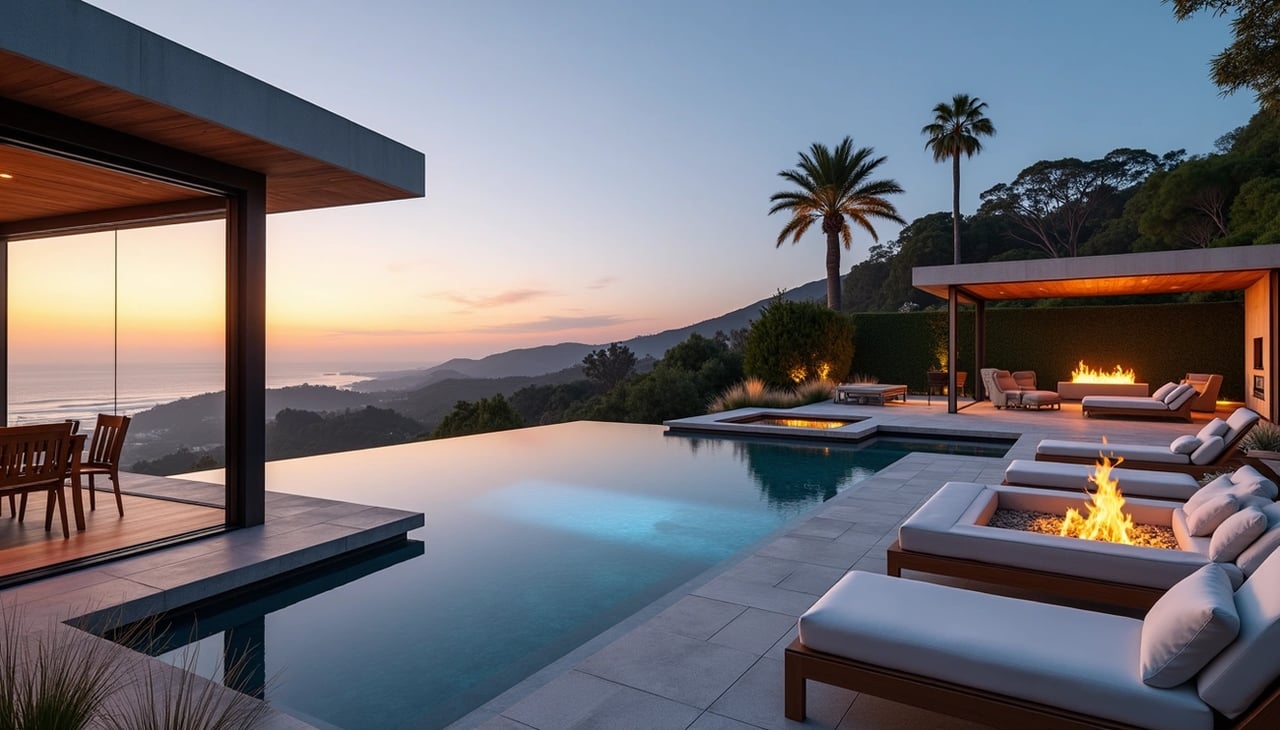
Luxury outdoor living spaces in Los Angeles are no longer afterthoughts. They're architectural extensions that discerning buyers assess with the same rigor as interiors. Pacific Palisades and Beverly Hills outdoor areas now rival indoor rooms in style and function. California's temperate climate and evolving buyer expectations drive this shift. Wide pocket doors, outdoor kitchens with intent and ceiling treatments have become standard in 2026's most coveted properties. Buyers in markets like Bel Air assess outdoor improvements as critically as interior spaces. This comparison gets into how each neighborhood approaches outdoor design, amenities and market value to seek strategic positioning in LA's private luxury market.
Outdoor Architecture and Design Philosophy Across the Three Markets
Los Angeles's premier neighborhoods have developed distinct approaches to luxury outdoor living spaces. Geography, buyer profiles, and each location's unique character shape these differences. These variations go beyond esthetic priorities—they reflect fundamental design philosophies about how outdoor spaces should function within a property's overall composition.
Pacific Palisades: Coastal-Influenced Open-Air Spaces
Modern Coastal Architecture has become the defining outdoor design language for Pacific Palisades. The approach centers on creating smooth connections between interior rooms and exterior spaces and treats them as continuous environments rather than separate zones. Retractable glass walls, floor-to-ceiling windows, and open layouts allow interior spaces to flow outside effortlessly. Residents describe this as one cohesive experience rather than distinct indoor and outdoor rooms.
The boundary between indoors and outdoors is blurred intentionally. Properties feature design elements that speak to what defines luxury outdoor living spaces in coastal markets: uninterrupted openness, connection to nature, and natural light from every angle. Terraces and patios extend the theme of open-air luxury with outdoor kitchens that include built-in grills, pizza ovens, refrigerators, and bar setups designed for easy entertaining. Automated pergolas and retractable awnings add shade and protection while maintaining clean, cohesive design lines.
Material continuity plays a significant role in creating this smooth flow. Hardwood floors extend to teak decks. Stone fireplaces continue onto patios, and metal accents carry from kitchen to poolside. Color palettes follow similar logic, with earth tones that unify the home while blending into Pacific Palisades's natural landscape. This consistency results in environments that read as one continuous space rather than compartmentalized rooms.
Strategic landscaping connects homes to their surroundings without sacrificing functionality. Tall hedges offer privacy without blocking ocean and canyon views, while drought-tolerant plants add texture and color with minimal maintenance. Native plants help control soil erosion and support local wildlife. They deepen the connection between architecture and terrain while reducing water-intensive upkeep. Layers of greenery, including tall grasses and shrubs, maintain privacy and create natural windbreaks in coastal conditions.
Garden terraces function as natural extensions of living rooms, complete with furnishings that feel welcoming outside as they do indoors. Guests often remark that stepping onto these terraces feels less like going outside and more like entering another room within the home. Floor-to-ceiling windows and sliding glass doors create open spaces that flow from interior to exterior effortlessly. Some homes feature retractable glass walls that open fully to create true indoor-outdoor living environments.
Sustainability lines up naturally with coastal design values in the Palisades. Properties incorporate sustainable materials, energy-efficient windows, solar integration, and environmentally responsible construction methods. Natural materials such as wood, stone, linen, and clay reduce toxins while adding warmth and texture. Improved ventilation and abundant daylight create healthier environments that promote rest and balance, reflecting wellness-focused design priorities.
Bel Air: Estate-Scale Outdoor Rooms with Privacy Focus
Bel Air's approach to luxury outdoor living spaces is different from the coastal openness of Pacific Palisades. Estate properties here prioritize privacy achieved through hillside terrain and architectural massing rather than visible security measures. Canyons and ridges create built-in separation, while strategic setbacks and landscape layering complete the privacy equation.
The neighborhood's topography shapes outdoor design in specific ways. Sloped lots command 10-20% higher property values because grade separation creates privacy between different areas of a property and between homes and neighboring structures. Grade changes provide built-in sound buffering, framed views, and natural screening. Ridgeline parcels deliver strong privacy from below, as downhill neighbors cannot view upper terraces or living spaces. Canyon settings provide intimacy with mature trees acting as visual barriers.
Architectural design on hillside properties employs specific tactics that maximize seclusion without sacrificing light or views. Massing stepped with the slope avoids large expanses of tall walls that would expose interior spaces. Vertical building walls should not exceed 15 feet in height above grade, with any walls above this stepped back by a minimum distance of ten feet. This terraced approach reduces visual mass and creates privacy layers between levels.
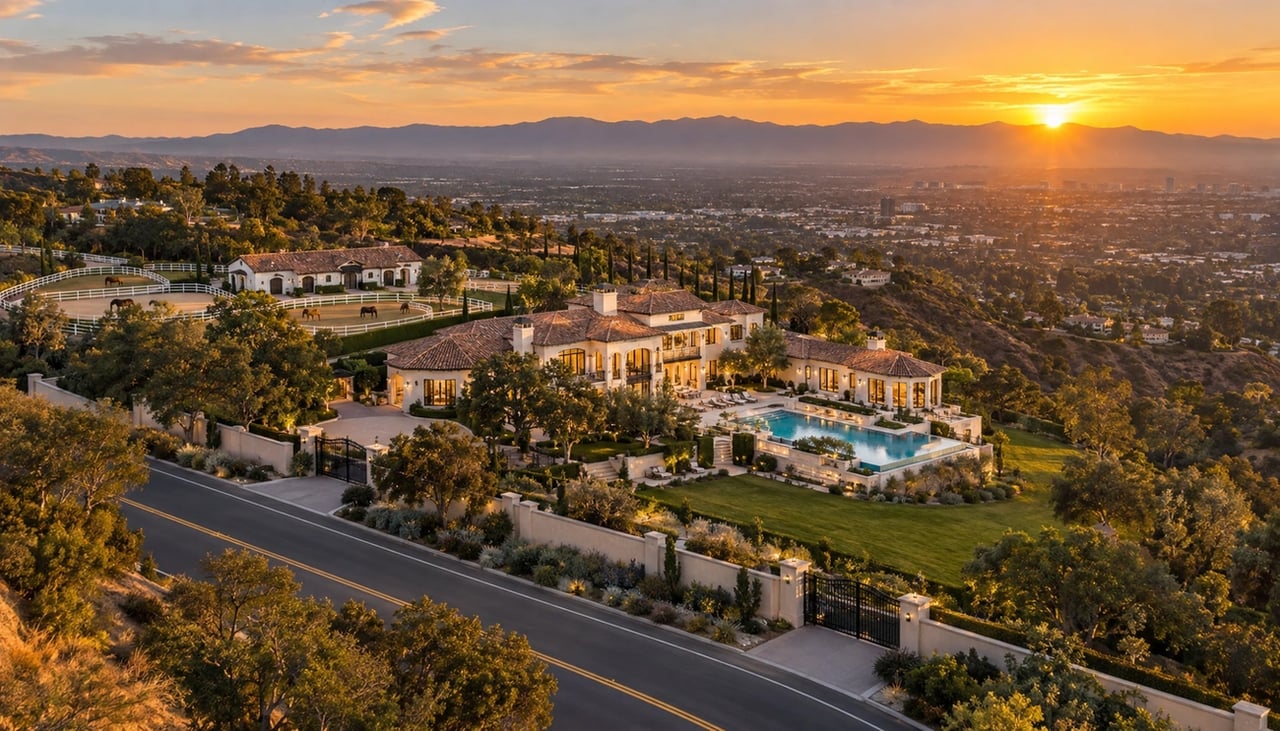
Estate-scale outdoor spaces feature multiple levels of terraces and entertaining areas typically. One prominent Bel Air property features three levels of outdoor living and entertaining spaces on the main floor terrace alone. These properties include extensive terraces that descend to lawn terraces at basement levels, with gardens set partially on plinth-like structures that step down toward city views. Main level pools often have infinity edges that cascade down to gardens and motor courts below.
Water features serve as both design elements and privacy tools in Bel Air. A 180-foot-long water wall guides visitors to entries before continuing to basement level water gardens. Properties incorporate 73-foot swimming pools within indoor-outdoor wellness retreats that include fitness rooms, steam rooms, and saunas. These features create layered experiences that feel private despite their scale.
Interior courtyards function as powerful privacy mechanisms. U-shaped courtyards wrap around three sides of outdoor space, while O-shaped courtyards enclose garden or pool areas completely with zero external sightlines. These configurations allow residents to enjoy outdoor spaces without exposure to neighboring properties. Side elevations feature restrained glazing intentionally with limited window openings or high fixed glass that reduce direct views between neighboring units, while main glazing orientations face toward water views and private outdoor living areas.
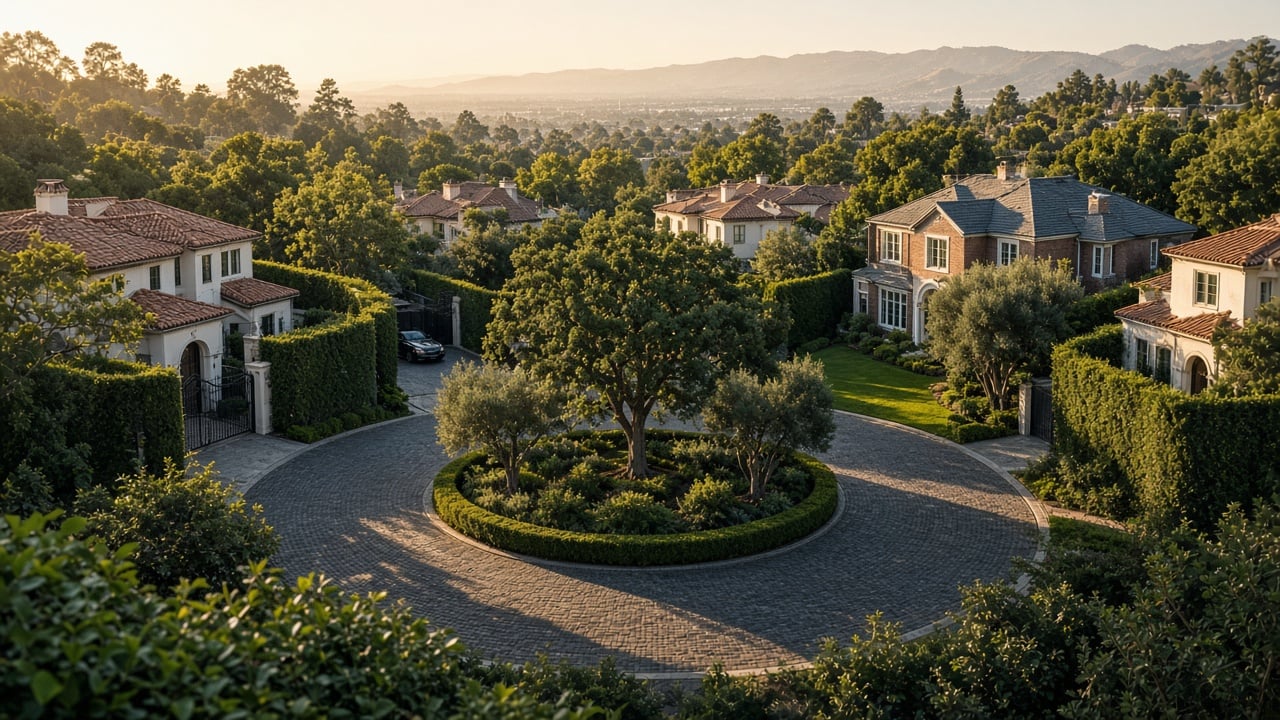
Motor courts positioned between driveways and entry doors provide functional privacy zones. Walls or fences enclose these spaces and create soundproofing and visual barriers while accommodating guest parking. Strategic plantings layer over architectural privacy measures, with native shrubs such as Toyon creating dense, evergreen hedgerows. Arborvitae varieties deliver year-round screening, with American Arborvitae reaching 20 to 30 feet in height and Emerald Arborvitae growing between 10 and 15 feet tall while maintaining trimmed widths of just 2 feet when planted in hedges.
Beverly Hills: Polished Entertaining Zones with Urban Proximity
Beverly Hills takes a different approach to luxury outdoor living spaces distinctly and balances urban sophistication with outdoor functionality. The neighborhood's design philosophy emphasizes polished entertaining zones that maintain connection to the city while creating retreat-like environments.
Homes feature disappearing walls, central courtyards, breezeways, and outdoor living rooms increasingly. Materials like travertine, cedar, and glass help thread interior to exterior, while open-plan layouts and floor-to-ceiling windows invite natural light and landscape views into every corner. Properties in areas like Trousdale Estates feature panoramic sliding glass doors that open onto lush terraces with infinity pools and fragrant gardens.
The emphasis on entertaining defines Beverly Hills outdoor spaces. Properties feature multiple levels of terraces, outdoor entertaining areas, and expansive glazing with multi-colored lighting creating lively atmospheres. Rooftop decks and pools, waterfalls, wine cellars, and guest houses support sophisticated hosting capabilities. Sliding glass doors lead from reflecting pools to living rooms and create large open spaces ideal for entertaining crowds.
Outdoor rooms are designed with intentional orientation for optimal light throughout the day. Many new builds feature entire wings oriented for optimal morning light in kitchens and soft sunset views from primary bedrooms, designed to line up with the body's circadian rhythms. Access to daylight has shifted from maximizing light to sculpting it using architectural elements that frame the sun's movement and boost mood throughout the day.
Homeowners work with horticultural designers to incorporate fragrant herbs like mint and jasmine for multisensory experiences, or to create privacy screens made of cascading greenery. Gardens have transformed into personal wellness spaces designed to support physical and emotional nourishment, with edible gardens featuring heirloom vegetables, aromatherapy herbs like lavender and rosemary, and outdoor rooms for meditation or yoga practice.
Native landscaping takes priority and conserves water while helping restore local ecosystems. These gardens often include pollinator-friendly plants, fruit trees, and shaded nooks with seating or hammocks for rest and reflection. The approach balances polished esthetics with environmental responsibility and creates spaces that feel curated without appearing overly maintained.
Climate Advantages and Year-Round Usability by Location
California's Mediterranean climate provides the foundation for year-round outdoor living across all three neighborhoods, yet each location offers distinct advantages. Pacific Palisades benefits from coastal breezes and ocean proximity and creates pleasant year-round sunny climate with breathtaking urban settings. The mild climate allows for continuous enjoyment of outdoor amenities, from infinity pools to outdoor lounges and al fresco dining areas.
Afternoons often bring stiff winds and consistent breezes in coastal areas and create ideal conditions for outdoor activities while providing natural cooling. The proximity to Will Rogers Beach and Palisades Park offers residents panoramic views of the Pacific Ocean from coastal bluff settings. This coastal influence moderates temperatures and creates comfortable conditions for outdoor living throughout the year.
Bel Air's hillside positioning in the foothills of the Santa Monica Mountains creates microclimates that vary with elevation and canyon placement. Properties benefit from natural airflow through canyons while elevated positions provide temperature advantages over lower-lying areas. The terrain itself creates natural climate moderation, with canyon settings offering protection from wind while maintaining comfortable temperatures.
Beverly Hills shares the broader Los Angeles Mediterranean climate advantages while maintaining closer urban proximity. The dry heat and dependable sunshine make outdoor entertaining a casual affair around the clock. Pool parties during the day and lounging fireside through cool nights—the climate supports continuous outdoor use without seasonal limitations.
Outdoor Amenities and Luxury Features: What Each Neighborhood Prioritizes
Amenity selection in Los Angeles's premier neighborhoods reflects buyer sophistication rather than trend-following. Properties in Pacific Palisades, Bel Air, and Beverly Hills prioritize different outdoor features based on how residents use their spaces, the characteristics of their terrain, and what drives value in each market. These distinctions appear in pool placement, kitchen complexity, wellness integration, and technology deployment.
Infinity Pools and Water Features: Placement and View Orientation
Infinity pools create connections between properties and their surroundings by incorporating landscapes and views into the pool design itself. The vanishing edge technique allows water to flow over one side, creating visual continuity with distant horizons. Properties featuring infinity pools establish meditative connections with nature's elements while the edge appears to blend into surrounding vistas.
Pacific Palisades properties orient infinity pools toward ocean views, capitalizing on coastal proximity. The negative edge faces west or southwest, allowing the pool surface to merge visually with the Pacific. This placement strategy maximizes the coastal advantage while creating dramatic sight lines from interior spaces. Pools in this neighborhood often feature salt-water systems that complement the coastal esthetic and reduce chemical maintenance requirements.
Bel Air's hillside topography demands different placement strategies. Infinity pools follow ridge lines or cantilever over slopes, with edges positioned to capture city light views after sunset. One notable property features a 73-foot swimming pool within an indoor-outdoor wellness retreat. Another includes curved designs that follow natural contours, with cascading spillovers creating water movement between multiple levels. Grade separation allows pools to sit at different elevations than primary living spaces, with water walls extending 180 feet to guide sight lines from entry points to basement water gardens.
Beverly Hills properties integrate infinity pools into multi-level entertaining zones. Rooftop installations gain prominence, with pools positioned 57 stories high spanning 150 meters across tower tops in luxury buildings. Ground-level installations emphasize geometric precision with clean lines that complement contemporary architecture. Glass-tiled finishes and integrated hot tubs appear frequently, with pools designed as social centerpieces rather than purely esthetic elements.
Water features beyond pools serve different functions across neighborhoods. Pacific Palisades incorporates natural elements like eco-pond systems with biofilters, aquatic plants, and fish that maintain water quality through natural ecosystem balance. Bel Air favors architectural water walls in stainless steel, natural stone, or tempered glass that provide visual drama and tranquil sound without extensive footprint requirements. Beverly Hills leans toward sculptural fountains and bubbling urns positioned near entertaining zones, where water sounds mask urban noise while adding sensory dimension to gatherings.
Outdoor Kitchen Capabilities: From Basic Grills to Chef-Grade Setups
Outdoor kitchen sophistication varies significantly between basic grilling stations and professional-grade culinary environments. Pacific Palisades properties emphasize functionality balanced with coastal esthetics. Kitchens feature weatherproof cabinetry in marine-grade stainless steel, built-in refrigeration, and dedicated prep zones with ample counter space for ingredient assembly. Bar-style counters facing cooking areas allow hosts to engage with guests during meal preparation, transforming cooking into shared experiences.
Bel Air properties install chef-grade setups rivaling indoor counterparts. Premium grill stations from brands like Kalamazoo, Lynx, and Wolf feature multiple cooking zones and powerful infrared sear burners. These installations integrate pizza ovens alongside high-performance grills, allowing seamless transitions from grilling steaks to baking wood-fired pizzas. Cooking versatility extends to smokers, rotisseries, griddles, and kamado-style cookers that add culinary possibilities beyond standard grilling.
The kitchen layout determines workflow efficiency. Distinct zones separate prep areas with chopping and marinating space from cooking zones containing grills and side burners, with final serving and cleanup zones maintaining separation while ensuring connected flow. U-shaped, L-shaped, and island-centered configurations balance function with movement, following classic kitchen work triangle principles between grill, prep station, and sink.
Beverly Hills outdoor kitchens prioritize entertaining scale. Installations include power burners, teppanyaki griddles, and warming drawers that expand functionality while keeping dishes at temperature during social events. Built-in beverage centers and outdoor refrigerators eliminate trips indoors, with dedicated wine storage maintaining proper temperatures for service. Custom cabinetry provides organized storage for tools, spices, and cookware while maintaining sleek esthetics. Premium materials like Moderno porcelain surfaces deliver contemporary looks with weather resistance and minimal maintenance requirements.
For those who love to entertain, the right home makes all the difference. If you're considering a purchase in the near future or beginning your search, I'd be delighted to help you discover spaces designed for elevated living and effortless hosting. Christina Pope  310-404-9931
  [email protected]
Wellness Amenities: Saunas, Cold Plunge, and Spa Integration
Wellness-focused outdoor design has shifted from occasional amenity to daily-use priority. The global cold plunge pool market demonstrates this trajectory, with values expected to grow 5.40% annually between 2022-2029, reaching 409 million USD by 2029. Pacific Palisades, Bel Air, and Beverly Hills properties increasingly integrate dedicated wellness zones into luxury outdoor living spaces.
Cold plunge tubs come in various materials affecting durability and maintenance. Cedar wood offers natural esthetics, while stainless steel and acrylic provide longer-lasting performance with reduced upkeep requirements. Sizes range from compact standing units to full immersion tubs accommodating multiple users simultaneously. Properties without built-in filtration require approved chemical sanitation and regular drainage, while systems with filtration demand periodic filter changes and water replacement based on usage frequency.
Spa integration follows three primary patterns. Pool-attached spas share heating and filtration systems, creating unified backyard experiences where users transition from swimming to warm therapeutic relaxation. Raised spillover spas produce cascading water flow into pools, generating calming background sound while adding visual elegance. Standalone custom spas integrate into landscape designs with natural stone surrounds creating retreat atmospheres or modern geometric designs with minimalistic finishes complementing contemporary homes.
Contrast therapy combining heat and cold has gained particular traction. Properties install wood-burning saunas reaching temperatures up to 220 degrees paired with cold plunge pools offering multiple temperature options. The alternation between thermal extremes creates physiological responses valued for recovery and wellness routines. Some installations incorporate fire pits between sauna and cold plunge zones, providing warmth during breaks while extending usability into cooler months.
Privacy considerations shape wellness amenity placement. Pergolas, cabanas, and strategic landscaping offer seclusion for outdoor spa use while enhancing overall design. Bel Air properties particularly emphasize this aspect, positioning wellness features within interior courtyards or behind layered vegetation that maintains views while preventing external sight lines.
Fire Features and Covered Entertaining Areas
Fire elements transform outdoor spaces from daytime-only environments into year-round destinations. Pacific Palisades properties incorporate fire bowls and fire pots positioned at pool edges or raised decks, with compact sizes ideal for highlighting water reflections after dark. These pieces come in cast stone, copper, or glass-fiber concrete, adding sculptural dimension that mirrors water surfaces at night. Modern systems feature automatic ignition providing effortless operation and consistent flame height.
Bel Air estates install dramatic fire walls extending 30 feet or more across curved pool edges. These linear designs create continuous flame ribbons that define spaces while drawing attention to specific property elements. When filled with reflective glass media or colored lava rock, they generate depth and movement particularly striking after sunset. One unique installation combines organic styling with raised platforms covered in Santorini-blue tiles, integrating fountain elements with fire features to create private island illusions.
Beverly Hills properties favor fire tables and sunken seating areas positioned at eye level with flames. These configurations encourage social gathering while providing warmth for nighttime use. Some designs incorporate acrylic pool sides with fire features positioned behind pools, creating optical illusions where flames appear to float on water surfaces. LED lighting around edges enhances this effect, producing modern esthetics that feel both dramatic and refined.
Fire and water combinations generate particularly strong visual impact. Properties position fire features where reflections appear across pool surfaces, creating depth and symmetry immediately noticeable to guests. Proper placement maintains safety distances of ten to twenty feet from pool edges preventing heat buildup, with non-combustible surfaces like natural stone, porcelain tile, or concrete beneath all fire elements. Wind direction influences positioning, with features placed where breezes naturally carry smoke away from seating areas.
Covered entertaining areas extend outdoor usability across weather conditions. Motorized retractable roofs provide weather protection at single button activation, instantly shielding guests and equipment from sudden rain or intense sun. Vaulted wood ceilings add rustic charm while recessed lighting and ceiling fans ensure year-round comfort. Overhead infrared heaters deliver consistent warmth without interrupting ambiance, particularly valuable for covered patios and pergola-covered kitchens.
Smart Outdoor Technology and Lighting Systems
Outdoor automation systems transform pools, patios, and pergolas into seamless home extensions through intelligent lighting, shading, and screen control. Platforms like Crestron integrate with architectural garden lighting from Garden Light LED and premium outdoor audio from James Loudspeaker, creating exterior environments that perform without disrupting landscapes. Weather-rated outdoor TVs, intuitive whole-home controls, and high-performance WiFi convert outdoor areas into immersive spaces built for entertaining and daily enjoyment.
Smart technology integration allows remote adjustment of landscape lighting, music, and grill preheating before guests arrive. This functionality provides convenience while adding significant appeal to properties. Automated mood lighting, integrated audio systems, and smart grills offering cooking guidance operate through wireless apps and devices. Twin Eagles Pellet Grills include app-based control and digital touchscreens making culinary experiences seamless.
Strong WiFi infrastructure underpins all smart outdoor functionality. Outdoor-rated wireless access points ensure device connectivity throughout exterior spaces. Smart devices require IP65 ratings or higher, confirming they withstand humidity, rain, and temperature fluctuations common in outdoor environments. These specifications protect investment longevity while maintaining performance across seasonal changes.
Layered lighting shapes outdoor space usability and atmosphere. Overhead lighting illuminates entire areas, while task lighting positioned over grills and prep counters enhances safety and functionality. Perimeter lighting frames gathering spaces, path lights guide movement without glare, and accent lighting near water features creates reflection and movement elevating the overall atmosphere. Low voltage LED fixtures deliver consistent illumination with reduced energy consumption. Smart controls enable automated schedules and adjustable brightness levels, with zoning capabilities creating different moods for entertaining, quiet evenings, or seasonal displays.
Color temperature selection influences perceived ambiance. Warm tones between 2700-3000K establish mood, while accent lighting highlights trees and water features with soft path lighting maintaining navigation clarity. Fixture placement strategies hide light sources while using directional beams, with uplights versus downlights creating different visual effects. Material choices incorporating stone underfoot and tactile surfaces contribute to refined atmospheres, particularly when hardware resists wind rattle.
Market Value and Buyer Expectations for Outdoor Living in 2026
Luxury real estate in Los Angeles operates differently than public market narratives suggest. The most substantial transactions unfold quietly within trusted circles, where discretion carries as much weight as value. Visibility is secondary to precision for those who understand this world, and timing is everything.
Price Per Square Foot for Outdoor Space Development
Outdoor space valuation follows different mathematics than interior square footage. One square foot of outdoor space commands 25 to 50 percent of interior space value in urban luxury markets. A 500-square-foot terrace could add as much as USD 750 per square foot to the total purchase price for properties selling at USD 1,500 per square foot indoors. This valuation framework shifts in Pacific Palisades, Bel Air and Beverly Hills, where outdoor living spaces function as primary lifestyle features rather than secondary add-ons.
Development costs for outdoor spaces range from USD 1,500 to USD 20,000 per square foot depending on foundation choice and materials. Labor represents 50 percent or more of total project costs, with material selection driving final totals. Permits require budgets between USD 400 and USD 1,500. Land preparation work demands USD 500 to USD 6,000. High-quality materials span USD 1 to USD 45 per square foot for standard installations, with major builds like pools or guest houses exceeding USD 100,000.
Pacific Palisades managed to keep a median sale price of USD 3.50 million in February 2026, with active listings showing a median of USD 3.88 million. Properties took 80 days to sell, with sale-to-list ratios at 95.3 percent. This pricing positions Pacific Palisades roughly 32 percent above Brentwood's USD 2.65 million median and 93 percent above Santa Monica's USD 1.81 million median.
What Luxury Buyers Expect in Each Neighborhood
Expectations in Beverly Hills center on smooth transitions between interior and exterior zones. Buyers search for homes where 20-foot glass walls blend into landscapes and allow living rooms to merge with pool decks in single, unbroken planes. Infinite-edge pools that appear to spill into the Los Angeles skyline are standard and often feature submerged fire pits or acrylic viewing windows. Outdoor kitchens equipped with professional-grade grills, wood-fired pizza ovens and dedicated wine refrigeration complete the picture.
Bel Air buyers prioritize expansive outdoor spaces with privacy achieved through terrain and architectural massing. Properties must deliver sprawling gardens, infinity pools and outdoor kitchens that function as true outdoor rooms and increase overall appeal. Panoramic views of the city or ocean add exclusivity to the outdoor experience.
Pacific Palisades attracts buyers seeking coastal-influenced resort-style living. Floor-to-ceiling windows and open layouts that flow to outdoor areas define desirable properties. Consistent materials creating smooth transitions and strategic landscaping that connects homes to surroundings without sacrificing privacy rank among top priorities.
Resale Impact of High-Quality Outdoor Investments
Outdoor space improvements deliver measurable returns in luxury segments. Ultra-luxury outdoor updates yield ROI of 75 to 90 percent. Properties emphasizing outdoor living see substantial resale advantages, with well-designed outdoor areas increasing usable living space and creating the effortless luxury buyers seek.
Specific features produce varying returns. Outdoor kitchens can achieve 100 to 200 percent ROI, especially in warmer regions where outdoor cooking occurs year-round. Fire pits offer average ROI of 78 percent and rise above 80 percent with smart material selection and added features. New patios yield ROI exceeding 100 percent due to low costs. Refurbishing existing patios can deliver returns up to 500 percent since repairs cost nowhere near as much as new construction. Well-executed outdoor transformations can add between 5 and 20 percent to a property's market value depending on scope and quality of execution.
Off-Market Opportunities and Strategic Positioning
Privacy, control and security often matter as much as price in Bel Air's ultra-luxury segment. Low inventory and concentrated buyer pools mean targeted outreach can generate compelling offers while preserving privacy. Staged exposure strategies start with tight circles and then broaden only if needed. Buyers retain well-connected agents active with listing agents and private networks and share clear briefs on price range, must-have features, timing and financing profiles. Speed and certainty carry weight, with clean terms, fewer contingencies and faster closes proving decisive.
Christina Pope—Sotheby's International Realty, EliteResidenceInternational.com
Comparison Table
Luxury Outdoor Living Spaces: Neighborhood Comparison
Luxury real estate in Los Angeles isn't driven by headlines—it's shaped by private conversations, timing and access. The most meaningful transactions often unfold in trusted circles, where discretion carries as much weight as value. Visibility is secondary to precision for those who understand this world, and timing is everything.
Pacific Palisades vs Bel Air vs Beverly Hills: Detailed Comparison
| Attribute | Pacific Palisades | Bel Air | Beverly Hills |
|---|---|---|---|
| Design Philosophy | Modern Coastal Architecture with uninterrupted indoor-outdoor flow | Estate-scale outdoor rooms with privacy focus | Polished entertaining zones with urban sophistication |
| Key Architectural Feature | Retractable glass walls and floor-to-ceiling windows that create continuous environments | Multiple terraced levels with stepped massing (max 15 ft wall height) | Disappearing walls, central courtyards, and panoramic sliding glass doors |
| Privacy Strategy | Strategic landscaping with tall hedges and native plants | Hillside terrain, interior courtyards (U-shaped and O-shaped), and grade separation | Urban proximity balanced with retreat-like environments |
| Topography Advantage | Coastal proximity with ocean and canyon views | Hillside positioning; sloped lots command 10-20% higher values | Flat to gently sloped terrain with city views |
| Pool/Water Features | Ocean-oriented infinity pools with salt-water systems | 73-foot pools, 180-foot water walls, cascading multi-level designs | Rooftop pools, geometric precision, glass-tiled finishes |
| Outdoor Kitchen Style | Functional with marine-grade stainless steel and bar-style counters | Chef-grade setups with premium brands (Kalamazoo, Lynx, Wolf), pizza ovens | Entertainment-scale with power burners, teppanyaki griddles, wine storage |
| Wellness Amenities | Eco-pond systems, natural biofilters | Indoor-outdoor wellness retreats with fitness rooms, steam rooms, saunas | Contrast therapy installations with wood-burning saunas and cold plunge |
| Fire Features | Fire bowls and fire pots at pool edges | 30+ foot fire walls along curved pool edges | Fire tables with sunken seating areas at eye level |
| Climate Advantage | Coastal breezes, ocean proximity, year-round pleasant temperatures | Hillside microclimates with natural airflow through canyons | Mediterranean climate with dependable sunshine and dry heat |
| Material Continuity | Hardwood to teak decks, stone fireplaces to patios, earth tone palettes | Natural stone, stainless steel, tempered glass | Travertine, cedar, glass with contemporary finishes |
| Median Sale Price (Feb 2026) | $3.50 million (active listings: $3.88 million) | Not mentioned | Not mentioned |
| Days on Market | Around 80 days | Not mentioned | Not mentioned |
| Sale-to-List Ratio | 95.3% | Not mentioned | Not mentioned |
| Primary Buyer Expectation | Coastal-influenced resort-style living with uninterrupted indoor-outdoor flow | Expansive outdoor spaces with privacy through terrain and architectural massing | Uninterrupted transitions with 20-foot glass walls and infinite-edge pools |
| Outdoor Space Characteristics | Open-air spaces with automated pergolas, drought-tolerant landscaping | Three levels of outdoor living spaces, estate-scale terraces | Multiple terrace levels, rooftop decks, sophisticated hosting capabilities |
| Sustainability Focus | Solar integration, energy-efficient windows, native plants for erosion control | Strategic native shrubs (Toyon, Arborvitae) for privacy hedgerows | Native landscaping for water conservation and ecosystem restoration |
| Smart Technology Integration | Weather-rated outdoor systems with automated controls | Crestron integration with Garden Light LED and James Loudspeaker | App-based controls for lighting, music, and smart grills (Twin Eagles) |
| Outdoor Space ROI | 75-90% for ultra-luxury updates | 75-90% for ultra-luxury updates | 75-90% for ultra-luxury updates |
| Unique Selling Point | Blurred boundaries between indoors and outdoors with coastal connection | Natural seclusion through hillside architecture without visible gates | Polished entertaining zones that maintain urban connection |
Christina Pope—Sotheby's International Realty
EliteResidenceInternational.com 310-404-9931 | [email protected]
Conclusion
Each neighborhood delivers its own advantages, yet none claims universal superiority. Pacific Palisades offers coastal-influenced resort living with continuous indoor-outdoor flow. Bel Air provides estate-scale privacy through hillside architecture and terraced outdoor rooms. Beverly Hills balances urban sophistication with polished entertaining zones.
The choice ends up depending on lifestyle priorities. Those seeking ocean-connected living gravitate toward Pacific Palisades. Buyers valuing natural seclusion without visible gates choose Bel Air. Hosts who prioritize sophisticated entertaining with city proximity will find Beverly Hills compelling.
Outdoor investments in all three markets yield 75 to 90 percent ROI when executed with care. To get discreet guidance on off-market opportunities that line up with your outdoor living priorities, reach out directly.
Christina Pope—Sotheby's International Realty
EliteResidenceInternational.com 310-404-9931 | [email protected]
Key Takeaways
Luxury outdoor living spaces in Los Angeles have evolved into architectural extensions that buyers evaluate with the same rigor as interior rooms, with each premier neighborhood offering distinct advantages based on lifestyle priorities.
• Pacific Palisades excels in coastal-influenced design with seamless indoor-outdoor flow, retractable glass walls, and ocean-oriented infinity pools creating resort-style living environments.
• Bel Air dominates in estate-scale privacy through hillside terrain and terraced outdoor rooms, with sloped lots commanding 10-20% higher property values due to natural seclusion.
• Beverly Hills leads in sophisticated entertaining zones featuring disappearing walls, rooftop pools, and chef-grade outdoor kitchens designed for urban luxury hosting.
• Outdoor space investments deliver strong returns with ultra-luxury retrofits yielding 75-90% ROI, while outdoor kitchens can achieve 100-200% returns in year-round climates.
• Smart technology integration is now standard across all neighborhoods, with automated lighting, climate control, and app-based outdoor kitchen management transforming spaces into seamless home extensions.
The decision between neighborhoods ultimately depends on whether you prioritize coastal connection (Pacific Palisades), natural seclusion (Bel Air), or urban sophistication (Beverly Hills). All three markets reward thoughtful outdoor investments with substantial property value increases and enhanced lifestyle experiences.
FAQs
Q1. What makes Pacific Palisades outdoor living spaces different from other LA neighborhoods? Pacific Palisades emphasizes Modern Coastal Architecture with retractable glass walls and floor-to-ceiling windows that create seamless indoor-outdoor flow. The design philosophy treats interior and exterior spaces as one continuous environment rather than separate zones, with ocean-oriented infinity pools, salt-water systems, and drought-tolerant native landscaping that connects homes to their coastal surroundings while maintaining privacy through strategic hedging.
Q2. How does Bel Air's hillside terrain affect outdoor space value and design? Bel Air's sloped lots command 10-20% higher property values because the grade separation creates natural privacy between different areas and neighboring properties. The hillside topography enables multi-level terraced outdoor spaces, with architectural guidelines limiting vertical walls to 15 feet before stepping back, creating privacy layers while maximizing city and canyon views without visible security measures.
Q3. What return on investment can homeowners expect from luxury outdoor improvements? Ultra-luxury outdoor retrofits typically yield 75-90% ROI across Pacific Palisades, Bel Air, and Beverly Hills. Outdoor kitchens can achieve 100-200% returns, particularly in year-round climates, while fire pits average 78% ROI. Well-executed outdoor transformations can add between 5-20% to overall property market value depending on scope and quality of execution.
Q4. What outdoor amenities do Beverly Hills luxury buyers expect in 2026? Beverly Hills buyers expect seamless transitions with 20-foot glass walls that blend living rooms with pool decks, infinite-edge pools with submerged fire pits or acrylic viewing windows, and professional-grade outdoor kitchens equipped with wood-fired pizza ovens and dedicated wine refrigeration. Rooftop installations and sophisticated entertaining zones with smart technology integration are now standard expectations.
Q5. How important is smart technology in luxury outdoor living spaces? Smart technology integration has become standard across all three neighborhoods, with platforms like Crestron controlling landscape lighting, outdoor audio, and climate systems remotely. Automated features include app-based outdoor kitchen controls, motorized retractable roofs, weather-rated WiFi infrastructure, and layered LED lighting systems with adjustable brightness and scheduling capabilities that transform outdoor areas into seamless home extensions.