Luxury real estate in Los Angeles' most exclusive enclaves follows unwritten rules that escape casual observation. Nearly 1 in 4 luxury deals never touched the MLS, instead closing through discreet conversations where privacy matters as much as price. What distinguishes the most expensive neighborhoods from simply affluent areas extends far beyond exclusivity alone. Architecture has emerged as the ultimate differentiator, with signature design commanding 20-40% premiums on property values. Beverly Hills maintains median prices exceeding $9.99 million, while Bel Air reaches $8.6 million. Discerning buyers who seek properties in LA's premier neighborhoods must understand how architectural identity drives value in today's luxury market.
The architectural awakening in most expensive neighborhoods in Los Angeles
When design became more valuable than address alone
Something fundamental shifted in Los Angeles' premier neighborhoods that redefined luxury itself. Buyers abandoned the practice of purchasing addresses and began investing in architectural statements. The quiet luxury movement transformed how wealth expresses itself in LA's richest enclaves, where sophistication speaks softly rather than loudly.
Smart buyers now seek homes defined by restraint, craftsmanship, and emotional resonance over mere grandeur. Natural stone has replaced polished gold. Architectural flow prioritizes calm and proportion above spectacle. Design choices reflect discernment instead of display, with every curve, finish, and angle serving a deliberate purpose.
This shift rejected wealth that demands attention. Property owners in LA's most exclusive neighborhoods now invest in design that endures rather than trends that disappear, valuing artisanship and materials that improve with time. The focus moved toward emotional and physical wellness, with architecture supporting mental clarity and mindfulness through natural ventilation, warm acoustics, and soft daylighting.
How architectural photography changed luxury marketing
Professional architectural photography became mandatory rather than optional for properties in LA's wealthiest neighborhoods. High-quality images forge emotional connections, allowing potential buyers to envision themselves in the space.
Skilled photographers utilize lighting to highlight design features, with natural light revealing rich textures while strategic artificial lighting adds warmth and depth. Listings with professional images attract more views, clicks, and inquiries. Exceptional visuals support higher asking prices and rental rates by presenting properties as truly high-end.
The gap between standard real estate photography and architectural work shows clearly in execution. Architectural shoots demand up to two days rather than the typical one-hour session, with photographers waiting for optimal light conditions and creating shadows that evoke emotion. This careful approach costs ten times more than standard pricing but produces images that sell experiences rather than simply record rooms.
The influence of global design trends on LA real estate
Foreign investment created a significant shift in architectural preferences across Los Angeles' most expensive neighborhoods. Investors from various cultural backgrounds introduced unique architectural styles and design aesthetics. Traditional Californian architecture evolved to embrace a fusion of global influences.
Asian minimalism, European sophistication, and Middle Eastern luxury now integrate smoothly with local design principles in luxury residences. Affluent foreign investors with distinctive architectural preferences bring their tastes to the United States. California's real estate landscape now reflects an increasingly diverse aesthetic, mirroring the multicultural character of its investor base.
Neighborhood-by-neighborhood architectural identity
Each exclusive enclave across Los Angeles has cultivated its own architectural DNA that sophisticated buyers immediately recognize. These distinctive signatures drive property values, draw specific clientele, and guide investment decisions throughout the city's most coveted addresses.
Beverly Hills and Holmby Hills: Traditional elegance meets modern innovation
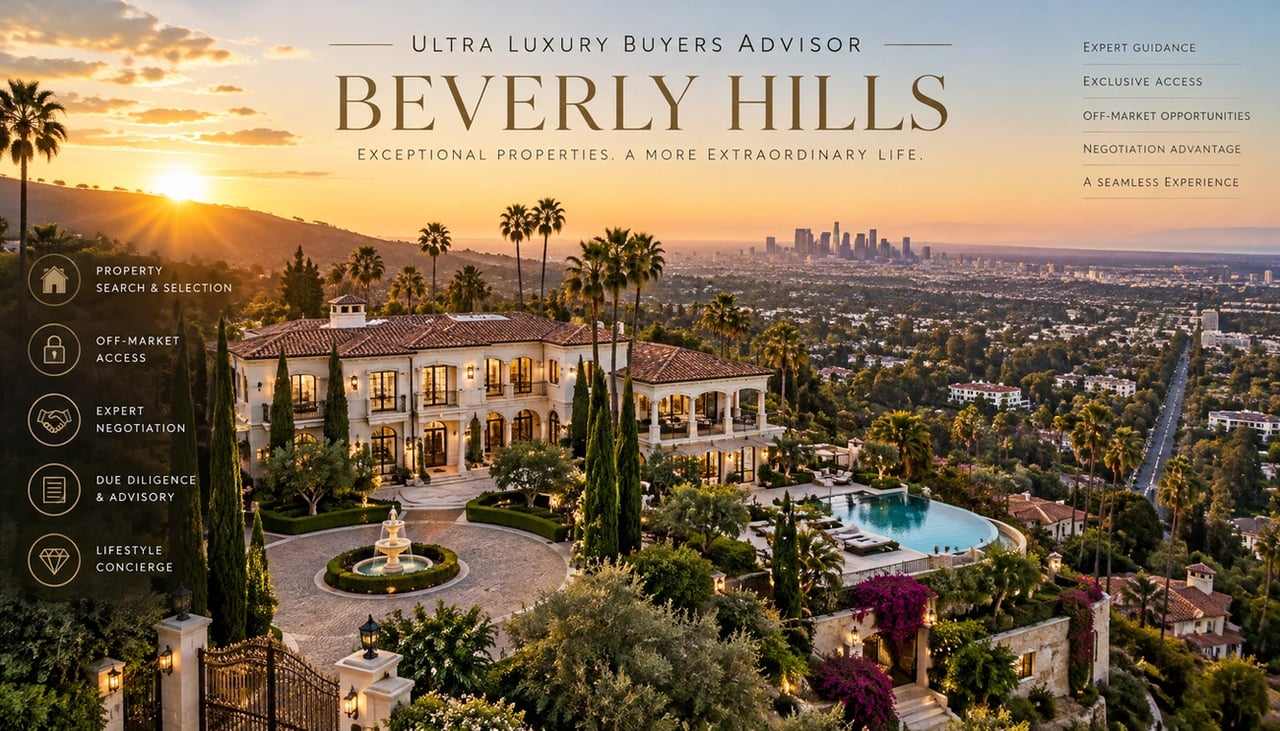
Beverly Hills presents a stunning collection of Mediterranean and Spanish Colonial Revival estates built between the 1920s and 1940s, featuring stucco walls, red clay barrel-tile roofs, and graceful arched openings. Trousdale Estates commands attention with its mid-century modern homes displaying clean horizontal lines, flat roofs, post-and-beam construction, and dramatic glass walls. Contemporary estates showcase expansive glass facades, bold geometric volumes, and refined minimalist details.
Holmby Hills stands apart with properties that masterfully blend classical and contemporary elements, bearing the architectural signatures of legends like Paul Williams, Wallace Neff, and Richard Landry. The magnificent 30,000-square-foot Holmby Hills estate designed by Williams exemplifies 1930s Georgian Colonial Revival architecture at its finest.
Bel Air: Hidden architectural masterpieces
Bel Air's secluded properties span from elegant Spanish and Mediterranean designs with stucco walls and red-tiled roofs to striking mid-century modern homes featuring open floor plans and extensive glass integration. Contemporary architecture here employs dynamic geometric forms, floor-to-ceiling windows, and premium materials including concrete, steel, and glass. Postmodern and deconstructivist designs create visual interest by combining traditional luxury materials with unexpected angles and unconventional layouts.
The Bird Streets: Glass and steel above the city
The Bird Streets have earned their reputation through sleek contemporary designs that maximize both natural light and sweeping city views with expansive floor-to-ceiling glass walls. Paul McClean's five-level estate at 9126 Cordell Drive spans nearly 24,000 square feet of architectural excellence. Woods and Dangaran created the spectacular USD 63.00 million Nightingale mansion incorporating 200 tons of carefully selected Turkish travertine. Views command such premium that homes without them trade at half the value of comparable properties with vistas.
For those who love to entertain, the right home makes all the difference. If you're considering a purchase in the near future or beginning your search, I'd be delighted to help you discover spaces designed for elevated living and effortless hosting. Christina Pope  310-404-9931
  [email protected]
Pacific Palisades and Malibu: Coastal contemporary dominance
Pacific Palisades properties excel at creating privacy through naturally protected areas and thoughtfully concealed architectural designs. Malibu's coastal contemporary style celebrates organic textures, abundant natural light, and seamless indoor-outdoor living achieved through expansive sliding glass doors. Harry Gesner's iconic Sandcastle home, constructed in 1961, pioneered sustainable design using reclaimed materials including old telephone poles and old-growth redwood. Case Study 2.0 has introduced fire-resistant, design-forward homes that arrive pre-approved for construction.
Hidden Hills and gated communities: Custom architectural freedom
Hidden Hills maintains its equestrian character by requiring a 4:12 pitched roof that honors the area's ranch heritage. The stunning 12,000-square-foot residence designed by Bittoni Architects demonstrates how modern Scandinavian influences can blend beautifully with historic ranch elements. Properties here range from classic ranch styles to contemporary farmhouses and Mediterranean-inspired estates, typically positioned on generous one to three-acre lots. Design guidelines and HOA approval processes preserve aesthetic harmony while encouraging individual architectural expression.
The economics of architectural value in richest neighborhoods in LA
Financial realities in the most expensive neighborhoods in Los Angeles follow metrics that standard appraisals overlook. Construction costs span $500 to $1,000+ per square foot in prime locations, with entry-level luxury homes beginning at $3 million. Rebuild costs in Pacific Palisades and Malibu reach $1,000 per foot, establishing replacement values that surpass original purchase prices.
Price per square foot: Design quality impact
Architect-designed homes sell for 12% more than comparable properties. Homes valued above $1 million see architectural features boost value by 19%. Custom architectural design contributes 10% to 15% to property value. A $3 million property gains $300,000 to $450,000 in additional value, frequently surpassing total architectural fees.
Renovation costs for architectural integrity
Demo and prep work ranges between $4 and $17 per square foot. Permits span from $150 to $2,000 depending on scope. Luxury construction demands premium materials: hand-selected marble, reclaimed hardwood, and custom millwork. Smart home systems require $25,000 to $100,000. Custom pools command $100,000 to $250,000+.
How signature architects add 20-40% to property values
Architectural investment yields 10% to 15% in property value. Well-designed homes secure market premiums of $300,000 to $450,000 on $3 million properties. Signature architects establish market differentiation that draws qualified buyers and expedites sales.
Teardown decisions and architectural replacement value
A $14.4 million teardown sold in Holmby Hills on 1.25 acres. Buyers assess land value independently from structure value, weighing replacement costs under current building codes.
Working with architects and designers in luxury markets
Achieving architectural excellence in the richest neighborhoods in Los Angeles demands familiarity with specialized professionals and the regulatory requirements unique to these communities.
Finding architects specialized in high-end LA real estate
IR Architects focuses on contemporary design for multi-million dollar residences across Los Angeles's luxury market, handling projects from 5,000 square-foot contemporary builds to expansive 70,000 square-foot estates. Krueger Architects offers design services for new construction and restoration of Mid-Century Modern homes, historic Hollywood Regency, and Spanish Revival properties throughout Southern California. Landry Design Group contributes over 35 years of experience crafting innovative architecture across diverse styles, scales and locations.
Design review boards and community standards
Design review boards evaluate the visual impact and aesthetic quality of proposed construction within luxury communities. These boards control material selections, roof specifications, building heights, driveway placement and materials, plus exterior color palettes. HOA approval processes extend project timelines based on design complexity. Licensed architects often prove essential, as many exclusive communities mandate architect-prepared submissions.
Project timelines for architectural developments
Complete projects from initial design concepts through final construction typically require 18 to 36 months or longer. The design development phase spans 6 to 12 months, influenced by architectural complexity, site conditions, and community review requirements. Construction phases extend 12 to 24 months or more for sophisticated builds.
Accessing architecturally significant properties off-market
Private transactions dominate luxury sales in Los Angeles's most exclusive neighborhoods. Many architecturally distinguished properties sell without public marketing. Experienced agents with established networks can identify off-market architecturally significant homes that match specific client preferences.
Those who appreciate spaces designed for sophisticated entertaining understand that the right home creates effortless hosting opportunities. For clients beginning their search or considering a purchase, I help identify residences crafted for elevated living and memorable gatherings. Christina Pope 310-404-9931 [email protected]
Conclusion
Architecture now drives value in Los Angeles' most exclusive neighborhoods, with signature design commanding premiums that location alone cannot deliver. Luxury real estate transactions happen through private channels where discretion and timing carry equal weight with price. Buyers who seek properties in these markets benefit from specialists who understand both architectural significance and exclusive opportunities.
Christina Pope – Sotheby's International Realty 310-404-9931 [email protected] EliteResidenceInternational.com
Key Takeaways
Architecture has become the primary value driver in Los Angeles' luxury real estate market, fundamentally changing how wealth is expressed and properties are valued.
• Signature architects add 20-40% to property values in LA's richest neighborhoods, with architect-designed homes selling for 12% more than comparable properties.
• Design quality now trumps location alone as buyers invest in architectural statements rather than just prestigious addresses, with quiet luxury replacing ostentatious displays.
• Each neighborhood has distinct architectural DNA - from Beverly Hills' Mediterranean estates to Bird Streets' glass modernism - that attracts specific buyer profiles and dictates renovation strategies.
• Professional architectural photography is essential for luxury marketing, with high-quality images justifying higher prices and creating emotional connections that sell spaces, not just properties.
• Off-market transactions dominate luxury sales, with nearly 1 in 4 luxury deals never hitting the MLS, making specialized agents crucial for accessing architecturally significant homes.
The shift toward architectural value reflects a broader evolution in luxury real estate, where discerning buyers prioritize craftsmanship, emotional depth, and design integrity over mere square footage or zip code prestige.
FAQs
Q1. How much value does hiring a signature architect add to luxury homes in Los Angeles? Signature architects can add 20-40% to property values in LA's richest neighborhoods. Architect-designed homes typically sell for 12% more than comparable properties, and for homes valued above $1 million, architectural features can increase value by 19%. On a $3 million property, this translates to $300,000 to $450,000 in additional value, often exceeding the total architectural fees.
Q2. What are the typical construction costs for luxury homes in LA's most expensive neighborhoods? Construction costs in prime Los Angeles locations range from $500 to $1,000+ per square foot, with entry-level luxury homes starting at $3 million. In areas like Pacific Palisades and Malibu, rebuild costs can reach $1,000 per square foot. Additional features like smart home systems add $25,000 to $100,000, while custom pools cost between $100,000 and $250,000 or more.
Q3. How long does it take to complete a luxury architectural project in Los Angeles? The full process from initial architectural design to final completion typically ranges from 18 to 36 months or more. The design phase alone takes 6 to 12 months, depending on architectural style, lot orientation, and HOA architectural review guidelines. The construction phase then ranges from 12 to 24 months or longer for complex projects.
Q4. Why do so many luxury properties in LA sell off-market? Nearly 1 in 4 luxury deals in Los Angeles never touch the MLS, instead selling through private channels where discretion carries as much weight as value. Properties in the most expensive neighborhoods often sell privately rather than through public listings, making specialized agents who understand off-market opportunities essential for accessing architecturally significant homes.
Q5. What architectural styles define different luxury neighborhoods in Los Angeles? Each neighborhood has distinct architectural DNA: Beverly Hills features Mediterranean and Spanish Colonial Revival estates alongside mid-century modern homes in Trousdale Estates; the Bird Streets showcase sleek glass and steel contemporary designs; Malibu and Pacific Palisades emphasize coastal contemporary style with indoor-outdoor living; while Hidden Hills blends modern farmhouses with ranch-style architecture on larger lots.