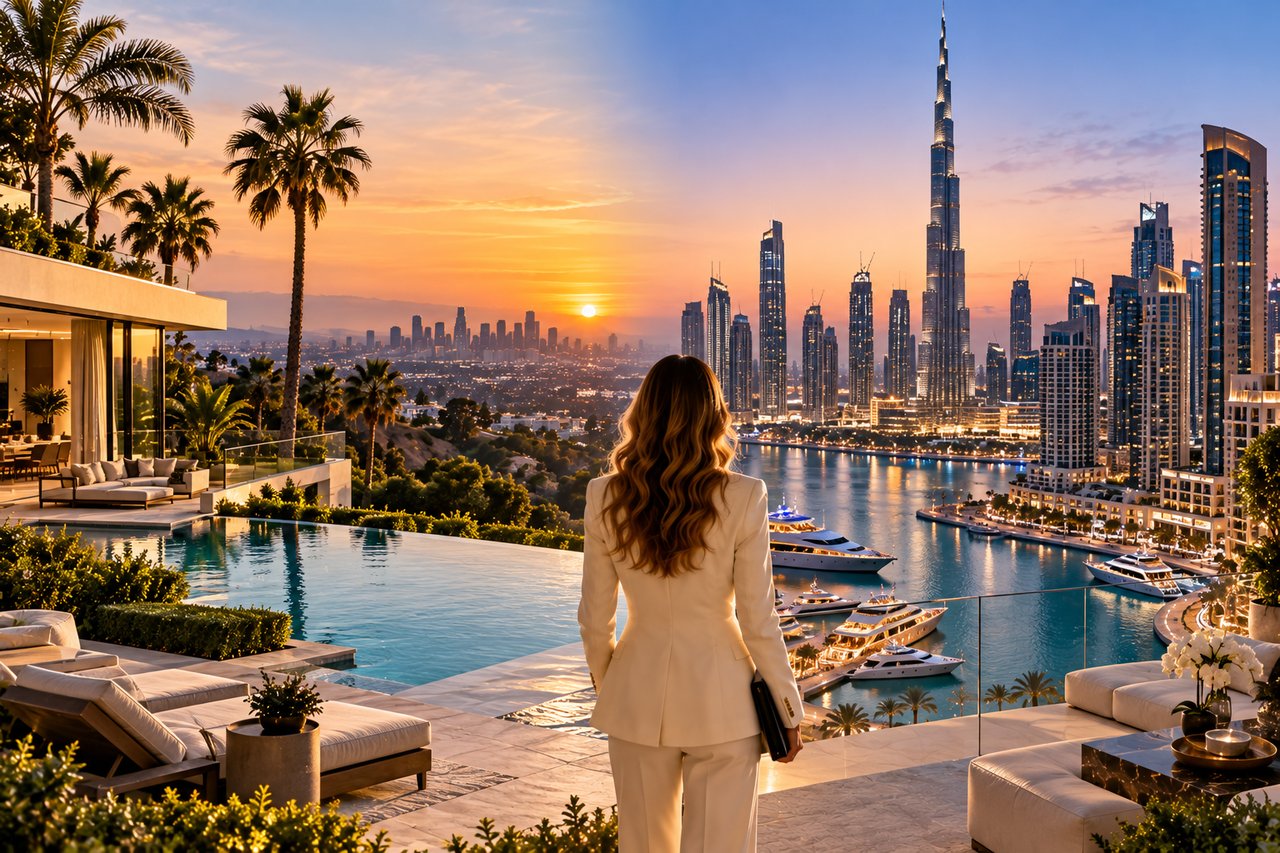
Malibu properties have appreciated 194.22% since 2000, though this figure reveals only the surface of a much deeper story. Luxury real estate across Los Angeles functions within exclusive circles where global tensions quietly shift capital flows toward established safe havens like Beverly Hills and Malibu California. A $120-million transaction in Holmby Hills recently closed without fanfare, typical of how the most significant deals unfold beyond public view. When geopolitical uncertainty rises, international buyers from the Middle East, Asia, and Europe turn their attention to premium American properties, with particular interest in Malibu beach and similar coastal sanctuaries. This examination reveals how world events influence the behavior of discerning buyers, the surge in private transactions, and the calculated positioning within markets that offer stability during turbulent times.
How Geopolitical Tensions Shape Capital Movement in Luxury Markets
"Land monopoly is not only monopoly, but it is by far the greatest of monopolies; it is a perpetual monopoly, and it is the mother of all other forms of monopoly." — Winston Churchill, Former British Prime Minister, historical figure whose insights on land and wealth apply to luxury real estate
Luxury real estate across Los Angeles functions through channels that exist far from public awareness. Major transactions happen within established circles where reputation matters more than publicity. Those who know this market understand that access and timing outweigh external opinions.
International wealth migration patterns during uncertainty
Global wealth movement has hit record levels. 142,000 millionaires relocated across borders during 2025, with numbers expected to reach 165,000 by 2026. This marks the largest voluntary movement of private capital in recorded history. The United Kingdom saw the most dramatic departure, with 16,500 high-net-worth individuals taking £66 billion in liquid assets with them.
The trend extends well beyond millionaires. Among surveyed billionaires, 36% had relocated at least once during 2025, while 44% for those aged 54 and under made similar moves. These relocations stem from calculated risk management rather than opportunity pursuit. Wealthy families now view residency and citizenship as core components of asset protection strategies.
Geopolitical tensions consistently reduce cross-border capital movement across every asset category. Rising uncertainty increases the probability of sanctions, asset seizures, or payment system failures. Smart money exits unstable regions and seeks jurisdictions with proven track records. Emerging markets bear the greatest risk, though solid institutions can offset much of the damage.
Safe haven status of premium U.S. real estate
America welcomed 7,500 new millionaire residents during 2025 based on economic strength alone. Global uncertainty makes residential real estate particularly attractive since quality housing remains essential regardless of market conditions. Strong economic foundations provide enough stability to weather external pressures, keeping housing markets steady with controlled growth even when stock markets stumble.
Money flows toward regulatory stability. Asia-Pacific investors choose Japan, Singapore, and Australia for clear legal frameworks and predictable economic policies. Student housing, workforce housing, and data centers deliver infrastructure-like returns with steady income streams that survive market volatility.
Privacy-driven transactions in Beverly Hills and coastal enclaves
The biggest coastal deals never reach public attention. They close without listings, marketing campaigns, or bidding wars. Beverly Hills sellers and similar communities reject traditional exposure that draws unwanted attention from neighbors, media, and security threats. Serious buyers want exceptional properties without advertising their intentions.
Information moves only through select networks of proven brokers who keep shadow inventories away from public platforms. The process works like whispered introductions where qualified sellers meet qualified buyers directly. This protects family privacy during ownership changes and maintains personal security throughout.
The Invisible Hand: Discretionary Buyers and Off-Market Activity
Off-market transactions dominate premium real estate, with industry experts estimating that at least half of all deals never reach public listing platforms. Some posit that as much as 80 percent of closed deals are "one and done," meaning only one buyer had access to the property. This pattern reflects calculated discretion rather than market inefficiency.
Why high-net-worth individuals prefer confidential sales
Privacy concerns drive off-market preferences across luxury segments. Public listings expose personal details to permanent digital records, creating security vulnerabilities and unwanted attention. High-net-worth individuals face heightened risks when financial dealings become public knowledge, including targeted crime and harassment.
Traditional open houses attract curious visitors with no purchase intent, particularly when sellers are prominent community figures. Private sales limit property information to vetted prospects, protecting both personal safety and financial confidentiality. One Beverly Hills agent no longer photographs wine cellars, safes, or security systems after a $2 million jewelry theft where perpetrators clearly knew the layout.
Off-market transactions provide negotiation advantages by preventing public pressure from influencing terms. Sellers avoid market fatigue from prolonged exposure, while buyers gain exclusive access to properties before competition emerges. These transactions close faster because the process centers on mutual fit rather than broad marketing.
The role of strategic timing in acquisition decisions
Luxury buyers approach decision-making with careful preparation to avoid misalignment costs. What appears as hesitation actually represents thorough planning: quiet capital allocation strategies, refinement of location criteria, and discussions around privacy and long-term ownership structure. The decision has often been forming for months before a buyer appears decisive.
Premium locations attracting global capital: Malibu California and beyond
Southern California communities like Malibu, Bel-Air, and Newport Coast offer the privacy and pedigree that discerning buyers seek: gated estates with panoramic views, private beach access, and celebrated architecture. Malibu beach properties command premiums during uncertain times, combining coastal lifestyle with strategic discretion.
Market Indicators That Signal Conflict-Driven Demand
Certain patterns emerge when you know where to look. International uncertainty leaves distinct markers across premium Los Angeles neighborhoods, and these signals tell a story quite separate from general market conditions.
Foreign buyer activity in Los Angeles County
Foreign buyer activity in the U.S. jumped 44 percent year over year. Chinese buyers consistently rank among top international investors, targeting Beverly Hills, Arcadia, and the Westside for high-end properties and educational access. Canadian buyers favor beachside communities like Santa Monica and Malibu California. Middle Eastern investors from Saudi Arabia, the UAE, and Qatar seek ultra-luxury estates offering privacy and security. International buyers influence pricing strategies in Los Angeles, often paying premiums for prime locations with global marketing.
Price stability in exclusive neighborhoods during global volatility
Ultra-high-net-worth individuals continue viewing real estate as an essential portfolio component. Cash accounted for 88% of luxury home transactions, insulating deals from interest rate fluctuations. Sales of homes priced at $10 million and above rose between February and May 2025 compared to the same period in 2024.
Increased interest in properties with security features
Privacy and security now rank as top concerns for luxury buyers worldwide. Smart security systems can boost home value by as much as 12%.
The Malibu beach premium during uncertain times
Malibu's limited coastline and protected terrain create natural scarcity sustaining long-term value. Prices increased 3.4% during the final quarter of 2024. Following the 2025 fires, New Zealand billionaires purchased $65 million in burned beachfront lots.
Strategic Positioning for Sellers and Sophisticated Buyers
"What we call real estate – the solid ground to build a house on – is the broad foundation on which nearly all the guilt of this world rests." — Nathaniel Hawthorne, Influential 19th-century American author, philosophical perspective on real estate's societal role
Strategic positioning in premium real estate starts with recognizing how wealth moves when circumstances shift. High-net-worth individuals prioritize efficiency and seamless processes over price negotiations. They want clarity in execution, not guarantees of specific outcomes, placing greater value on eliminating unpredictable complications than on immediate financial calculations. The most successful transactions therefore focus on what matters most to these clients: maintaining privacy, handling complexities smoothly, and aligning with their personal values.
Understanding the discretionary buyer's mindset
Affluent buyers view luxury real estate as both personal expression and family legacy building. Almost 40% of U.S. millionaires intend to purchase international properties within the next twelve months. Their decisions span generations, with properties functioning as foundational assets that families can rely on for decades.
When to enter or exit premium markets
Los Angeles luxury real estate favors smart positioning over perfect timing. The fundamentals that drive lasting value—location quality, land scarcity, architectural distinction, and privacy—matter more than short-term market fluctuations. Holding properties long-term makes financial sense given substantial transaction costs and the patient appreciation that premium assets typically deliver.
Working with specialists who understand international transactions
International transactions succeed through experienced teams that include attorneys, translators, and financial advisors familiar with different cultural approaches. These deals require patience and adaptability to work across time zones and legal frameworks. For those who love to entertain, the right home makes all the difference. If you're considering a purchase in the near future or beginning your search, I'd be delighted to help you discover spaces designed for elevated living and effortless hosting. Christina Pope 📞 310-404-9931 ✉️ [email protected]
Long-term value preservation in conflict-resilient locations
Beverly Hills, Malibu California, and similar coastal enclaves retain their appeal across decades through limited supply, protective zoning, and consistent international recognition.
Conclusion
World events continue to influence luxury real estate patterns, though these shifts remain apparent only within established professional circles. Private transactions across Beverly Hills and Malibu California represent thoughtful wealth protection strategies rather than market speculation. Those who understand this market recognize that careful positioning outperforms rushed timing decisions. Premium coastal communities that provide discretion, safety, and stable governance serve as enduring foundations for international families committed to preserving assets across generations through exceptional American real estate.
Key Takeaways
Global conflict is driving unprecedented wealth migration, with luxury real estate serving as a strategic safe haven for international capital seeking stability and discretion.
• Global wealth flight accelerates: 142,000 millionaires relocated in 2025, with 165,000 projected for 2026, representing the largest voluntary capital transfer in modern history.
• Off-market dominance: Up to 80% of luxury transactions never reach public listings, driven by privacy concerns and security risks for high-net-worth buyers.
• Foreign investment surges: International buyer activity jumped 44% year-over-year, with cash comprising 88% of luxury transactions, insulating deals from market volatility.
• Premium locations command conflict premiums: Malibu, Beverly Hills, and coastal enclaves attract global capital due to geographic scarcity, regulatory stability, and natural security features.
• Strategic positioning trumps timing: Successful luxury real estate investment focuses on location quality, privacy preservation, and long-term wealth preservation rather than market timing.
The luxury real estate market operates through exclusive networks where discretion, security, and multigenerational value preservation drive decision-making more than traditional market metrics.
FAQs
Q1. What are the main risks associated with investing in luxury real estate? Luxury properties come with significantly higher carrying costs that scale with property size and value. These include elevated property taxes, insurance premiums, utilities, professional landscaping, and ongoing maintenance. Coastal luxury homes face additional expenses such as salt air maintenance, weather-resistant fixtures, and specialized insurance coverage. Buyers should carefully evaluate these long-term financial commitments before purchasing.
Q2. Why do high-net-worth individuals prefer off-market real estate transactions? High-net-worth buyers choose off-market transactions primarily for privacy and security reasons. Public listings expose personal details to permanent digital records, creating security vulnerabilities and unwanted attention. Private sales limit property information to vetted prospects only, protecting both personal safety and financial confidentiality. Additionally, off-market deals avoid public pressure during negotiations and prevent market fatigue from prolonged exposure.
Q3. How has global wealth migration affected luxury real estate markets? Global wealth migration has reached historic levels, with 142,000 millionaires relocating across borders in 2025 and projections of 165,000 for 2026. This represents the largest voluntary transfer of private capital in modern history. These movements are driven by risk management rather than opportunity-seeking, with wealthy individuals treating residency and citizenship as elements of broader wealth preservation strategies, significantly impacting luxury real estate demand in stable markets.
Q4. What makes certain locations like Malibu and Beverly Hills attractive during times of global uncertainty? Premium locations like Malibu and Beverly Hills offer a combination of geographic scarcity, regulatory stability, privacy, and security features that appeal to international buyers during uncertain times. These coastal enclaves provide gated estates with panoramic views, private beach access, and celebrated architecture. Their limited supply, protected terrain, and sustained global demand create natural scarcity that supports long-term value preservation across generations.
Q5. How do foreign buyers influence the Los Angeles luxury real estate market? Foreign buyer activity in the U.S. luxury market jumped 44% year-over-year, with international investors significantly impacting Los Angeles pricing strategies. Chinese buyers target Beverly Hills and the Westside, Canadian buyers favor beachside communities like Santa Monica and Malibu, while Middle Eastern investors seek ultra-luxury estates offering privacy and security. These buyers often pay premiums for prime locations and typically use cash for transactions, insulating deals from interest rate fluctuations.