Luxury real estate value in high-end markets operates differently than standard property transactions because the most important deals unfold through private conversations rather than public listings. Design and architecture are decisive factors in determining value, yet what separates luxury properties from regular homes are the geometric principles that buyers evaluate before making offers. Lot configuration and floor plan layouts command premium prices in the luxury real estate market. Buyers seeking to understand the luxury real estate meaning recognize that rectangular simplicity and panoramic view potential affect resale value. Strategic room placement matters too. This analysis gets into which type of estate geometry is most desirable and why certain configurations outperform others at the highest price points.
The Geometry Premium: What Distinguishes Luxury Real Estate vs Regular Properties
Zoning regulations separate luxury real estate vs regular properties through development parameters that determine what can be built and how much space remains usable. These restrictions establish the foundation for property value differentiation in high-end markets.
Lot Configuration and Zoning Compliance
Luxury residential zoning imposes specific buildable area limits that standard properties rarely encounter. Lot coverage restrictions cap building footprints at 30-40% of total lot size, with impervious surface limits reaching 50-60% of lot area. Green space requirements mandate minimum 25% of the total lot remain undeveloped.
Setback requirements create the spatial boundaries that define luxury real estate meaning in practice. Front yards require 25-35 feet from property lines. Side yards need 10-15 feet on each side, and rear yards need 20-30 feet of clearance. Corner lots face additional 15-foot street-side setbacks, which affects both development costs and architectural possibilities.
Height restrictions limit luxury properties to 35-45 feet from grade with story limits of 2-3 stories above grade. Zoning codes that restrict buildable volume push developers toward expensive single-family homes when land values are high. This creates the luxury-only phenomenon in desirable locations.
Building Envelope and Maximum Development Rights
Building envelope defines the maximum three-dimensional space a new structure can occupy through combined controls on lot coverage, building height, base height, setbacks, street walls, and courts. Contextual districts now cover 43% of New York City zoning lots. This shows how envelope restrictions shape urban luxury development.
Floor-to-floor height calculations affect story count within height limits directly. A 100-foot height limit accommodates eleven stories at 8 feet 8 inches floor-to-floor height but only ten stories at 9 feet 4 inches. This mathematical constraint forces architects to maximize floor area within envelope restrictions and limits design flexibility.
Corner Lots vs. Interior Parcels
Market data from Woodbridge reveals corner lots sold substantially faster than interior lots and required less price reduction. Yet their price per square foot remained similar to interior lots. Interior lots delivered the most consistent pricing and predictable days on market.
Corner lots provide two street-facing facades and increased natural light. They also offer development flexibility that interior parcels cannot match. Buyers pay for comparable square footage, not lot position. Speed of sale becomes the main advantage rather than price premium in the luxury real estate market.
Floor Plan Layouts That Maximize Resale Value
Floor plan configuration determines resale performance more directly than architectural style in the luxury real estate market. Buyers review spatial relationships and functional efficiency before esthetic priorities.
Open Plan Geometry in Contemporary Design
Open-concept floor plans command premium prices and outperform traditional layouts in original sales prices and long-term appreciation. The uninterrupted flow between living areas creates the main advantage through specific architectural strategies: structural column placement and beam design that frames distinct areas while maintaining openness. Varied ceiling heights and architectural soffits naturally define functional zones. Strategic window placement creates circulation patterns.
Large windows, sliding glass doors and skylights harvest natural light. This reduces artificial lighting requirements and creates uplifting atmospheres. Kitchen islands double as casual dining spaces or conversation areas. They facilitate interaction while maintaining functional zones. Market appeal spans a variety of buyer demographics from young families to empty nesters, with greater flexibility for future renovations as lifestyle needs change.
Formal Room Placement and Traditional Layouts
Traditional house plans feature defined floor plans with rooms for specific uses, unlike modern design with open layouts combining common areas. More walls, hallways and alcoves create this definition. Formal living and dining rooms, porches with columns, and gabled or hipped rooflines distinguish traditional configurations. Split-bedroom layouts appeal to homeowners seeking privacy and aging-in-place flexibility in two-story homes.
Master Suite Location: Single vs. Multi-Story Considerations
Main-level master suites provide accessibility for all life stages and aging-in-place considerations without stair navigation. Second-story locations offer improved privacy away from daily activities. They provide better views from higher vantage points. Resale value depends heavily on local market trends, with some regions preferring single-story accessibility while others favor multi-story separation.
Service Area Integration and Staff Quarters
Staff quarters positioning determines operational efficiency. Adjacent placement to the service core enables movement without crossing principal circulation paths. Detached structures provide clearest separation with covered service passages maintaining connection. Vertical separation uses dedicated stairs serving only staff levels and service cores. Back-of-house corridors running behind the living sequences enable invisible service through dual door positions in rooms requiring regular staff access.
Outdoor Living Space Proportions
Luxury outdoor living extends beyond simple patios to full outdoor kitchens and expansive covered lanais. Fireplaces and continuous indoor-outdoor transitions complete the space. Pool decks, cabanas and multi-level terraces maximize scenic surroundings. Vaulted wood ceilings, recessed lighting and ceiling fans ensure year-round usability.
Site Geometry Factors Buyers Evaluate Before Making Offers
Physical site characteristics reveal value potential before buyers enter a property. Topographical evaluation separates premium parcels from standard offerings in the luxury real estate market.
Elevation Changes and View Potential
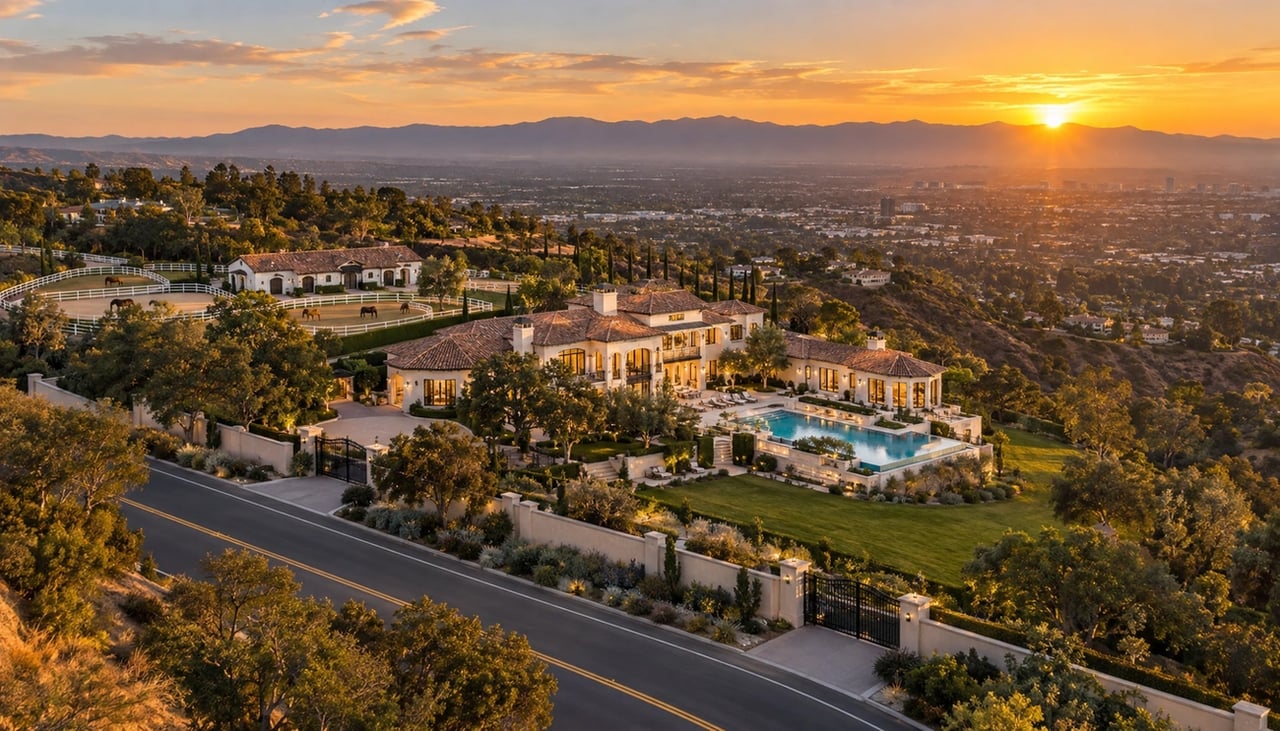
Higher elevations provide cleaner air with less pollution and distance from street noise. They offer natural privacy from neighbors, better flood protection, and superior water drainage. Properties with optimal elevation command higher prices, particularly those with protected views. Rolling topography creates dramatic views from upper levels and main floors. Elevated positioning allows sight lines over neighboring properties and trees. Improved natural light from elevated positioning adds another dimension to value assessment.
Sun Exposure and Seasonal Light Patterns
Eastern exposure delivers morning light that may be delicate in spaces, though bedroom placement requires careful window treatment consideration. Western exposure floods rooms with golden afternoon overtones. Southern exposure provides harsh light throughout the day. Northern exposure offers consistent light that never becomes too harsh or dull.
Neighboring Property Lines and Future Development Risk
Adjacent property construction presents risks including foundation cracks and building facade movement. Ground vibrations from heavy equipment can cause structural shaking and damage, along with soil settlement. Property developers bear responsibility to ensure their work does not damage neighboring properties.
Driveway Grade and Vehicle Access
Sloped terrain requires driveway grades between 5% and 15%. Steeper sites just need retaining walls to ensure safety and prevent runoff damage. Excessive steepness creates slipping hazards during rain. It adds strain to vehicles and drainage systems.
Understanding Which Type of Estate Geometry Is Most Desirable
Market performance data reveals buyers' priorities for specific geometric configurations. To understand which type of estate is most desirable, you need to analyze construction efficiency against luxury value seen in different price segments.
Rectangular Simplicity vs. Complex Articulation
Rectangular homes achieve better energy efficiency. Compact shapes reduce surface area, which means fewer walls and rooflines expose the structure to external elements. This lowers heating and cooling demands. Construction crews work with fewer corners, requiring less framing material and minimizing waste since standard building materials like plywood and drywall are designed for rectangular dimensions. Irregularly shaped homes offer unique, eye-catching designs that create visual interest. They blend with natural landscapes in a harmonious way. The non-linear forms are seen as symbols of luxury and creativity. Added complexity and craftsmanship signal custom, high-end design investment.
Symmetrical vs. Asymmetrical Designs in Different Markets
Symmetrical exteriors favor simpler styles such as Georgian or Craftsman. These center on focal points with identical windows, gables and rooflines on either side. Asymmetrical homes boast intricate design choices including Tudor, Victorian and Contemporary styles. They provide more depth and visual interest through prominently featured components. Many clients want symmetrical front elevations. Some find asymmetry uncomfortable. Builders who provide both forms create more diverse streetscapes and broaden market appeal.
Compact Luxury vs. Sprawling Estates
Homes between 5,000 and 10,000 square feet sell fastest right now. They average 97 days on market compared to 102 days for 2,000-5,000 square foot properties and 126 days for estates exceeding 10,000 square feet. Buyers value manageable spaces from property, acreage and tax viewpoints. Annual taxes on huge homes can reach $90,000.
Conclusion
Property geometry determines luxury real estate value more than architectural style or interior finishes. Rectangular configurations deliver construction efficiency, while elevation positioning and floor plan layouts create the premium pricing that separates high-end properties from standard homes. Buyers evaluating luxury estates should prioritize lot configuration and view potential over esthetic details. These geometric fundamentals are the foundations of resale performance and long-term appreciation in the most competitive markets. The right spatial proportions outperform complex design elements.
Key Takeaways
Understanding how property geometry impacts luxury real estate value helps buyers make informed decisions and maximize their investment potential in high-end markets.
• Rectangular lot shapes and optimal elevation positioning drive higher resale values more than complex architectural details or interior finishes in luxury markets.
• Open-concept floor plans with strategic master suite placement consistently outperform traditional layouts in both initial sales prices and long-term appreciation.
• Properties sized 5,000-10,000 square feet sell fastest at 97 days on market compared to larger estates that average 126 days, proving compact luxury beats sprawling designs.
• Corner lots sell significantly faster than interior parcels despite identical price per square foot, offering speed advantages without premium pricing.
• Southern and western sun exposure combined with protected views from higher elevations create the most desirable site characteristics that luxury buyers evaluate before making offers.
The geometry premium in luxury real estate isn't about elaborate design—it's about functional efficiency, optimal positioning, and strategic spatial relationships that enhance daily living while protecting long-term investment value.
FAQs
Q1. Why do corner lots sell faster than interior lots in luxury real estate markets? Corner lots provide two street-facing facades, increased natural light exposure, and greater development flexibility compared to interior parcels. While they don't command higher prices per square foot, they typically sell significantly faster and require less price reduction during negotiations, making speed of sale their primary advantage over interior lots.
Q2. What floor plan layout maximizes resale value in luxury homes? Open-concept floor plans consistently outperform traditional layouts in both initial sales prices and long-term appreciation. These designs use strategic structural column placement, varied ceiling heights, and natural light harvesting through large windows to create functional zones while maintaining spatial flow. They appeal to diverse buyer demographics and offer greater flexibility for future renovations.
Q3. What is the ideal size range for luxury homes that sell fastest? Properties between 5,000 and 10,000 square feet sell fastest in the luxury market, averaging 97 days on market. This compares favorably to smaller 2,000-5,000 square foot properties at 102 days and larger estates exceeding 10,000 square feet at 126 days. Buyers prefer manageable spaces that balance luxury with practical considerations like maintenance costs and property taxes.
Q4. How do zoning restrictions affect luxury property development? Luxury residential zoning typically limits building footprints to 30-40% of total lot size and imposes height restrictions of 35-45 feet. Setback requirements mandate 25-35 feet from front property lines, 10-15 feet on side yards, and 20-30 feet for rear yards. These restrictions force developers to maximize value within constrained building envelopes, often resulting in expensive single-family homes in desirable locations.
Q5. Should the master suite be located on the main level or upper floor in luxury homes? Main-level master suites provide accessibility for all life stages and aging-in-place considerations without requiring stair navigation. Second-story locations offer enhanced privacy from daily activities and better views from elevated positions. The optimal choice depends heavily on local market preferences, with some regions favoring single-story accessibility while others prefer multi-story separation for privacy.