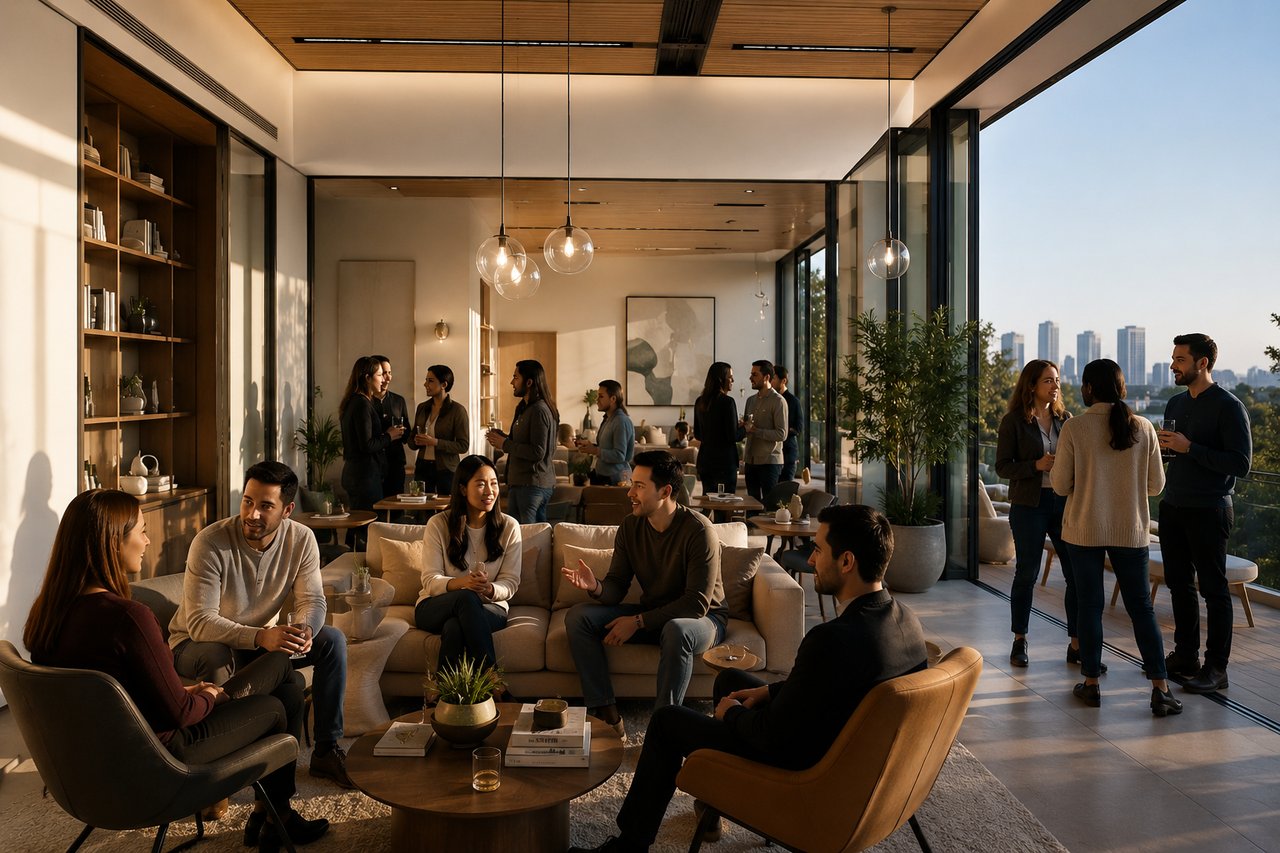
Othership and communities like it have earned serious attention not as passing trends, but as spaces where intellectual engagement and genuine connection carry real social weight. This piece looks at Othership's NYC locations — Flatiron and Williamsburg — what membership actually involves, and why LA's private learning communities have made intellectual networking the pursuit of choice for a new generation of professionals.
The Rise of Intellectual Third Spaces: From Wellness to Learning
"In the absence of informal public life, living becomes more expensive. Where the means and facilities for relaxation and leisure are not publicly shared, they become the objects of private ownership and consumption." — Ray Oldenburg, Sociologist and author of The Great Good Place
Ray Oldenburg coined the term "third places" in 1989 the physical locations beyond home and work where people exchange ideas and build real relationships. Libraries, coffee shops, corner bars, places with low barriers and open doors. The pandemic dismantled most of them and never fully gave them back, clearing space for a different kind of venue: premium wellness clubs that treat health as something shared rather than solitary.
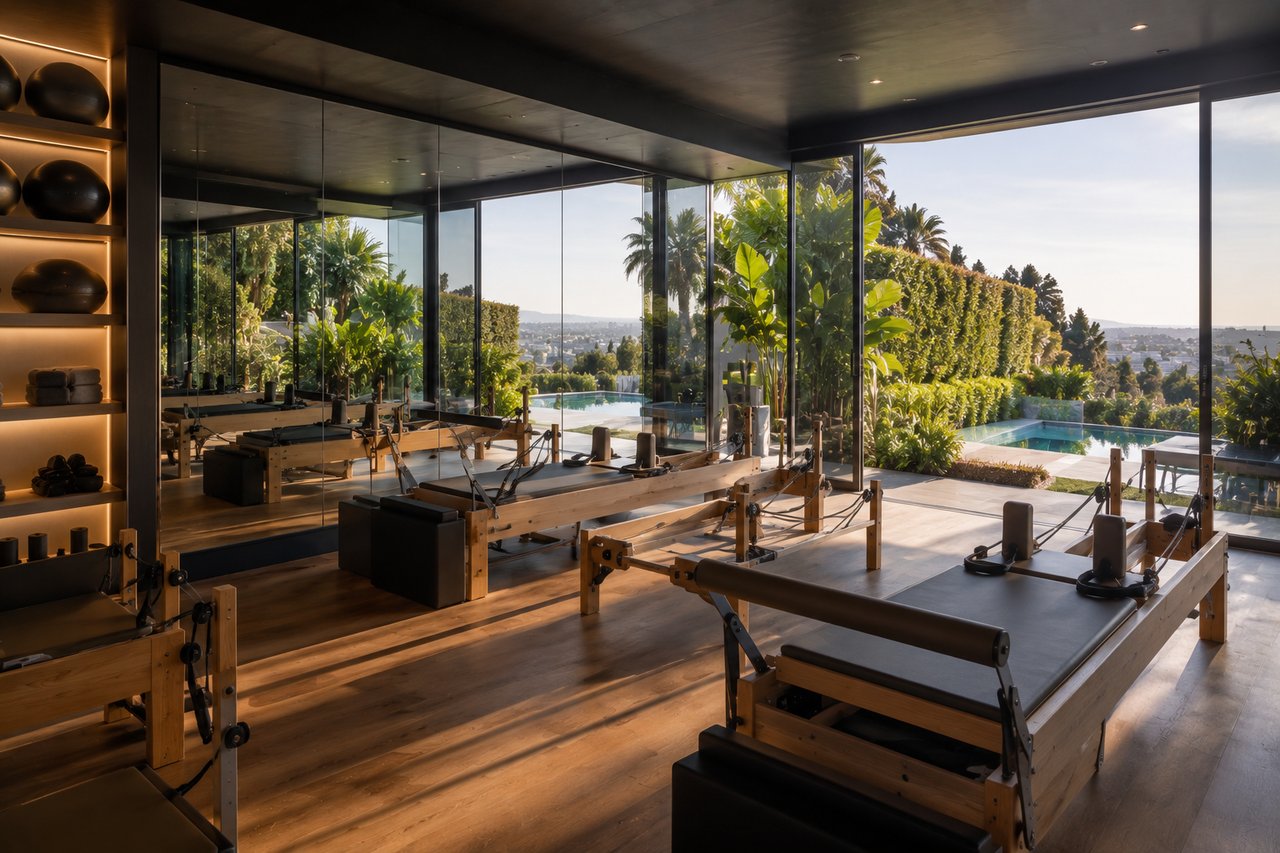
Los Angeles clubs like Heimat and Remedy Place charge $350 monthly for access to multi-floor facilities Pilates studios, saunas, dining rooms where members close deals in meditation rooms and strike up friendships in cold plunges. Othership, with locations in Toronto and NYC, follows the same instinct: alcohol-free spaces where connection happens through guided sauna sessions and ice baths rather than happy hours.
The numbers tell a clear story. Just 18% of young adults aged 18-29 go out several times a week. Only 17% of Gen Z find nightlife appealing, while 43% are drawn to health and fitness. Among Gen Z consumers, 56% place fitness at the center of how they structure their social lives, compared to 40% of consumers overall.
Traditional third places, particularly commercial ones have been closing steadily since 2011. Wellness venues have filled much of that space. What has followed is something more specific: private learning communities where intellectual growth has become its own form of social currency.
Inside Othership Locations: Where Community Meets Cognition
Othership runs four locations two in Toronto at Yorkville and Adelaide, and two in NYC at Flatiron and Williamsburg. The Flatiron space opened in July 2024, offering a 75-person cedar-lined sauna within a 7,000-square-foot facility. Williamsburg followed in October, with a 100-person sauna and two sunken communal cold plunge pools. Saunas hold steady between 175°F and 190°F; cold plunges run from 32°F to 40°F.
Membership starts at $333 monthly. Drop-in classes are priced at $65 for 75-minute sessions, and first-timers can try a two-week intro pass for $135 with one session allowed per day. Three formats are on offer: free flow sessions for those who prefer self-guided use, structured classes that alternate heat and cold exposure with group activities, and evening socials built to replace traditional nightlife.
What Othership delivers that a standard wellness facility cannot is harder to quantify. Co-founder Robbie Bent started the concept in his Toronto garage a gathering of friends who wanted connection without alcohol at the center of it. The model runs on something closer to affective trust, where what a person feels in the room carries more weight than what the science says. Guides with backgrounds in breathwork and meditation walk members through each session, with the explicit goal of lowering the social barriers that most environments quietly reinforce. One member put it simply: it helps overcome the inertia of routine.
LA's Private Learning Communities and the Status Symbol Shift
"Community connectedness is not just about warm fuzzy tales of civic triumph. In measurable and well-documented ways, social capital makes an enormous difference in our lives…Social capital makes us smarter, healthier, safer, richer, and better able to govern a just and stable democracy." — Robert D. Putnam, Political scientist and author
"Community connectedness is not just about warm fuzzy tales of civic triumph. In measurable and well-documented ways, social capital makes an enormous difference in our lives…Social capital makes us smarter, healthier, safer, richer, and better able to govern a just and stable democracy." — Robert D. Putnam, Political scientist and author
Private membership clubs in Los Angeles have opened more locations in the past four years than in the three decades following London's Groucho Club launch in 1985. That pace tells its own story. The membership club market is on track to grow at 11% annually through 2027, reaching an estimated $25.8 billion — numbers that reflect something more than commercial momentum.
San Vicente Bungalows and venues of its kind draw members who are less interested in traditional markers of exclusivity and more focused on the quality of minds in the room. Waiting lists swelled during the pandemic as professionals came to a quiet realization: being well-read and intellectually curious holds a value that no purchase can replicate. When FKA Twigs posed the question "Where are the thinkers?" At her British Library keynote, the response was immediate not because the answer was obvious, but because the question itself struck a nerve.
The concern behind it is well-founded. A review of 71 studies by the American Psychological Association confirmed that excessive short-form video consumption is directly tied to diminished cognitive function. Gen Z has coined "knowledge maxing" as a deliberate counter to that slide, and 84% of Millennials express a genuine sense of duty to contribute something meaningful to the world.
Books now serve as intellectual currency, appearing on Instagram feeds with the same careful intention once reserved for designer pieces. Othership's NYC locations reflect the same instinct thermal experiences valued not just for physical benefit, but for the mental clarity that daily algorithm exposure steadily chips away.
Conclusion
Spaces like Othership and LA's private learning communities are meeting a need that neither apps nor amenities can replicate the kind of connection that comes from shared experience and genuine intellectual engagement. Professionals are voting with their time and their membership fees, choosing environments built around growth over those built around exclusivity. That shift says something worth paying attention to.
For those who want a home that matches how they live and what they value, Christina Pope is ready to help. Reach her at 310-404-9931 or [email protected] to find a space designed for elevated living and the life that goes with it.
Key Takeaways
The rise of intellectual third spaces like Othership reflects a profound cultural shift where meaningful connection and cognitive engagement have replaced traditional luxury as status symbols.
• Loneliness drives demand for community spaces: With 67% of Gen Z and 65% of millennials reporting loneliness, premium wellness venues charging $333+ monthly are filling the void left by declining traditional third places.
• Wellness became social infrastructure: Only 17% of Gen Z find nightlife appealing versus 43% drawn to health and fitness, making spaces like Othership's sauna sessions the new networking venues.
• Intellectual engagement signals status: Private learning communities and "knowledgemaxxing" emerged as antidotes to digital brain rot, with books and deep thinking replacing designer goods as social currency.
• Membership clubs boom reflects behavioral change: The private club market is growing 11% annually to reach $25.8 billion by 2027, driven by professionals seeking communities built around shared knowledge rather than exclusivity.
• Structured rituals create authentic connection: Othership's guided breathwork and thermal experiences foster emotional trust and break down social barriers that algorithms cannot replicate, offering genuine human connection in an increasingly isolated world.
These spaces aren't temporary trends—they represent a fundamental reimagining of how people invest in relationships, personal growth, and social belonging in the post-pandemic era.
FAQs
Q1. What makes Othership different from a traditional sauna or wellness facility? Othership goes beyond standard wellness services by combining structured thermal experiences with community building and emotional connection. Sessions include guided breathwork, meditation, and group activities that alternate between heat exposure (175°F-190°F saunas) and cold plunges (32°F-40°F), designed to break down social barriers and create meaningful connections rather than just providing transactional wellness services.
Q2. Which Othership location should I choose—Flatiron or Williamsburg? Both NYC locations offer unique experiences: Flatiron features a 75-person cedar-lined sauna in a 7,000-square-foot space, while Williamsburg houses a larger 100-person sauna with two sunken communal cold plunge pools. Your choice depends on capacity preference and neighborhood convenience, as both provide the same membership benefits and session formats.
Q3. How much does Othership membership cost and what's included? Othership membership starts at $333 monthly and provides access to all locations. Drop-in classes cost $65 for 75-minute sessions, while first-timers can try a two-week intro pass for $135 allowing one session daily. Members can choose between free flow self-guided sessions, structured classes, and evening social events.
Q4. Why are intellectual networking spaces becoming status symbols? With 67% of Gen Z and 65% of millennials experiencing loneliness and concerns about digital brain rot, being well-read and intellectually engaged has replaced traditional luxury markers. Only 17% of Gen Z find nightlife appealing compared to 43% drawn to health and fitness, making knowledge-based communities and cognitive engagement the new social currency.
Q5. Is Othership safe and how do they maintain hygiene standards? Othership prioritizes health and safety through strict sanitization policies, extensive filtration systems, and chlorination systems for the pools. They adhere to health regulations and maintain high standards across all locations to ensure a safe environment for all members during thermal and cold plunge experiences.