Why New Yorkers Are Choosing Los Angeles Luxury Real Estate
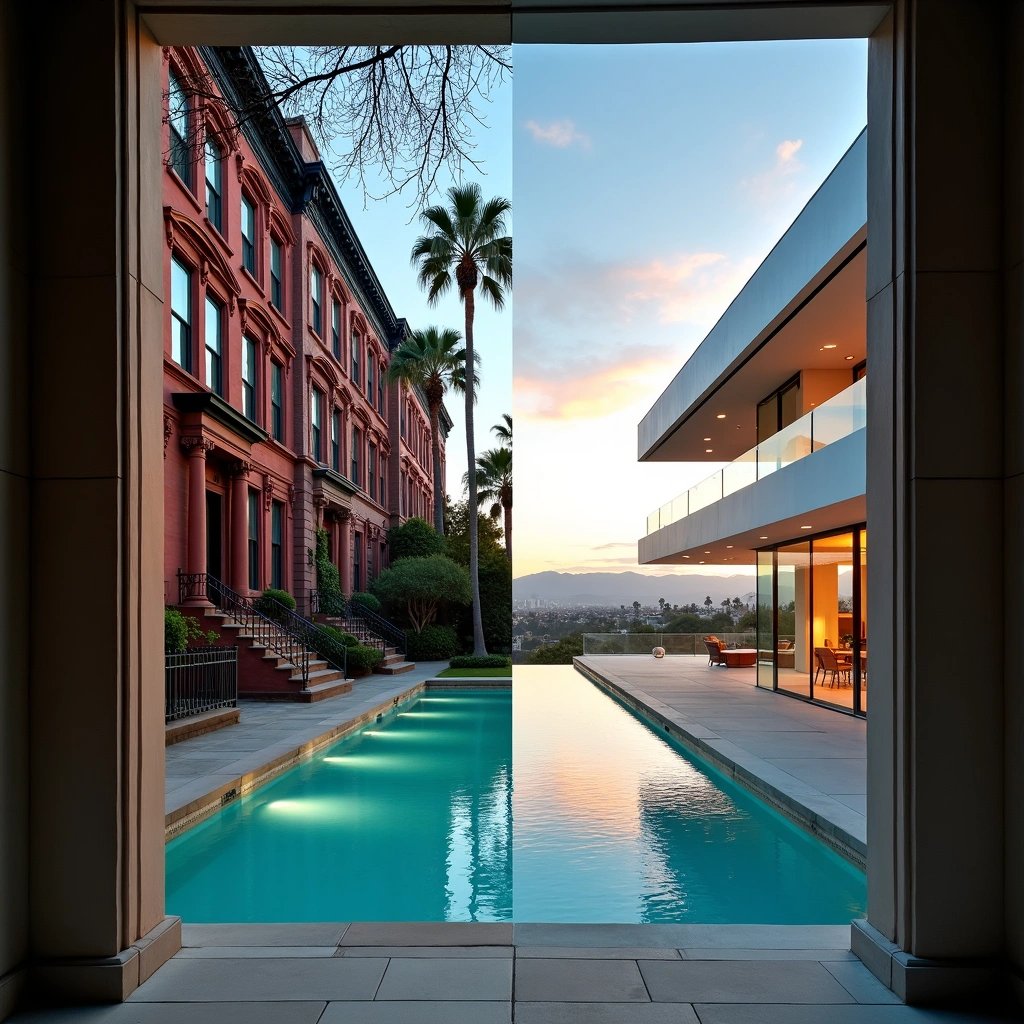
The migration from Manhattan penthouses to LA estates reflects more than geographic preference. High-net-worth individuals find that wealthy neighborhoods in Los Angeles offer structural advantages unavailable in New York's vertical landscape.
Space, Privacy, and Architectural Freedom
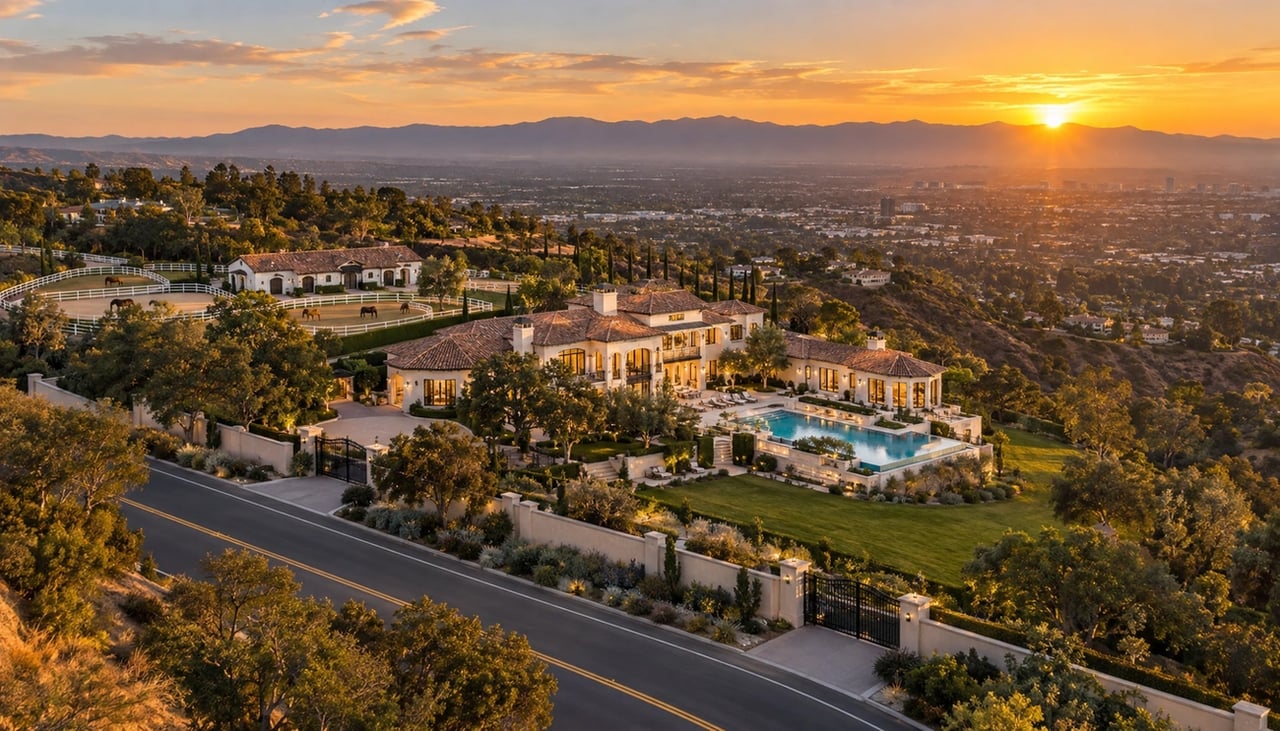
Luxury buyers moving to affluent neighborhoods in Los Angeles prioritize separation from constant exposure. Privacy features once thought secondary now shape purchasing decisions: concealed entrances, mature landscaping that positions homes away from street view, and gated access with extended driveways. Buyers sacrifice square footage in exchange for emotional comfort and genuine seclusion, a change that would have been uncommon a decade earlier. The architectural freedom available on larger lots allows custom design that reflects personal vision rather than conforming to existing structures.
Climate and Outdoor Living Benefits
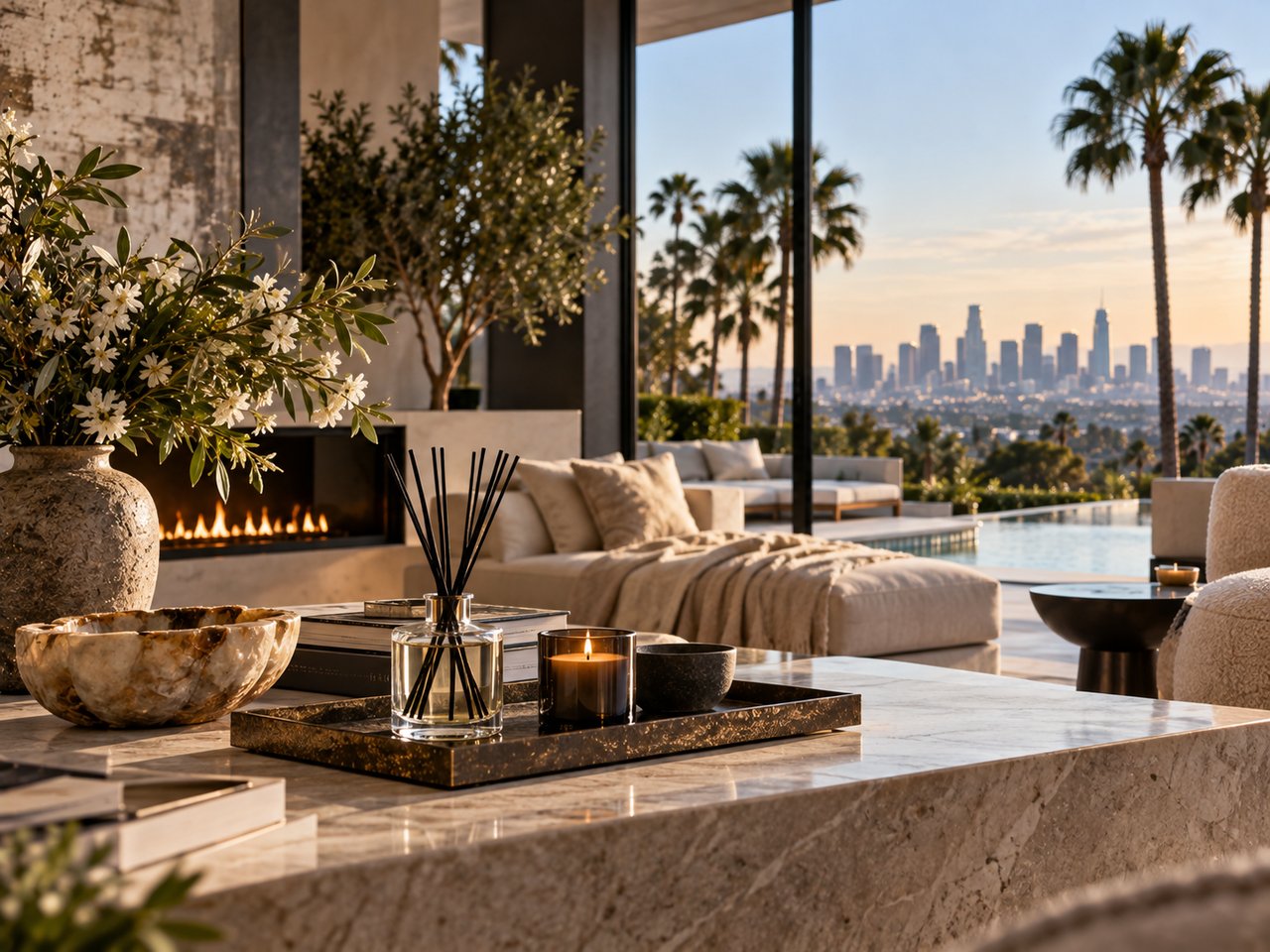
Southern California's weather transforms outdoor infrastructure into year-round living space. Beverly Hills, Bel Air, and Pacific Palisades feature covered outdoor living rooms, chef-grade outdoor kitchens, and resort-style pools with fire features that function as primary entertaining zones rather than seasonal amenities. Well-designed outdoor spaces add substantial property value while reshaping daily experience. Privacy-focused landscaping and climate-controlled entertainment areas extend usable square footage without the structural costs of interior additions.
Entertainment Industry and Tech Ecosystem Opportunities
LA's tech employment increased 14.6 percent between 2016 and 2017. Major firms including Google, Facebook, Apple, Amazon, Netflix, and Spotify opened new offices. The region's entertainment and content industries generate $55.90 billion each year and support 265,200 jobs in film and digital media. Technology and entertainment meet here to create career opportunities distinct from New York's finance-centered economy. Founders who no longer face questions about keeping companies outside Silicon Valley find this attractive.
Tax Considerations for High-Income Relocations
Changing domicile from California requires both physical relocation and intent to reside in the new state. California maintains a safe harbor provision if you spend fewer than 183 days in the state. Deferred bonuses remain allocated to California based on where work was performed, whatever your residency at payment. Equity compensation faces particular scrutiny, with taxation evaluated from grant to exercise date for stock options.
Best Places to Live in Los Angeles: Neighborhood Guide by NYC Comparison
Best Places to Live in Los Angeles: Neighborhood Guide by NYC Comparison
Choosing among the best neighborhoods in Los Angeles requires understanding how Manhattan and Brooklyn lifestyles translate across a horizontal, car-dependent landscape where best places to live in Los Angeles prioritize different values than vertical New York.
For Upper East/West Side Residents: Beverly Hills and Hancock Park
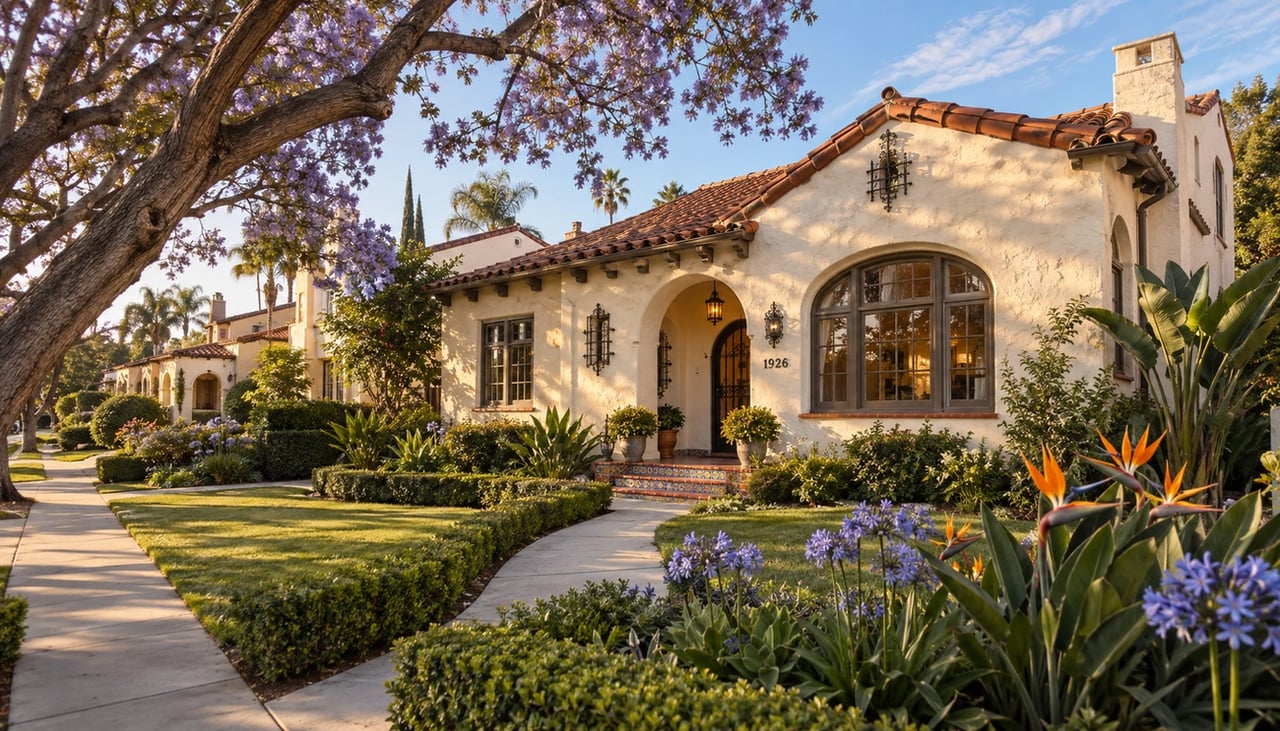
Hancock Park delivers historical prestige comparable to Upper East Side elegance. The neighborhood was developed in the 1920s with 50-foot setbacks and generous lots that range from 10,000 to 20,000 square feet. It features Period Revival estates in Spanish Colonial, Tudor and Mediterranean styles. Tree-lined streets create park-like atmospheres while maintaining proximity to downtown (10 minutes east) and Hollywood. Pricing ranges from $600 to $1,200 per square foot based on condition. Beverly Hills offers contemporary luxury with smaller lots around 7,500 square feet but attracts tourists daily. Hancock Park maintains quiet, family-oriented streets.
For Tribeca and SoHo Buyers: Venice and Culver City
Culver City functions as LA's creative epicenter. The city has a population of 40,779 and became a film and television production hub in the 1920s. It housed Metro-Goldwyn-Mayer studios from 1924 to 1986. Sony Pictures Entertainment maintains headquarters here among a formally designated Art District filled with galleries and restaurants. Venice offers eclectic beach culture with artistic spirit, iconic boardwalk atmosphere and Abbot Kinney Boulevard's shops and dining.
For Park Slope and Brooklyn Heights Families: Pasadena and South Pasadena
South Pasadena ranks in California's Top 5 unified school districts and offers Gold Ribbon and National Blue Ribbon designations across its elementary, middle and high schools. This incorporated city of 10,584 residents maintains small-town walkability with historic homes, tree-lined streets (Tree City USA member) and a farmers market adjacent to the Gold Line station. Pasadena features eight distinct neighborhoods with diverse architectural styles and Caltech proximity.
For Upper West Side Culture Seekers: Brentwood and Westwood
Brentwood delivers prestigious estates with lower population density than most LA neighborhoods and features large lots with proximity to both the 405 and 10 freeways. Condos start under $1 million while estate mansions reach $50 million. Westwood surrounds UCLA campus with median household income of $68,716 and Westwood Village's Mediterranean-style shopping district. The right home makes all the difference if you love to entertain. Christina Pope would be delighted to help you find spaces designed for sophisticated living and effortless hosting if you're thinking over a purchase in the near future or beginning your search.  310-404-9931
  [email protected]
For Financial District Professionals: Downtown LA Luxury Towers
Hope + Flower, THEA at Metropolis and 825 South Hill represent downtown's luxury vertical living. THEA features over 1.5 acres of outdoor space including downtown's largest pool. Units range from studios to three-bedroom residences (496-1,656 square feet) and penthouses (2,571-3,487 square feet). Hope + Flower positions residents steps from LA LIVE, Convention Center and entertainment district.
What to Expect: Lifestyle Adjustments from NYC to LA
The move between affluent neighborhoods in Los Angeles and Manhattan's vertical density requires recalibrating daily routines around fundamentally different infrastructure.
Car Culture and Commute Planning
Vehicle ownership becomes non-negotiable. Data shows 78% of LA County commuters drive alone, with mean commute times reaching 31 minutes. The region recorded 336 automotive fatalities in 2023. Traffic patterns require flexible work schedules to avoid peak congestion between 7:00-10:00 AM and 4:00-7:00 PM. Navigation apps function as essential tools rather than conveniences. Therefore, proximity to work or freeway access influences neighborhood selection more than walkability scores.
Social Scene and Community Building
LA's sprawling geography requires intentional community formation. Shared interest groups, consistent participation in neighborhood activities, and frequenting local establishments create social foundations that don't form on their own. The city's size can feel isolating despite its population density. Regular attendance at selected venues proves more valuable than attempting broad social reach.
Dining, Arts, and Cultural Amenities
Los Angeles hosts more museums and theaters than any US city. The Broad, Getty Center, LACMA, Walt Disney Concert Hall, and Hollywood Bowl anchor a cultural infrastructure comparable to New York's, though geographically dispersed. Patina at Disney Hall and Otium near The Broad provide arts-adjacent dining experiences like Lincoln Center's offerings.
Home Size and Property Features
Properties prioritize horizontal expansion over vertical density, with outdoor entertainment zones functioning year-round rather than seasonally.
Navigating LA's Luxury Market: Insider Strategies
You need to understand systems that operate beyond public listings and standard procedures to secure properties among the most coveted addresses in Los Angeles neighborhoods.
Finding Off-Market Properties Through Exclusive Networks
Approximately 25% of luxury transactions never reach the Multiple Listing Service. LA properties go off-market for privacy and price testing. Celebrity requirements also play a role. Access gets controlled through Compass Private Exclusive channels and verified broker networks. A Bel Air property at $20 million that avoids public searchability requires agents with direct Compass network access. Dual agency presents the highest risk in LA luxury markets. Measure ULA imposes 4% transfer tax on sales between $5-10 million and 5.5% above $10 million. This affects seller pricing calculations. Buyer verification with proof-of-funds becomes mandatory before viewings at $10 million and above. Off-market pricing reflects full market value rather than discounts.
Understanding Multiple Offer Situations
Competitive situations favor offers with fewer contingencies and higher earnest money deposits of 1-3% of purchase price. Buyers must cover differences between offered price and appraised value out-of-pocket for appraisal gaps. Cash offers eliminate financing uncertainty.
Inspection and Due Diligence Differences
California purchase agreements include timeframes to review seller disclosures, inspections and zoning verification. You reduce negotiation options if you miss due diligence deadlines.
Closing Process and Timeline Expectations
California closing occurs when the County Clerk records the deed, not at document signing. Buyers receive Closing Disclosure statements three days before signing. The average process spans 43 days.
Conclusion
Los Angeles luxury real estate rewards those who understand its private nature. In stark comparison to this, public listings pale against the most distinguished properties that circulate through discreet networks where timing and relationships determine access. New Yorkers who recognize this difference position themselves to work with agents connected to off-market inventory and insider knowledge. The transition from vertical Manhattan to horizontal LA becomes smooth when professionals who guide both visible markets and exclusive opportunities that define the city's highest tier lead the way.
Key Takeaways
For New Yorkers considering LA's luxury market, success depends on understanding the city's unique geography, culture, and exclusive property networks.
• Match neighborhoods to NYC lifestyle: Beverly Hills/Hancock Park mirror Upper East Side elegance, while Venice/Culver City offer Tribeca's creative energy with California flair.
• Embrace car-dependent living: LA's 31-minute average commute and sprawling geography require strategic neighborhood selection based on freeway access rather than walkability.
• Access off-market luxury properties: 25% of high-end transactions never reach public listings—success requires agents with exclusive network connections and verified buyer credentials.
• Prepare for horizontal luxury living: Properties prioritize outdoor entertainment spaces, privacy features, and architectural freedom over vertical density, fundamentally reshaping daily lifestyle.
• Navigate California's tax implications: Measure ULA adds 4-5.5% transfer tax on luxury sales, while residency changes require careful planning for high-income earners.
The key to LA luxury real estate lies in understanding its private nature—the most distinguished properties circulate through discreet networks where relationships and timing determine access, making professional guidance essential for successful transitions from Manhattan's vertical market to LA's horizontal luxury landscape.
FAQs
Q1. Which Los Angeles neighborhoods are most similar to New York's Upper East and West Side? Beverly Hills and Hancock Park offer the closest comparison to Upper East and West Side living. Hancock Park features historic estates with generous lots, tree-lined streets, and architectural elegance reminiscent of Manhattan's prestigious neighborhoods, while Beverly Hills provides contemporary luxury with established prestige and refined amenities.
Q2. Can you live in Los Angeles without a car like you can in New York City? While technically possible, living car-free in LA is significantly more challenging than in NYC. Approximately 78% of LA County commuters drive alone, with mean commute times of 31 minutes. Unlike New York's comprehensive subway system, LA's public transportation is limited, making vehicle ownership practically essential for most residents to access work, shopping, and social activities efficiently.
Q3. What lifestyle adjustments should New Yorkers expect when moving to Los Angeles? The transition requires adapting to car-dependent living, horizontal rather than vertical density, and intentional community building. Social connections don't form as organically due to LA's sprawling geography, requiring consistent participation in neighborhood activities and interest groups. However, year-round outdoor living, larger home sizes, and abundant natural surroundings offer lifestyle benefits unavailable in New York.
Q4. How does the luxury real estate buying process differ between LA and NYC? LA's luxury market operates with significant off-market activity, with approximately 25% of high-end transactions never reaching public listings. Access requires connections to exclusive broker networks. Additionally, California's Measure ULA imposes 4-5.5% transfer tax on luxury sales, and the closing process occurs when the County Clerk records the deed rather than at document signing, typically spanning 43 days.
Q5. Which LA neighborhoods work best for families relocating from Brooklyn? Pasadena and South Pasadena offer the strongest match for families from Park Slope or Brooklyn Heights. South Pasadena ranks in California's Top 5 unified school districts with Gold Ribbon and National Blue Ribbon designations, while maintaining small-town walkability, tree-lined streets, historic homes, and a strong sense of community similar to Brooklyn's family-oriented neighborhoods.