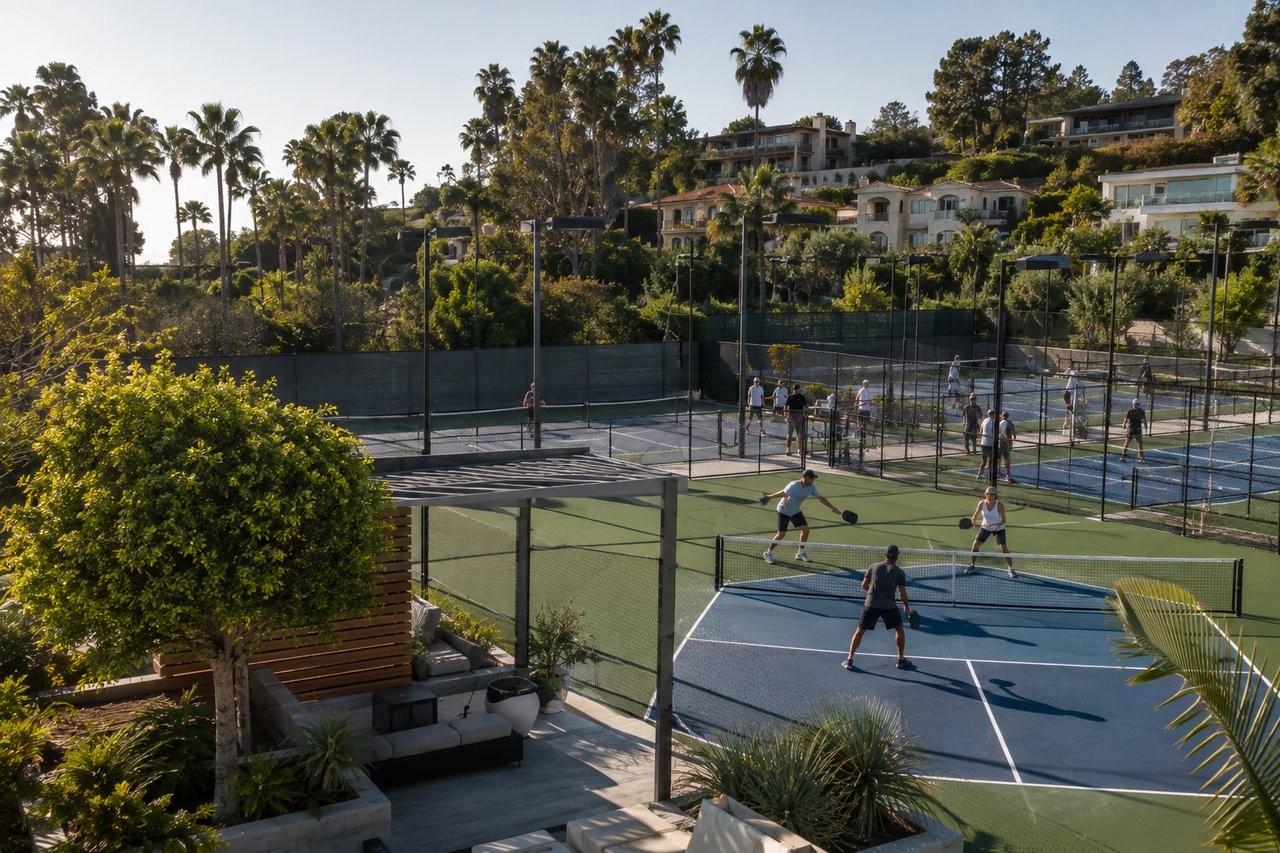
Public pickleball courts Los Angeles residents frequent have become an unexpected competitor to traditional backyard pools in the city's evolving lifestyle landscape. Pickleball has exploded across the nation. More than 36 million people welcome the sport nationwide. California leads the country with nearly 3,600 courts, and Los Angeles has experienced a dramatic transformation as courts fill early in the morning and remain packed throughout the day. The sport's momentum accelerated substantially in 2019 and became a pandemic phenomenon by 2020. Homeowners now face a direct question: invest in private pool maintenance or welcome the vibrant community found at public courts. This change reflects broader shifts in how Angelenos approach recreation, social connection and property value considerations.
The Cultural Shift: From Backyard Pools to Public Court Communities
"Community is much more than belonging to something; it’s about doing something together that makes belonging matter." — Brian Solis, Digital marketing expert and author
Backyard pools once symbolized California luxury, yet homeowners now favor public pickleball facilities over private aquatic amenities. A backyard game court stays active year-round. Pools sit unused for months due to weather and seasonal limitations. One homeowner reported using their game court ten times more than their pool and noted the court created genuine family time.
Maintenance realities drive this transition. Pools just need chemicals and constant cleaning, whereas pickleball courts require minimal upkeep. HOA communities face substantial pool costs including chemical treatments and liability insurance. These facilities serve residents only during warmer months but incur year-round maintenance expenses.
Swimply, the private pool rental platform, expanded to pickleball courts after recognizing the sport's superior economics. Court owners earn between $1,000 and $3,000 monthly, with rentals ranging from $25 to $100 per hour. The company projects pickleball revenue will surpass pool rentals within three years, driven by players who participate several times weekly. Pools generate most revenue between Memorial Day and Labor Day. Pickleball operates year-round in warmer states.
Construction costs further favor courts over pools and allow homeowners to recoup investments within one to two years.
Mapping Los Angeles' Most Sought-After Public Pickleball Locations
Los Angeles has public pickleball courts in a variety of neighborhoods, from beachside Santa Monica to inland Pasadena. Memorial Park in Santa Monica dominates the west side with 16 courts created by lining four tennis courts for pickleball. Players find 4.5+ skill levels during regular pickup games. Courts become very busy after 5pm on weekdays. The facility operates as a free county park and features individual paddle racks for each court rather than shared systems.
Beverly Hills charges residents $12 per hour and non-residents $17 per hour at La Cienega Tennis Center, which maintains eight dedicated pickleball courts. West Hollywood operates two major facilities: Plummer Park with four lighted multi-use courts plus one paddle court, and West Hollywood Park with six lighted courts. Both locations require $8 per hour reservations.
East-siders access Allendale Park in Pasadena, where four outdoor dedicated courts operate free with a rotating queue system. El Segundo Recreation Center provides four dedicated outdoor courts for South Bay residents.
Peak hours fill between early mornings before work, after-work sessions and weekend mornings. Court time requires planning ahead. Players identify which venues fill quickly and book best pickleball courts during off-peak midday or late-evening slots when recreational pickleball activity decreases.
What This Trend Means for Property Decisions
Luxury real estate in Los Angeles operates through private conversations and timing rather than headlines. The biggest transactions unfold within trusted circles, where discretion matches value in importance. Proximity to public pickleball courts los angeles facilities now influences these property decisions. Traditional amenities once dominated conversations.
Properties next to pickleball courts face value declines of 10% to 20% due to noise reaching 70 decibels up to 100 feet away. Noise above 55 decibels constitutes a nuisance, and as many as 60% of homebuyers refuse to purchase homes next to courts whatever the price. One Massachusetts couple blamed constant racket for hampering their $1 million home sale over eight months despite price reductions.
Distance calculations matter by a lot. Properties one to two blocks away see declines of 5% to 10%, and homes three blocks distant enter neutral territory. The optimal range sits four to six blocks away. Property values increase 1% to 5% there as noise becomes inaudible yet best pickleball courts remain available.
The right home makes all the difference for those who love to entertain. Christina Pope would be delighted to help you find spaces designed for effortless hosting if you're thinking over a purchase in the near future or beginning your search. Christina Pope 📞 310-404-9931 ✉️ [email protected]
Conclusion
The pickleball phenomenon has fundamentally altered recreational priorities in Los Angeles. Homeowners now weigh court proximity among traditional amenities when evaluating properties. Maintenance economics favor game courts over pools, and community engagement sustains participation year-round. Distance matters most. Properties four to six blocks from facilities capture benefits without noise disruptions. This fundamental change reflects broader shifts in how Angelenos value social connection and active lifestyles over isolated luxury amenities.
Key Takeaways
Los Angeles homeowners are increasingly choosing public pickleball courts over private pools, reflecting a major shift in recreational priorities and property investment decisions.
• Pickleball courts deliver superior economics: Homeowners use game courts 10x more than pools, while court owners earn $1,000-$3,000 monthly with year-round revenue versus pools' seasonal limitations.
• Strategic distance from courts impacts property values significantly: Homes 4-6 blocks away see potential 1-5% value increases, while adjacent properties face 10-20% declines due to noise concerns.
• LA offers diverse court access options: From free facilities like Memorial Park's 16 courts to premium venues charging $8-17 per hour, players find options across neighborhoods from Santa Monica to Pasadena.
• Community engagement trumps private amenities: The social factor and minimal maintenance requirements make public courts more appealing than isolated backyard pools that demand constant upkeep and chemicals.
This trend signals a broader cultural transformation where access to shared recreational spaces outweighs traditional luxury ownership, fundamentally changing how Angelenos evaluate property decisions and lifestyle priorities.
FAQs
Q1. How do pickleball courts compare to pools in terms of year-round usage and maintenance? Pickleball courts remain active throughout the year and require minimal upkeep, while pools often sit unused for months due to weather limitations and demand constant maintenance including chemicals, heaters, and cleaning. Homeowners report using their game courts approximately ten times more frequently than their pools, with courts creating more opportunities for family engagement and social interaction.
Q2. Can proximity to pickleball courts affect residential property values? Yes, distance from pickleball courts significantly impacts home values. Properties located immediately adjacent to courts may experience value declines of 10-20% due to noise concerns, while homes situated one to two blocks away might see 5-10% decreases. However, properties positioned four to six blocks from facilities can potentially gain 1-5% in value, as they benefit from convenient access without noise disruptions.
Q3. Where can I find the best public pickleball courts in Los Angeles? Los Angeles offers diverse options across neighborhoods. Memorial Park in Santa Monica features 16 courts and attracts high-level players, though it becomes extremely busy after 5pm on weekdays. Beverly Hills' La Cienega Tennis Center provides eight dedicated courts with hourly fees, while Pasadena's Allendale Park offers four free outdoor courts with a rotating queue system. West Hollywood operates facilities at both Plummer Park and West Hollywood Park with lighted courts available for reservation.
Q4. What are the financial benefits of owning a pickleball court versus a pool? Court owners can earn between $1,000 and $3,000 monthly through rentals, with rates ranging from $25 to $100 per hour. Construction costs favor courts over pools, allowing homeowners to recoup their investment within one to two years. Unlike pools that generate revenue primarily during summer months, pickleball courts operate profitably year-round in warmer climates with minimal ongoing expenses.
Q5. What should I consider when booking time at popular pickleball venues? Peak hours consistently fill during early mornings before work, after-work sessions, and weekend mornings. To secure court time, players should plan ahead by identifying which venues fill quickly and booking during off-peak periods such as midday or late-evening slots when recreational activity decreases. Many facilities offer reservation systems, with fees varying from free at county parks to $8-17 per hour at premium locations.