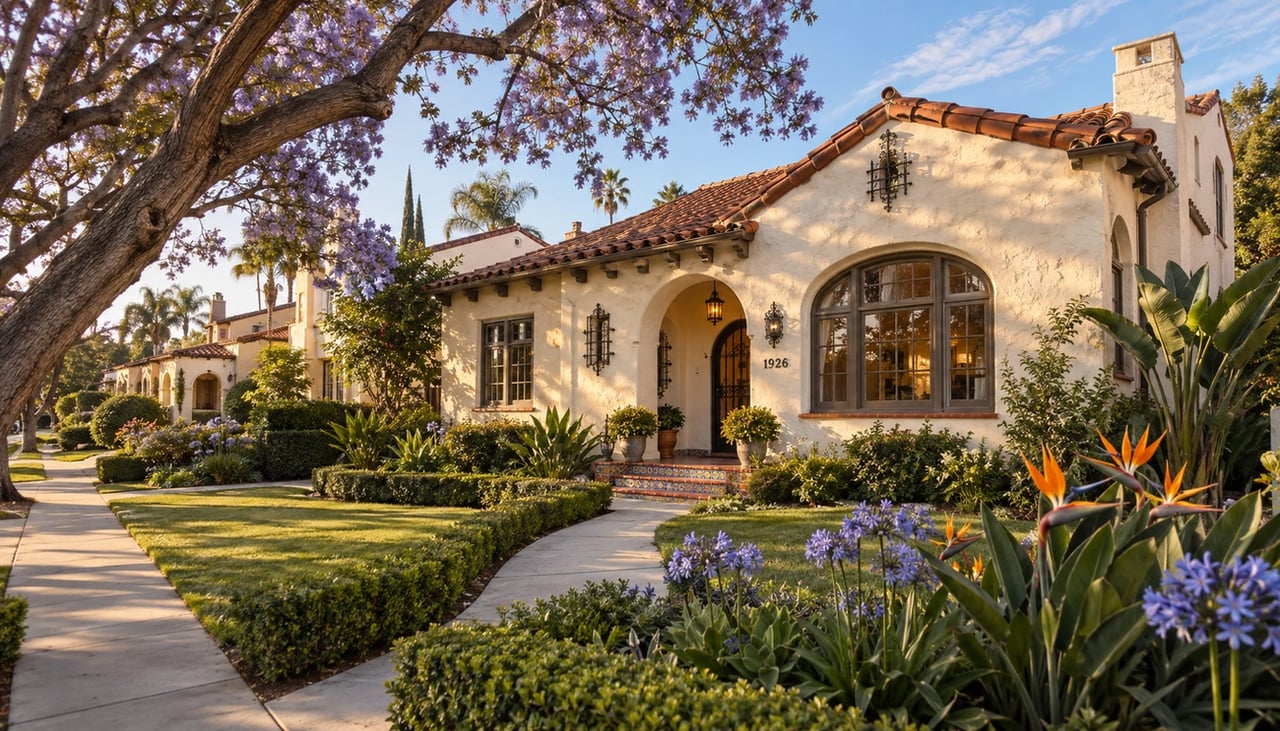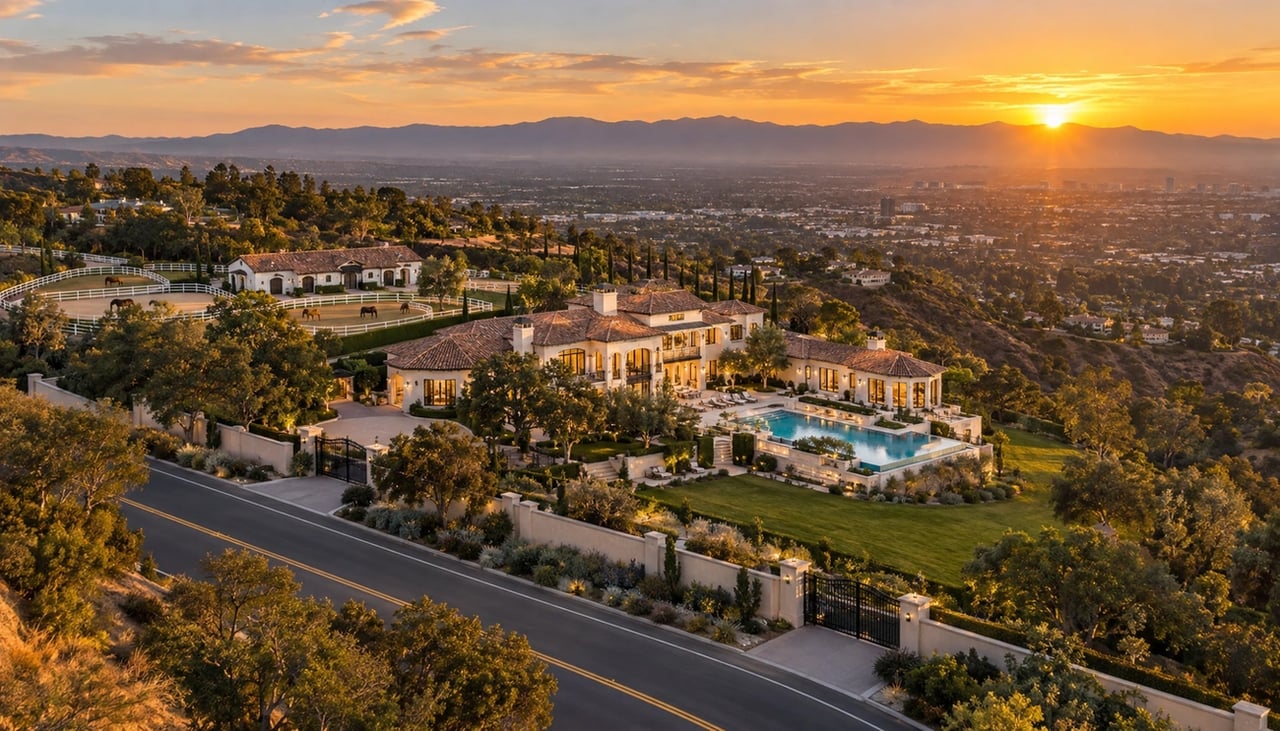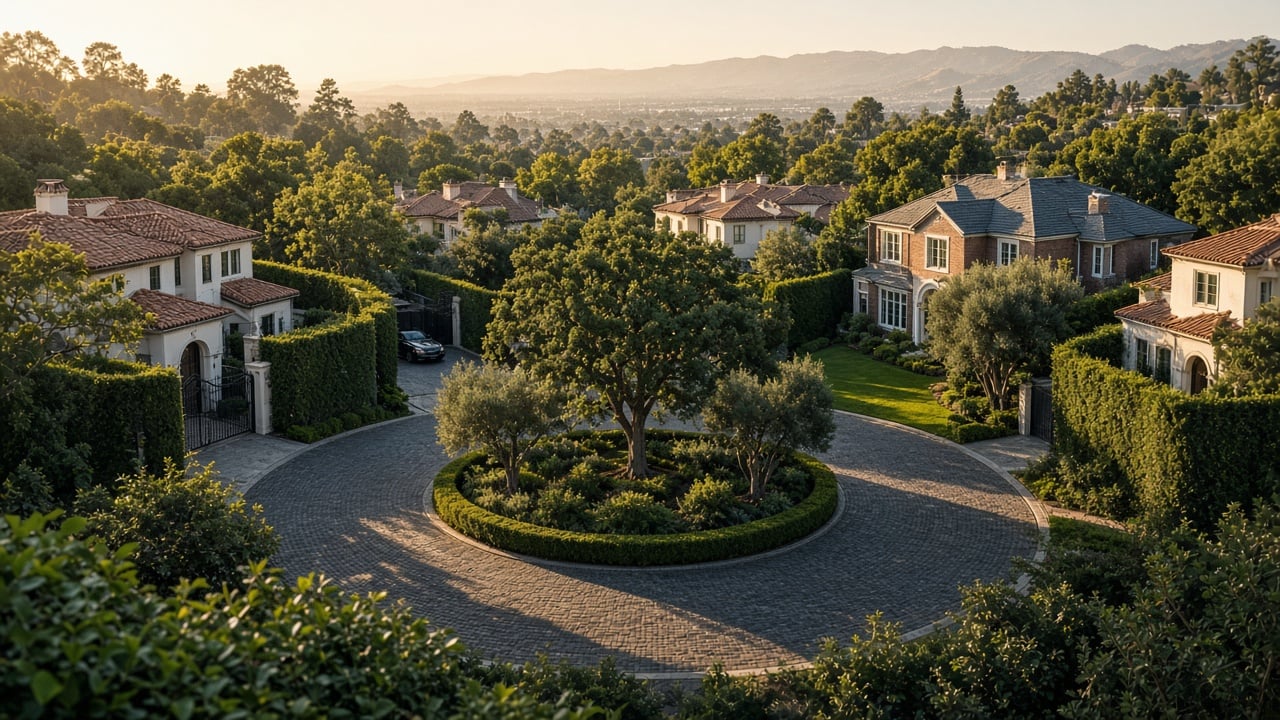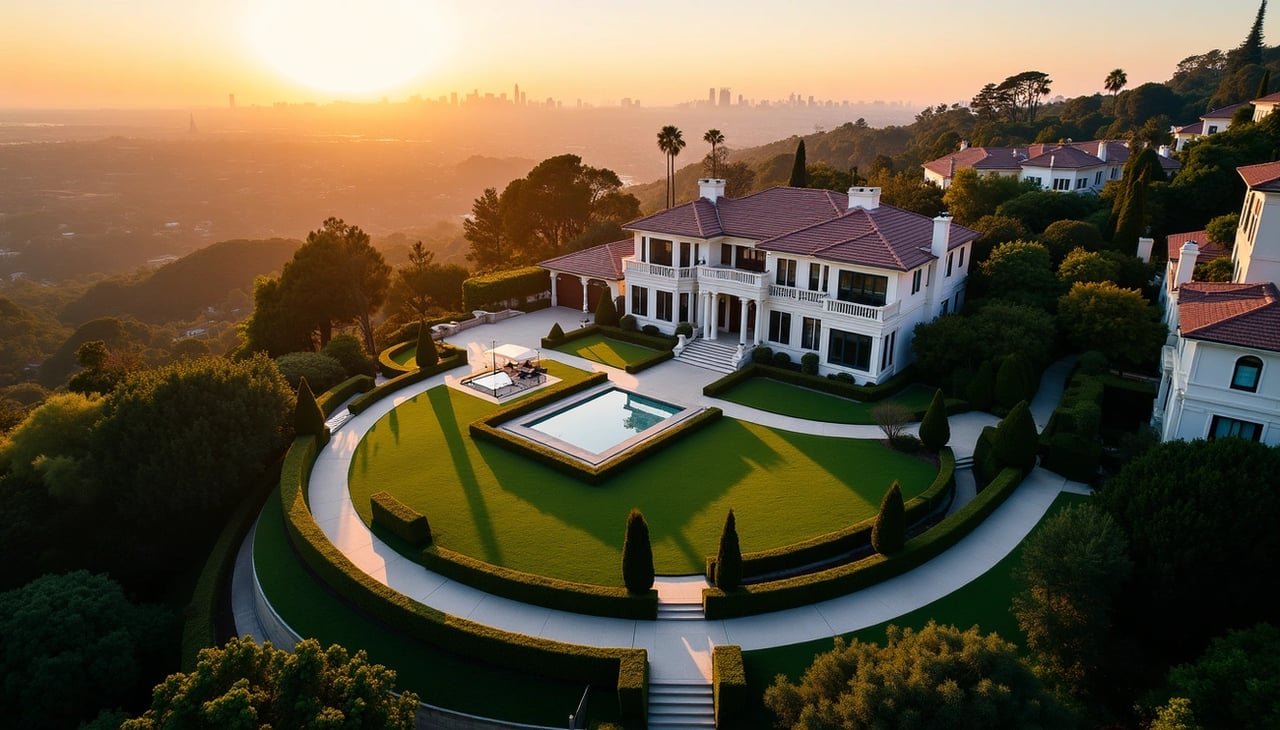
Bel Air estates stand as the crown jewel of luxury real estate in Southern California. Property owners of these multimillion-dollar homes deal with a surprising challenge. Land values in many areas exceed $5 million per acre, but these prestigious lots can't be split into multiple properties. This restriction will become a bigger issue in 2026.
Most people outside the high-end real estate world don't know about these limitations. Bel Air estates' exclusive California neighborhoods, with their sought-after skyline sections, follow strict legal rules set up many years ago. Anyone looking at Bel Air estates homes for sale needs to understand these vital restrictions. The rules impact investment opportunities and development possibilities in Bel Air estates of all sizes. Even the wealthiest landowners can't make full use of their property.
This piece explores why these valuable properties must keep their current layouts. We'll look at upcoming legal changes in 2026 and what they mean for owners. You'll also learn about the lesser-known effects on those who have invested in these exclusive Bel Air estates.
The Rise of Bel Air Estates and Its Legacy
A land acquisition in 1921 changed Los Angeles's real estate forever. Oil tycoon Alphonzo Bell purchased 1,760 acres of a former 4,438-acre ranch. Mexican Governor Manuel Micheltorena had granted this land to Maximo Alanis in 1843. This purchase became the foundation of one of America's most prestigious neighborhoods.
From farmland to luxury enclave
Bell's vision of an upscale community with generous lots turned farmland into a luxury enclave. He bought Jake and Daisy Danzinger's mansion at what we now call Bel Air Road for $2.50 million. His holdings grew to 22,000 acres after a $6.00 million expansion.
Bell brought his ambitious vision to life by hiring engineer Wilkie Woodward for subdivision planning and landscape architect Aurele Vermuleon for planting coordination. The project showed exceptional attention to detail:
- Underground utilities preserved the scenery
- The community featured fifty miles of bridle paths
- Large iron gates created an impressive entry
- Uniformed guards checked visitors—a first for local communities
Bel Air Estates launched its first tract in 1923 with 128 lots. A second tract in 1925 expanded the community. Bell promoted his development as "Bel Air Estates: The Exclusive Residential Park of the West". Estate prices ranged from $7,500 to $30,000. Buyers had to spend at least $20,000 on home construction according to deed restrictions.
The role of postwar suburbanization
Los Angeles's suburbanization continued steadily through fifteen years of depression and war from 1930 through 1945. Bel Air changed by a lot after World War II. The 1950s saw development in the upper reaches, where hillside lots measured less than an acre.
Postwar homes looked different from their 1920s counterparts. Bel Air developed distinct characters in various areas. "Old Bel Air" represented the original 1920s tracts near Sunset Boulevard. "New Bel Air" had lower elevations close to the West Gate and postwar homes on smaller hillside lots.
New federal housing policies boosted American homeownership during the postwar boom. Builders received low-interest FHA loans while affordable mortgages made homes available to more Americans than ever before. These federal programs helped other suburban areas more, yet their development patterns influenced elite communities like Bel Air.
How exclusivity shaped early development
Los Angeles's luxury real estate market operates differently from standard property markets. Bel Air's history shows careful management of exclusivity through specific restrictions and controls.
Bell asked potential buyers to provide recommendation letters and undergo credential investigations before approving sales. He banned "movie people" from his community, thinking their morals were questionable. This restriction faded as Hollywood gained influence.
The first buyers spent $40,000 on a seven-acre lot in November 1922. This set the standard for large-scale, high-value properties. Master architects Paul R. Williams, Wallace Neff, and Roland E. Coate designed homes that boosted the neighborhood's prestige.
Bel Air now has three distinct sections: East Gate Bel Air (Old Bel Air), West Gate Bel Air, and Upper Bel Air. The East Gate, home to the first residential properties, joins Holmby Hills to create what many call "the world's finest collection of luxury properties".
Bel Air managed to keep its 1920s zoning laws while other neighborhoods changed. This protected the area from over-development and in part preserved its original character and exclusivity. Such preservation helps Bel Air estates remain among California's most sought-after properties.
Understanding Lot Subdivision Laws in California
California's property laws shape landowners' rights through complex principles that carry serious consequences. Every Bel Air estates property sits on a legal foundation that defines what owners can and cannot do with their multimillion-dollar investments. State laws about land division create these boundaries.
The Subdivision Map Act explained
California's Subdivision Map Act started in 1893 as a basic mapping requirement. Now it has grown into a complete system that controls land division across the state. The current version, updated extensively in 1974, serves several vital purposes:
- Prevents fraud and exploitation in real estate transactions
- Protects public health and safety through proper infrastructure
- Controls design and improvement of subdivided lands
- Makes sure new developments don't burden taxpayers unfairly
The Map Act stops anyone from dividing land for sale, lease, or financing without getting local government approval through a formal mapping process. This law lets local agencies direct subdivision development. They make sure new projects line up with community needs, zoning requirements, and what the infrastructure can handle.
Owners of exclusive Bel Air estates must guide their property splitting plans through both the Map Act and Los Angeles zoning rules. These regulations have kept the area's character intact for decades.
Why 1972 is a critical legal cutoff
March 4, 1972 marks a vital turning point in California property law. This date matters especially in historic neighborhoods like Bel Air estates California. Properties split before and after this date follow different legal rules.
Government Code section 66412.6(a) states that parcels created before March 4, 1972, "shall be conclusively presumed to have been lawfully created." This applies if the division created fewer than five parcels when no local rules controlled such splits. The law wanted to resolve questions about old property divisions that happened under previous legal systems.
Just mentioning multiple lots in a deed doesn't make it a legal division. The California Supreme Court ruled that a "division of land" needs separate ownership of a portion from nearby lands. Many Bel Air estates lots shown as separate on maps but sold together remain single parcels. Owners cannot treat them as separate buildable lots today.
How local ordinances affect lot splits
Local rules add more regulations to state law for potential lot splits. Skyline Bel Air estates areas typically face these requirements:
- Lot sizes must be bigger than state minimums
- Design standards protect neighborhood looks
- Infrastructure must meet utility, access, and service needs
- Environmental rules protect hillsides, manage drainage, and prevent fires
Local agencies can approve or deny subdivision requests based on zoning rules, design standards, and public safety concerns. Bel Air estates' homeowners' associations can enforce CC&Rs that limit subdivision even more than city codes.
A recent California Supreme Court decision backed local authority. The court ruled that using lot numbers in legal documents doesn't split land. This matters because people have always used lot numbers to describe property without creating separate legal parcels. This affects historic neighborhoods where old property deeds mention multiple "lots" that were never split legally.
People looking at Bel Air estates homes for sale need to understand these legal limits. They determine both today's purchase and tomorrow's possibilities.
Why Bel Air Estates Lots Are Locked In
The most crucial decisions about Bel Air estates properties happen behind closed doors, not in public forums. Property owners of these prestigious estates just need to understand the invisible barriers to subdivision. This becomes even more critical as 2026 approaches with its potential legal changes. These limitations go beyond simple administrative hurdles - they are fundamental legal and physical realities that have shaped these properties for decades.
Original parcel configurations
Bel Air estates lots have natural constraints that limit subdivision possibilities. The properties often come with unusual dimensions. Many lots are long and narrow with natural downward grades and descending slopes that make parcel division impractical.
Water channels create extra complications for these properties. These waterways often cross western portions of lots and require mandatory easements that limit buildable area. One property's documentation states that "a water channel that traverses the western portion of the property and cuts through the front yard" required a 15-foot storm drain easement and 10-foot setback.
Natural features and required setbacks can cut buildable areas in half. Many properties that seem large enough to split lack sufficient east-west or north-south developable space. This makes it impossible to create separate parcels that match neighborhood standards.
Lack of separate conveyance history
The biggest barrier to subdivision lies in these properties' legal creation and transfer history. A landmark 2025 California Supreme Court case, Cox v. City of Oakland, ruled that mentioning multiple lots in a deed doesn't create separate legal parcels.
The court specified that a legal "division of land" under section 66412.6(a) of the Map Act requires evidence of:
- A conveyance that placed a portion of land into separate ownership
- Distinct ownership from contiguous lands
- Actual separate conveyance from surrounding properties
Many Bel Air estates' lots shown on old maps never became independent legal entities. They were always transferred together with adjoining properties. The court noted that "Lot 18 was always conveyed together with at least one other contiguous lot and was never separately conveyed. Therefore, it was never 'created' as a distinct parcel under the Act".
How this affects current owners
Current and future owners face several practical challenges. Building permits can't be issued for properties that are "the remainder of an original lot from which other portions have been split or replatted" without formal approval of a lot split. Getting this approval involves multiple challenges, including infrastructure assessments, utility requirements, and compliance with complete plans.
Many Bel Air estates must follow deed restrictions that are decades old. The Skyline Bel Air Estates operates under Covenants, Conditions, and Restrictions (CCRs) from 1966. These specify that "no building or structure intended for or adapted to business purposes, and no apartment house, double house, lodging house, rooming house, hospital, sanitorium or doctor's office, or other multiple family dwelling shall be erected".
Practical realities create financial challenges too. Homeowners face unexpected costs when they learn their multimillion-dollar lots can't support multiple dwellings. Most Bel Air parcels were carefully planned as part of complete developments with unified esthetics. Planning boards actively protect lot integrity to preserve the character that makes these estates valuable.
This creates an interesting value paradox. The exclusivity that drives property values depends on limitations that prevent maximizing land usage through subdivision. This reality persists despite rising land values.
The 2026 Legal Landscape: What’s Changing
LA's premier neighborhoods look peaceful on the surface, but a major legal transformation is brewing for 2026. The elite who live in Bel Air estates know that property value goes beyond listing pages. The real worth lies in legal details that define these properties. This moment marks the end of decades of evolving case law.
New interpretations of the Subdivision Map Act
The Subdivision Map Act remains California's foundation for property division. Court decisions and legislative amendments continue to shape its interpretation. Recent judicial opinions have cleared up previously unclear sections about pre-1972 lots. These rulings have limited subdivision options.
The difference between "lots" on maps and "parcels" as legally recognized properties has become clearer. Many Bel Air estates owners thought they owned multiple buildable lots based on old tract maps. The truth is these properties often make up just one legal parcel, even when deeds mention multiple lots.
Courts now look at "separate conveyance" requirements differently. Property that has transferred as one unit - whatever the number of "lots" in its description - makes up a single legal parcel under the Act. This means many Bel Air estates homes need today's stricter subdivision process to divide their property.
Recent court rulings like Cox v. Oakland
The Cox v. Oakland ruling changed how we understand historical lot divisions. The court showed that mentioning multiple lots in a deed doesn't create separate legal parcels - actual separate transfers must have happened.
The justices looked at whether Lot 18 was its own legal parcel, though it appeared separate on an old map. They found that "Lot 18 was always conveyed together with at least one other contiguous lot and was never separately conveyed." This meant it never became independent.
This ruling affects many Bel Air estates properties where:
- Original lot configurations show multiple lots on maps
- Properties have always transferred as complete estates
- No records show separate transfers of individual lots
Why 2026 is a turning point for Bel Air Estates
The year 2026 marks fifty years since California's legislature made major changes to subdivision rules. This anniversary brings together several legal trends. Case law around the Map Act has settled, and certain grandfather rules affecting pre-1976 properties will expire.
Skyline Bel Air estates and other elite neighborhoods will face closer examination of their lot status. Planning departments now use digital historical property records to check transfer history. This makes it hard to claim subdivision rights without proof of separate historical transfers.
These legal changes will affect property values. Some Bel Air estates California properties might lose value as their subdivision potential disappears under clearer legal rules. Properties with proven separate transfer histories could become more valuable because they can still be divided.
To conclude, this transformation strengthens what made Bel Air estates special from the start - exclusivity. Now legal interpretation, not just high prices, protects this unique character.
Architectural and Planning Constraints
Bel Air estates showcase their exclusivity through architectural and planning constraints that have shaped the community from the start. These design rules act as visible enforcers of hidden boundaries that maintain the properties' distinctive and restricted nature.
Zoning restrictions in Bel Air Estates
Zoning classification forms the core of Bel Air's development control. Properties in Bel Air estates mainly fall under R-1 Low Density Residential District designation. This classification aims to "accommodate single-family detached housing, ensure preservation of existing neighborhoods and retain the Town's small town character". The zoning rules limit density and block multi-family dwellings that could result from splitting lots.
Planning Commissions keep a close watch on these zones to "guide the development and growth of the Town and preserve the character of the community". They review all site plans, subdivisions, and rezoning requests thoroughly. This oversight effectively stops most attempts to divide lots.
Design uniformity and neighborhood character
Intentional design regulations create the architectural harmony seen throughout exclusive Bel Air estates. Period Revival styles define the historic properties within the planning district. These properties feature two-story single-family homes built on large, irregular parcels. The land's natural shape adds to this character. Flat areas spread across the south end while steeper hills rise in the north, where streets follow natural curves.
Rules state that "development shall be compatible with neighboring development and provide a cohesive and rational pattern". The regulations clearly specify that "all development shall consider design features that will create an attractive and visual continuity between proposed development and adjacent neighborhoods".
How planning boards enforce lot integrity
Multiple overlapping authorities work together to preserve Bel Air's exclusive character. The Planning Commission makes final decisions about subdivision plans and site development. They serve as the primary defense against inappropriate density increases. These decisions align with complete plans that usually favor preservation over division.
Planning boards use specific criteria. They require that "building materials shall be compatible in quality, color, texture, finish and dimension with other buildings in the district". They also ensure that "the style and scale of the proposed building shall respect design elements prevalent in the community". These standards naturally resist any attempts to build multiple smaller homes on divided lots.
Skyline Bel Air estates and other prestigious areas use these architectural rules effectively. The esthetic requirements work alongside legal barriers to protect lot integrity.
The Hidden Costs of Owning a Million-Dollar Lot
Bel Air's elite often whisper about a peculiar challenge: they can't divide their million-dollar lots despite their enormous value. Smart investors know these restrictions could mean the difference between a wise purchase and a costly mistake.
Why you can't build multiple homes
Strict rules limit most Bel Air properties to "single-family residential purposes only." These deed restrictions clearly ban apartment houses, double houses, or any multiple family dwellings. California's 2021 Senate Bill 9 (SB-9) allows some single-family lots to be split, but homeowners' associations can still enforce CC&Rs that prohibit lot-splitting.
Property owners who want to divide their lots must sign an affidavit. This document commits them to live in one unit for at least three years. The rule stops developers from buying and splitting multiple properties right away.
Impact on resale and investment potential
These restrictions create several financial hurdles. Parcel-mapping fees can reach $80,000. The process takes 18-24 months, which adds substantial carrying costs.
Mortgages add another layer of complexity. Lenders haven't created protocols yet to handle lot splits on mortgaged properties. Property values face downward pressure as legal interpretations clarify these subdivision limits.
How this affects Skyline Bel Air Estates and others
Skyline Bel Air Estates has specific rules from 1966. Their CC&Rs limit improvements to "first class private dwelling houses" with standard outbuildings. These rules apply to all lots except numbers 79, 124-128.
The Community Association enforces these deed restrictions to protect the exclusive atmosphere that drew buyers here originally. For those who love to entertain, the right home makes all the difference. If you're considering a purchase in the near future or beginning your search, I'd be delighted to help you find spaces designed for elevated living and effortless hosting. Christina Pope  310-404-9931
  [email protected]
Conclusion
Bel Air estates stand at the peak of luxury real estate, yet they face complex legal frameworks that limit their development potential. These restrictions will become more rigid by 2026 and will shape these prestigious neighborhoods for generations. Many wealthy buyers are taken aback when they learn how the original parcel configurations, absence of separate conveyance history, and strict zoning requirements create an unbreakable barrier against subdivision.
These limits work in two ways. They safeguard the architectural integrity and exclusive character that make Bel Air estates so sought-after. The restrictions also protect property values by stopping overdevelopment and keeping the area's historic charm intact. Landmark decisions like Cox v. Oakland have shown courts consistently support these restrictions, making it clear that just mentioning multiple lots on a deed doesn't create separate legal parcels.
Smart investors should look at Bel Air properties with a clear understanding of their development limits. California law often treats what looks like multiple buildable lots as one legal parcel. This reality changes investment strategies, especially for those who thought they could subdivide the property.
These constraints don't diminish the true value of Bel Air estates - they raise it. The resulting exclusivity creates an environment of unique prestige. Buyers who seek these properties tend to value preservation over division, tradition over development, and legacy over quick profits.
Your perfect home makes entertaining a joy. I'd love to help you find spaces built for luxury living and effortless hosting if you plan to buy soon or start your search. Christina Pope 310-404-9931 [email protected]
The legal changes coming in 2026 will strengthen Bel Air's status as a neighborhood where value comes from historical significance, architectural integrity, and unwavering exclusivity. Million-dollar lots that can't be split might seem restrictive, but they form the foundation that makes Bel Air estates California's most desired addresses.
Key Takeaways
Understanding the legal restrictions on Bel Air estates is crucial for potential buyers and current owners navigating this exclusive market in 2026.
• Legal barriers prevent subdivision: Despite million-dollar values, most Bel Air lots cannot be split due to California's Subdivision Map Act and lack of separate conveyance history dating back decades.
• 2026 marks a legal turning point: Recent court rulings like Cox v. Oakland have clarified that referencing multiple lots in deeds doesn't create separate parcels, solidifying restrictions.
• Zoning and architectural constraints preserve exclusivity: R-1 residential zoning, deed restrictions, and planning board oversight actively prevent multiple-family dwellings and maintain neighborhood character.
• Hidden costs impact investment potential: Lot split attempts face $80,000+ fees, 18-24 month timelines, and mortgage complications, significantly affecting property valuation and resale strategies.
• Restrictions enhance rather than diminish value: The exclusivity these limitations create maintains Bel Air's prestige, making properties valuable for their historical significance and architectural integrity rather than development potential.
These constraints represent the foundation of what makes Bel Air estates California's most coveted addresses—where value derives from preservation rather than division.
FAQs
Q1. Why can't million-dollar lots in Bel Air be split in 2026? Million-dollar lots in Bel Air can't be split in 2026 due to legal restrictions stemming from the Subdivision Map Act, lack of separate conveyance history, and stringent zoning requirements. Recent court rulings have clarified that referencing multiple lots in deeds doesn't create separate parcels, solidifying these restrictions.
Q2. How do architectural constraints affect Bel Air estates? Architectural constraints in Bel Air estates enforce design uniformity and preserve neighborhood character. Zoning regulations, particularly R-1 Low Density Residential District designation, limit density and prevent multi-family dwellings. Planning boards strictly enforce these rules to maintain the area's exclusive nature and architectural integrity.
Q3. What are the hidden costs of owning a Bel Air estate? Hidden costs of owning a Bel Air estate include the inability to build multiple homes on a single lot, potential downward adjustments in property valuation due to subdivision restrictions, and limitations on resale and investment potential. Attempting lot splits can incur significant fees and face lengthy approval processes.
Q4. How does the 2026 legal landscape impact Bel Air property owners? The 2026 legal landscape marks a turning point for Bel Air property owners as it solidifies existing restrictions on lot subdivision. This change results from evolving case law and the expiration of certain grandfather provisions, potentially affecting property values and investment strategies for those who may have anticipated subdivision possibilities.
Q5. Do these restrictions decrease the value of Bel Air estates? Contrary to what one might expect, these restrictions often enhance rather than diminish the value of Bel Air estates. By preserving exclusivity, architectural integrity, and historical significance, these limitations maintain the prestige that makes Bel Air one of California's most coveted addresses, attracting buyers who value preservation over development potential.