Wellness Real Estate in 2030: What Luxury Home Buyers Will Demand Next
The wellness real estate market is on a strong upward trajectory, projected to reach $1.8 trillion by 2030 with a 23.6% annual growth rate double the pace of other wellness sectors and eight times faster than overall construction.
• Wellness features command premium pricing: Properties with wellness certifications secure 10-25% price premiums for residential and 4.5-7.5% rental premiums for commercial spaces, while maintaining 92%+ occupancy rates.
• Recovery infrastructure is now a baseline expectation: Cold plunge pools, infrared saunas, and contrast therapy suites have moved well beyond the luxury add-on category, with installations ranging from $600 to $65,000.
• Smart health integration defines modern luxury: AI-powered wellness monitoring, remote health tracking through wearable sensors, and personalized health systems are becoming standard features in high-end properties.
• Geographic hotspots show strong growth: Italy leads with 50% annual growth, while Saudi Arabia's market surged from $200 million to $28 billion in eight years, now representing 12% of all construction.
• Cash buyers dominate the market: All-cash transactions account for 32% of home sales, the highest rate since 2014, pointing to strong buyer confidence even during periods of economic volatility.

Wellness real estate has more than doubled in size over the past five years and is projected to surpass $1.1 trillion by 2029[1]. Affluent buyers are approaching home design with a sharper focus on health and longevity, and features that once read as optional upgrades are now expected from the start. Roughly 38% of real estate professionals working in the $10 million-and-above market report that aging in place has become a vital consideration among their clients[1][2]. Long-term livability is no longer an afterthought, it is shaping the market. What follows covers the key innovations luxury home buyers will expect, the market landscape heading into 2030, and what makes wellness properties a sound investment.
The Wellness Real Estate Market Landscape Leading to 2030
The wellness real estate market grew 23% from 2024 to 2025 while overall global construction expanded only 3%[3]. The market reached $876 billion in 2025 and is forecast to hit $1.8 trillion by 2030, a 23.6% average annual growth rate since 2019[3][4]. That pace is roughly double that of mental wellness, the next fastest-growing wellness sector at 12.4%[4].
Geographic concentration shapes the market clearly. The United States commands $254 billion, followed by China at $218 billion and the UK at $51 billion[3][4]. Asia-Pacific leads regionally with $350 billion, North America accounts for $274 billion, and Europe represents $205 billion, together capturing over 95% of the global market[4][4].
Certain markets stand out for their pace of growth. Italy posted 50% annual growth from 2019 to 2025, followed by Spain at 46% and Saudi Arabia at 34%[3][4]. Saudi Arabia's market grew from $200 million in 2017 to $28 billion in 2025, while the UAE moved from $3.3 billion to $14.6 billion over the same period[3][4]. Wellness real estate now accounts for over 12% of all construction in both countries[4].
The financial case is equally compelling. Wellness-focused residential properties at middle and upper market tiers secure 10-25% price premiums, while commercial buildings with wellness features demonstrate 4.4-7.7% rental premiums per square foot[5].
Wellness Real Estate Innovations Buyers Expect
"Wellness is most effective when it feels intuitive rather than indulgent." — Kyle Webb, Founder of KH Webb Architects
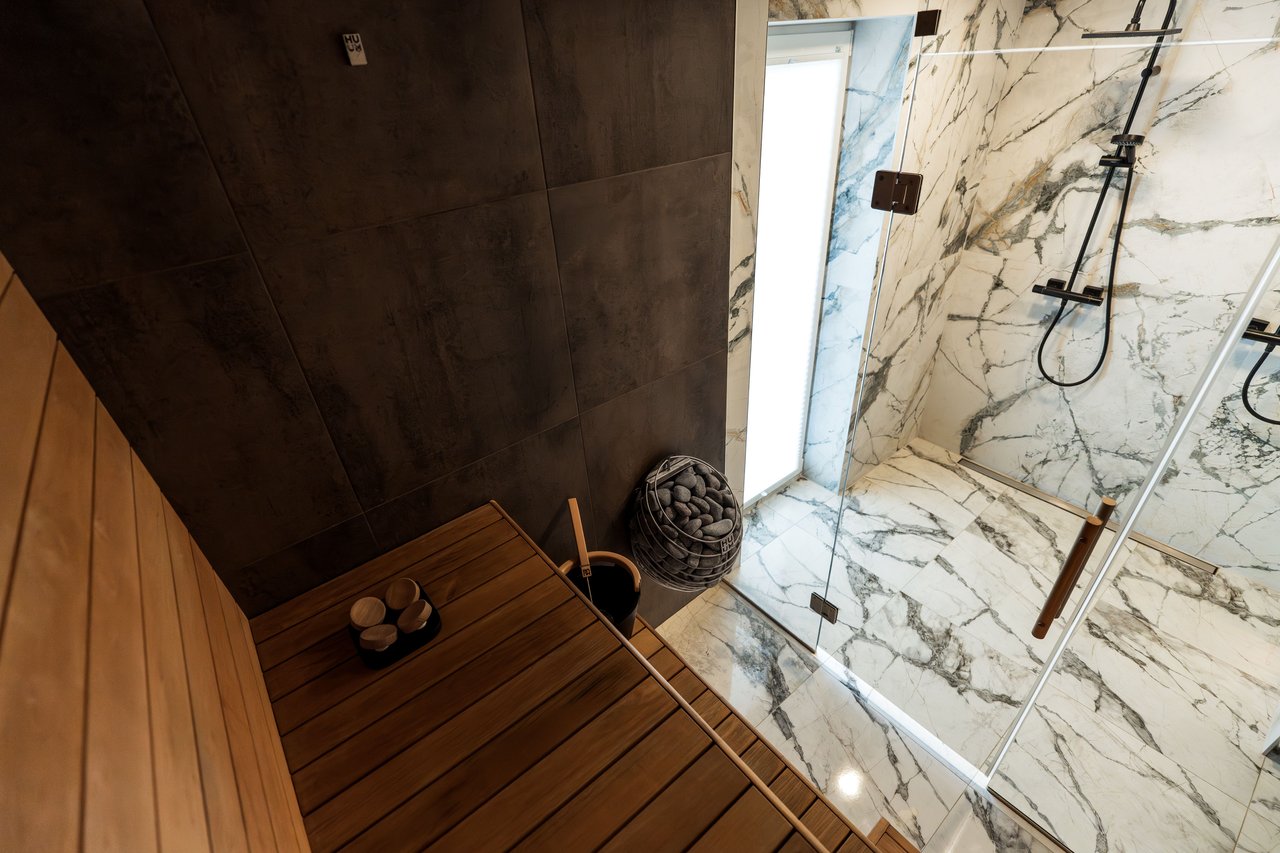
Cold plunge pools, infrared saunas, and contrast therapy suites now sit at the center of what high-end buyers expect when purchasing a home. Cold plunge pool orders have increased tenfold since 2019, with installations ranging from $600 DIY setups to luxury units at $65,000[6]. One Manhattan apartment complex cited its cold plunge as the deciding factor for buyers who paid $2.20 million[6]. Infrared and traditional saunas have made a similar shift—once reserved for spas, they are now standard in primary bathrooms and home gyms, often customized with chromotherapy lighting and integrated sound systems[7].
Contrast therapy suites take this further, dedicating entire wellness floors to the pairing of saunas and cold plunge pools. These spaces are frequently built into walk-out lower levels with direct outdoor access, with cold exposure water temperatures held between 50°F and 59°F[8][9].
Home fitness spaces reflect the same standard. Private training studios feature commercial-grade equipment, with sessions priced between $80 and $200[10]. Red light therapy rooms operating at wavelengths between 600 and 900 nanometers have also gained traction, used in 10-to-20-minute sessions for skin rejuvenation and muscle recovery[11].
Health monitoring has moved well beyond the gym. Smart home systems connect wearable sensors, blood pressure monitors, and glucose meters to provide real-time tracking from within the home[12]. Dedicated meditation rooms, built with soundproofing, natural materials, and biophilic design, complete what discerning buyers now consider a fully realized living environment[13].
Investment Strategy: What Makes Wellness Properties Valuable
"An affordable wellness community there delivered a 53% return on equity over a five-year period, thanks to faster sales, lower turnover, and tenant satisfaction greater than 80%." — Global Wellness Institute, Research organization focused on wellness
Wellness-certified properties consistently outperform standard real estate across financial metrics that matter to serious buyers. Wellness-focused residential developments capture 10-25% price premiums compared to similar properties in the same market[14]. Commercial buildings with wellness features achieve rental premiums of 4.5-7.5% per square foot[15]. According to Knight Frank, wellness properties command premiums ranging from 10-35% and frequently pre-sell before construction completes[16].
Rental performance tells the same story. Wellness rental units across the United States held an average occupancy rate exceeding 92% in 2024, outpacing traditional units by 5-7%[14]. Properties carrying WELL and LEED certifications resell at consistently higher rates than comparable non-certified buildings[17]. One affordable wellness community delivered a 53% return on equity over five years, driven by faster sales, lower turnover, and tenant satisfaction above 80%.
Market resilience sets wellness real estate apart when conditions shift. Wellness-focused developments held their ground during economic downturns, supported by differentiated positioning and steady buyer demand[16]. Homes within gated communities offering wellness amenities routinely sell for tens of thousands more than comparable properties in standard neighborhoods[18].
Cash buyers remain a defining force in this market. All-cash transactions accounted for 32% of home sales in January the highest rate since 2014[19] and roughly a third of all homes sold in the first half of 2025 were purchased without financing[20].
How Longevity Design Is Reshaping Los Angeles Luxury Real Estate
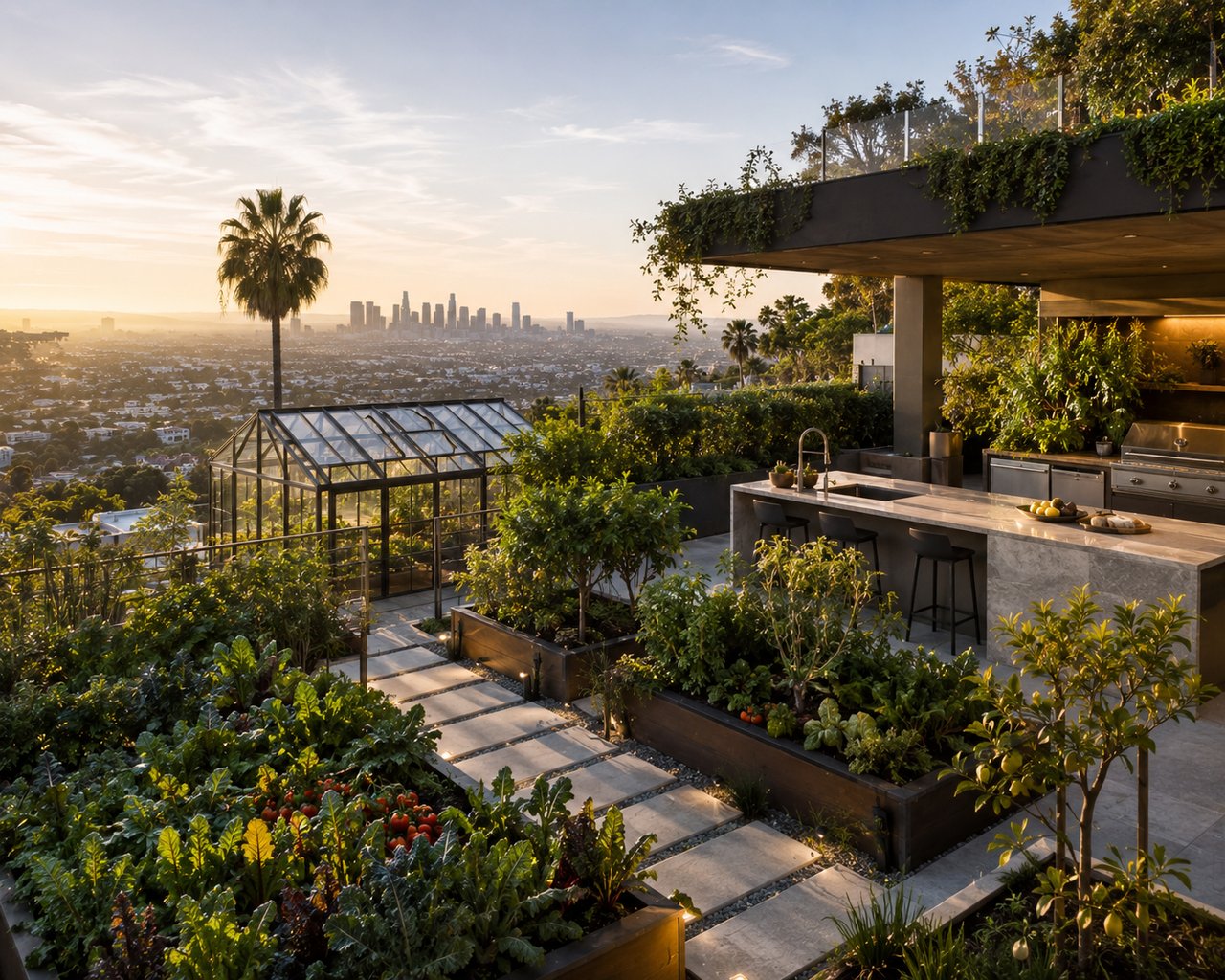
The longevity movement is no longer a future concept, it's already influencing buying decisions across Los Angeles' most prestigious neighborhoods. Affluent buyers increasingly view wellness infrastructure as an essential component of luxury, placing greater emphasis on homes that promote long-term health, resilience, and sustainability. As a result, properties that integrate advanced air and water purification, non-toxic materials, circadian lighting, dedicated wellness spaces, energy efficiency, and smart home technology are becoming more desirable and better positioned for long-term appreciation.
This shift is especially evident in Beverly Hills and Bel Air, where buyers are prioritizing estates designed for wellness, privacy, and multigenerational living. In Brentwood, health-conscious families are seeking homes that combine sustainable construction with flexible spaces for work, fitness, and everyday well-being. Malibu continues to attract buyers who value clean coastal air, natural surroundings, and seamless indoor-outdoor living, while Hidden Hills remains highly desirable for its privacy, larger lots, equestrian lifestyle, and opportunities to create private wellness retreats. Hollywood Hills appeals to buyers looking for modern architectural homes filled with natural light, panoramic views, and technology that supports both comfort and healthy living. Meanwhile, Pacific Palisades is entering a new chapter as rebuilding efforts incorporate resilient construction, energy-efficient systems, wildfire-conscious design, and wellness-focused features from the very beginning.
Across these luxury communities, longevity design is becoming a defining characteristic of premium real estate rather than an optional upgrade. Buyers are increasingly investing in homes that not only provide exceptional lifestyles today but also support healthier living, greater resilience, and stronger long-term value for years to come.
Conclusion
Wellness real estate has transformed from a niche luxury segment into a trillion-dollar market with measurable financial advantages. Properties featuring recovery infrastructure, smart health systems, and biophilic design consistently command 10-25% premiums while delivering superior occupancy rates and market resilience. Whether buying, selling, or planning a custom home in Greater Los Angeles, Christina Pope can help navigate this evolving market at 310-404-9931 or [email protected].
FAQs
Q1. How large is the wellness real estate market expected to grow by 2030? The wellness real estate market reached $876 billion in 2025 and is projected to surpass $1.8 trillion by 2030, representing an average annual growth rate of 23.6%. This makes it the fastest-growing sector in the wellness economy, with growth rates roughly double that of other wellness categories.
Q2. What price premiums do wellness-focused properties command? Wellness-focused residential properties typically secure 10-25% price premiums compared to similar properties in the same market. Commercial buildings with wellness features achieve rental premiums of 4.5-7.5% per square foot, with some properties commanding premiums as high as 35%.
Q3. Which countries are leading the wellness real estate market growth? The United States leads with $254 billion, followed by China at $218 billion and the UK at $51 billion. Italy posted the highest annual growth at 50%, followed by Spain at 46% and Saudi Arabia at 34%. Saudi Arabia's market grew from $200 million in 2017 to $28 billion in 2025.
Q4. What wellness amenities are becoming standard in luxury homes? Cold plunge pools, infrared saunas, and contrast therapy suites are transitioning from luxury add-ons to baseline expectations. Other in-demand features include AI-powered health monitoring systems, private fitness studios with commercial-grade equipment, red light therapy rooms, and dedicated meditation spaces with biophilic design elements.
Q5. Why do wellness properties perform better during economic downturns? Wellness properties demonstrate superior market resilience due to their differentiated positioning and steady demand. They maintain higher occupancy rates (averaging over 92% compared to 85-87% for traditional units) and attract cash buyers who represent 32% of transactions, providing stability during volatile market conditions