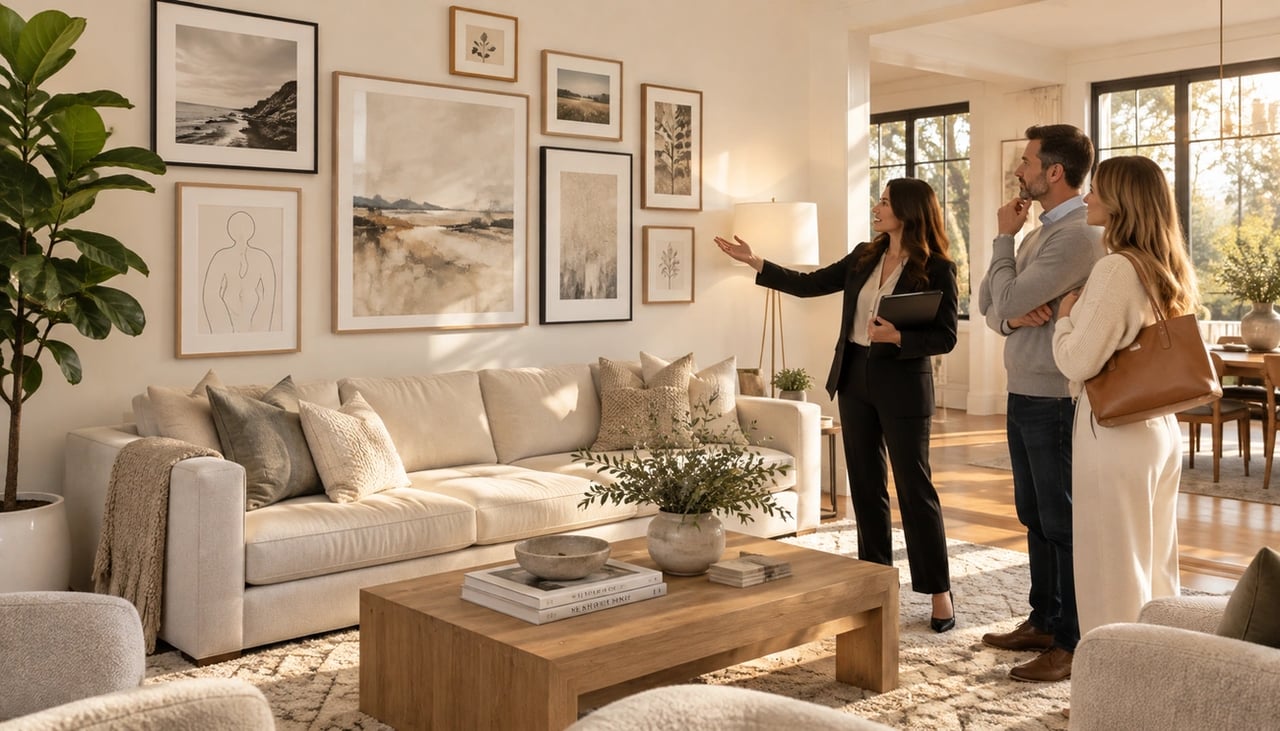
Gallery walls trace their origins to the 16th century, when aristocrats filled their estates with portraits and tapestries as marks of taste and status. What began as a symbol of old-world refinement has since earned a firm place as a staging tool in modern real estate. Professionally staged homes regularly feature carefully chosen artwork — and for good reason. Art helps buyers form an emotional connection with a space, and the right pieces can make rooms feel larger, establish focal points, and raise the perceived value of a home during showings.
For sellers in competitive markets, knowing how to design a gallery wall, plan a layout that resonates with serious buyers, and avoid common missteps can mean the difference between a swift sale and a listing that sits.
What Is a Gallery Wall and Why It Matters in Real Estate
The Definition and Core Elements
A gallery wall is a curated arrangement of framed art, photographs, prints, and personal objects displayed together on a single wall to form one cohesive visual statement. Each piece reflects a deliberate decision rather than an accumulation of frames over time, turning an otherwise blank wall into an intentional focal point. The medium is secondary — successful arrangements can include original paintings, framed prints, mirrors, ceramic plates, woven textiles, and sculptural objects, among others.
Cohesion is what holds it all together. Shared color palettes, consistent frame finishes, or a recurring theme can tie unlike pieces into something that reads as a composition rather than clutter. Professional installers keep spacing between frames at a consistent 2-3 inches throughout, which prevents displays from feeling chaotic or unfinished. That discipline is ultimately what separates a curated arrangement from a haphazard one.
How Gallery Walls Impact Buyer Perception
A well-designed gallery wall does considerable work in listing photos. Symmetrical groupings are easier on the eye and photograph cleanly without overwhelming the frame. Repeated elements — whether mirrors, matching prints, or coordinated objects — establish visual harmony that buyers respond to, even before they set foot inside.
For sellers, the impact extends well beyond photography. These arrangements elevate a property's overall feel, signaling quality and intentionality that buyers associate with higher value. Professionally staged rooms with thoughtful gallery walls also give buyers a clearer read on how a space functions day to day, making it far easier to picture themselves living there.
The Psychology Behind Visual Presentation
Buyers form impressions within seconds of entering a room — well before any logical evaluation takes hold. The nervous system responds instinctively to its surroundings, and research consistently shows that people are drawn to symmetrical arrangements and find them inherently pleasing.
When a space is easy to understand at a glance, buyers relax. A relaxed buyer is an open buyer — one far more willing to imagine a future in the home rather than quietly cataloguing its shortcomings. Gallery walls offer exactly these kinds of visual cues, giving rooms a clear sense of purpose without requiring buyers to work for it.
Why Buyers Are Demanding Gallery Walls Before Closing
"Never underestimate the power of creating a space buyers can emotionally connect with." — Katrina Grubb, Real Estate Professional
Move-In Ready Appeal in Luxury Markets
The ready-to-move-in luxury homes market reached $425.30 billion in 2025 and is projected to climb to $733.60 billion by 2032, growing at 8.1% annually. That figure reflects something straightforward: affluent buyers want properties they can walk into, not projects they have to finish. Luxury single-family homes in North America are already selling at 98.86% of list price, which speaks to how competitive demand for move-in-ready inventory has become.
Buyers at this level expect immediate possession, superior craftsmanship, and a curated experience from the moment they take ownership. A professionally installed gallery wall signals exactly that — a home that is complete, considered, and ready for life to begin.
Gallery Walls as Social Media and Lifestyle Indicators
Ninety-nine percent of millennial home buyers begin their search online, which means listing photographs carry more weight than ever. Well-staged properties with gallery walls generate the kind of images that stop buyers mid-scroll and drive showing requests. At luxury price points, buyers are not simply evaluating square footage — they are assessing whether a home delivers the standard of living they expect to step into immediately.
Staging directs attention. It tells buyers where to pause, what to notice, and how one room leads to the next. Gallery walls, when done well, go a step further — they suggest a way of living, giving rooms a sense of purpose beyond function.
The Connection Between Staging and Final Sale Price
Staged homes sell in roughly 24 days, compared to 90 days for properties left unstaged — a 73% reduction in time on market. Among sellers who invested in staging, 75% saw returns of 5% to 15% over asking price. Sellers' agents reported 1–5% increases in buyer offers in 22% of cases, while 17% noted value increases of 6–10%.
What High-End Buyers Expect from Presented Homes
Luxury buyers are not looking for guidance on how furniture works. They are looking for confirmation that a home fits the life they already lead. A flawlessly staged property reads as an immediate upgrade, not a residence that needs attention before it can be enjoyed. Eighty-three percent of buyers' agents confirmed that staging made it easier for clients to picture a property as their future home.
How to Design a Gallery Wall That Attracts Serious Buyers

Image Source: Edensign
Choosing the Right Location and Wall Space
Start by assessing each wall for both its visual potential and practical suitability. Entryways set the tone for the entire showing, hallways offer underused opportunities for visual impact, and living room walls above sofas are natural focal points. Stairways, bedroom walls above headboards, and office spaces behind desks are equally strong candidates. Before committing to a location, confirm the surface can support the weight of the installation, consider how the wall texture will interact with the frames, and check that lighting highlights rather than washes out the display.
Selecting Art That Appeals to Buyers
Art should complete the room, not compete with it. Landscapes, still lifes, botanicals, and contemporary abstracts read well across a wide range of buyer tastes. Religious art, most nudes, and edgy contemporary subjects are best avoided, as they risk alienating rather than welcoming. Family photos, diplomas, and personal items should come down entirely — buyers need to picture themselves in the space, not feel they've wandered into someone else's home. The best pieces add color, establish a focal point, or draw attention to the home's custom features.
Coordinating Frames for Visual Impact
Frame choice shapes the entire tone of a display. Wood finishes — cherry, oak, walnut — bring warmth and texture. Metal frames in silver, gold, bronze, or black lean contemporary and sleek. For a cohesive result, monochromatic frames in varying shades work well; contrasting finishes create bold, dynamic energy; and neutral tones like black, white, or beige keep the focus on the artwork itself.
How to Plan a Gallery Wall Layout
Trace each frame onto kraft paper, cut the shapes out, and tape them to the wall with painter's tape before a single nail goes in. Leave the paper layout up for two days — this reveals frames positioned too high and gaps that are easier to catch early than to correct later. Maintain 2-3 inches between frames as a general rule. Small frames under 8x10 can sit 1.5-2 inches apart; medium frames from 11x14 to 16x20 hold well at 2-3 inches; large frames 18x24 and above benefit from 3-4 inches of breathing room.
Symmetry vs. Eclectic Arrangements
Symmetrical gallery walls rely on identical frames arranged in balanced grids with even spacing throughout. They suit modern homes, offices, hallways, and dining rooms where clean lines are a priority. Eclectic arrangements take a different approach — varying frame sizes, colors, shapes, and styles are grouped around one larger anchor piece. The look is more relaxed, but consistent spacing and visual balance are still essential to keep the display from reading as clutter. Distributing darker and larger frames evenly across the arrangement ensures the whole display feels considered rather than accidental.
Gallery Wall Tips for Sellers Working With Luxury Properties
"Home staging is an expected part of the real estate process, especially when it comes to luxury properties." — Tori Toth, Professional Home Stager, best-selling author, and lifestyle expert
Avoiding Personal Photos and Overly Personal Elements
Family photographs, diplomas, military certificates, and religious items should come down. Buyers need room to picture themselves in a home — not to feel as though they are visiting someone else's. Expensive original artwork is also better removed; pieces that signal significant personal wealth can prompt lowball offers rather than serious ones. Neutral landscapes, clocks, and mirrors are safe choices that hold a room together without telling too personal a story. A small photo on a nightstand is generally fine, but hallways and staircases are best kept clear.
Scale and Proportion Guidelines
Gallery wall arrangements should span two-thirds to three-quarters the width of the furniture sitting beneath them. The center of the display sits at 1,450mm above the finished floor, with 5–8cm of breathing room maintained between every frame. The bottom of the arrangement should clear the top of any furniture by 25–30cm. On walls without furniture anchoring them, keep the bottom edge no lower than 120cm from the floor.
Are Gallery Walls Out of Style or Still Relevant?
Well-curated gallery walls have not gone out of style — they have simply grown more refined. The format has matured toward tighter, more considered layouts of five to seven pieces, with color-blocked, monochromatic palettes gaining ground as a popular evolution. A display that is thoughtfully assembled and properly scaled will always hold its appeal.
For those who love to entertain, the right home makes all the difference. Whether a purchase is on the near horizon or the search is just beginning, Christina Pope would be glad to help find spaces built for elevated living and effortless hosting. Christina Pope 📞 310-404-9931 ✉️ [email protected]
Conclusion
For sellers positioning properties in competitive markets, a gallery wall is a strategic decision, not a decorative one. Properly spaced, neutrally themed, and cohesively framed arrangements signal to buyers that a home is ready to be lived in — not worked on. Buyers at premium price points expect move-in-ready presentations, and a well-executed gallery wall is one of the clearest signals a property can offer. The details matter, and the ones who get them right spend far less time on the market.
Key Takeaways
Gallery walls have evolved from aristocratic displays into powerful real estate staging tools that significantly impact buyer decisions and sale outcomes. Understanding their strategic implementation can accelerate sales and increase property value.
• Staged homes with gallery walls sell 73% faster (24 days vs. 90 days) and command 5-15% higher prices than unstaged properties.
• Gallery walls create emotional connections by transforming blank spaces into curated focal points that help buyers envision their lifestyle in the home.
• Maintain 2-3 inches between frames and use neutral subjects like landscapes or abstracts while avoiding personal photos, religious art, or expensive pieces.
• Strategic placement matters most: Position arrangements at eye level (57 inches center), spanning two-thirds to three-quarters the width of furniture below.
• Luxury buyers expect move-in-ready presentations with professionally curated art displays that signal lifestyle elevation rather than renovation projects.
The key to successful gallery walls in real estate lies in creating cohesive, neutral arrangements that enhance spaces without overwhelming them. When executed properly with consistent spacing, appropriate scale, and buyer-friendly artwork, gallery walls transform properties from ordinary listings into aspirational homes that command premium prices and sell faster in competitive markets.
FAQs
Q1. Are gallery walls still in style in 2026? Yes, gallery walls remain relevant in 2026, though they've evolved toward more curated displays with five to seven pieces rather than overcrowded arrangements. Modern gallery walls often feature color-blocked designs with monochromatic palettes. Well-executed gallery walls with proper spacing and cohesive themes continue to be effective staging tools that enhance property appeal.
Q2. What are the basic rules for creating a gallery wall? Maintain consistent spacing of 2-3 inches between all frames to prevent a cluttered appearance. Position the center of your arrangement at approximately 57 inches from the floor (eye level), and ensure the display spans two-thirds to three-quarters the width of any furniture below it. Use cohesive elements like matching frame finishes, coordinated color palettes, or recurring themes to tie the pieces together.
Q3. Should sellers remove artwork before listing their home? For staging purposes, remove personal photos, family pictures, and controversial artwork like religious pieces or expensive originals. However, neutral artwork such as landscapes, abstracts, or botanical prints can enhance a space by creating focal points and helping buyers visualize the home's potential. Professional staging often includes carefully selected artwork because it helps properties photograph better and sell faster.
Q4. What are common mistakes to avoid with gallery walls? Avoid hanging frames too close together or too far apart—inconsistent spacing creates visual chaos. Don't include overly personal elements that prevent buyers from envisioning themselves in the space. Other mistakes include choosing frames that are too small for the wall, ignoring scale and proportion guidelines, and mixing too many conflicting styles without a unifying element.
Q5. Do gallery walls help homes sell faster? Yes, professionally staged homes with gallery walls typically sell in approximately 24 days compared to 90 days for unstaged properties. Gallery walls create compelling focal points in listing photos, help buyers emotionally connect with spaces, and contribute to the move-in-ready appeal that luxury buyers expect. Properties with strategic staging, including gallery walls, often command 5-15% higher prices than unstaged homes.