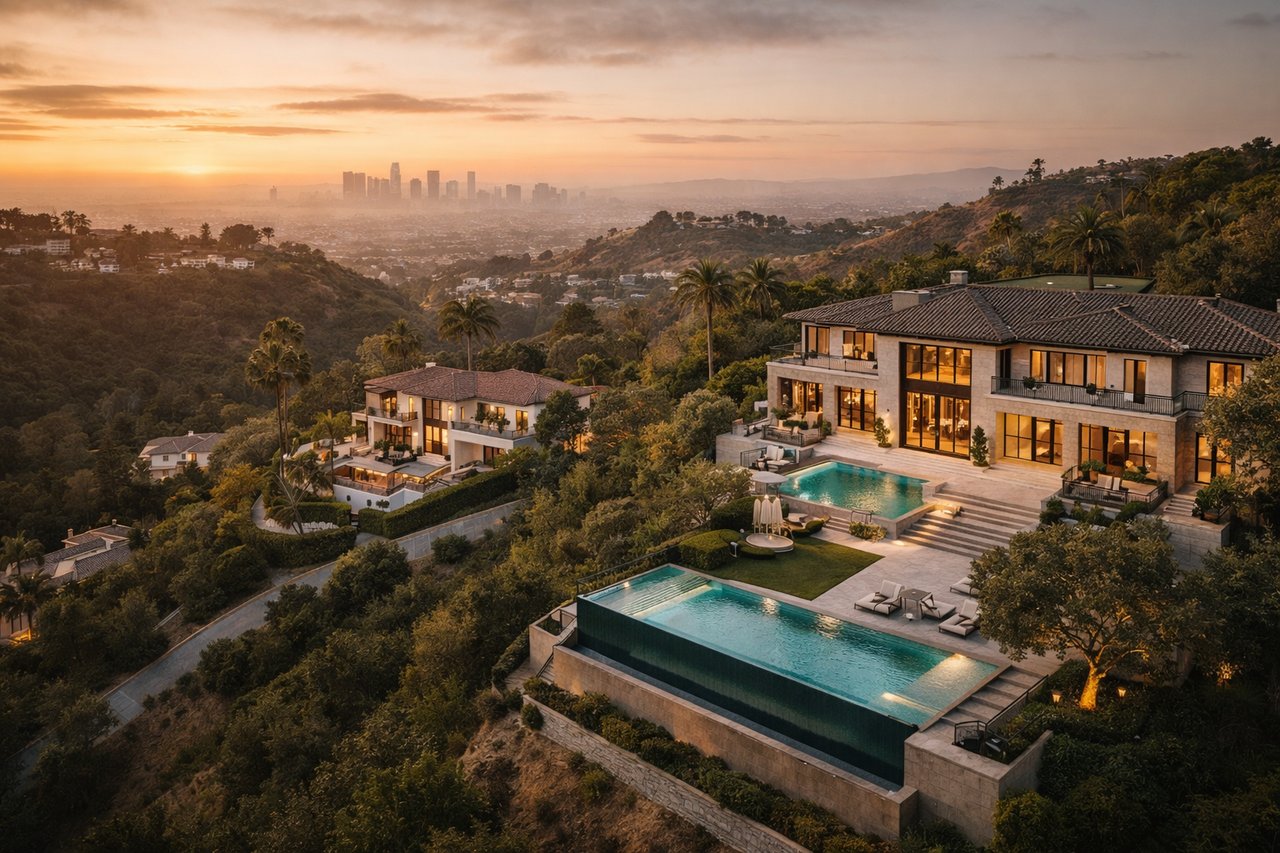
Luxury real estate in rich neighborhoods in Los Angeles operates through private conversations rather than public listings. Properties in these areas never enter the market formally. This creates transactions where lot position determines long-term value more than original price. Beverly Hills commands median values approaching $13 million, while Bel Air listings reach $40 million. The richest LA neighborhoods reward strategic positioning over purchase price. How old money reviews lot hierarchy in rich LA neighborhoods of all types separates informed buyers from those who pay premium prices in rich neighborhoods Los Angeles. The difference lies in being willing to recognize positioning advantages, from the most expensive neighborhoods in Los Angeles to coastal enclaves.
The Hidden Hierarchy of Lot Positioning in Richest LA Neighborhoods
Luxury real estate in Los Angeles operates through mechanisms invisible to those outside trusted networks. Transactions unfold quietly within trusted circles where discretion carries weight equal to dollar amounts. Visibility takes secondary importance to precision for buyers who understand this world. Timing determines outcomes more than market announcements.
What separates premier lots from standard luxury lots
Square footage becomes a footnote when wealth evaluates properties in rich neighborhoods in Los Angeles. Buying at the top of the market centers on privacy and prestige, lifestyle and long-term positioning. Physical dimensions matter less than strategic placement within the neighborhood fabric.
The richest LA neighborhoods shape luxury through specific fundamentals that vary block by block. Privacy and security show through gated streets and long driveways, controlled sightlines and managed access points. Views and settings range from ocean frontage to canyon ridgelines to flat estate grounds. Architectural inventory has legacy estates, landmark properties and statement new builds. Lifestyle patterns determine whether residents prioritize beach access, studio proximity or quiet residential living. Access and logistics factor in commute routes and traffic realities, movement efficiency.
The neighborhood itself becomes part of the asset and functions as part of the property's brand. Premier lots exist where these fundamentals line up most favorably. Standard luxury lots may offer size or finishes, but they lack the positioning advantages that compound value over time.
How wealth evaluates property positioning
High-net-worth buyers approach properties as dual-purpose assets. They evaluate homes as lifestyle instruments and capital placements at once. This dual evaluation creates assessment criteria foreign to traditional residential thinking.
Luxury properties compete on perception and preparation, strategic positioning rather than price alone. Micro-location details down to block orientation and adjacency affect long-term performance by a lot. Two blocks within the same rich LA neighborhoods can alter the entire ownership experience.
Premium positioning depends on quantifiable factors. South-facing exposure maximizes natural light and warmth. Proximity to retail anchors provides convenience without compromising privacy. Distance from traffic corridors reduces noise pollution and creates residential calm. Elevation relative to surrounding structures determines view permanence and privacy screening. Walkability to cultural nodes adds lifestyle value without requiring constant vehicle dependence.
Higher elevations deliver measurable advantages in Los Angeles' rich neighborhoods. Properties positioned above surrounding areas receive cleaner air with reduced pollution levels and increased distance from street noise, natural privacy from neighboring properties, superior flood protection and improved water drainage. These elevation benefits create compounding value over decades of ownership.
The unspoken rules of street selection
Street positioning separates informed buyers from those who pay premium prices in rich neighborhoods in Los Angeles without recognizing hierarchy mechanics. Through traffic streets versus tucked-away cul-de-sacs create different daily experiences. Neighbors looking into living spaces contrast with total screening from adjacent properties.
Topography divides properties into distinct categories. Flat estate grounds offer usable land and architectural flexibility. Hillside settings introduce engineering realities that affect both construction costs and long-term maintenance patterns. Noise considerations separate canyon corridors and busy routes from quiet interior streets.
View protection represents maybe the most critical unspoken rule. What remains protected through zoning or geographic constraints versus what may change through future development determines pricing durability. Buyers who understand protected views recognize value permanence. Those who assume all views carry equal weight discover depreciation when neighboring construction eliminates sight lines.
Wealth applies these evaluation frameworks before making offers in the most expensive neighborhoods in Los Angeles. They recognize that position within the hierarchy determines appreciation patterns and resale liquidity, legacy value more than initial purchase price.
Physical Positioning Elements That Raise Premium Values
Physical site characteristics determine value trajectories before buyers enter structures in rich neighborhoods in Los Angeles. Topography, orientation, access design and land configuration create measurable advantages that compound over ownership cycles. These elements separate properties that appreciate consistently from those that stagnate despite original luxury finishes.
Elevation advantages in hillside communities
Vertical positioning delivers quantifiable benefits in the richest LA neighborhoods. Higher elevations provide cleaner air with reduced pollution levels and increased distance from street noise. Natural privacy emerges from elevation itself. Properties positioned above surrounding structures gain visual separation without relying solely on fencing or vegetation.
Flood protection and superior water drainage represent additional elevation advantages. Properties on higher ground avoid water accumulation issues that affect lower lots during seasonal rains. Rolling topography creates dramatic views from both upper levels and main floors. Elevated positioning allows sight lines over neighboring properties and trees.
Privacy through natural screening and setbacks
Strategic site planning establishes privacy before construction begins. Living spaces oriented away from neighboring windows, stepped building forms and green buffers prove effective for creating seclusion. Small adjustments in setback depth or building arrangement reduce overlooking and help frame views toward treetops or skies rather than neighboring roofs.
Layered privacy approaches outperform single-element strategies. Dense, mature trees behind elegant stone walls combined with retractable structures in seating areas maximize seclusion while maintaining design sophistication. The goal centers on feeling protected while preserving connections to fresh air, natural light and open sky.
View corridors and orientation
View corridors protect established sight lines from building development obstruction. West and south-facing lots often capture sunsets and city lights. Elevated lots positioned above neighboring roofs display more of distant ridgelines. Landmark visibility creates stronger buyer interest and pricing premiums.
Orientation affects daily comfort and energy efficiency. South-facing living spaces receive warm daylight year-round, making them ideal for primary rooms. Strategic window and porch placement frames key views while protecting against harsh western sun exposure. Bedrooms and offices positioned to minimize street noise and maximize privacy add functional value.
Access patterns and entry impressions
Driveway design shapes the entire arrival experience in Los Angeles rich neighborhoods. Sloped terrain requires grades between 5 and 15 percent. Fire codes call for 20-foot unobstructed access width and turnarounds where dead-ends exceed 150 feet. Access that fails code standards affects financing and insurance availability.
Circular driveways offer symmetry and hotel-like presence, ideal for estates with large front setbacks. Serpentine paths build anticipation through curves around mature landscaping. Tiered drives on sloped lots create the feeling of ascending to a sanctuary, often combining retaining walls, integrated planters and elegant lighting.
Lot shape and usable land configuration
Land shape influences foundation options and layout efficiency. Sloped lots allow split-level designs that follow natural landscape contours, minimizing extensive grading while providing opportunities for multiple outdoor access points. Walkout basements suit downhill lots, offering extra space and backyard access without expanding footprints.
L-shaped or U-shaped layouts create courtyard areas on wide lots, protecting against wind while adding visual interest. Narrow lots benefit from linear layouts that maintain flow while respecting setback restrictions. Properties that work with natural terrain rather than forcing designs onto land maximize both efficiency and long-term value in rich neighborhoods Los Angeles.
Neighborhood-Specific Lot Position Dynamics in Los Angeles Rich Neighborhoods
Value hierarchies function independently of architectural quality in rich Los Angeles neighborhoods. Geographic differences create these hierarchies. Topography, access patterns, and community identity shape the positioning rules that each enclave enforces.
The Platinum Triangle: position rules in Beverly Hills, Bel Air, and Holmby Hills
Beverly Hills divides into Flats and Hills and creates distinct positioning dynamics. The Flats offer usability and classic neighborhood structure with medium to high walkability. Hillside areas deliver views and greater privacy. Bel Air positions properties on gated hillside estates with high privacy, low walkability, and variable lot profiles focused on retreat and hosting. Access routes matter substantially. Some pockets feel close to everything while others feel removed during peak traffic windows.
Holmby Hills claims the difference as the smallest yet most exclusive community. Properties cover mega-mansions built recently and historic estates spanning Sunset Boulevard. The neighborhood provides more estate-oriented, less view-driven positioning than Bel Air. Usable grounds and setbacks often serve as the headline feature. Legacy estate prestige defines value. Premiums attach to parcel size, historical significance, and turnkey condition.
Bird Streets: elevation tiers and view premiums
Elevation determines pricing in the Bird Streets. Higher positioning delivers better views and correspondingly higher values. Properties at lower elevations start around $2 to $3 million. Top-tier properties reach $70 million or more. The jetliner views from upper elevations show downtown Los Angeles, the Pacific Ocean, and the Hollywood Sign at once.
Lots trend steep, terraced, and often narrow at street level. Flat, buildable pads remain rare and command premiums. The most valuable parcels sit on promontories or flag lots with long, unbroken sightlines that stretch from the basin to the ocean. Views vary block by block. Orientation and elevation determine whether you capture downtown, city skyline, or ocean and Catalina on clear days.
Malibu: beachfront positioning vs bluff-top advantages
Beachfront properties deliver direct san access and constant ocean presence with high photographic and market appeal. Beachfront commanded a $17.81 million median sales price and $4,643 per square foot in September 2025. Bluff-top homes provide elevated, panoramic views with more privacy than many beach lots and potentially larger parcels than tightly packed beachfront rows.
Canyon homes inland trade immediate ocean frontage for larger lots and greenery. Malibu Park showed a $7.98 million median sale price. This demonstrates the premium gap between direct coastal frontage and inland positioning.
Brentwood and Pacific Palisades: interior vs perimeter lots
Brentwood south of Sunset features gently sloping terrain with grid-patterned subdivisions. Areas between San Vicente and Sunset Boulevards display gently curving streets with generously sized lots. Maximum privacy and acreage concentrate in canyon estates that include Mandeville and Sullivan Canyons.
Pacific Palisades positions properties in varied topography from beach and bluff to hillside ridge. Lower-bluff streets trend Mediterranean and coastal contemporary. Inland and canyon pockets add mid-century, ranch, and modern estates on larger lots. Dramatic ocean views appear in pockets like Castellammare and El Medio Bluffs.
Why Smart Buyers Prioritize Position Over Purchase Price
Strategic buyers in rich neighborhoods in Los Angeles separate price from value during acquisition. Original purchase amounts matter less than positioning advantages that compound across ownership cycles. This approach shows they understand that certain site characteristics cannot be updated or acquired later.
Long-term appreciation patterns by lot position
Luxury home values increased 3.9% compared to typical home appreciation of 3.2%. Properties in prime locations demonstrate consistent appreciation even during volatile market periods. A prestigious address functions as a hedge against downturns and ensures both stability and profitability.
Irreplaceable features become more valuable over time. View corridors, proximity to coastline, and lot positioning represent fixed assets that appreciation curves favor. Land and view position dominate value calculations in the most expensive neighborhoods in Los Angeles and often contribute more than interior square footage to pricing.
Liquidity advantages of well-positioned properties
Liquidity allows buyers to capitalize on opportunities as they emerge. Well-positioned properties deliver speed advantages in richest LA neighborhoods markets. Corner lots sold much faster than interior lots while maintaining similar price per square foot. Properties in prime locations attract buyers because positioning reduces transaction risk.
Access to capital provides negotiating power and closing certainty. Buyers who secure well-positioned lots gain flexibility for future transactions. Those who compromise on position often face extended marketing periods during resale.
The cost of compromising on positioning
Superior views paired with strong privacy, gated access, and landscape buffers command the strongest prices. Buyers who prioritize finishes over fundamentals find that updates lose relevance when positioning lacks difference. An older structure on exceptional land retains value. Newer construction on inferior lots don't deal very well with market changes.
Compromising on position in rich neighborhoods Los Angeles creates portfolio drag that persists across ownership cycles.
How to Assess Lot Position Before Making an Offer in Rich Neighborhoods Los Angeles
Assessment methods reveal positioning realities that marketing materials obscure in rich neighborhoods in Los Angeles. Systematic evaluation separates advantageous lots from those with hidden limitations.
Site visit timing and what to observe
Properties visited during different weather conditions reveal drainage issues invisible during dry periods. Standing water, unusual vegetation patterns, or soil color changes indicate poor drainage or unstable conditions. Observing lots during various times and days captures traffic patterns, noise levels, and the neighborhood's activity cycles.
Questions to ask about surrounding lots
Neighbors provide firsthand information about area dynamics that sellers omit. Residents share facts about common concerns and recent developments affecting the neighborhood. Questions about traffic during rush hours, road conditions, and parking availability reveal daily realities. Asking whether homes endured damaging events like storms or floods uncovers undisclosed property histories.
Understanding zoning and future development potential
Luxury residential zoning limits building footprints to 30-40% of total lot size with height restrictions of 35-45 feet. Setback requirements mandate 25-35 feet from front property lines, 10-15 feet on side yards, and 20-30 feet for rear yards. These restrictions determine buildable area and architectural possibilities in the most expensive neighborhoods in Los Angeles.
Making use of local expertise for positioning insights
Local brokers possess knowledge about community trends and upcoming opportunities in competitive markets. Agents who make use of local market information position themselves as trusted advisors through data access.
Conclusion
Positioning advantages compound value in ways that interior upgrades never replicate in rich neighborhoods in Los Angeles. Properties on superior lots appreciate, sell faster, and maintain pricing power during market shifts. Two homes with similar finishes perform differently due to elevation, view protection, access patterns and street hierarchy alone.
Buyers who understand these positioning fundamentals make offers based on long-term value rather than immediate esthetics. They secure properties that function as both lifestyle assets and mutually beneficial capital placements. The richest LA neighborhoods reward those who recognize that what cannot be changed matters most. Position determines appreciation trajectories that original purchase prices never predict.
Key Takeaways
In Los Angeles' luxury real estate market, strategic positioning creates lasting value that transcends initial purchase price, making lot selection the ultimate determinant of long-term wealth preservation.
• Elevation and views drive premium values: Higher positioned lots deliver cleaner air, natural privacy, flood protection, and protected sight lines that compound value over decades of ownership.
• Neighborhood hierarchy matters more than square footage: The Platinum Triangle, Bird Streets, and coastal enclaves each enforce distinct positioning rules where street selection and topography determine appreciation patterns.
• Well-positioned properties offer superior liquidity: Prime lots sell faster and maintain pricing power during market shifts, providing owners with negotiating advantages and exit flexibility.
• Physical positioning elements cannot be retrofitted: View corridors, elevation advantages, privacy screening, and access patterns represent fixed assets that become more valuable as surrounding areas develop.
• Smart buyers assess zoning and future development potential: Understanding setback requirements, height restrictions, and protected views prevents costly positioning mistakes that compromise long-term value.
The most successful luxury buyers in LA recognize that exceptional land with modest improvements outperforms new construction on inferior lots, making the position the ultimate hedge against market volatility.
FAQs
Q1. Why is Malibu real estate more expensive than Beverly Hills? Malibu properties command higher prices primarily due to waterfront positioning and coastal access. Beachfront lots in Malibu reached a median sales price of $17.81 million and $4,643 per square foot, while offering direct ocean access, superior climate with marine breezes, and protected views. The combination of limited coastal inventory and premium positioning advantages creates pricing that often exceeds inland luxury neighborhoods.
Q2. Why do people consider the Valley less desirable than other LA neighborhoods? The San Fernando Valley experiences higher temperatures due to its geographic position as a concrete bowl surrounded by mountains that trap warm air and block cooling marine breezes. Additionally, the Valley's suburban character and distance from cultural centers require longer travel times to reach entertainment, dining, and beach areas—often 1.5 to 2 hours depending on traffic. These factors contribute to lower property values compared to coastal or hillside communities.
Q3. How much does lot terrain affect property value in Los Angeles? Lot terrain significantly impacts value because many hillside properties sit on partially unbuildable land due to steep slopes or terracing. Flat, usable lots command premiums since they offer greater architectural flexibility and lower construction costs. Properties on hilly terrain may also carry higher wildfire risk and insurance costs, making flat lots in desirable areas substantially more valuable regardless of the existing structure.
Q4. Does lot size directly increase property value in luxury neighborhoods? In luxury markets, lot position matters more than raw size. While larger lots typically represent 20% of total home cost, strategic positioning—including elevation, view corridors, privacy screening, and street hierarchy—drives appreciation more than square footage alone. A smaller lot with superior views and protected positioning often outperforms a larger lot with compromised sightlines or inferior street placement.
Q5. What makes certain streets within the same neighborhood more valuable than others? Street hierarchy within neighborhoods creates distinct value tiers based on traffic patterns, elevation, and privacy. Quiet cul-de-sacs command premiums over through-traffic streets, while higher elevation positions deliver better views, cleaner air, and natural privacy. Properties on interior streets with protected views and minimal noise exposure consistently outperform those on busy corridors, even when located in the same zip code.