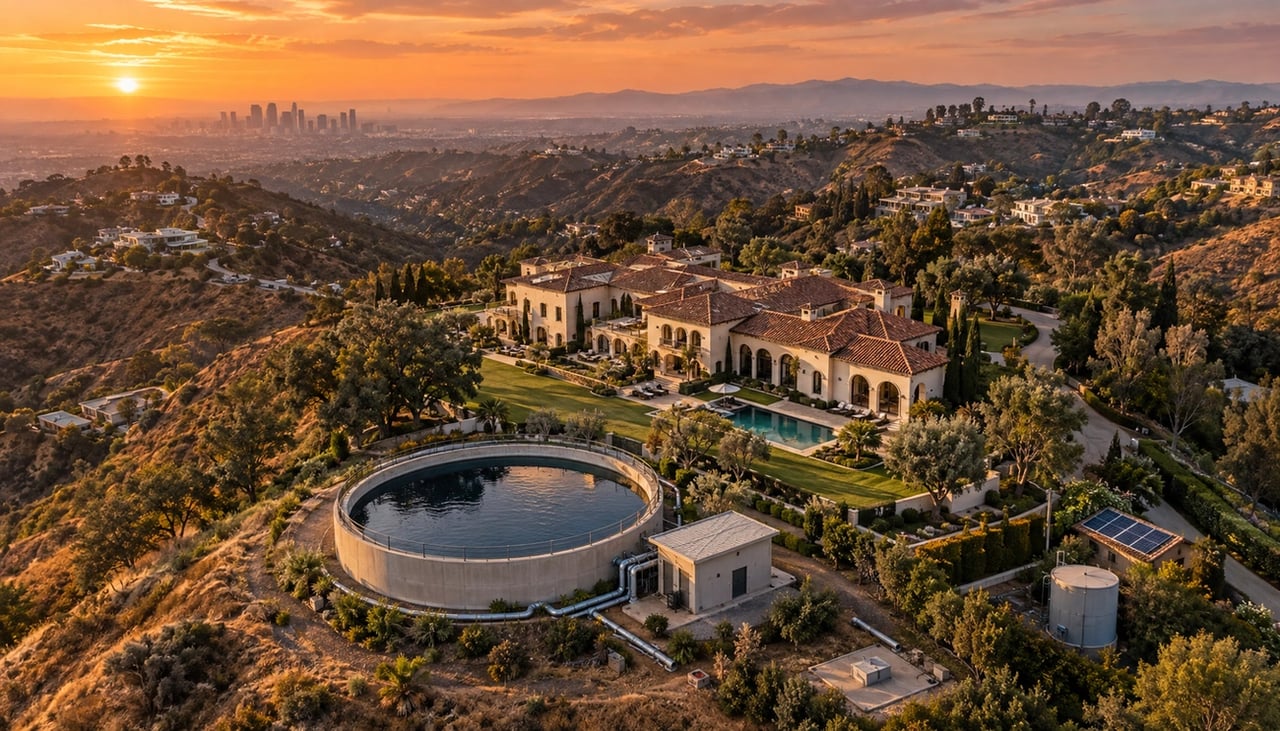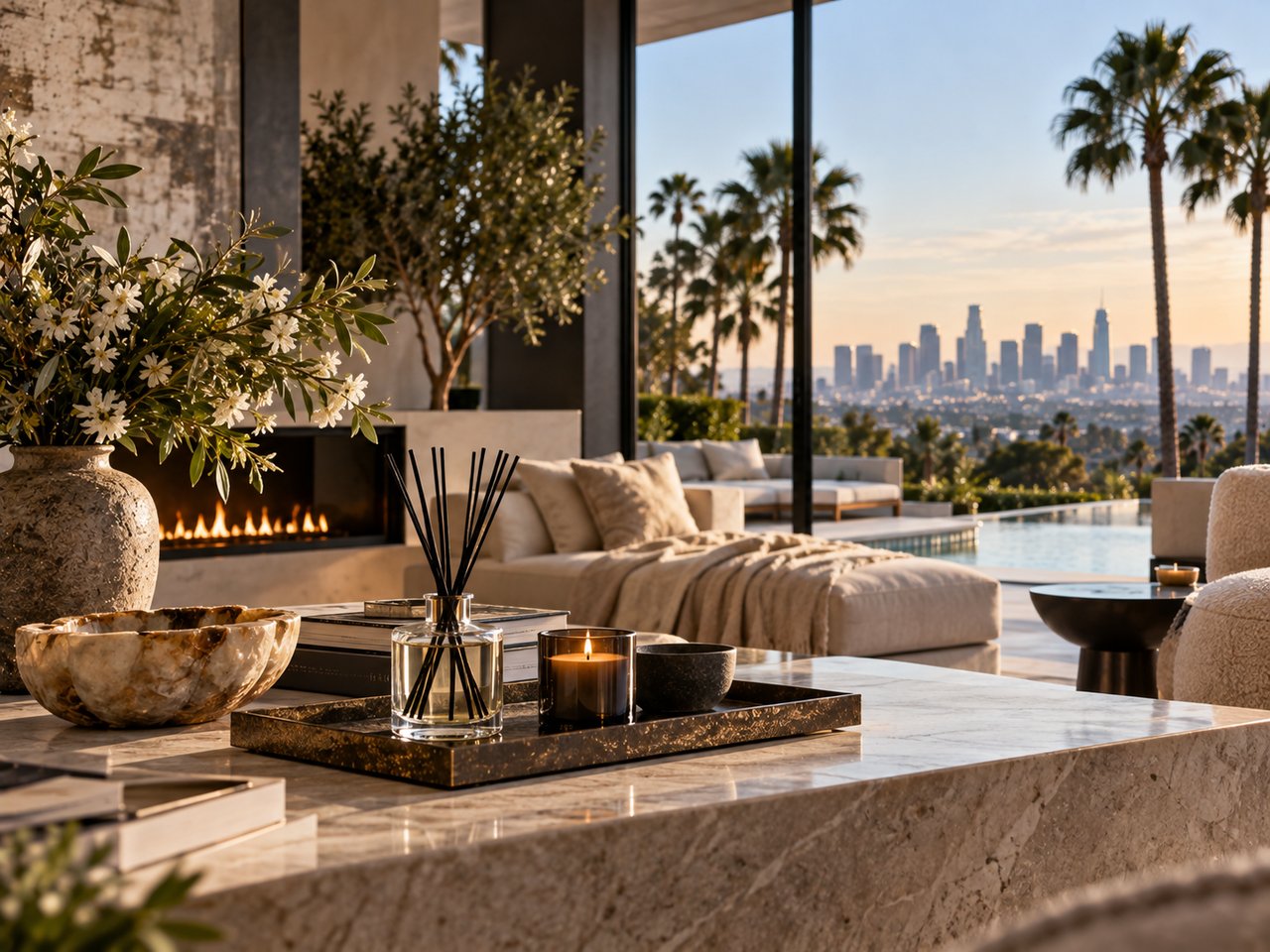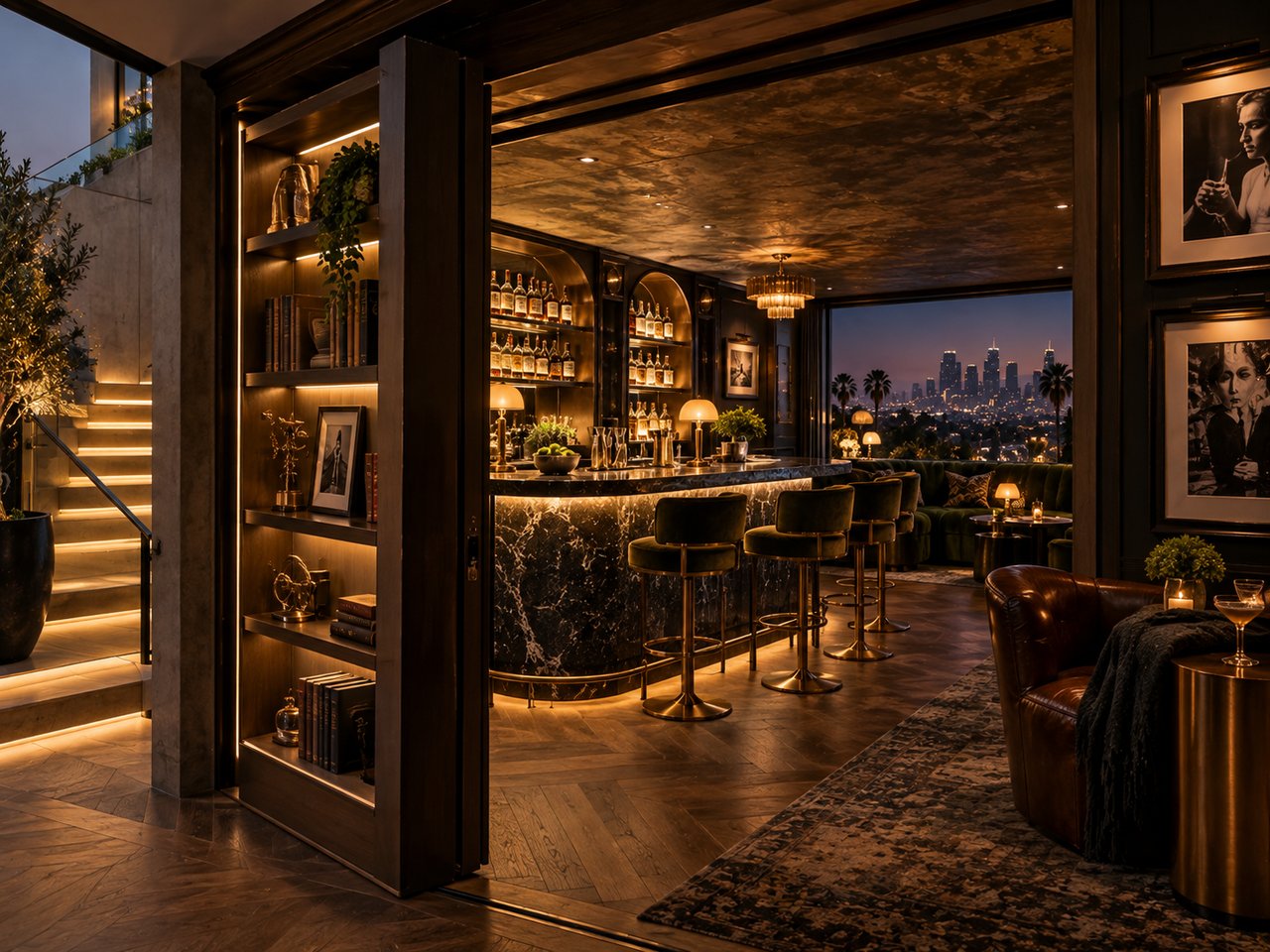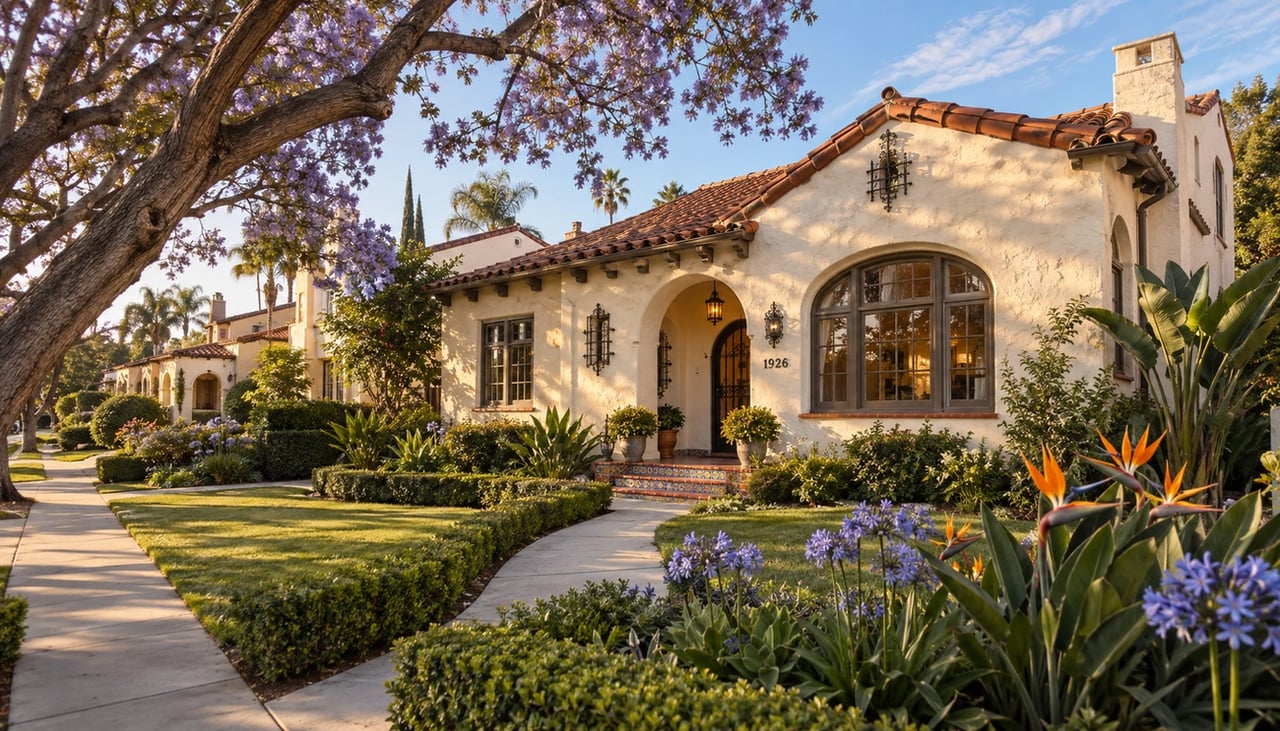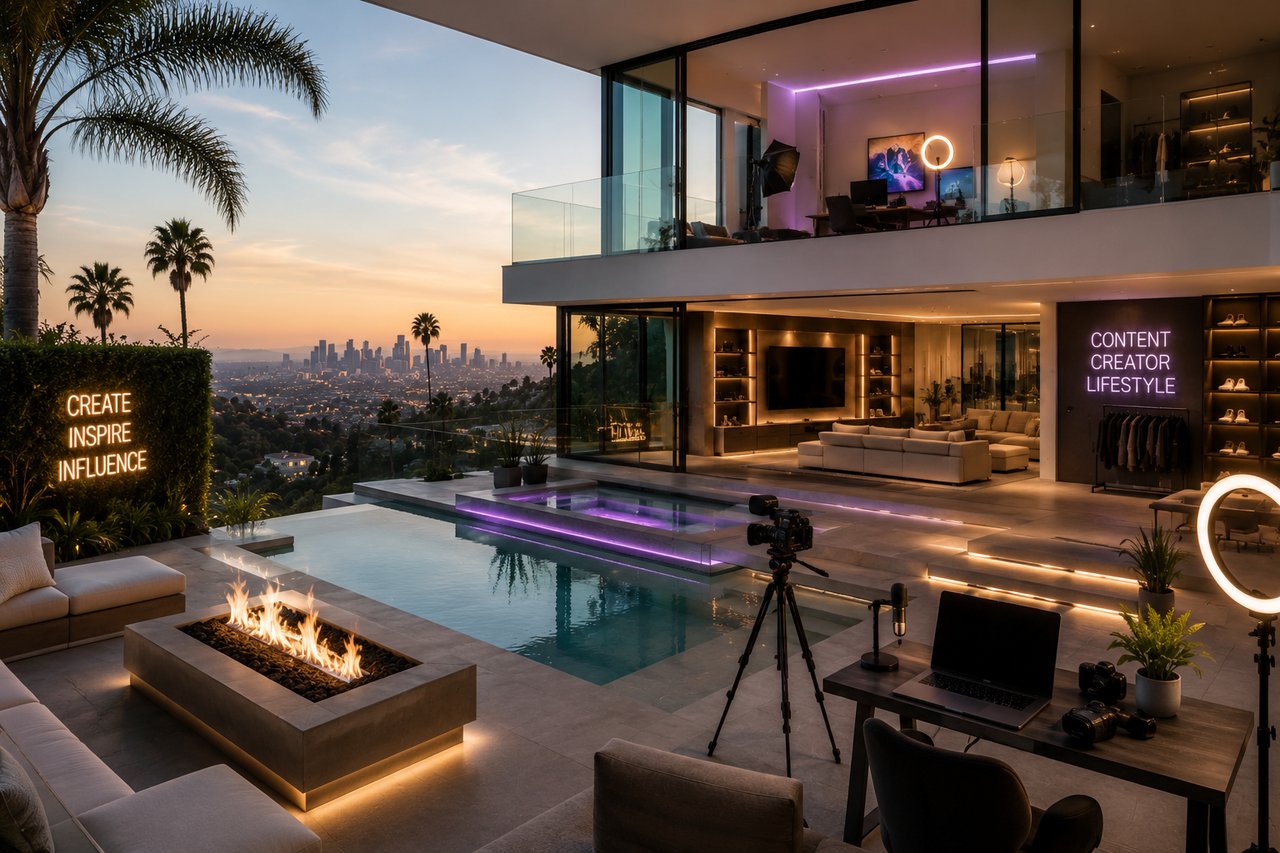
The LA influencer market operates differently than traditional luxury real estate. The most important transactions unfold through private channels rather than public listings. Lifestyle influencers approach property decisions as business infrastructure. Micro-influencers are 3x more engaged than big influencers. LA based influencers like Emma Chamberlain command followings of 14.3M, and the stakes have moved. Top influencers structure real estate portfolios around content creation needs and privacy requirements. They arrange these around brand considerations too. This progress reflects how top la influencers and la lifestyle influencers are redefining luxury living in 2026.
The shift from traditional celebrity to creator-driven luxury
The change from traditional celebrity to creator-driven luxury
Luxury real estate in Los Angeles operates within a framework where discretion precedes visibility. The most important transactions unfold through private conversations rather than public announcements. Timing and access matter more than exposure for those navigating this market. Christina Pope at Sotheby's International Realty and firms like EliteResidenceInternational.com understand this dynamic, where privacy carries as much weight as purchase price.
How LA lifestyle influencers changed the definition of status
The power structure within aspirational marketing has changed. People were 59.7% more likely to say they would buy a protein shake when endorsed by a social media influencer versus a celebrity. This preference stems from perceived relatability. Consumers view influencers like themselves, while celebrities represent aspirational goals that feel distant and less trustworthy.
Status symbols centered on material possessions before this change. Silver spoons and corsets marked elite positions in 1899. Luxury handbags and sports cars replaced them later. Mass production and outsourcing to China democratized these goods and made them available to both wealthy and middle-class consumers. Designer items lose effectiveness as status markers when everyone can purchase them.
The top 1% of earners began spending less on material goods starting in 2007. They increased investment in education by 3.5 times since 1996, while middle-income spending on education remained flat. Education now accounts for almost 6% of top 1% household expenditures, compared with just over 1% for middle-income households. This change reflects what researchers call "inconspicuous consumption," where immaterial investments signal status more than visible purchases.
Why discretion became the new wealth signal
Status symbols require scarcity and difficulty of acquisition. The wealthy pivoted toward markers that remain exclusive as luxury goods became ubiquitous through mass production. Privacy emerged as one such marker. Maintaining privacy requires substantial resources including time, money, and energy to sidestep constant data extraction in an interconnected and surveilled world.
The correlation between net worth and online presence runs inverse. Ultra-high-net-worth individuals maintain minimal or no public social media presence. This invisibility serves multiple strategic purposes: protecting privacy, preventing searchable records, and avoiding performative dynamics. Most of all, it signals having nothing to prove.
The quiet luxury movement reflects this philosophical change. Influencers like Becca Bloom showcase ultra-wealthy lifestyles on platforms like TikTok, yet the content feels less ostentatious than expected. Her viral video "Houses We Almost Bought—But Didn't" accumulated more than 19 million views and featured estates priced in the hundreds of millions. The presentation style emphasizes subtle flex over brazen display and echoes shows like Succession.
RichTok creators document luxury experiences without traditional flashiness. Benjamin Bryant, with 130,000 TikTok followers, explains the appeal: "It lets people 'try on' a rich life" through brief glimpses of private villas and luxury seaplanes that satisfy curiosity while decoding wealth codes. Yet discretion remains paramount. Growing up with social media taught younger wealthy individuals that visibility creates vulnerability. They watched influencers rise and fall based on perception rather than substance.
The role of off-market opportunities in influencer real estate
Off-market transactions line up with creator priorities around privacy and strategic positioning. These exclusive properties never appear online and require deep local connections and proactive approaches. Firms like Ray Lyon Realty utilize Westside LA expertise along with elite agent networks including Compass Private Exclusives and Top Agent Network to uncover opportunities before public listing.
The advantages extend beyond privacy. Off-market deals provide access to motivated sellers who value discretion and opportunities for tear-downs and redevelopment projects. They also enable faster closings through reduced appraisal contingencies. Agents can broadcast specific buyer requirements across private networks and source properties rather than waiting for listings.
This approach offers strategic benefits for top influencers in Los Angeles. Transactions remain confidential and protect personal security while avoiding public scrutiny of financial decisions. Knowing how to move on properties that line up with specific content creation needs or brand esthetics provides competitive advantages quickly. LA lifestyle influencers understand that the most valuable opportunities circulate within trusted circles, where relationships and reputation determine access long before price negotiations begin.
Understanding the LA influencer economy in 2026
The creator economy has evolved beyond content production into a structured business ecosystem. An estimated 50 million creators generate content for five billion social media users worldwide. Social commerce is projected to reach $2 trillion by 2026. The financial architecture supporting LA-based influencers reflects genuine commercial complexity rather than fleeting trends.
Los Angeles infrastructure supporting this economy extends way beyond the reach and influence of filming locations. The city functions as a hub where platforms, tools, and businesses powering the creator ecosystem are built and scaled. Average reported annual influencer marketing budgets rose 171% year-over-year, with 71% of organizations reporting budget increases. Enterprises now invest an average of $5.6 to $8.1 million in creators each year, while industry leaders average $7.8 million in spend.
Revenue streams beyond brand deals
Brand partnerships remain the foundations of creator income, accounting for about 70%. Reliance on a single channel creates vulnerability to algorithm changes and platform policy shifts. The most resilient LA lifestyle influencers operate through diversified models that combine multiple income sources.
Subscription platforms provide recurring revenue through exclusive content access. Patreon-style memberships, Instagram subscriptions ranging from 99 cents to $99.99, and TikTok's Series feature allow creators to monetize behind paywalls. These models deliver predictable monthly income rather than sporadic brand deals.
Affiliate marketing generates commission-based earnings without upfront inventory costs. Beauty creators often stack affiliate links for skincare routines alongside branded product launches and VIP membership communities. The sequencing matters: affiliate links function as top-of-funnel discovery, store conversions drive transactions, and memberships ensure retention.
Digital products scale income beyond time constraints. Templates, courses, workshops, and guides require original effort but generate ongoing revenue without additional labor. Subscription-based models averaged $103,787 over 12 months, while mixed revenue models generated $107,646 each year. The top 10% of earners produced $14 million monthly and $171 million over 12 months, averaging $48,500 per month per creator.
Live commerce and shopping integrations represent channels growing faster. Platforms like ShopMy and Whatnot enable direct sales from fans and shoppers, driven by consumer preference for creator recommendations over traditional advertising. Product launches transform audience attention into repeatable businesses, though creator-led ventures require handling product development and inventory management.
The creator-to-entrepreneur transition
Top LA influencers no longer function as marketing channels alone. They operate as autonomous media businesses producing content, building communities, and launching products with long-term commercial value. This change involves treating influence as infrastructure rather than output.
Professionalization defines the current landscape. Two-thirds of creators acknowledge the professional nature of their roles. They're moving beyond side hustles into legitimate career paths. Most creators earn under $1,000 in their first year, but by year four, roughly 80% make $10,000 or more each year. 76% of creators made more money in 2023 compared to the prior year.
Companies like Spotify are expanding creator monetization criteria and opening LA studio spaces to support recording needs. Events such as the Influencer Marketing Conference & Expo in Los Angeles function as boardrooms for the creator age. They aid networking between brands, creators, and platforms.
How top LA influencers structure their businesses
Formal business structures become necessary as income grows. They help manage taxes, liability, growth potential, and contracting ability. Successful creators structure income properly and manage risk rather than treating content as a hobby.
Multiple monetization paths include YouTube ad revenue, membership platforms, brand deals across Instagram and TikTok, and e-commerce through Shopify or similar services. Diversification protects against platform dependency, where algorithm changes, ad-rate swings, and payout rule modifications create volatility.
The strategic priority involves building owned infrastructure. Email lists, private communities, and owned websites provide control that platform-dependent income cannot match. Owned channels compound over time as email lists grow and sites maintain search rankings.
Boutique agencies and management firms help top influencers in Los Angeles guide contracts, growth strategy, and monetization pathways. These advisors assist in turning audiences into sustainable businesses and negotiating revenue splits. Los Angeles-based startups like Pearpop aid social collaboration networks where creators connect with one another or brands to produce content and earn together.
Where LA based influencers are choosing to live
Where LA based influencers are choosing to live
Geographic decisions for la based influencers extend beyond personal preference into strategic business calculations. Christina Pope at Sotheby's International Realty and firms like EliteResidenceInternational.com recognize this move, where property selection reflects content needs, networking opportunities, and brand positioning instead of simple lifestyle choices.
Beverly Hills and Hidden Hills: The traditional choices
Hidden Hills remains the traditional stronghold for creators who want maximum privacy within gated seclusion. This city of 1,725 residents sits adjacent to Calabasas in the Santa Monica Mountains. It features 2-acre lots surrounded by white three-rail fences and abundant signage warning of horses and children at play. Vanity Fair described it as having evolved from a "rustic retreat" into the "glitzy epicenter of Nouveau Hollywood" and an "uber-elite enclave".
Beverly Hills and neighboring Bel Air continue to attract top influencers in Los Angeles who want proximity to high-end boutiques, restaurants, and the entertainment infrastructure already there. These neighborhoods signal luxury through geography alone. The trade-off involves higher visibility and less anonymity than gated compounds provide.
Emerging neighborhoods attracting lifestyle influencers
Melrose Hill has emerged as one of LA's hippest micro-neighborhoods. It sits between East Hollywood, Larchmont Village, Koreatown, and Hollywood. Developers Zach Lasry and Josh Tohl acquired roughly 15 properties in 2018 and 2019. They preserved 1920s-era commercial buildings instead of demolishing them. The result created walkable streetscapes that attract influencers and the casually affluent to venues like Chainsaw, the Venezuelan bakery that became one of the most viral all-day destinations in Los Angeles.
Silver Lake attracts lifestyle influencers who want artistic ambiance and bohemian energy. West Hollywood positions creators near vibrant nightlife and entertainment venues. Downtown LA offers a cosmopolitan urban atmosphere with a burgeoning arts district. The San Fernando Valley provides more property value per dollar, which explains its growing popularity among influencers purchasing houses instead of renting.
Privacy versus accessibility: The new location calculus
Location decisions balance competing priorities of security against operational needs. Proximity to trendy restaurants, fashion boutiques, and event venues enables top la influencers to capture engaging content and stay connected with trends. Esthetic appeal matters just as much. Neighborhoods must appeal to content style and personal brand identity.
Traffic determines viability as much as aesthetics. Distance measures in minutes instead of miles in Los Angeles. A Venice residence becomes impractical for someone working in Hollywood due to 90-minute commute realities. La based influencers prioritize locations within a 5-mile radius of their daily destinations accordingly.
Safety, accessibility, and creative community presence weigh heavily in decisions. Neighborhoods that provide security, convenient transportation, and collaboration opportunities within influencer industries offer advantages beyond simple geography. The presence of co-working spaces and creative amenities transforms residential areas into business hubs.
Co-living and creative compounds
Ambitious CoLiving operates properties designed for the creator economy. Locations in West Hollywood and Downtown LA place residents near casting agencies, studios, and nightlife. These spaces host networking events, outings, and industry workshops for members. The premium paid at such facilities represents investment instead of mere rent for creatives and founders. Access to recording studios, photo labs, and kitchens full of fellow creators accelerates career development.
PodShare pioneered pod living networks that provide custom-built bunks in open-plan lofts. Memberships allow roaming between locations citywide. Other operators serve specific segments: Tripalink caters to students around USC with shuttle services, Bungalow matches compatible roommates through tech platforms, and LivingQ restores historic properties in Hancock Park and Franklin Village into vibrant communities.
These arrangements provide more than affordable housing. They deliver instant social circles in a sprawling city where connecting proves difficult and networking opportunities especially valuable for creatives. They also provide location access that might otherwise exceed budget constraints.
How top influencers in Los Angeles are investing in real estate
Investment strategies among top influencers in Los Angeles reveal calculated approaches where property acquisitions serve operational functions rather than status displays. Christina Pope at Sotheby's International Realty and firms like EliteResidenceInternational.com recognize this move, where transactions prioritize production capabilities, income generation, and brand infrastructure over traditional luxury metrics.
Content creation spaces as business infrastructure
Production facilities represent the most important infrastructure investment category for established LA-based influencers. Alan Chikin Chow opened a 10,000-square-foot Los Angeles production studio featuring 10 custom-built sets for his staff of 20. The studio came equipped with high-tech cameras and internet-ready lighting designed for YouTube production. This approach mirrors Hollywood executives more than social media users.
The Dude Perfect team operates 80,000 square feet in Frisco, Texas for filming sports stunts. On top of that, they maintain a separate 20,000-square-foot headquarters priced at USD 3.00 million. MrBeast owns a 50,000-square-foot Studio C in Greenville, North Carolina. His influence extends beyond production into local real estate markets as employees and collaborators purchase surrounding homes.
SypherPK founded Oni Studios with a USD 10.00 million compound to support other influencers. YouTuber Ten Hundred acquired and remodeled a 15,000-square-foot warehouse completely and documented the transformation experience as content itself. These investments function as business assets that generate returns through increased production capacity, content quality, and operational efficiency.
Multi-property portfolios for different content needs
Top LA influencers structure portfolios around multifamily income properties and main residences with growing frequency. Jason Oppenheim added a 40-unit West Hollywood apartment property to his holdings for USD 18.40 million in 2026. He targeted luxury repositioning with rents averaging USD 4,200 per unit. Josh Altman participated in a USD 52.00 million multifamily syndication in Beverly Hills and projected 15 percent IRR over five years.
Graham Stephan reported crossing USD 30.00 million in total real estate holdings. This included a newly acquired 12-unit Los Angeles apartment property that generates USD 52,000 in monthly gross rent. Kendra Wilkinson purchased a 16-unit Orange County apartment building for USD 6.20 million and disclosed detailed rehab budgets of USD 850,000 aimed at boosting rents by 22 percent. Caleb Simpson acquired a 14-unit New York apartment building for USD 12.30 million. He detailed projected renovation costs of USD 2.10 million to raise average rents above USD 5,000 monthly.
These acquisitions demonstrate lifestyle influencers treating real estate as business operations that require capital deployment, renovation expertise, and cash flow management rather than passive investments.
Strategic property selection for brand alignment
Property decisions reflect brand positioning as much as financial returns. Top LA influencers select locations, architectural styles, and amenities that reinforce content narratives and audience expectations. Production spaces signal professionalism and scale. Multifamily portfolios demonstrate financial acumen and entrepreneurial credibility. Each acquisition communicates specific messages about business sophistication, market knowledge, and long-term vision beyond content creation alone.
The architecture of influencer-optimized homes
Architectural specifications for la influencer residences reflect production requirements rather than esthetic priorities alone. Better Homes and Gardens Real Estate's 2026 Design Trends Moving Real Estate report shows that nearly half of buyers say social media influences what they want in a home at least somewhat. One in five says it shapes their priorities a great deal. Christina Pope at Sotheby's International Realty and firms like EliteResidenceInternational.com recognize this development, where design decisions prioritize content creation functionality alongside traditional luxury features.
Natural lighting and dedicated studio spaces
Natural light provides balanced illumination compared to artificial lighting and enhances the esthetics of interior spaces. It makes them feel brighter, more spacious and inviting. Top L.A influencers translate this into strategic property selection based on window orientation and room exposure. Natural light explains architectural features, decor elements and colors that create visually appealing environments. Exposure to natural light has been linked to increased productivity, creativity and concentration.
Content houses just need abundant natural light and privacy from fans and neighbors. Village Studio properties illustrate this approach. They scour the country to find homes with optimal natural light and open space, then install approximately $40,000 worth of decorations on display or stash them in prop closets so influencers can style spaces however they want. Every Village Studio home needs a well-lit, open kitchen. Food bloggers can capture perfect cooking shots there.
Dedicated zones serve dual purposes. Artists and creators negotiate between solitude and integration, between domestic rhythms and creative production demands. The studio becomes a question of scale, material and orientation. It may be folded into a living room corner, positioned on a rooftop or detached as a garden retreat.
Outdoor areas designed for lifestyle content
Outdoor spaces function as content stages rather than mere amenities. Patios, pools and gardens designed with camera angles in mind provide lifestyle influencers with diverse backdrops. Architectural details that translate beautifully to social media include color-washed rooms and interior glass walls. These create visual depth while providing flexible division in open floor plans.
The right home makes all the difference if you love to entertain. I'd be delighted to help you find spaces designed for raised living and effortless hosting if you're thinking about a purchase in the near future or beginning your search. Christina Pope  310-404-9931
  [email protected]
Smart home integration for uninterrupted production
Smart home technology streamlines content production workflows. Automated lighting systems adjust throughout the day and maintain consistent filming conditions. Voice-controlled environments allow creators to modify settings without interrupting shoots. Integrated sound systems, climate controls and security features operate naturally in the background. They support production without technical interruption.
Esthetic consistency across living and working zones
Social media has turned everyday features into must-have lifestyle moments. Staging creates small, camera-ready scenes that spark emotion. Top influencers in Los Angeles structure spaces where living areas and production zones share cohesive visual languages. This consistency allows creators to film throughout properties without jarring esthetic transitions that disrupt content narratives or demand extensive set dressing between shots.
Building communities through proximity and cooperation
Physical clustering among LA-based influencers follows patterns observed in academic research. Spatial proximity increases cooperation rates by a lot. Studies to explore cooperation at MIT from 2005 to 2015 found that moving researchers into the same building increased their propensity to cooperate. Effects plateaued five years after the move. Buildings hosting researchers in the same or related fields from multiple departments generated larger cooperation effects. Christina Pope at Sotheby's International Realty and firms like EliteResidenceInternational.com recognize how location decisions extend beyond individual properties into strategic community positioning.
How top LA influencers cluster by niche
Moving to buildings hosting between 4 and 7 departments increased cooperation rates by 0.572 papers per hundred pairs annually. Buildings hosting more than 7 departments increased rates by 0.813 papers per hundred pairs. Moving researchers to buildings with others sharing their academic field increased cooperation rates by 0.558 papers per hundred pairs relative to buildings with unrelated fields. These dynamics translate to creator communities. Lifestyle influencers cluster by niche in specific LA neighborhoods and facilitate spontaneous cooperation and knowledge sharing.
Los Angeles demonstrates pronounced niche clustering. The city's diverse communities led to hyper-niche creators, from career pivot storytellers to hyper-local food reviewers to fitness coaches with specific audiences. Nano-creators often outperform larger influencers in engagement and conversion. Their audiences trust them more, their content feels less transactional, and people see them as genuine experts in niche categories.
Shared resources and cross-promotion benefits
Cross-promotion through influencer cooperation creates expanded reach. It introduces creators to fresh follower pools interested in complementary content. Trust extends when an influencer vouches for another. This leads to higher engagement and more meaningful connections. Influencer cooperation through cross-promotion proves budget-friendly. It requires only time and creativity rather than large marketing budgets.
Content creator partnerships open doors to joint videos, shared blog posts, and co-hosted live streams that yield unique content standing out to combined audiences. Collaborating creators experience higher engagement rates. Content gets promoted by both parties, and followers from both sides are more inclined to like, comment, and share.
The Creator House model development
Content houses emerged to provide fertile ground for influencers to create content for viewers. They grow their profile and brand through cooperations with other house members. The proximity of fellow content creators and availability of emotional support from peers contributed to collaborative house popularity. Collab houses require abundant natural light and privacy from fans and neighbors.
Hype House formed in December 2019. It occupied a Spanish-style mansion perched atop a gated street hill with a palatial backyard, pool, and enormous kitchen, dining, and living quarters. The house housed four group members. TikTok videos tagged #hypehouse had accrued 100 million views by January 2020. A January 2020 New York Times article described Los Angeles as home to a land rush of collab houses. Popularity arose at the time the burgeoning COVID-19 pandemic hit the United States.
Financial strategies enabling luxury purchases
Financing strategies for top LA influencers operate within specialized lending frameworks that traditional mortgage products rarely accommodate. Lenders view influencers and content creators as high-risk borrowers whatever their income levels. LA-based influencers must find alternative pathways that require careful preparation and expert guidance. Christina Pope at Sotheby's International Realty and firms like EliteResidenceInternational.com recognize these financing realities. Access depends on documentation sophistication rather than earnings alone.
How creators qualify for high-end mortgages
Lenders question the potential longevity of an influencer in their chosen niche. Many won't have been earning income for four or more years. Lifestyle influencers need at least two years of tax returns that show solid income and profit. Influencers who pay themselves a salary via a limited company can often make a case for lending based on profits and income into the business. This approach works better than using the monthly salary drawn down, which is usually much less to limit tax liability.
Bank statement loans measure a borrower's capacity to repay based on income averaging over 12 or 24 months rather than rigid documentation requirements. Underwriters average qualifying deposits from platforms like AdSense, Stripe, PayPal, Patreon, and Twitch to calculate monthly income. Tax returns aren't required. Alternative products include 1099 income loans for brand deal concentration and P&L statement loans that CPAs prepare. Both require minimum 660 FICO scores and 25% ownership stakes when using business bank statements.
Working with specialized advisors who understand influencer income
Specialist mortgage brokers connect top LA influencers with lenders experienced in self-employed mortgages. They help verify income history and negotiate better terms, including lower unadvertised rates. Financial advisors like those at HCW Advisor help creators choose appropriate business entities and manage estimated taxes. They also build cash reserves for uneven income and create long-term investment plans.
Timing acquisitions around platform changes and revenue cycles
Algorithm updates create income volatility. Meta favored Reels over traditional Posts in spring 2022, and this shift caused influential content creators to lose thousands in monthly revenue. Top LA influencers time acquisitions during stable revenue periods. They build downpayments exceeding 20% to increase lender confidence.
What this means for luxury real estate professionals
Serving this market requires recognizing that la influencer clients assess properties through operational lenses rather than traditional luxury metrics. Christina Pope at Sotheby's International Realty and firms like EliteResidenceInternational.com understand that meaningful transactions unfold through trusted relationships where timing and discretion determine outcomes.
Understanding creator needs beyond traditional buyers
Lifestyle influencers prioritize audience composition and brand adjacency over vanity metrics when selecting properties. Research shows 67% of high-net-worth millennials and 48% of Gen X luxury buyers report social media influences their home research. Therefore, real estate professionals must assess how properties function as content infrastructure. They must think over natural lighting, production zones, and esthetic consistency that align with creator brand identities.
The right home makes all the difference if you love to entertain. I'd be happy to help you find spaces designed for elevated living and effortless hosting if you're thinking about a purchase in the near future or beginning your search. Christina Pope 310-404-9931 [email protected]
The importance of discretion in influencer transactions
Ultra-high-net-worth individuals understand that real luxury centers on privacy and security, freedom from scrutiny. Discretion extends beyond transaction confidentiality into marketing partnerships and client communications. It functions as a brand promise rather than optional service.
Long-term relationship building with emerging talent
Brands maintaining influencer relationships for at least 12 months experienced 300% increases in engagement compared to short-term collaborations. Real estate professionals benefit from similar approaches and treat top L.A influencers as long-term partners rather than transactional clients.
Conclusion
LA's influencer economy has transformed luxury real estate from status display into business infrastructure. Top creators structure property portfolios around production capabilities, privacy requirements and income generation rather than traditional prestige markers. Christina Pope at Sotheby's International Realty and firms like EliteResidenceInternational.com recognize this rise, where meaningful transactions unfold through private channels rather than public listings.
Creators navigating this market find success when they treat real estate as operational assets while maintaining the discretion that defines genuine luxury. Properties functioning as content studios, investment vehicles and brand extensions will determine competitive positioning within LA's digital world as the creator economy matures.
Key Takeaways
LA's influencer culture is transforming luxury real estate from status symbols into strategic business infrastructure, where properties serve as content studios and investment vehicles rather than mere lifestyle displays.
• Discretion is the new luxury signal - Top creators prioritize privacy and off-market transactions over flashy purchases, with ultra-wealthy influencers maintaining minimal online presence to signal genuine status.
• Properties function as business infrastructure - Successful LA influencers invest in homes optimized for content creation, featuring natural lighting, dedicated studio spaces, and esthetic consistency across living zones.
• Geographic clustering drives collaboration - Creators strategically locate near industry peers in neighborhoods like Melrose Hill and West Hollywood to facilitate spontaneous partnerships and cross-promotion opportunities.
• Diversified income enables luxury purchases - Top influencers structure multiple revenue streams beyond brand deals, including subscriptions, affiliate marketing, and real estate portfolios generating $100K+ annually.
• Specialized financing unlocks high-end properties - Creators work with mortgage brokers experienced in influencer income, using bank statement loans and alternative documentation to qualify for luxury real estate despite irregular earnings.
The shift represents a fundamental evolution where influence becomes infrastructure, privacy signals wealth, and properties serve as both homes and production facilities in LA's creator-driven economy.
Introduction
FAQs
Q1. How are influencers changing luxury real estate priorities in Los Angeles? Influencers approach property purchases as strategic business infrastructure rather than status symbols. They prioritize features like natural lighting for content creation, dedicated studio spaces, and privacy over traditional luxury metrics. Properties are selected based on production capabilities, brand alignment, and income generation potential, with many creators building multi-property portfolios that serve different content needs.
Q2. What income levels do successful content creators actually achieve? The creator economy shows significant income variation. While 88% of influencers earn up to $500,000 annually, the top performers generate substantially more, with some earning between $500,000 and $1 million (11%) and a small percentage exceeding $1 million (2%). Successful creators diversify income through brand deals, subscription platforms, affiliate marketing, digital products, and e-commerce rather than relying on a single revenue stream.
Q3. Where are LA-based influencers choosing to live in 2026? While traditional areas like Beverly Hills and Hidden Hills remain popular for their privacy and prestige, many influencers are gravitating toward emerging neighborhoods. Areas like Melrose Hill, Silver Lake, West Hollywood, and parts of the San Fernando Valley offer better value, creative communities, and proximity to trendy venues. Location decisions balance privacy needs with accessibility to content opportunities and collaboration with other creators.
Q4. How do influencers qualify for luxury home mortgages? Creators face unique challenges since lenders view them as high-risk borrowers due to income volatility. Most need at least two years of tax returns showing consistent income. Specialized financing options include bank statement loans that average income over 12-24 months from platforms like AdSense and Patreon, and alternative products for 1099 income. Working with mortgage brokers who understand creator income structures is essential for securing favorable terms.
Q5. Have influencers negatively impacted Los Angeles as a city? While influencer culture has contributed to gentrification and rising costs in certain areas, most creators live in specific pockets of LA rather than throughout the entire city. Many LA natives note that influencers exist in a bubble, frequenting the same handful of locations while the broader city maintains its diverse culture and character. The influencer presence represents one facet of LA rather than defining the entire metropolitan area.