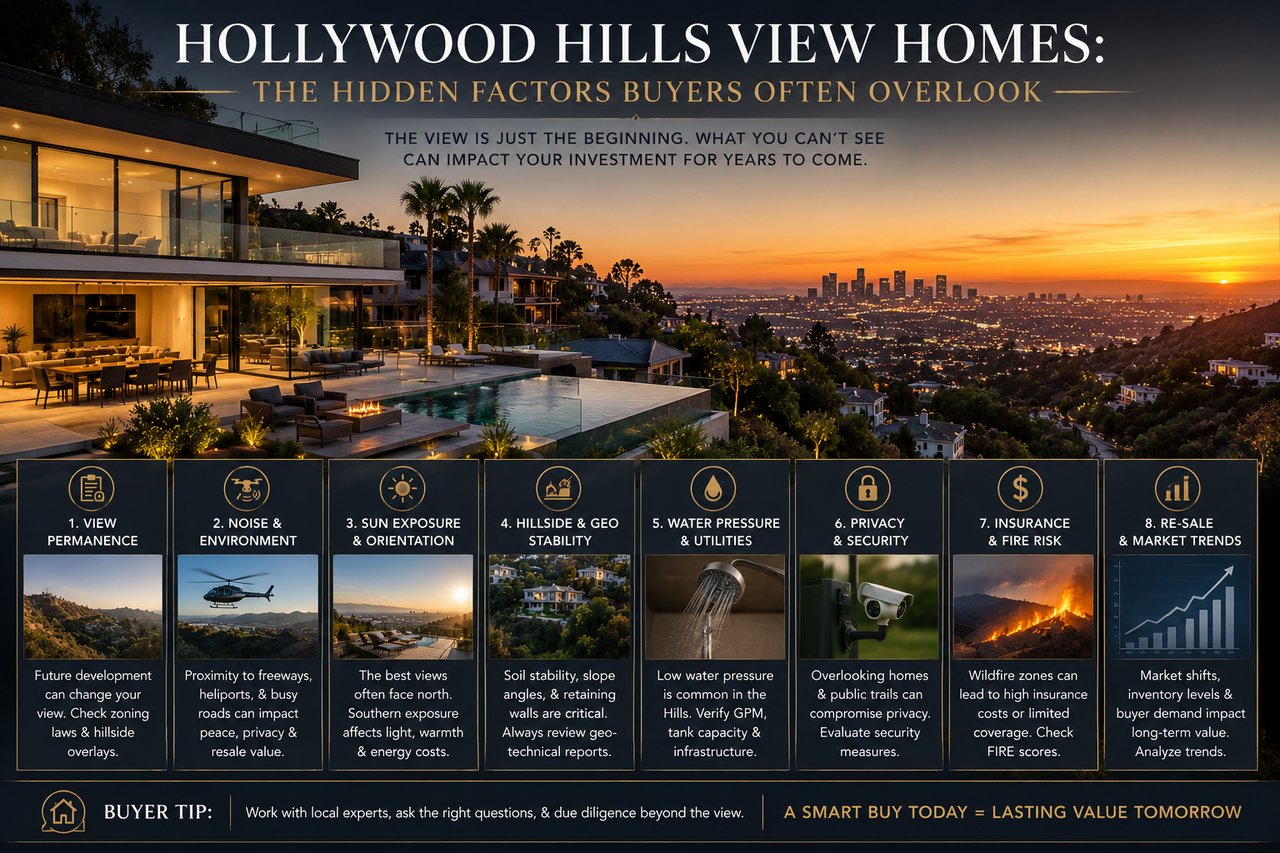
Beyond the photos: what changes between showing and ownership
Buyers tour properties at convenient times, usually between 10 a.m. and 4 p.m. on weekends. This scheduling pattern creates a systematic blind spot. The home you see bathed in soft midday light operates very differently at 7 a.m. on a Tuesday or 8 p.m. on a summer evening.
Morning versus evening light patterns
East-facing rooms in Hollywood Hills view homes receive gentle, energizing light that works well for kitchens and breakfast areas. The temperature stays cooler during morning hours and reduces heat gain while providing natural illumination. This orientation becomes less appealing for bedrooms if occupants are light-sensitive. Sunrise directly penetrates east-facing windows.
West-facing exposures present the opposite dynamic. These spaces remain dark through morning hours but receive saturated, dramatic light during late afternoon and evening. While this creates appealing sunset views, west-facing bedrooms and bonus rooms experience the worst overheating. The sun sits lower on the horizon during afternoon hours in summer and punches through glass at a more horizontal angle. This generates both glare and major heat gain. Air conditioning systems work hardest during these peak west-exposure hours and fight the hottest part of the day.
South-facing slopes above canyon floors receive earlier warmth and longer direct sun compared to low-lying areas. North-facing rooms maintain steady, shadowless illumination but stay cooler year-round. Hillsides offer stronger morning and afternoon light than flats, though neighbor tree canopies and afternoon ridge winds require evaluation before purchase.
Seasonal weather effects on hillside properties
The sun's path shifts between seasons and alters how light enters each room. Summer brings a sun that tracks higher and longer through the sky. South-facing windows receive strong midday light from above, while east and west exposures capture brutally bright horizontal rays. Well-designed overhangs cast shade during summer months and reduce heat penetration.
Winter brings a lower sun angle that allows light to penetrate deeper into south-facing rooms. This provides free heating and improved natural illumination during shorter days. East light helps warm kitchens early in the day, while west light adds warmth to dens and bedrooms during evening hours.
The same property viewed in July versus January presents vastly different comfort levels. Summer's high sun clears most neighboring structures, while winter's low angle causes buildings to cast shadows that extend across entire blocks. Ground-floor and lower-elevation properties that seem bright during summer showings can sit in permanent building shadow throughout winter months.
Noise considerations at different elevations
Sound levels on hillside properties vary based on elevation, proximity to roadways, and canyon acoustics. Noise measurements use A-weighted decibels (dBA), which approximate how the human ear perceives different frequencies. Normal conversation at three feet measures roughly 60 dBA, while very quiet environments register around 40 dBA. Very loud conditions reach 100 dBA and approach the threshold where serious discomfort occurs.
Ambient noise level represents the composite sound from all sources at a given location. Hillside streets often provide quieter environments than canyon-bottom roads carrying through-traffic. But sound can travel unpredictably through canyon topography and magnify noise from distant sources. Fixed noise sources like HVAC equipment, generators, and pool pumps from neighboring properties create recurring sound patterns. Properties at higher elevations sometimes experience ridge winds that generate their own ambient noise, especially during seasonal Santa Ana conditions.
Hollywood hills homes with a view: the technical realities
High-value hillside transactions in Los Angeles depend on information that never appears in listing descriptions. Buyers who understand subsurface conditions, infrastructure limitations, and replacement costs negotiate from positions of strength. This knowledge separates informed purchasers from those finding expensive realities after close of escrow.
Geotechnical reports and what they reveal
A geotechnical engineer tests soil composition, identifies structural risks, and provides foundation design parameters. Properties on slopes steeper than 33% require mandatory geotechnical analysis in Los Angeles. The Los Angeles Department of Building and Safety enforces strict hillside development standards to protect people, property, and environment.
Hollywood Hills terrain has three dominant soil types. Colluvium consists of loose material deposited by downslope movement and remains unstable under pressure. Engineered fill provides reliable support when compacted but requires verification testing. Bedrock delivers firm support and serves as the optimal anchoring material for caissons or piles.
Geotechnical engineers with licenses conduct borings, sample testing, and slope stability calculations. Their reports include bearing strength analysis, drainage review, and landslide risk assessment. The slope's factor of safety must exceed 1.5 for static loads, with higher factors required in seismic zones. LADBS reviews these findings before issuing grading permits.
Foundations get compromised, retaining walls destabilize, and soil erosion occurs when water management fails. Geotechnical reports must review stormwater patterns, surface flow dynamics, and erosion potential. Properties near steep drops or liquefiable zones trigger additional testing protocols.
Sewer lateral condition and replacement costs
Sewer lateral replacement runs $150 to $250 per foot. Most laterals extend about 50 feet from house to street. This creates total project costs between $7,500 and $12,500. Actual expenses depend on excavation depth, obstructions, and whether work can proceed without destroying driveways.
Camera inspection costs $100 to $500 and reveals damage origins before replacement begins. Installation expenses range $50 to $200 per foot depending on pipe material and access difficulty. Labor-intensive work drives costs higher, with experienced plumbers charging $50 to $150 per hour.
Water pressure systems and booster pumps
Hillside properties above four stories experience inadequate water pressure on upper levels. Pressure sufficient for fourth-floor delivery comes from municipalities, with gravity reducing available pressure at higher elevations. Pressure booster systems become necessary for buildings over four stories to maintain acceptable flow for faucets, showers, and toilets.
Water booster pumps add 20 to 50 PSI to existing supply pressure. Properties that receive 30 PSI from municipal sources can achieve comfortable 60 to 80 PSI delivery with appropriate boosters. Modern variable speed systems adjust motor speed based on demand and reduce electricity consumption while maintaining consistent pressure.
Septic versus city sewer on canyon lots
Public treatment facilities receive wastewater through underground pipes from municipal sewer systems. Septic systems treat wastewater on-site using tanks and drainfields. Pumping becomes necessary every three to five years for septic tanks. Local regulations and availability determine which system canyon properties use.
The cost structure nobody mentions upfront
Recurring ownership expenses on hillside properties often exceed original projections by wide margins. National averages place hidden homeownership costs above $21,000 annually, with maintenance alone averaging $8,808. Hollywood Hills view homes carry extra cost layers that reveal themselves only after closing.
Fire insurance premiums in hazard zones
Fire Hazard Severity Zones classify areas based on fuel load, terrain, weather patterns, and historical fire behavior over 30 to 50-year periods. California employs three hazard levels in State Responsibility Areas: moderate, high, and very high. Every California county contains at least moderate fire hazard zones, while many consist almost entirely of high or very high classifications.
Insurance carriers in high-risk zones either refuse new policies or increase premiums to match expected future losses. California's statewide homeowner policy nonrenewal rate climbed from 11% in 2018 to 13% in 2021. The 2018 Carr Fire and Mendocino Complex Fire destroyed 8,900 homes and 329 businesses. Verisk's 2017 analysis identified 2 million Californians at high or extreme wildfire risk.
Home insurance costs in California exceed $2,000 annually for properties with $300,000 dwelling coverage and $1,000 deductibles. Colorado properties under similar parameters cost over $2,500 per year. Properties lacking standard coverage require California FAIR Plan fire-only policies supplemented with DIC coverage for liability, theft, and water damage.
Retaining wall maintenance and replacement cycles
Hillside lots depend on retaining structures that prevent soil movement and maintain level building pads. Wall longevity depends on materials, drainage design, and soil pressure loads. Maintenance costs accumulate through inspection, drainage system cleaning, and eventual replacement.
Brush clearance and defensible space programs
Los Angeles requires clearance of all native brush, weeds, grass, trees, and hazardous vegetation within 200 feet of structures and within 10 feet of combustible fences or roadways. Grass must be cut to three inches in height within this zone. Native brush reduces to three inches except for individual shrubs spaced 18 feet apart and trimmed to remove lower third growth.
Trees taller than 18 feet require trimming so no foliage sits within six feet of ground level. Tree foliage must maintain 10-foot clearance from chimney outlets. Roof surfaces require maintenance free of leaves, needles, and combustible matter. Defensible space extends 100 feet around homes by law.
Zone 0 extends five feet from structures and requires gravel, pavers, or concrete instead of combustible mulch. Zone 1 extends 30 feet from buildings and mandates removal of all dead plants, grass, and weeds. Zone 2 extends from 30 to 100 feet and requires grass trimmed to four-inch maximum height.
Private road maintenance agreements
Multiple property owners sharing private access roads require maintenance agreements defining cost allocation and decision-making authority. California Civil Code Section 845 provides simple protections for private roadway maintenance and allows paying owners to recover proportionate shares from non-paying owners. These agreements function as covenants running with the land.
Maintenance responsibilities include routine upkeep, repairs, snow removal, grading, and necessary improvements. Cost sharing formulas allocate expenses based on equal shares, road frontage length, or other agreed methods. Majority owner approval authorizes repair projects, with all owners contributing regardless of individual consent. Non-payment within 30 days permits collection actions including attorney fees and interest at prime rates.
How lot position affects both lifestyle and value
Lot configuration determines daily living patterns more than architectural style. Los Angeles hillside properties operate under strict municipal definitions that shape both lifestyle and future value.
Street-side versus canyon-side orientation
Uphill lots position the front lot line and primary vehicular access at lower elevations than rear boundaries. Downhill lots reverse this pattern. Street access sits above the rear property line. This difference affects everything from garage placement to view protection. Orientation affects solar panel viability and overall home value for buyers who want renewable energy systems. Working with builders to maximize lot position creates advantages even on smaller parcels. Homes positioned further back require longer utility connections while maintaining setback compliance.
Neighbor proximity and privacy gradients
Corner lots deliver more natural light. Adjacent structures block sunlight on only one of four sides. South-facing corner properties receive sunlight from multiple angles throughout the day. But two-street exposure reduces privacy compared to interior lots. Properties with just one neighboring structure provide quieter outdoor spaces and eliminate the noise overlap that occurs when homes sit between multiple neighbors. Hillside position creates privacy variations that shift with seasons. Yards feel secluded during summer foliage. That buffer disappears once leaves fall and exposes backyards to neighboring sightlines or roadways.
Those who love to entertain need the right home. If you're thinking about a purchase in the near future or beginning your search, I'd be delighted to help you find spaces designed for elevated living and effortless hosting. Christina Pope  310-404-9931
  [email protected]
Buildable area and future addition potential
Lot size and shape determine whether space exists for additions, detached structures, or pools within setback requirements. Larger lots with minimal restrictions offer opportunities for guest cottages or additional garages. Flat yards command premiums for play areas and pools. Sloped terrain limits usable square footage and increases landscaping requirements.
What drives resale strength in hollywood hills homes for sale with view
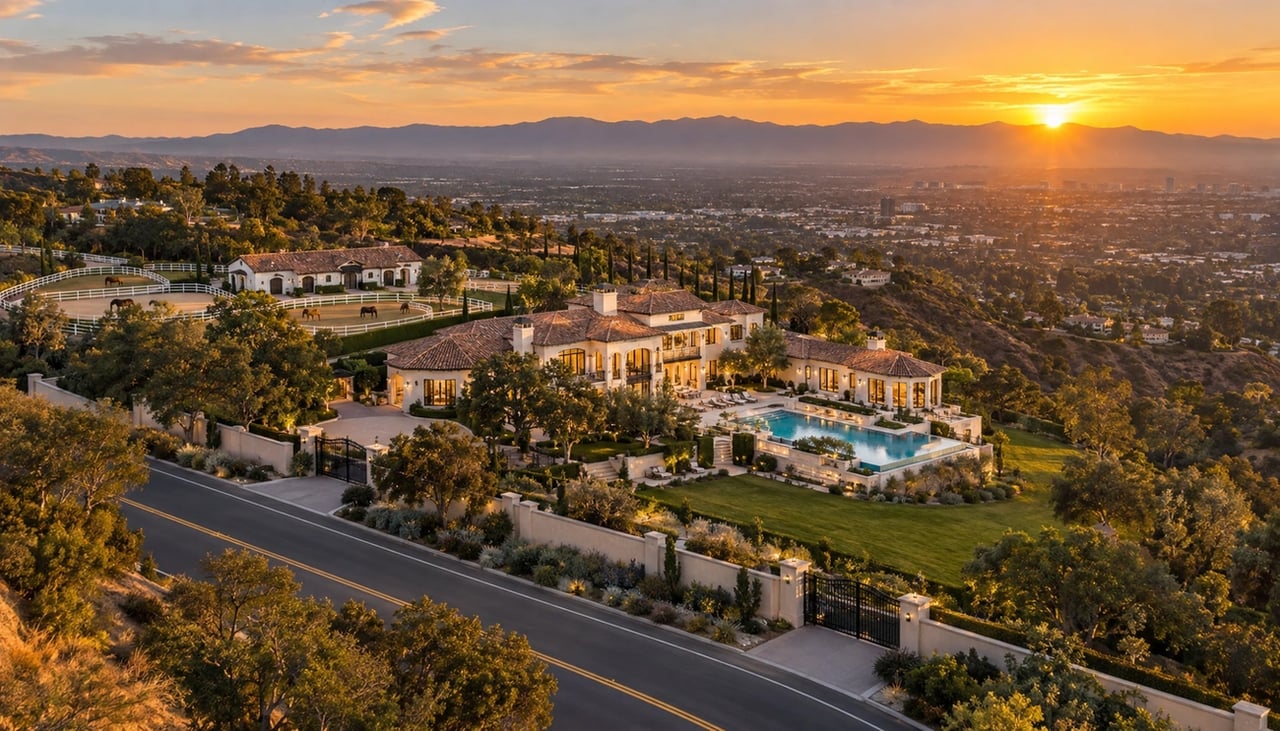
Resale value in luxury hillside markets responds to factors invisible in standard listings. Buyers who explore Hollywood hills homes for sale with view put documentation quality, infrastructure capacity and legal view protections above surface-level esthetics.
Documented permits versus as-built conditions
Properties with complete permit records close faster and command stronger pricing. Undocumented improvements trigger appraisal adjustments, lender scrutiny and title complications that compress negotiating leverage.
Access quality and parking count
Easier access to Sunset Boulevard, superior parking configurations and shorter commutes to studios or the Westside trade at premiums compared to remote pockets with narrow roads. Insurers and lenders think over road width and emergency access, influencing both insurability and financing terms. Narrow, winding roads combined with limited parking deter certain buyer segments.
View protection mechanisms
Scenic easements control adjacent land use and airspace above that land to protect scenic views. Owners retain rights to uses not restricted by the easement, and these easements do not affect how owners used land prior to establishment. The federal Uniform Conservation Easement Act allows conservation easements protecting natural, scenic or open-space values of real property.
Micro-market buyer profiles by canyon
Lower Laurel Canyon attracts buyers seeking nightlife proximity and commute convenience, given easier access and better parking on average. Central and Mid Canyon buyers prize character and history in eclectic 1920s to 1960s cottages. Upper Laurel Canyon and Mulholland-adjacent pockets feature larger lots, stronger views and improved privacy, though access presents challenges. Buyers wanting separation from urban density focus here.
The right home makes all the difference if you love to entertain. I'd be delighted to help you find spaces designed for elevated living and effortless hosting if you're thinking about a purchase in the near future or beginning your search. Christina Pope 310-404-9931 [email protected]
Conclusion
Hollywood Hills view homes deliver visual appeal that stands out, yet the premium pricing reflects much more than panoramic vistas. Geotechnical conditions, infrastructure limitations, and insurance costs that get pricey mean ownership expenses often exceed original projections. Buyers who break down sewer laterals, water pressure systems, and fire insurance premiums before closing avoid surprises that get pricey later.
Properties commanding the best resale value feature complete permit documentation, protected view corridors, and quality access. Lot positioning determines daily comfort while micro-market dynamics shape what buyers just need. Those who understand these technical realities negotiate from strength and build equity through informed decisions rather than reactive problem-solving after purchase.
Key Takeaways
When buying Hollywood Hills view homes, understanding the hidden technical and financial factors is crucial for making informed decisions and avoiding costly surprises after closing.
• Timing matters for property tours - View homes at different times of day and seasons to understand light patterns, noise levels, and seasonal weather effects that impact daily living comfort.
• Technical inspections are non-negotiable - Geotechnical reports, sewer lateral conditions, and water pressure systems reveal expensive infrastructure issues that standard inspections miss.
• Hidden costs add up quickly - Fire insurance premiums, retaining wall maintenance, brush clearance requirements, and private road agreements can exceed $21,000 annually in additional expenses.
• Lot position determines lifestyle and value - Street-side versus canyon-side orientation, neighbor proximity, and buildable area significantly impact both daily living experience and future resale potential.
• Documentation drives resale strength - Complete permit records, protected view corridors, and quality access roads command premium pricing and faster sales in the luxury hillside market.
The properties that maintain their value best combine stunning views with solid infrastructure, complete documentation, and strategic positioning that protects both the investment and the lifestyle it provides.
FAQs
Q1. Should I hire a specialist to inspect hillside properties for landslide risks? Yes, you should bring in a geotechnical engineer to assess hillside properties. Standard home inspections aren't sufficient to evaluate slope stability, soil conditions, or landslide potential. A geotechnical engineer conducts soil testing, analyzes drainage patterns, and calculates slope stability factors to identify structural risks that general inspectors miss. This specialized assessment is essential for properties on steep terrain.
Q2. What makes the Bird Streets the most expensive area in Hollywood Hills? The Bird Streets represents the most expensive enclave in Hollywood Hills due to its prime location above the Sunset Strip, contemporary estate architecture, and elevated positioning that maximizes city and canyon views. The neighborhood combines luxury amenities with strategic positioning that offers both privacy and accessibility, making it one of LA's most sought-after residential areas.
Q3. How much does a geotechnical inspection cost for a hillside property? Geotechnical inspections for hillside properties typically cost between $1,800 and several thousand dollars depending on the scope and complexity. The inspection includes soil sampling, slope stability calculations, drainage evaluation, and a detailed report on foundation conditions. While this represents a significant upfront expense, it provides critical information that can prevent costly surprises after purchase.
Q4. What are the main hidden costs of owning a Hollywood Hills view home? Hidden ownership costs include fire insurance premiums in hazard zones, retaining wall maintenance and replacement, mandatory brush clearance programs, and private road maintenance agreements. These expenses can exceed $21,000 annually beyond standard homeownership costs. Fire insurance alone can cost over $2,000 per year for properties in high-risk zones, with some areas requiring California FAIR Plan coverage.
Q5. How does lot orientation affect property value in the Hollywood Hills? Lot orientation significantly impacts both lifestyle and resale value. Uphill lots position street access at lower elevations, while downhill lots have access above the rear property line, affecting garage placement and view protection. Corner lots receive more natural light but sacrifice privacy, while properties with canyon-side orientation typically command premiums due to enhanced views and reduced neighbor proximity.