Is solar required on new homes in California? The answer is yes for most new construction. California became the first state to mandate solar PV systems on new homes, and the 2025 Energy Code expanded these requirements after taking effect January 1, 2026. So builders and homebuyers must understand updated rules for new construction solar panels across single-family homes and multifamily buildings. The California solar mandate now covers broader building types with revised sizing methodologies and battery storage provisions. Whether solar panels are required for new home construction depends on building type, permit dates, and specific compliance pathways.
Is Solar Required on New Homes in California in 2026?
"The 2025 Building Energy Efficiency Standards, adopted in September 2024 and effective January 1, 2026, advance multiple fronts in California’s decarbonization strategy." — California Department of Housing and Community Development, State agency overseeing building standards
California Title 24 solar energy code requires all new residential, commercial and multi-family constructions to have a solar system, barring a few exceptions. The specific requirements vary based on building classification, with distinct rules applying to single-family homes, low-rise multifamily structures, high-rise residential buildings, and commercial properties. Do new homes in California require solar? The answer depends on which category the construction falls under.
Single-Family Home Requirements
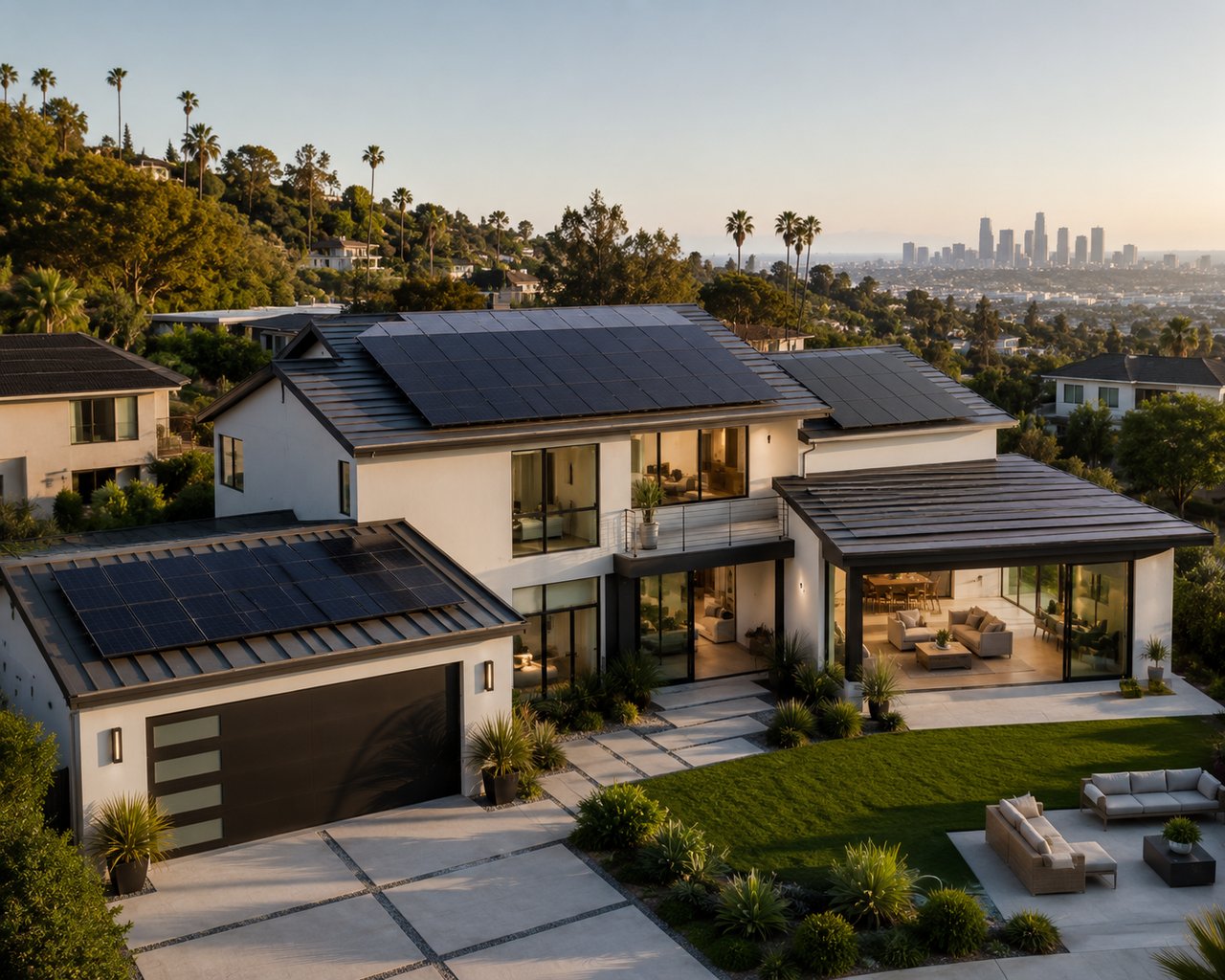
New construction solar panels became mandatory for single-family homes on January 1, 2020. The requirement applies to all low-rise residential occupancies. Single-family homes, duplexes, garden apartments and other housing types with three or fewer habitable stories fall under this mandate. This includes detached houses and townhomes under occupancy groups R-3 and R-3.1.
The minimum PV system size for single-family residences follows a calculation based on conditioned floor area and climate zone. The formula uses Equation 150.1-C: kWPV = (CFA × A) / 1000 + (NDU × B), where CFA represents conditioned floor area in square feet and NDU indicates number of dwelling units. A typical 2,000-square-foot single-family home in Climate Zone 12 (Sacramento Valley) requires about 2.6 kW of solar PV capacity. The same home in coastal Zone 3 needs around 3.0 kW. New detached ADUs on existing lots are treated as new construction and must comply with solar requirements.
Low-Rise Multifamily Buildings
Low-rise multifamily projects with fewer than three habitable stories must install solar PV systems using calculation methods like those for single-family homes. Section 170.2(f) establishes two compliance pathways: the solar access roof area (SARA) method or the conditioned floor area (CFA) method. The required size is the smaller of either capacity.
The SARA method uses 18 watts per square foot for steep-sloped roofs. Low-sloped roofs apply 14 watts per square foot. The CFA calculation follows Equation 170.2-C, which considers climate zone, conditioned floor area of dwellings, and number of dwelling units. Solar access roof area includes roof areas, covered parking, carports and newly constructed structures on the property that can support a solar PV system per Title 24, Part 2, Section 1511.10.
High-Rise Multifamily Buildings
California Title 24 draws a critical difference at the four-story threshold. Residential buildings with four or more habitable floors transition from residential code section to commercial-level requirements. High-rise R-1 (hotels, boarding houses) or R-2 (apartments, condominiums) occupancy groups must comply with both solar PV and battery storage mandates.
This classification change triggers sizing calculations following commercial methodologies under Section 170.2(g). A 100-unit apartment building with 80,000 square feet of conditioned space in Climate Zone 6 might require 130 kW of solar PV capacity. Mixed-use developments require separate calculations for each occupancy group. A typical design with two levels of retail and six residential floors above must calculate requirements separately, then sum totals to determine overall system sizing.
Commercial and Nonresidential Buildings
New commercial buildings constructed after January 1, 2023 require solar arrays and battery energy storage systems. The mandate applies to auditoriums, clinics, convention centers, financial institutions, grocery stores, high-rise multifamily buildings, hotels and motels, libraries, medical office buildings, office buildings, restaurants, retail centers, schools, theaters, unleased tenant space, and warehouses.
Commercial solar requirements follow Equation 140.10-A: kWPVdc = (CFA × A) / 1000, where A represents the PV capacity factor from Table 140.10-A based on building type. System size should not be less than the smaller of the PV size determined by this equation or the total of all available Solar Access Roof Areas multiplied by 14 W/ft².
How the 2025 Title 24 Energy Code Changed Solar Requirements
"The 2025 Title 24 standards that went into effect on January 1, 2026, represent a meaningful step forward in California's push toward carbon neutrality by 2045." — California Energy Commission, State agency responsible for energy policy
The 2025 Title 24 Energy Code replaced the 2022 cycle on January 1, 2026, introducing revised calculations for new construction solar panels and battery storage systems. These updates altered sizing formulas, expanded battery mandates to additional building categories, and established new compliance procedures that builders and energy consultants must follow for all applicable projects.
Permit Date Determines Code Compliance
Building permit application date determines which Title 24 version applies to a project, not construction start date or when design work began. Applications submitted before January 1, 2026 may still use the 2022 code cycle, while anything submitted on or after that date must meet the 2025 standards. This triggers a complete change in compliance software, approved forms, and calculation methods. Projects that began design work under 2022 assumptions but file permits after the effective date must recalculate using 2025 requirements, which can alter system sizing and project economics.
Updated PV System Sizing Methodology
Solar Access Roof Area multipliers changed in the 2025 code. Steep-sloped roofs now use 18 watts per square foot, while low-sloped roofs apply 14 watts per square foot. A single multiplier applied previously, whatever the roof slope. So homes that met 2022 sizing requirements may calculate differently under current standards because the climate-zone-based equations were revised.
The required PV system size for single-family homes remains the smaller of two calculations under Section 150.1(c)14. The SARA method multiplies usable roof area by the new wattage factors and excludes areas with less than 70 percent annual solar access and spaces unavailable due to other code requirements. The equation method uses Equation 150.1-C based on climate zone, conditioned floor area, and dwelling unit count. Low-rise multifamily buildings follow parallel rules under Section 170.2(f) using Equation 170.2-C.
The 2025 code permits a 25 percent reduction in calculated PV size for single-family homes when installed with qualifying battery storage. The battery must meet Joint Appendix JA12 qualification requirements and maintain a minimum battery compliance cycling capacity of 7.5 kWh.
Expanded Battery Storage Requirements
Battery mandates extended to additional nonresidential building types in the 2025 cycle. Assembly occupancies and religious worship facilities now fall under combined solar-plus-battery requirements. These categories previously faced solar-only mandates or no requirements at all. The linkage between PV system size and required battery capacity tightened for buildings already subject to storage rules.
High-rise multifamily buildings with four or more stories must install battery storage whenever the building requires PV, unless the project qualifies for specific exceptions. One exception applies when installed PV system capacity falls under 15 percent of the capacity calculated using Equation 170.2-D. Tables 140.10-B and 170.2-V include updated battery energy storage system capacity factors measured in watt-hours per square foot of conditioned floor area, with certain values corrected through official errata.
What Exemptions Exist for the California Solar Mandate?
Not every new construction project falls under the California solar mandate. Section 150.1(c)14 establishes specific exemptions that eliminate or reduce solar PV requirements based on physical constraints, system sizing calculations and alternative compliance pathways.
Insufficient Roof Space or Solar Access
Solar Access Roof Area determines whether a building can accommodate solar panels. No PV system is required if the usable SARA falls below 80 contiguous square feet. This exemption applies when permanent barriers such as trees, hills or adjacent structures restrict available roof space. SARA excludes roof areas with less than 70 percent annual solar access and accounts for shading obstructions. Steep-sloped roofs count only existing permanent obstructions toward shading calculations, while low-sloped roofs factor in all obstructions, including those integrated into building design.
Complete exemption from solar requirements occurs when SARA drops below 3 percent of total conditioned floor area or falls below 80 square feet. Commercial and high-rise buildings qualify for exemption when available SARA represents less than 3 percent of CFA.
Minimum System Size Thresholds
Calculated system size determines exemption eligibility for smaller buildings. Single-family homes require no PV installation if the calculated minimum PV system size falls below 1.8 kWdc. This affects homes smaller than 600 to 700 square feet, based on climate zone. Low-rise multifamily projects face a higher threshold: buildings are exempt when calculated minimum PV size drops below 4 kW.
Buildings with multiple habitable stories receive graduated exemptions. Two-story dwellings must install PV sized at the smaller of SARA capacity or Equation 150.1-C requirements, but no less than 1.0 watt DC per square foot of conditioned floor area. Three-story low-rise residential and single-family dwellings with three or more stories reduce this floor to 0.8 watt DC per square foot.
Special Circumstance Exceptions
Snow-load restrictions provide exemption when enforcement authorities determine the system cannot meet ASCE 7-16, Chapter 7 requirements. Buildings approved by local planning departments before January 1, 2020, with mandatory conditions limiting PV may qualify for reduced sizing.
Battery storage systems reduce required PV size by 25 percent when installed with qualifying systems that meet Joint Appendix JA12 requirements and maintain minimum capacity of 7.5 kWh.
Community Solar Alternative Compliance
Community solar presents an alternative compliance pathway where on-site installations prove impractical. Participating buildings must demonstrate energy performance equal to or better than required on-site systems, with energy savings benefits allocated to the building for no less than 20 years. Building owners retain opt-out rights provided they install on-site systems that meet original permit requirements.
How Does the Solar Mandate Impact New Home Buyers and Builders?
New construction solar panels add costs to California homes while delivering financial benefits that builders and buyers must review. The mandate reshapes pricing structures and creates new financing considerations in residential markets of all types.
Upfront Cost Considerations
Solar systems on new single-family homes increase construction costs by $8,400 to $12,000. This translates to an additional $40 per month on 30-year mortgage payments. But the federal 30% tax credit for solar and battery installations expired at the end of 2025. A typical solar and battery system generated tax credits worth about $10,000 previously.
Lease-to-own models emerged as alternatives after tax credit expiration. Homeowners pay system costs upfront under prepaid lease structures while installers pass tax credit benefits as discounts. Solar installers anticipate these arrangements will account for nearly all residential business in 2026. Strong need remains despite incentive changes.
Long-Term Energy Savings Projections
Monthly electricity bill reductions offset upfront expenses. Single-family homeowners save about $80 monthly on electricity costs and net $40 in monthly savings after mortgage payment increases. This amounts to $500 in net savings annually. Cumulative savings range from $19,000 to $25,000 over 25 years.
Utility rate structures determine energy cost projections. The Solar Billing Plan (NEM 3.0) compensates exported generation at rates below retail credit under legacy programs. Evening peak periods between 4 to 9 p.m. carry expensive import rates. Self-consumption and storage design decisions become critical for actual bill savings.
Effect on Home Pricing and Market Dynamics
Properties equipped with solar systems see resale value increases between 4.1% and 10%. This represents about $17,000 in added value for California's median-priced home. Solar-equipped homes may sell faster as buyers value energy efficiency. But market premiums could diminish over time as solar integration becomes standard rather than exceptional.
What Battery Storage Requirements Apply to New Construction Solar Panels?
Battery storage mandates diverge based on building classification under Title 24. Single-family homes face preparatory requirements, while high-rise and commercial structures must install operational systems.
Battery-Ready Wiring for Single-Family Homes
Newly constructed single-family buildings receiving electrical service greater than 125 amps must meet battery-ready infrastructure standards under Section 150.0(s). The main panelboard requires a minimum busbar rating of 225 amps, whatever the actual service amperage. Builders must provide either BESS-ready interconnection equipment with 60-amp backed-up capacity and four BESS-supplied branch circuits, or a dedicated raceway from main service to subpanel with minimum trade size of one inch. Required circuits must supply refrigerator and lighting near the main exit, along with sleeping room receptacle outlet. Space for future system isolation equipment must be reserved within three feet from the main panel. Duplexes need separate panels for each unit that meet these specifications.
Mandatory Storage for High-Rise Buildings
High-rise multifamily and commercial buildings required to install PV must include battery storage. Sizing follows Equation 140.10-B for energy capacity and Equation 140.10-C for power capacity. Title 24 requires energy storage systems to meet the lesser of 5 kWh of storage per 1 kW of PV installed or the building's expected peak demand. Battery exemptions apply when installed PV size falls below 15 percent of calculated capacity, buildings have ESS requirements under 10 kWh rated capacity, single-tenant buildings contain less than 5,000 square feet of conditioned floor area, or projects locate in Climate Zone 1.
How Batteries Reduce Required PV System Size
Installing qualifying battery storage reduces calculated PV capacity by 25 percent for single-family homes. The battery must provide minimum compliance cycling capacity of 7.5 kWh and meet Joint Appendix JA12 qualification requirements. Systems must maintain at least 80 percent round-trip efficiency, which means 80 percent of stored energy remains available after conversion losses.
Conclusion
California's solar mandate represents a detailed regulatory framework that transforms new construction across all building categories. Single-family homes, multifamily structures and commercial properties each face distinct requirements based on conditioned floor area, climate zones and solar access limitations. Builders must then work through complex sizing calculations while evaluating exemptions for insufficient roof space or minimum system thresholds. Upfront costs range from $8,400 to $12,000 and deliver long-term returns, with homeowners saving $19,000 to $25,000 over 25 years. Battery storage requirements further separate single-family preparatory standards from mandatory installations on high-rise buildings. These regulations position California as pioneering residential energy efficiency and advancing the state's carbon neutrality objectives through standardized solar integration on new construction projects.
Key Takeaways
California's 2025 Title 24 Energy Code, effective January 1, 2026, mandates solar panels on virtually all new residential and commercial construction, with specific requirements varying by building type and size.
• Solar is mandatory for most new California homes: Single-family homes, low-rise multifamily buildings (under 4 stories), and high-rise residential structures must install solar PV systems sized by conditioned floor area and climate zone.
• Upfront costs are offset by long-term savings: New construction solar adds $8,400-$12,000 to building costs but delivers $19,000-$25,000 in energy savings over 25 years, with homes gaining 4-10% resale value.
• Battery requirements differ by building type: Single-family homes need battery-ready wiring infrastructure, while high-rise multifamily and commercial buildings must install operational battery storage systems alongside solar panels.
• Exemptions exist for physical constraints: Buildings qualify for solar exemptions when usable roof area falls below 80 square feet, solar access drops under 70%, or calculated system size is below minimum thresholds.
• Permit date determines compliance standards: Projects submitted on or after January 1, 2026 must follow updated 2025 code requirements, including revised sizing calculations (18 W/ft² for steep roofs, 14 W/ft² for low-slope roofs).
Understanding these requirements is essential for builders, developers, and homebuyers navigating California's evolving energy landscape. The mandate positions the state as a national leader in residential energy efficiency while advancing its carbon neutrality goals through standardized solar integration across new construction projects.
FAQs
Q1. Is solar still financially beneficial in California under the 2026 regulations? Yes, solar remains beneficial despite changes to net metering. While upfront costs range from $8,400-$12,000, homeowners save approximately $80 monthly on electricity bills, resulting in $19,000-$25,000 in savings over 25 years. Additionally, solar-equipped homes typically see resale value increases of 4-10%, representing approximately $17,000 in added value for California's median-priced home.
Q2. Can HOAs legally prevent homeowners from installing solar panels in California? No, HOAs cannot legally block solar installation in California under the Solar Rights Act. However, in shared-roof situations like townhouses or condos, physical constraints and community property arrangements may make additional installations practically difficult or financially unviable, even though they're not technically prohibited.
Q3. Do all new homes in California require solar panels in 2026? Most new residential construction requires solar panels, but exemptions exist. Buildings are exempt when usable roof area falls below 80 square feet, solar access is less than 70%, or calculated system size is below minimum thresholds (1.8 kW for single-family homes, 4 kW for low-rise multifamily). Buildings with insufficient roof space representing less than 3% of conditioned floor area also qualify for exemption.
Q4. Are battery storage systems required with solar panels on new California homes? Requirements vary by building type. Single-family homes must include battery-ready infrastructure (225-amp minimum busbar rating and dedicated circuits) but don't require actual battery installation. High-rise multifamily buildings (four or more stories) and most commercial buildings must install operational battery storage systems alongside solar panels.
Q5. How does the 25% solar system size reduction work with battery storage? Single-family homes that install qualifying battery storage can reduce their required solar PV system size by 25%. The battery must provide a minimum compliance cycling capacity of 7.5 kWh, meet Joint Appendix JA12 qualification requirements, and maintain at least 80% round-trip efficiency to qualify for this reduction.