Hidden Hills equestrian estates rarely promote their best opportunities openly. Privacy and timing, along with trusted access, often shape a Los Angeles luxury real estate transaction before a listing appears. Buyers thinking over Long Valley Road may value each property’s bridle trail connection and access to the community’s three riding arenas as much as the residence itself.
Christina Pope of Sotheby’s International Realty, EliteResidenceInternational.com, helps purchasers break down options such as a hidden hills horse farm, hidden hills equestrian center access, hidden ranch equestrian options, a hidden hills equestrian ranch, or a hidden hills modern equestrian estate. This piece explains how buyers can pursue private opportunities, confirm horse-keeping rights, inspect barns and land, assess wildfire readiness, and negotiate based on facts instead of assumptions.
Step 1: Plan a Private Long Valley Road Property Search
Private buyer guidance: Christina Pope—Sotheby's International Realty, EliteResidenceInternational.com
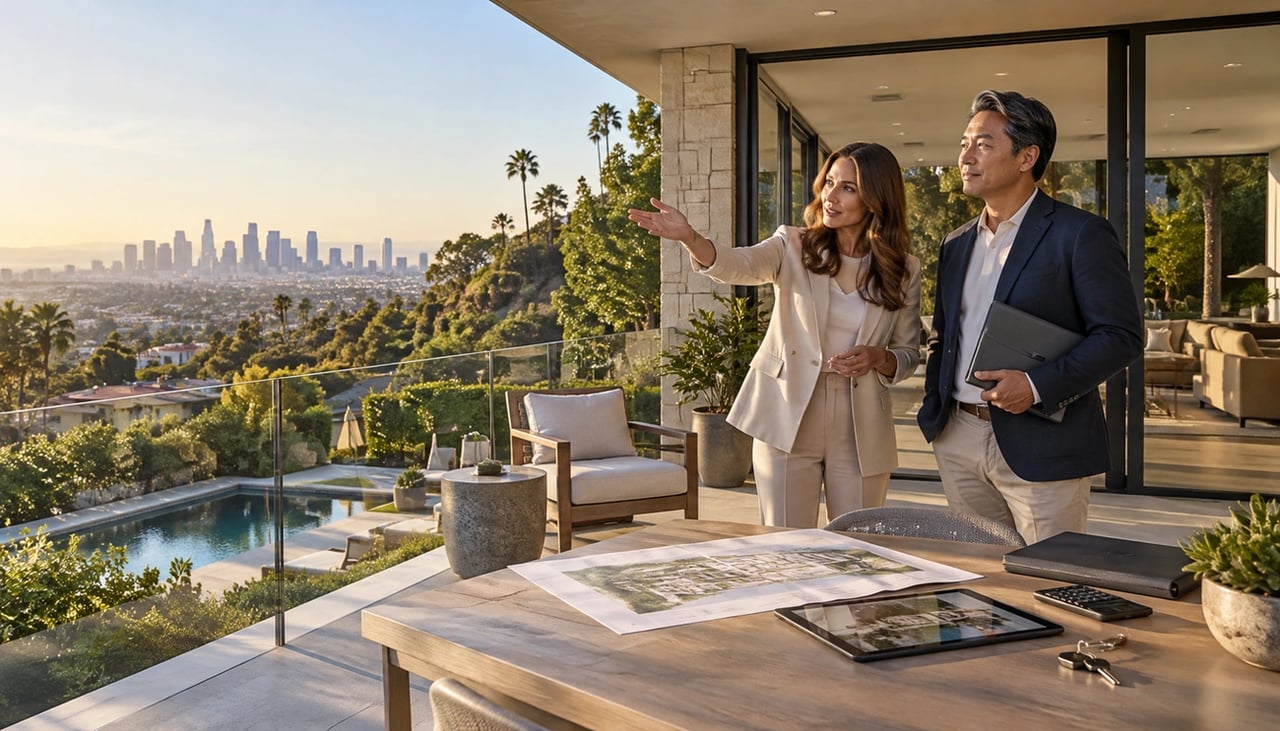
Private conversations and access at the right time often determine which Long Valley Road opportunities a buyer sees. A buyer represented by Christina Pope of Sotheby’s International Realty through EliteResidenceInternational.com can establish clear search criteria before personal details or touring plans circulate widely.
If you plan to buy soon or have started your search, I’d be delighted to help you find spaces designed for elevated living and effortless hosting. Christina Pope 📞 310-404-9931 ✉️ [email protected]
Why luxury Los Angeles purchases depend on privacy, timing, and access
Hidden Hills controls entry and limits casual property viewing. Open houses, for-sale signs, balloons, banners, and flags are prohibited, and agents must accompany prospective buyers inside the city. Buyers should decide early who can receive search updates, attend tours, and speak with listing representatives.
Timing affects access as well. A seller may privately test interest, pause a sale, or accept an offer without broad public marketing. Privacy supports the process, but it does not guarantee that a particular estate is available.
Explore off-market options without assuming every estate is available
Ask the buyer’s representative to monitor public listings and confidential owner interest. Define non-negotiable features in writing, such as acreage, permitted stalls, usable turnout, guest quarters, a riding ring, or a direct trail connection.
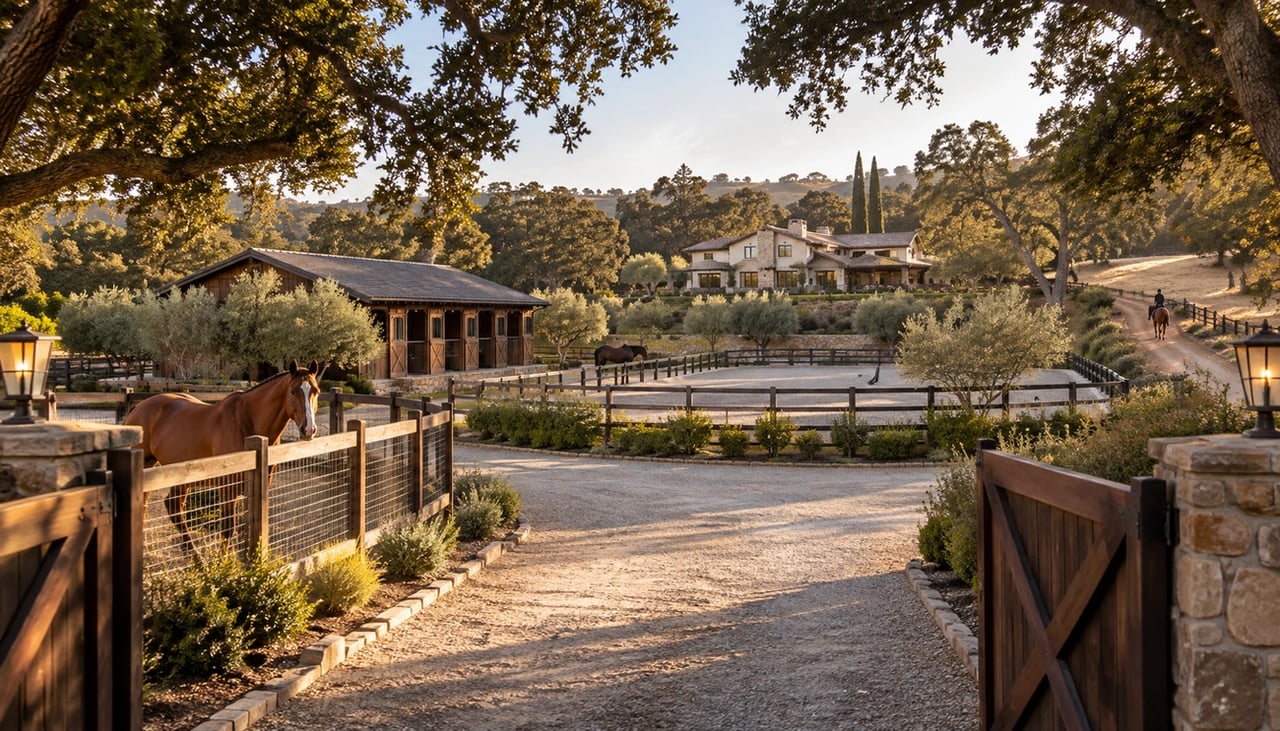
One Long Valley Road estate can differ sharply from a property just a few doors away. One listed estate, for example, offered roughly 2.39 acres, a three-stall barn, groom’s quarters, tack and feed rooms, and a riding arena. These features describe that property, not a standard specification for every hidden hills equestrian ranch or hidden hills modern equestrian estate.
Match your riding needs to Hidden Hills trails and community arenas
Serious riders should prioritize daily function over appearance. They can compare private facilities with community resources, including approximately 25 miles of bridle trails and three riding arenas. A family with a child who rides may value a well-kept home with access to shared arenas more than a large private arena.
Buyers should state whether they want a working hidden hills horse farm, a hidden ranch equestrian lifestyle, or access to a hidden hills equestrian center before touring. This difference will guide the property shortlist.
Arrange private tours and confirm gate access
Each tour should be scheduled through the listing representative, and the buyer should identify guests ahead of time. Confirm the gate procedure, approved arrival time, vehicle details, and whether contractors or equestrian advisers may attend. Buyers should allow enough time to walk the barn area, trailer approach, paddocks, and trail connection instead of limiting the visit to the residence.
Step 2: Check Property Rights and Horse-Keeping Rules
A Los Angeles estate's private discussions can reveal a chance, but ownership rights determine whether a buyer can keep horses, build, or ride as intended. Christina Pope of Sotheby's International Realty, EliteResidenceInternational.com, can coordinate a discreet document request for a Hidden Hills equestrian center or a Hidden Hills modern equestrian estate.
Confirm city boundaries, parcel lines, and the recorded building site
Get a current city map, assessor parcel record, deed legal description, and Building Location Certification. Compare these documents with a licensed survey that shows fences, barns, driveways, and the recorded building site. The City provides a zoning map and planning-permit applications, which allow the buyer to confirm jurisdiction and ask whether existing improvements match approved plans.
Review HHCA rules, fees, reserves, and planned assessments
Request current CC&Rs, rules, architectural standards, budget, financial statements, reserve information, meeting minutes, and notices of planned assessments. Review membership fees, transfer requirements, collection status, and architectural history before committing. Association rules require approval for additions, remodels, and lot improvements, including fencing, pools, and retaining walls.
Verify horse limits, permitted uses, and barn approvals
Do not assume a Hidden Hills equestrian ranch can operate as a boarding or training business. Confirm permitted horse numbers, ownership rules, and stall and arena approvals directly with the City and HHCA. Ask about limits on lessons, clients, traffic, or events. The association permits boarding for non-resident horses only after registration, indemnification, acknowledgment of governing documents, and an Association-issued identification card. This review distinguishes a Hidden Hills horse farm or Hidden Ranch equestrian plan from private residential use.
Check title, trail easements, and access rights
Order a preliminary title report early and get the listed easement documents. Compare trail alignment, access rights, utility corridors, drainage routes, and maintenance duties against the survey. A recorded bridle-trail easement may restrict drainage pipes unless the Architectural Committee and Board provide written approval through a recorded Easement and Maintenance Agreement. Have a real-estate attorney assess the legal effect if title language or trail location remains unclear, and ask a licensed surveyor to locate it on site precisely.
Step 3: Inspect the Estate Beyond Its Listing Photos

Image Source: Charleston SC Real Estate
The inspection turns recorded rights into daily operating needs, repair priorities, and evacuation capacity. Christina Pope can coordinate specialists through a private inspection schedule.
Measure usable horse space on a Hidden Hills equestrian ranch
Walk the property and measure stall circulation, turnout space, trailer turning areas, and arena space. Drained, usable ground matters more than brochure acreage.
Inspect barns to verify structural safety, airflow, and safe wiring
Check roof framing, moisture, airflow, stall damage, lighting, conduits, GFCI outlets, and agricultural-rated fixtures. Keep hay in a separate area.
Check fencing, turnout areas, and arena footing
Test gates, fencing, turnout areas, and footing. Look for mud, bare soil, erosion, or drainage problems.
Test water supply and review drainage and manure removal
Run fixtures at the same time, trace roof runoff, and confirm manure storage, collection frequency, and removal plans.
Inspect the main home, guest quarters, and utility systems
Check the roof, foundation, HVAC, plumbing, electrical panels, windows, drainage, and guest-quarter systems.
Assess wildfire exposure, horse evacuation routes, and insurance options
Keep 50 to 100 feet between the stable and other buildings. Review brush clearance, trailer exits, horse transport plans, and insurance coverage for barns, custom construction, and loss of use.
Apply this inspection to any hidden hills horse farm, hidden ranch equestrian holding, hidden hills equestrian center, or hidden hills modern equestrian estate.
Step 4: Set Your Price and Complete the Purchase
Christina Pope of Sotheby’s International Realty, EliteResidenceInternational.com, can help position a Hidden Hills equestrian buyer.
Compare recent Long Valley Road sales with verified equestrian features
Compare closed sales based on acreage, condition, and verified barns, arenas, and living quarters. 24848 Long Valley Road sold for $16.75 million in 2023 and offered 9,459 square feet on 1.28 acres.
Build a budget for purchase costs, repairs, and horse care
Account for closing funds, repairs, insurance, taxes, feed, veterinary and hoof care, utilities, fencing, and footing. Annual horse care costs range from $1,800 to $8,500 per horse.
Choose financing and set offer terms around unresolved issues
Ask lenders whether jumbo financing suits the acreage and improvements. Commercial use may require agricultural financing. Set inspection, appraisal, financing, title, and insurance contingencies based on unresolved issues.
Track disclosures, contingencies, and required repairs through escrow
Track disclosures, contingency removals, and signed repair terms throughout escrow. Calendar each deadline. Escrow commonly lasts 30 to 60 days.
Complete the final walkthrough and arrange safe horse transport
Inspect completed work before recordation and schedule horse transport afterward. Ownership transfers when the deed records. Terms should protect your interests in a hidden hills horse farm, hidden ranch equestrian property, hidden hills equestrian ranch, hidden hills equestrian center, or hidden hills modern equestrian estate.
Equestrian Estates and Hidden Hills Horse-Keeping: Neighborhood Blurbs
Bel Air
Bel Air is known for hillside seclusion and architecture, not horse-keeping, so it is a limited fit for this topic. The honest pivot is for buyers who ride but also want city access: Bel Air offers privacy and views, while a Hidden Hills estate offers acreage, barns, and trails. Christina Pope advises buyers to decide early which matters more, then shortlist accordingly. Buyers who want an equestrian lifestyle should confirm permitted uses before falling for any estate, and Bel Air buyers should do the same for their own plans. Bel Air guide →
Beverly Hills
Beverly Hills is a world-class address for buyers who want an iconic, city-adjacent home, and it sits at the opposite end of the spectrum from an equestrian estate. For a buyer weighing the two, Christina Pope, with deep international experience in the Dubai luxury market, advises comparing the daily realities: horse-keeping needs usable land, barns, and trail access, while Beverly Hills offers proximity and polish. A clear brief on lifestyle priorities makes the choice simple. Riders can always keep one eye on the saddle and one on the skyline. Beverly Hills guide →
Hollywood Hills
The Hollywood Hills offer views and design but rarely the flat, usable ground that horses need. That is the honest pivot: hillside lots can be dramatic yet limited when it comes to turnout, arena space, and trailer access. Christina Pope advises buyers with horses in mind to measure usable land first and consider where an equestrian lifestyle can realistically fit. For those who want the Hollywood Hills mood without the stable, there are plenty of homes that fit. Hollywood Hills guide →
Brentwood
Brentwood’s established lots appeal to buyers seeking a settled, residential setting, but equestrian use is not what the area is known for. Buyers comparing Brentwood with a horse property should be clear about what each offers: Brentwood brings convenience and quiet streets, while an equestrian estate brings land, barns, and trail connections. Christina Pope advises confirming permitted uses and any limits before assuming a property can support animals. The right fit starts with an honest list of daily needs. Brentwood guide →
Pacific Palisades
Pacific Palisades is better known for its coastal setting and ongoing rebuilding than for equestrian estates, so this is a limited match for the topic. Buyers who want to ride should verify any horse-keeping rights directly with the city before assuming they apply to a given lot, and those buying in the Palisades should confirm permits and insurance as part of the process. Christina Pope advises a documents-first approach in both cases. Good paperwork keeps every kind of dream on solid ground. Pacific Palisades guide →
Hidden Hills
Hidden Hills is where this topic lives, with equestrian estates, bridle trails, and community riding facilities set within a gated city. Christina Pope advises buyers to treat each property individually: confirm permitted horse numbers, barn and arena approvals, easements, and association rules, then measure usable turnout and inspect barns, fencing, drainage, and footing. Wildfire readiness and horse evacuation plans belong on the checklist alongside insurance. Tours are arranged privately through the agent, so a clear brief makes the search efficient. Hidden Hills guide →
Malibu
Malibu has a long relationship with horses and open land, and some properties offer space that suits riders. Others, particularly on the coast, do not. Christina Pope advises buyers to verify permitted horse-keeping, barn approvals, coastal rules, and slope conditions for the specific parcel, and to ask how drainage, fire exposure, and evacuation would work with animals. Insurance for barns and custom construction deserves its own conversation. Malibu can be a wonderful place to ride when the property and the paperwork agree. Malibu guide →
Considering an equestrian estate or weighing it against other options? Christina Pope, Senior Global Real Estate Advisor (CA DRE# 02022142), can be reached at 310.404.9931 or through Contact. Explore Global Listings, request a Home Valuation, see Relocation support, read the Blog, or learn more About Christina.
Conclusion
Luxury real estate in Los Angeles rewards discretion, preparation and precise timing, particularly if an equestrian estate may trade quietly. Buyers who verify rights, inspect usable horse facilities, prepare for wildfire safety and budget beyond the purchase price can move forward with confidence. Christina Pope of Sotheby’s International Realty, EliteResidenceInternational.com, can help buyers pursue the right chance on Long Valley Road with privacy and an informed strategy.
Key Takeaways
A successful Long Valley Road purchase requires private access, documented rights, thorough inspections, and a realistic equestrian operating budget.
Define non-negotiables—horse capacity, turnout, arena, trail access, and guest quarters—and pursue both listed and private opportunities discreetly.
Verify zoning, parcel boundaries, HHCA rules, horse limits, barn approvals, and trail easements before assuming any intended use is permitted.
Inspect usable land, barn safety, water, drainage, fencing, arena footing, utilities, and wildfire evacuation routes—not just the home’s appearance.
Price properties using verified equestrian features and comparable sales; budget for repairs, insurance, taxes, and $1,800–$8,500 in annual care per horse.
Protect your offer with inspection, title, appraisal, financing, and insurance contingencies, then complete repairs and horse-move plans before closing.
FAQs
Q1. How can prospective buyers view homes in Hidden Hills?
Buyers must arrange private tours through an agent and confirm gate access in advance. Agents must accompany prospective buyers, and open houses are prohibited.
Q2. Is owning an equestrian estate in Hidden Hills expensive?
Budget beyond the purchase price for taxes, insurance, association fees, repairs, and horse care. Annual horse care can range from $1,800 to $8,500 per horse, alongside property maintenance costs.
Q3. What horse-keeping rules should buyers check before purchasing?
Confirm horse limits, barn and arena approvals, and restrictions on boarding, lessons, or commercial activities with the City and Hidden Hills Community Association. Existing facilities do not automatically authorize every intended use.
Q4. What should an equestrian property inspection cover?
Inspect usable horse space, barn structure, ventilation, wiring, fencing, arena footing, water supply, and drainage. Also check the residence, wildfire exposure, and safe horse evacuation routes.
Q5. Do Long Valley Road estates offer access to riding trails and arenas?
Hidden Hills has approximately 25 miles of bridle trails and three community riding arenas. However, buyers should verify each estate’s trail connections, recorded easements, and access rights rather than assume direct access.