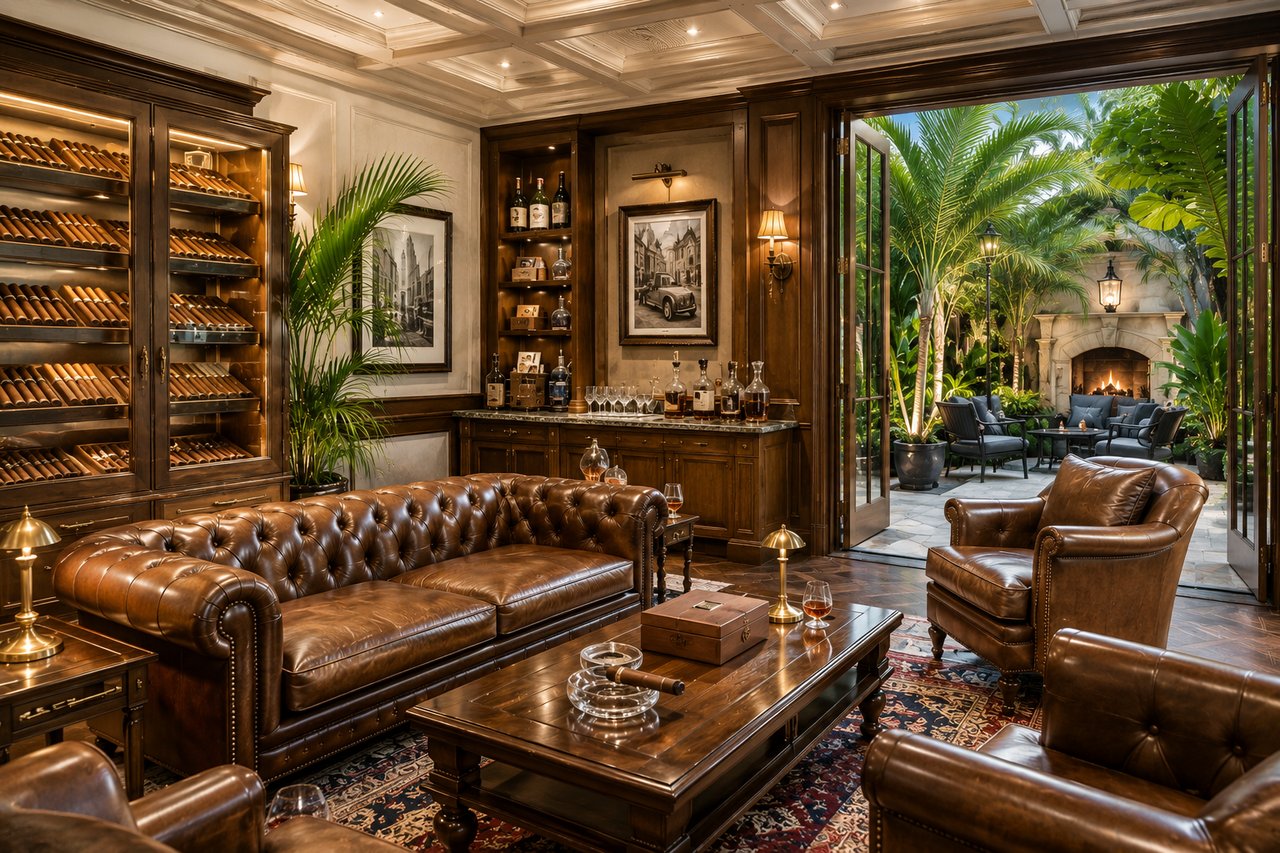
Miami's private club world is serious business. The Bath Club alone carries a $20,000 initiation fee and $18,000 in annual dues, and that kind of price tag tends to signal that something exceptional waits on the other side of the membership. Miami Beach's reputation — the oceanfront, the energy, the access — makes it easy to assume no one would willingly walk away from it.
One member did exactly that, trading Miami's private scene for Los Angeles's members-only landscape. The reasons, the surprises, and the trade-offs are worth understanding for anyone weighing the two cities. This piece looks honestly at membership costs, application culture, community, and professional value — and what the comparison ultimately reveals about what each city is really selling.
My Life in Miami's Most Exclusive Clubs and Private Members Clubs
Inside Soho Beach House and The Bath Club
Soho Beach House offered membership starting at $1,050 quarterly — an accessible entry point by Miami standards. The restored 1940s tower overlooking Miami Beach carried its history well, with interiors drawing from the city's Art Deco and Cuban heritage and a rooftop pool facing the ocean that quickly became familiar ground. The Cowshed spa ran six ocean-facing manicure and pedicure chairs, four large dual-treatment rooms, and private treatment spaces. Cecconi's handled Northern Italian dining for both members and the public, while Ocho above it served cocktails with the Atlantic as a backdrop.
The Bath Club operated at an entirely different register. Founded in 1926 by architect Robert A. Taylor, the club set its terms plainly: a $20,000 initiation fee and $18,000 in annual dues, with membership invitation-only and capped at 200. The grounds held over 26,000 square feet of event space and 50,000 linear feet of beach. Members spoke of "inclusive exclusivity" — shared interests carrying more weight than wealth or status alone.
The Allure of Miami Beach's Private Scene
The draw of Miami's private clubs went well beyond oceanfront access. Soho Beach House built its membership around creatives, entrepreneurs, and professionals, programming private film screenings, art shows, and live performances that gave the social calendar real texture. The Screening Snug and Library offered quieter corners for those seeking intellectual engagement rather than a scene.
The Bath Club made its impression through Mediterranean-influenced design and an atmosphere of unhurried elegance. The Grand Ballroom and Historic Ballroom featured soaring ceilings, dramatic chandeliers, and original inlaid wood flooring. The Courtyard offered al fresco dining beneath palm trees and a bougainvillea-wrapped pergola, while The Hut provided beachside service from chaise lounges — the kind of detail that signals a club confident enough not to try too hard.
Why I Started Considering a Change
After a while, the rhythm became too familiar. Soho Beach House ran from 7am to 2am on weekends, consistent to a fault. The initial excitement of Miami's private scene gradually gave way to something more routine. The party-first culture that once felt like a perk started to feel like the whole point, and the Cowshed spa — genuinely good as it was — sat at the edges of the experience rather than at its center.
The finances asked a harder question too. Soho Beach House remained reasonable, but The Bath Club's $38,000 first-year commitment deserved honest scrutiny. Beach access and dining privileges are real, but $38,000 warrants more than ambiance. That question, quietly persistent, opened the door to looking elsewhere.
First Impressions of LA's Private Club Landscape
The Application Process: Miami vs LA
LA's clubs do not make entry easy — and they make that clear from the start. San Vicente Bungalows requires a nomination from an existing member before a candidate can even submit an application, with the Membership Committee reviewing prospects monthly. The California Club goes further, keeping its Membership Office entirely off-limits to the public and extending invitations only through current members.
The Aster takes a different approach altogether. Applicants upload photos, write a short bio, and detail their interests, skills, profession, and hobbies. Compared to Miami's largely financial screening, this feels personal — almost intimate. Heimat requests social media profiles alongside the names of current members, making how someone presents themselves publicly as relevant as who vouches for them.
Initial Membership Experiences
The Aster made an impression early. Its Hollywood location holds a 36-seat cinema, a professional recording studio, and workspaces built around wellness — a combination that has little precedent in Miami's club offerings. Soho House West Hollywood, despite its familiar brand, drew a noticeably different membership when it opened more than a decade ago. The crowd reflected entertainment industry priorities, not beach culture.
Understanding LA's Club Culture
Privacy carries real weight here. San Vicente Bungalows enforces a strict no-photos policy throughout the property — a sharp contrast to Miami's camera-ready venues. The Aster describes its purpose as serving creative leaders who shape arts and culture, which sets the tone for how LA clubs position themselves. The social display that drives Miami's scene holds little currency in these rooms.
Cost Comparisons That Shocked Me
The numbers vary widely. The Aster's $3,600 annual membership sits at a reasonable entry point, while Jonathan Club commands a $50,000 initiation fee. Remedy Place — which bills itself as the world's first social wellness club — charges $2,000 per month. Griffin Club asks for $12,000 upfront plus $450 monthly for a family membership, and Little Beach House Malibu adds $1,095 to $2,190 annually on top of a standard Soho House membership. LA does not offer one price point — it offers a full spectrum, and what a member pays reflects exactly what they are there for.
The Surprising Elements of LA's Members-Only Clubs
"Membership is not just access to a place. It's access to experiences you can't find anywhere else." — Chris Cicchinelli, Owner of Social House
"Membership is not just access to a place. It's access to experiences you can't find anywhere else." — Chris Cicchinelli, Owner of Social House
Wellness Programs Over Party Culture
Remedy Place challenged the foundational assumption of what a private club is for. Dr. Jonathan Leary founded the concept in 2012 around a simple but unconventional idea — that self-care and genuine human connection belong in the same room. Hyperbaric oxygen chambers push more oxygen into the body, improving how internal systems perform. Lymphatic compression suits flush toxins and stagnant fluid, leaving members feeling noticeably lighter after each session. Ice bath classes, cryotherapy, and functional medicine consultations formed the programming core — no cocktail hours, no DJ sets. Artha extended the offering further with float therapy, thermal shock treatments, cryo facials, yoga, and meditation. Wellness here was not an added benefit packaged alongside a restaurant reservation. It was the entire point.
The Tech and Entertainment Industry Influence
NeueHouse chose its address deliberately — the original CBS Studios building, the world's first structure built for broadcast. Podcasting rooms, screening facilities, and cultural programming drew creatives to the space, with no beach in sight. Chief Los Angeles operated out of a former 1940s puppet theater and admitted exclusively powerful women in business. City Club LA gathered leaders, creators, and changemakers, anchoring community around women's leadership groups and professional meeting rooms with downtown skyline views. Across LA's club scene, professional momentum drove memberships far more than social standing.
Design Philosophy: Minimalist vs. Opulent
Heimat reimagined a 1930s industrial building — 75,000 square feet across five floors — keeping the bones of the original structure intact. Concrete walls, original graffiti, commissioned murals, and live cacti gardens surrounded precision training equipment. Spring Place took a quieter approach, filling interiors with natural light and considered design to support focused, productive work. Where Miami's clubs leaned toward ornate and decorative, LA's spaces asked members to think, create, and perform.
Access to Exclusive Experiences Beyond the Club
Proper Club members received preferred hotel room rates, select complimentary stays, and amenity access across participating properties. The Aster extended reach further with reciprocal clubs around the world. Spa partnerships at select locations offered preferred pricing and annual credits applied toward treatments. The value proposition traveled well — memberships that follow rather than anchor.
How LA Clubs Build Community Differently
California Club staff knew every member by name. That detail, small as it sounds, said something about how these clubs understood hospitality. City Club LA organized member-led committees built around causes its community genuinely cared about. Events were designed around culture and shared purpose rather than social performance. Programming stayed curated and intentional, with meaningful connections as the clear priority over volume or visibility.
Making the Choice: Is LA or Miami Better for Private Club Membership
"Camaraderie is what it's all about — mutual trust and friendship among people who spend a lot of time together. That's why you join a club." — Chase Kyes, Golfer
Luxury real estate in Los Angeles operates through private conversations and careful positioning rather than public listings. Evaluating private club memberships follows a similar logic — discretion, timing, and alignment with long-term goals tend to matter more than surface-level appeal. Christina Pope—Sotheby's International Realty, EliteResidenceInternational.com.
Lifestyle Fit and Personal Priorities
Miami offers year-round beach access and Latin American cultural energy that is genuinely hard to replicate. LA, on the other hand, has built a club culture around wellness and creative collaboration as everyday practice, not weekend indulgence. The decision comes down to whether oceanfront socializing or health-centered programming fits better into how a member actually wants to spend their time.
Professional Opportunities in Each City
Miami clubs have long served finance, healthcare, and real estate professionals well — deal flow happens naturally in those rooms. LA's membership landscape runs on entertainment and tech relationships, where curated programming does the work that nightlife once did. Florida's lack of state income tax also adds a meaningful financial dimension for business owners weighing residency alongside membership.
Family-Friendly Amenities and Services
Griffin Club extends full privileges to children up to age 23, with summer camps and Kids Korner childcare available from six months through age six. Miami's family options lean more casual and beach-centered, with Miami Family Club offering community access at just $100 annually. LA clubs, by comparison, invest more deliberately in multigenerational programming and structured activities.
Long-Term Value and Investment
A private club membership is worth evaluating the way any asset is — network quality, time efficiency, and whether the association reflects where a member is headed professionally and personally. For those who also entertain at home, the right property near a prestigious club carries real weight in both lifestyle and market value. Christina Pope can help identify homes designed for that kind of elevated living: 310-404-9931 or [email protected].
Conclusion
Neither city wins outright. Miami and LA's wellness-focused establishments serve different people with different priorities — and that distinction matters more than any ranking. Those who thrive on oceanfront culture, Latin energy, and beach-centric socializing will find Miami difficult to leave. Those who place greater value on health, creative community, and professional purpose tend to find LA's private club culture genuinely rewarding in ways they didn't expect. The shift, for those who make it, tends to exceed what they anticipated. The right choice is simply the one that fits — honestly and practically — into the life someone is building.
Key Takeaways
Moving from Miami's exclusive club scene to LA's private membership landscape reveals fundamental differences in culture, priorities, and value propositions that extend far beyond location.
• Miami prioritizes party culture and oceanfront luxury with clubs like The Bath Club charging $20,000 initiation fees, while LA emphasizes wellness programs, creative collaboration, and professional networking over social display.
• LA's application processes are significantly more invasive, requiring member nominations, social media profiles, and personal bios, compared to Miami's straightforward financial vetting.
• Wellness replaces nightlife as the core offering in LA clubs, featuring hyperbaric oxygen chambers, cryotherapy, and lymphatic compression instead of cocktail-focused programming.
• Professional opportunities differ dramatically: Miami clubs serve finance and real estate dealmaking, while LA memberships facilitate entertainment and tech industry connections through curated programming.
• The choice depends on lifestyle alignment rather than objective superiority—select Miami for beach-centric socializing and tax benefits, or LA for holistic health integration and creative community building.
FAQs
Q1. What are the membership costs for exclusive clubs in Miami compared to LA? Miami's exclusive clubs range from Soho Beach House at $1,050 quarterly to The Bath Club's $20,000 initiation fee plus $18,000 annual dues. LA's pricing varies widely, from The Aster at $3,600 annually to Jonathan Club's $50,000 initiation fee, with wellness-focused Remedy Place charging $2,000 monthly. Overall, both cities offer options across different price points, though LA tends to emphasize wellness amenities while Miami focuses on oceanfront access.
Q2. How do the application processes differ between Miami and LA private clubs? Miami clubs typically use straightforward financial vetting processes, while LA clubs require more personal information. San Vicente Bungalows demands nomination from current members, The Aster asks for photos, bios, and detailed personal interests, and Heimat requests social media profiles plus member references. LA's application process treats personal branding and creative credentials as membership prerequisites rather than just financial qualifications.
Q3. What makes LA's private club culture different from Miami's? LA clubs prioritize wellness programs, creative collaboration, and professional networking over Miami's party-focused culture. LA venues feature hyperbaric oxygen chambers, cryotherapy, and meditation spaces as core offerings rather than amenities. They also enforce strict no-photo policies and design spaces for productivity and meaningful connections, attracting tech and entertainment professionals instead of Miami's finance and real estate crowd.
Q4. Are private club memberships worth the investment for networking purposes? Private clubs serve different professional communities in each city. Miami clubs facilitate finance, healthcare, and real estate dealmaking, while LA memberships connect entertainment and tech industry professionals through curated programming. The value depends on your industry and career goals—both cities offer strong networking opportunities, but the professional circles and interaction styles differ significantly between the two locations.
Q5. Which city offers better family-friendly amenities at private clubs? LA clubs like Griffin Club provide comprehensive family privileges including full access for children up to age 23, summer camps, and childcare for ages six months to six years. Miami offers more affordable options like Miami Family Club at $100 annually, though programming tends to be more beach-centric. LA clubs generally prioritize multigenerational programming and structured activities over Miami's casual, oceanfront family experiences.