The pacific palisades rebuild faces a stark reality: devastating wildfires leveled nearly 7,000 structures, yet only 390 homes are under construction actively despite rebuilding plans approved to nearly 750 addresses. High-end real estate in Los Angeles operates differently than public narratives suggest. The most important palisades fire rebuild transactions unfold through private conversations, where discretion and timing determine success. Riviera Enclave demonstrates how shared private development models accelerate palisades rebuilding progress while municipal coordination doesn't deal very well with unprecedented scale. This examination reveals how palisades riviera recovery advances through resource pooling and direct agency partnerships. It contrasts sharply with broader pacific palisades recovery challenges. Understanding these dynamics matters for those navigating resilient palisades reconstruction beyond conventional market visibility.
Riviera Enclave Demonstrates Rapid Palisades Rebuilding Progress While City Struggles with Scale
Riviera Enclave Demonstrates Rapid Palisades Rebuilding Progress While City Struggles with Scale
Luxury real estate in Los Angeles operates through private conversations rather than public listings. The most important palisades fire rebuild transactions unfold within trusted circles, where discretion carries as much weight as value. Visibility remains secondary to precision for those who understand this world, and timing determines outcomes. Christina Pope at Sotheby's International Realty and EliteResidenceInternational.com guide these channels where strategic positioning shapes recovery.
Private Development Model Outpaces Municipal Coordination
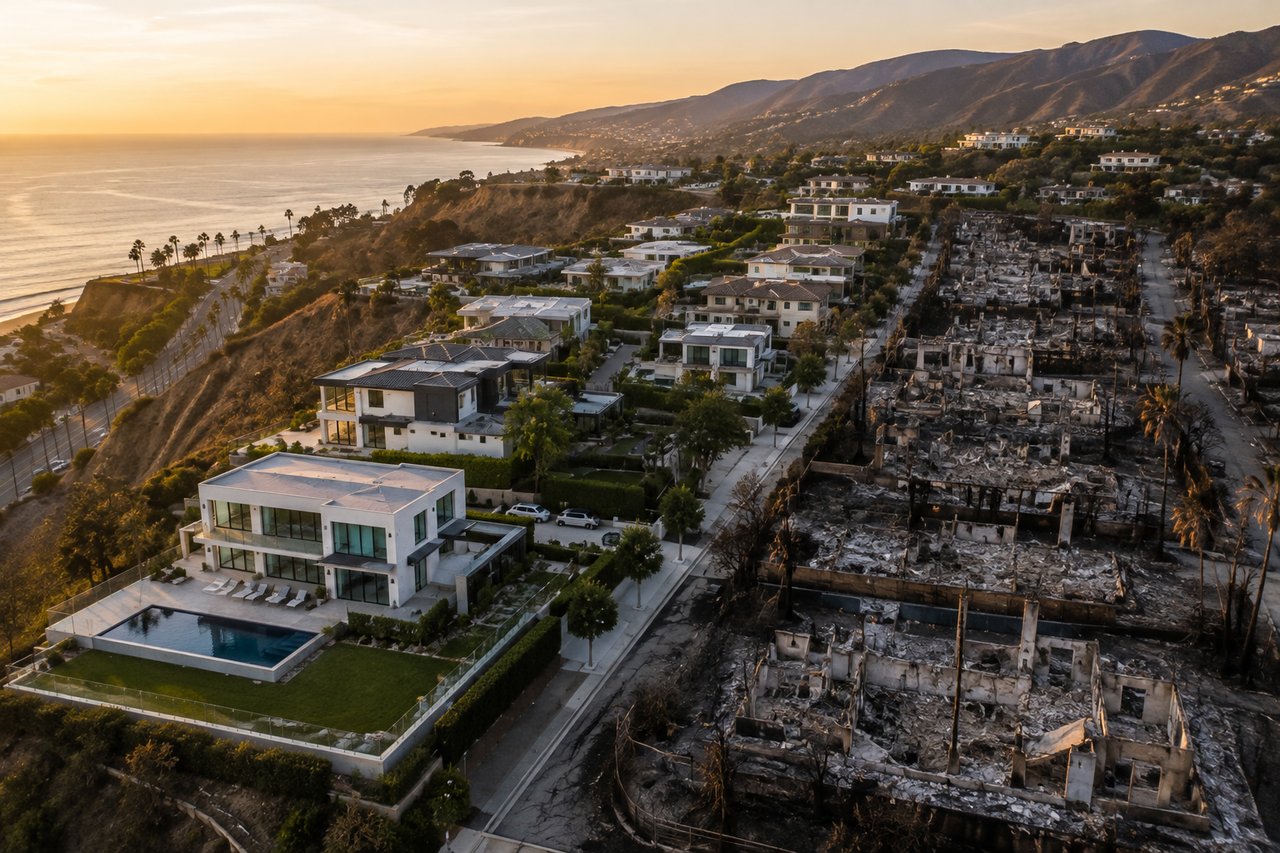
The Riviera neighborhood presents a different pacific palisades rebuild trajectory than broader municipal efforts suggest. This enclave south of Sunset Boulevard sits adjacent to the Riviera Country Club and experienced a generational reset when the January 2025 fire swept through. Cleared lots now line streets like Amalfi and Capri. They create opportunities rarely seen in a fully built-out community where new construction almost never occurred.
City-wide figures show 390 homes under active construction against nearly 750 approved addresses. The coordination required for 5,500 homes in a dense coastal community exceeds current municipal capacity. Private development models in the Riviera accelerate timelines through direct resource allocation. Fountainhead Homes completed 10,587-square-foot estates in Upper Riviera by 2026 and demonstrated execution speed unavailable through conventional channels.
Strategic Positioning Attracts Families Seeking Accelerated Returns
Families recognize the Riviera's structural advantages for accelerated palisades rebuilding progress. The neighborhood historically claimed over half of the highest-tier luxury sales, with median prices reaching $10 million for premium properties. Only 10% of homes listed above $6.50 million appear in the Riviera currently. This lack drives private negotiations.
The fire destroyed select properties, especially near canyon edges, while sparing many homes. This created selective rebuilding opportunities within network infrastructure that was already there and reduced complexity compared to areas requiring detailed utility restoration.
High-End Real Estate Transactions Operate Beyond Public Market Visibility
Off-market luxury transactions historically represented 30 to 40 percent of pacific palisades recovery deals, a ratio that grew after the fires. These private channels operate through Compass Private Exclusives and REALM Global. They clear transactions in 30 to 45 days compared to 90-plus days for public lot listings.
About 40 percent of vacant lot sales in the 90272 zip code transferred to investors since the fire. First-wave investor-built spec homes reach completion through private sales before public listing, with buyer-specified upgrades incorporated during final build-out. These transactions avoid the 300-plus public MLS lot listings and target pre-qualified buyers who value privacy over price discovery processes.
Why Most Pacific Palisades Fire Rebuild Efforts Face Unprecedented Delays
Federal intervention arrived one year after wildfires destroyed nearly 40,000 acres, yet less than 10 homes stood rebuilt. President Trump's executive order targeted what he termed "bureaucratic red tape" and directed FEMA and SBA to preempt state and local procedural requirements. Only 2,500 of tens of thousands of destroyed structures received permits to rebuild despite this.
Complex Permitting Landscape Creates Bottlenecks Despite Executive Orders
Processing times averaged 93 days for pacific palisades rebuild permits, even with faster reviews promised by local leaders. Governor Newsom and Mayor Bass issued emergency orders suspending CEQA and Coastal Act requirements for eligible projects. The city claimed permits processed nearly three times faster than pre-fire timelines. The federal administration described the situation as "a nightmare of delay, uncertainty, and bureaucratic malaise".
Local officials countered that permitting wasn't the obstacle. Los Angeles County Supervisor Kathryn Barger emphasized that 53% of residents who were affected took no action to rebuild. The reason wasn't permitting delays but lack of capital to move forward.
Underinsurance Crisis Affects Majority of Displaced Families
State Farm dropped over 1,600 policies in Pacific Palisades before the fires. The company cited catastrophe exposure and rising reconstruction costs and targeted areas presenting "the most substantial wildfire hazards". Smoke damage claims became contentious, with homeowners reporting delays over whether cleanable damage warranted full recovery. The California FAIR Plan, designed as temporary backstop coverage, insured roughly 40% of homes in parts of the Palisades.
Mayor's Milestone Announcement Explains Reality Gap
Mayor Bass announced the first certificate of occupancy as "an important moment of hope". Critics noted the difference between developer-planned construction and true rebuilds replacing residents' homes. More than two months post-fire, only four permits were issued by March 24.
5,500 Homes Require Coordination Beyond Current City Capacity
Rebuilding 5,500 homes in a dense coastal community requires coordination the city lacks. UCLA's independent commission recommended new local rebuilding authorities, but those proposals remain unimplemented.
How Riviera's Collaborative Approach Reshapes Palisades Riviera Recovery
"Disaster risk reduction is not solely an institutional responsibility. It is a shared task that requires vision, political leadership, and coordinated action among governments, the private sector, and communities. Only through concrete partnerships can we anticipate threats and protect what matters most: people, livelihoods, and the stability of our territories." — Nahuel Arenas, Chief of the UNDRR Regional Office for the Americas and the Caribbean
Riviera Property Group operates through partnerships rather than isolation and pools resources with multiple real estate developers to accelerate pacific palisades rebuild timelines. This collaborative model addresses resource constraints that slow conventional recovery efforts, especially in palisades riviera neighborhoods where coordination determines execution speed.
Multiple Developer Partnerships Accelerate Resource Allocation
Developer partnerships create shared expertise and resource pools unavailable to individual property owners who navigate palisades fire rebuild complexities alone. Multiple development entities contribute specialized capabilities, from land acquisition to construction management. They compress timelines through parallel workflows.
Direct Work with LADBS Minimizes Bureaucratic Friction
Direct coordination with the Los Angeles Department of Building and Safety eliminates intermediary delays. Bittoni Architects secured approvals in 30 days through complete, compliant packages submitted under EO1 and EO8 eligibility frameworks. Projects bypass discretionary reviews that extend municipal processing typically, so this matters.
Architect and Designer Integration Simplifies Ground-Up Construction
Riviera's process integrates architects and designers from the start through final specifications. Early designer involvement prevents mid-construction revisions that get pricey when interior professionals enter after building begins. This coordination covers spatial planning, structural plans, surveys and permit submissions as unified workflows rather than sequential handoffs.
Certificate of Occupancy Timeline Advantages
Thomas James Homes completed ground-up construction to Certificate of Occupancy in approximately six months. Strategic positioning determines recovery speed for those who seek resilient palisades properties designed for better living. Christina Pope  310-404-9931
  [email protected] assists clients who navigate palisades rebuilding progress through private channels where timing creates advantages.
What Independent Research Reveals About Community-Driven Rebuilding Priorities
"It took 18 months of extensive outreach efforts in Flagstaff for standards around infrastructure, vegetation management, and other compliance clauses within the WUI code to be adopted and enforced." — Paul Summerfelt, Wildfire management officer, Flagstaff
NORC Study Captures Resident Trade-Offs Between Cost, Time, and Services
NORC at the University of Chicago partnered with the Pacific Palisades Community Council to survey 1,265 residents and provided the first complete, statistically representative picture of community priorities. The research captured trade-offs residents face between cost, time, and access to services during pacific palisades rebuild decisions.
Focus Groups Inform Evidence-Based Policy Decisions
Six 60-minute focus groups, each with six to eight community members, came before the survey. These sessions surfaced issues that shape recovery decisions, categorized by profile: homeowners with destroyed properties, renters, households with children, and older residents.
Longitudinal Surveys Track Development of Community Sentiment
A follow-up survey launched later to track changes in resident sentiment as the ever-changing rebuilding situation unfolds. This longitudinal approach provides decision-makers with insights as palisades rebuilding progress continues.
UCLA Commission Recommendations for Resilient Palisades Remain Unimplemented
UCLA assembled 40-plus researchers from multiple institutions to inform the Blue Ribbon Commission. The Commission's main recommendation to establish a Resilient Rebuilding Authority with financing powers stalled in the state Legislature. Another major recommendation for a Regional Fire Control District requires voter approval for funding.
Social Infrastructure Matters More Than Physical Restoration Alone
Residents prioritized community representation in palisades riviera recovery efforts. Thirty-seven percent chose partnerships between local government and trusted community organizations to lead rebuilding.
Conclusion
Riviera Enclave's accelerated palisades rebuilding progress demonstrates how private development partnerships and direct agency coordination overcome obstacles that stall municipal-scale efforts. Broader pacific palisades recovery confronts permitting complexities and underinsurance realities affecting thousands of families. High-end real estate operates mostly through trusted circles where discretion shapes outcomes. Christina Pope provides guidance through private channels to those seeking spaces designed for refined living during this recovery phase. 310-404-9931 [email protected]
Key Takeaways
While Pacific Palisades faces massive rebuilding challenges after wildfires destroyed nearly 7,000 structures, the recovery reveals stark contrasts between private development success and municipal struggles.
• Private development outpaces public efforts: Riviera Enclave completes luxury homes in 6 months through direct agency partnerships, while city-wide only 390 of 5,500 homes are under construction despite 750 approved permits.
• Off-market transactions dominate luxury recovery: 30-40% of Pacific Palisades deals occur privately, closing in 30-45 days versus 90+ days publicly, with 40% of vacant lots sold to investors through exclusive networks.
• Underinsurance crisis stalls majority of rebuilds: State Farm dropped 1,600 policies pre-fire; 53% of impacted residents can't rebuild due to lack of capital, not permitting delays, despite executive orders expediting approvals.
• Collaborative models accelerate timelines: Pooling resources across multiple developers, architects, and designers from project start reduces bureaucratic friction and enables complete permit packages approved in 30 days.
• Community priorities extend beyond physical restoration: Independent research shows residents value social infrastructure and local representation in recovery decisions, yet UCLA Commission recommendations for resilient rebuilding authorities remain unimplemented.
The Riviera's success demonstrates that strategic partnerships, direct agency coordination, and integrated planning compress reconstruction timelines—advantages primarily accessible through private channels where discretion and timing determine outcomes in Los Angeles luxury real estate markets.
FAQs
Q1. Has construction actually started on homes in Pacific Palisades after the fire? Yes, construction has begun in select areas. As of recent reports, 390 homes are actively under construction, with nearly 750 addresses having approved rebuilding plans. The Riviera Enclave neighborhood has demonstrated particularly rapid progress, with some developers completing ground-up construction to Certificate of Occupancy in approximately six months through streamlined private development models and direct coordination with city agencies.
Q2. How long will the complete Pacific Palisades rebuild take? The timeline varies significantly by neighborhood and approach. While some private developments in areas like the Riviera are completing homes in 6-12 months, the broader community rebuild will likely take 8-10 years. With approximately 5,500 homes requiring reconstruction in a dense coastal area, the scale exceeds current municipal coordination capacity. Individual timelines depend heavily on factors like insurance coverage, permitting processes, and access to builders and resources.
Q3. Why haven't more Pacific Palisades homes been rebuilt yet? The primary obstacle isn't permitting—it's financial capacity. Local officials report that 53% of impacted residents have taken no action to rebuild because they lack sufficient capital, not due to bureaucratic delays. An underinsurance crisis affects the majority of displaced families, with State Farm having dropped over 1,600 policies before the fires. Additionally, approximately 40% of vacant lots have been sold to investors rather than original homeowners rebuilding.
Q4. Will Pacific Palisades look different after it's rebuilt? The rebuilt community will likely differ from its pre-fire character. While regulations limit new construction to 10% larger than previous structures for insurance-funded rebuilds, the neighborhood will feature more modern architecture, two-story homes replacing single-story originals, and increased use of ADUs (accessory dwelling units). Properties sold to investors may introduce contemporary designs that differ from the area's traditional California esthetic, though the fundamental single-family zoning is expected to remain unchanged.
Q5. What are the biggest challenges facing Pacific Palisades residents trying to rebuild? Residents face multiple interconnected challenges: underinsurance leaving many without adequate funds to rebuild, complex permitting processes averaging 93 days despite expedited reviews, limited access to qualified builders and materials, and difficult decisions about whether to rebuild or sell. Additionally, concerns about future fire risk, infrastructure capacity with limited evacuation routes, and the loss of community character as original residents are displaced by investors create both practical and emotional obstacles to recovery.