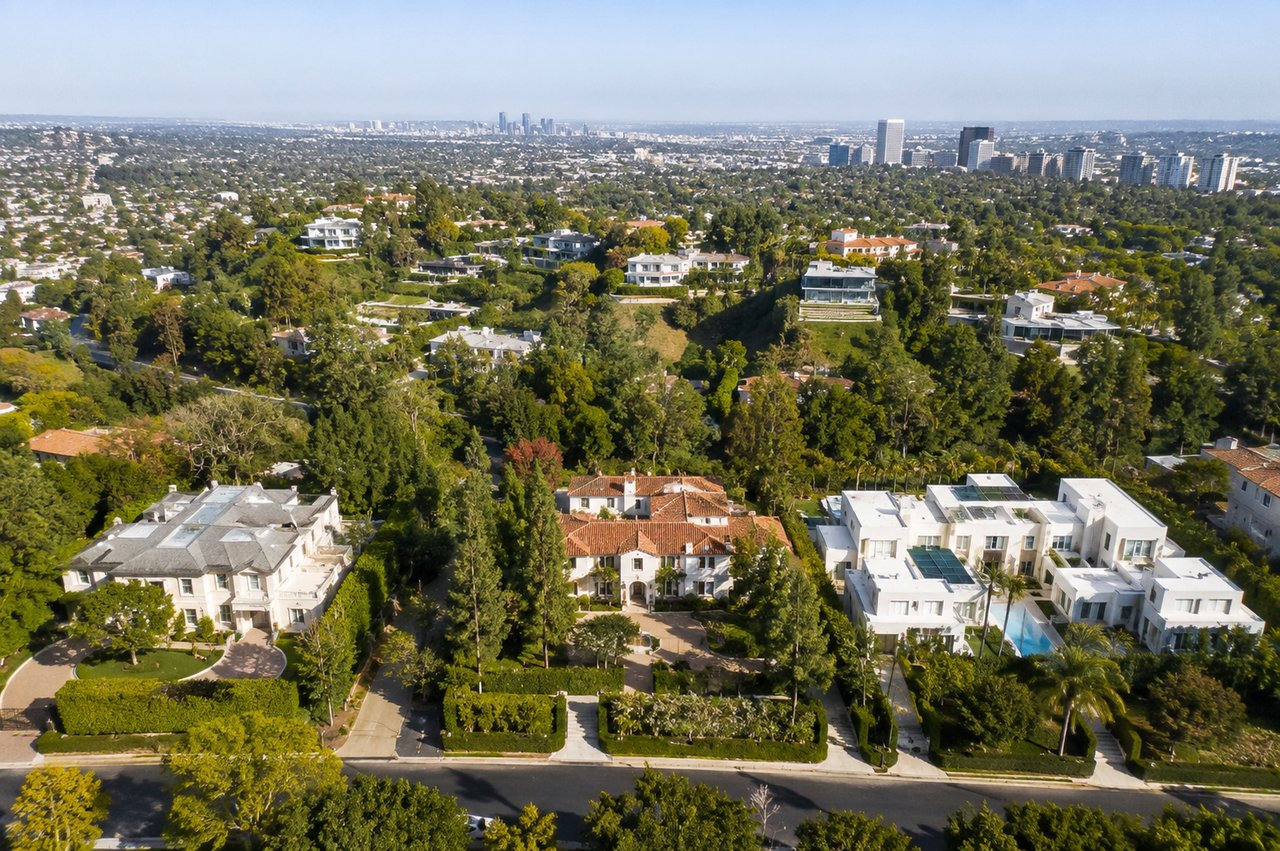
Buyers considering homes for sale in Beverly Hills Flats, elevated hillside properties, or secured private communities will find that each area presents its own terrain, architectural character, and set of lifestyle trade-offs. The palm-lined streets of the Flats, the ridge-top panoramas of Trousdale, and the controlled access of Beverly Park each serve a different kind of buyer. What a Beverly Hills Flats map cannot show is how privacy, positioning, and timing quietly shape every transaction and every long-term ownership experience.
How Beverly Hills Neighborhoods Compare: A Strategic Overview
Beverly Hills real estate operates within three distinct planning frameworks, and each one shapes everything from permitting timelines to long-term resale value. The city divides single-family properties into the Central Area (the Flats), the Hillside Area, and Trousdale Estates, with each zone governed by its own development standards and review processes. Setbacks, height limits, grading requirements, and renovation scrutiny all vary depending on which designation applies.
Terrain Types and What They Mean for Buyers
The Flats occupy level to gently sloped terrain between Santa Monica Boulevard and Sunset Boulevard, laid out on a regular street grid. Every square foot of a lot is usable no hillside grading, retaining walls, or switchback driveways required. The Hills rise north of Sunset, where streets follow canyons and ridgelines rather than a grid. Lots here are typically graded into pads designed around view corridors, with outdoor spaces oriented toward city vistas. Trousdale Estates sits on Beverly Hills' eastern ridge, where homes occupy level pads cut into the hillside and deliver wide panoramic views across Los Angeles.
Hillside projects carry a more demanding approval path; geotechnical investigations, soils reports, and erosion control plans are standard requirements where slopes exceed city thresholds. Central Area properties face design review focused on street-visible elements and compatibility with neighboring homes. Flat-lot estates offer straightforward at-grade construction, while hillside properties call for site-specific engineering and considerably more documentation.
Price Ranges Across Beverly Hills Neighborhoods
Current market data reflects meaningful variation across this stretch of affluent Los Angeles:
- The Flats: Entry-level properties start at USD 7.00 million to USD 9.00 million in the 500 blocks, with fully renovated estates reaching USD 20.00 million to USD 40.00 million in the 700 and 800 blocks
- Trousdale Estates: Homes range from USD 8.995 million to USD 54.85 million, with average pricing around USD 8.20 million
- Beverly Hills Gateway: Properties span USD 3.90 million to USD 100.00 million
- Golden Triangle: Average sales price sits at USD 2.24 million
The median listing price across Beverly Hills stands at USD 12.995 million, though the median sale price settles at USD 6.10 million. The spread between those two figures reflects how selectively this market actually transacts.
Access to Schools, Shopping, and Amenities
All properties within Beverly Hills city limits are served by the Beverly Hills Unified School District Hawthorne Elementary, El Rodeo Elementary, Beverly Vista Middle School, and Beverly Hills High School. Worth noting: some properties with a Beverly Hills postal address sit outside city boundaries and fall under LAUSD rather than BHUSD. Enrollment follows municipal designation, not zip code.
Walkability favors the Flats. Southern blocks in the 500s and 600s are within easy reach of the Golden Triangle, Rodeo Drive, and Beverly Gardens Park. The 700 and 800 blocks near Sunset put grocery stores roughly 1.5 miles away. Hillside properties and Trousdale require driving for most daily errands.
Beverly Hills Flats Map and Key Boundaries
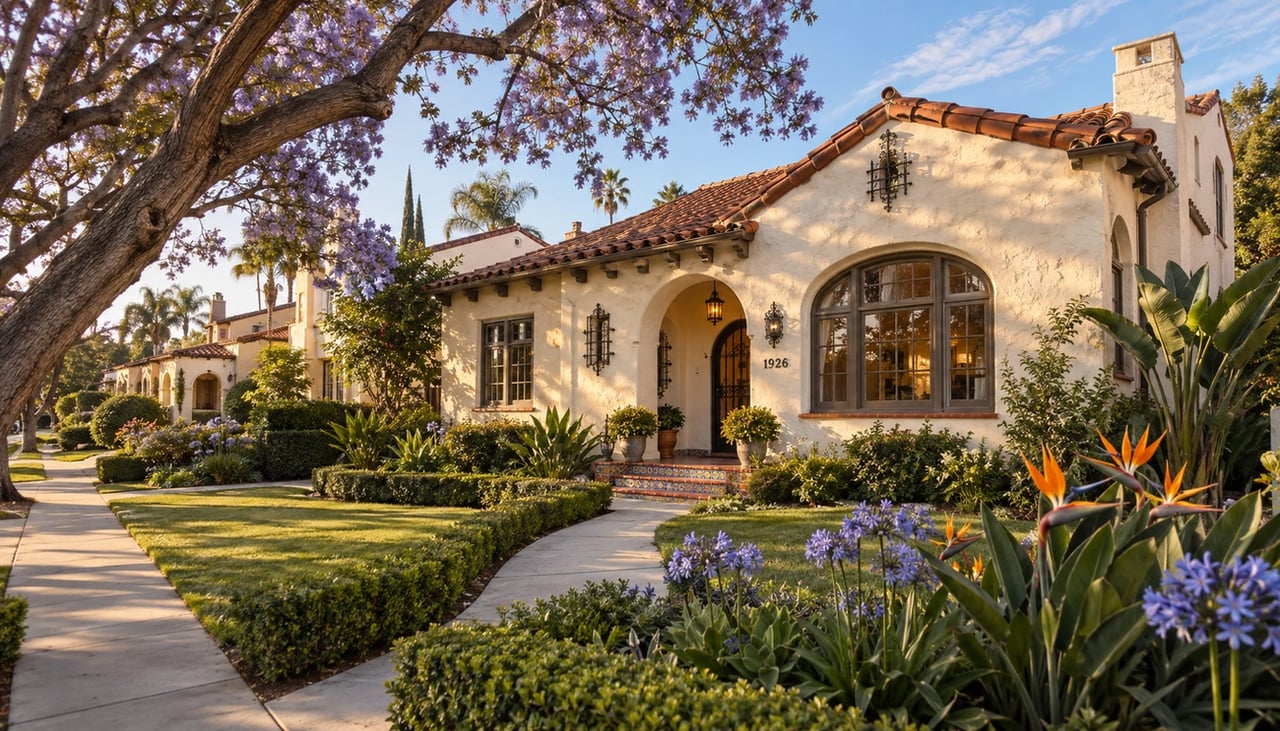
The Flats cover approximately 200 acres, bounded by Sunset Boulevard to the north, Santa Monica Boulevard to the south, Doheny Drive to the east, and Whittier Drive to the west. Streets closest to Sunset — Carmelita and Lomitas among them — hold the largest lots and command USD 10.00 million to USD 30.00 million for restored estates from the 1920s. The mid-Flats, running between Burton Way and Sunset, carry the highest concentration of preserved Spanish, Tudor, and Mediterranean architecture in the neighborhood.
The Flats: Classic Beverly Hills Living
"We don’t make land here, you can’t find properties with as much pedigree and prominence as you can in Beverly Hills Flats." — Felix Pena, Estates Director at Hilton & Hyland
Landscape architect Wilbur David Cook gave the Flats their defining character — wide boulevards, generous setbacks, and a master-planned tree canopy where each street carries its own species. Beverly Drive announces itself with towering palms that deliver the Southern California image buyers carry in mind long before they arrive. Maple Drive earns its name every fall, when the canopy turns and the street feels unlike anywhere else in Los Angeles.
Wide streets and mature trees
The Green and Cook Community Plan of 1906 established this street-by-street planting approach, and its results remain visible at every turn. Queen palms line Hamilton Drive. Chinese elms shade South Almont and North Elm. Southern magnolias anchor Gale Drive with fragrant blooms and polished foliage year-round. The effect is immediate — a neighborhood that feels considered, unhurried, and entirely itself.
Architectural range from Spanish Revival to modern
Few neighborhoods in Los Angeles hold this range of residential architecture within such a compact area. Spanish Colonial Revival estates from the 1920s sit beside Tudor Revival homes, Georgian colonials, French Provincial properties, and Mid-Century Modern residences. The Witch's House on Walden Drive and Carmelita Avenue stands as a neighborhood landmark a whimsical 1920s structure that captures the Flats' long-standing comfort with individuality alongside elegance. New construction in transitional and contemporary styles continues appearing where older homes have been replaced.
Walking distance to world-class dining and shopping
The southern blocks in the 500s and 600s place residents within easy reach of the Golden Triangle's restaurants, boutiques, and Beverly Gardens Park. The 700 and 800 blocks near Sunset tell a different story grocery stores and pharmacies sit 1.5 miles or more away, and most residents here drive for daily errands.
Lot sizes in the 500, 700, and 800 blocks
Lot sizes shift noticeably as one moves north through the Flats. The 500 blocks average 11,000 to 15,000 square feet, with select Beverly Drive and Crescent Drive parcels reaching 25,000 square feet owing to unusual lot depth. The 700 and 800 blocks typically offer 25,000 to 30,000 square feet among the largest residential parcels the neighborhood affords.
Family-friendly appeal and school access
The average household size of three reflects a genuine family presence throughout the Flats. Students attend Hawthorne Elementary, El Rodeo Elementary, Beverly Vista Middle School, and Beverly Hills High School — all within the Beverly Hills Unified School District.
For clients who value both the living experience and the long-term investment, the Flats consistently deliver on both. Whether a search is just beginning or a decision is close, Christina Pope is glad to help identify the right property with the care and discretion the market demands.  310-404-9931
  [email protected]
The Hills: Privacy Through Elevation
Elevation changes everything north of Sunset. Hillside properties occupy terrain where topography drives every design decision, every construction budget, and every aspect of long-term ownership.
Trousdale Estates and contemporary architecture
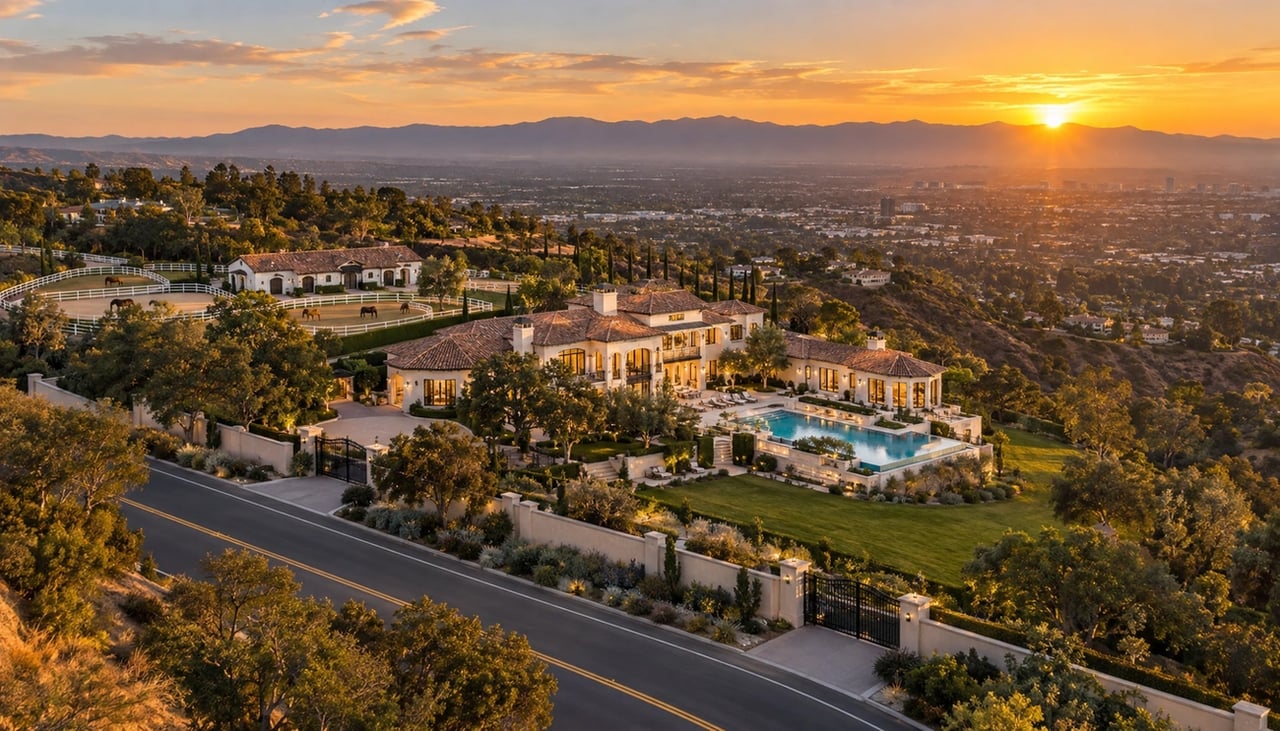
Trousdale Estates occupies Beverly Hills' eastern ridge 535 lots developed in the 1950s from former Doheny ranch land. Homes sit on level pads cut into the hillside, with panoramic city and ocean views on clear days. The neighborhood holds the largest concentration of custom mid-century modern architecture in Los Angeles, with properties designed by A. Quincy Jones, Paul R. Williams, Wallace Neff, and Cliff May. A 14-foot height limit paired with strict view protections preserves the low horizontal profile that gives the enclave its unmistakable character.
Mulholland corridor properties
The Mulholland corridor draws buyers whose priorities run toward larger parcels, canyon-to-valley views, and multiple access points. Lots here are measured in acres, not standard residential dimensions a meaningful distinction for those who value land as much as architecture.
View premiums and what they cost
The pricing reflects the position. Trousdale's premiums are tied to panoramic views, ridge placement, and architectural pedigree homes range from USD 8.995 million to USD 54.85 million, running 25 to 30 percent above Beverly Hills' median. Buyers who understand what drives that premium tend to hold these properties well.
Single-story versus multi-level hillside homes
Trousdale's original design review called for single-story construction to protect view corridors. Multi-level homes exist elsewhere in the Hills, though every additional story raises foundation complexity considerably.
Driveway access and terrain considerations
Hillside construction adds 15 to 30 percent over flat-lot costs a figure driven by caisson foundations, grading, and export hauling. Trousdale's flatter pads ease some of that burden, though buyers should account for site-specific engineering requirements before finalizing any budget.
Gated Communities: Maximum Security and Seclusion
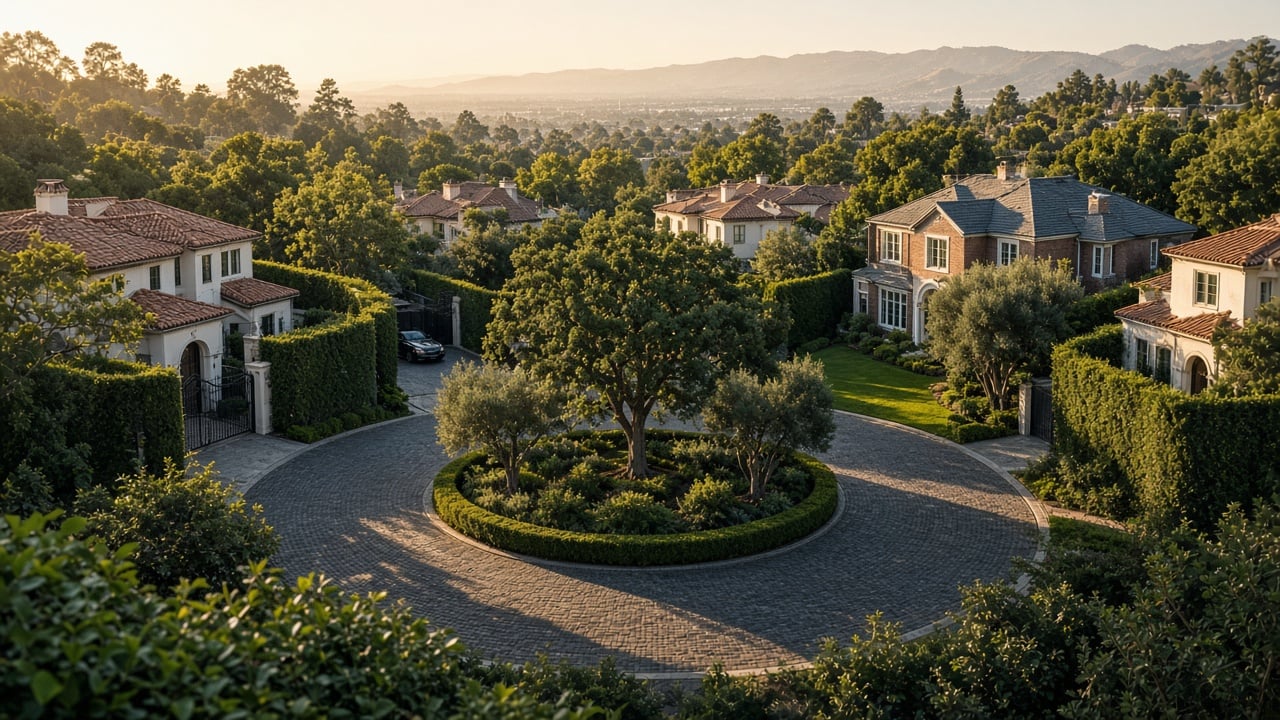
Guard-gated enclaves occupy their own tier within Beverly Hills real estate. Access control, perimeter security, and layered privacy protocols define the ownership experience here not walkability, street presence, or architectural visibility.
Beverly Park North and South
Beverly Park spans 250 acres between Mulholland Drive and Sunset Boulevard, divided into North Beverly Park with 64 homes and South Beverly Park with 16 residences. A minimum 5,000-square-foot requirement applies to all homes, though estates in the North section average nearly 20,000 square feet, and those in the South average 11,000 square feet. The neighborhood carries a mean household income of USD 502,440. Three 24/7 guard gates manage entry, supplemented by roaming patrols and individual property gates that add further layers of controlled access. Airspace above the community operates under a no-fly zone.
Hidden Valley Estates in Benedict Canyon
Hidden Valley Estates holds 33 homes set into Benedict Canyon near Franklin Canyon Park. Properties range from 2,026 to 12,000 square feet, with an average of 8,720 square feet, and prices span USD 3.00 million to USD 19.00 million. Buyers drawn here tend to seek forested seclusion on parcels that can exceed one acre, with the assurance of 24/7 guard-gated entry.
Mulholland Estates amenities
Mulholland Estates offers a typical 5-bedroom, 7-bathroom configuration, with homes averaging 8,400 square feet. The guard-gated community includes three lighted tennis courts, racquetball and basketball courts, a playground, and a clubhouse with a dance studio — amenities that reflect a lifestyle sustained entirely within the gates. Prices exceed USD 10.00 million.
Guard gates, private roads, and no-fly zones
Security staffing runs around the clock at gatehouse checkpoints. Private roads limit external traffic, and Beverly Park enforces photography restrictions with the added benefit of protected airspace [222], subject to FAA designation.
Who chooses gated living and why
For high-profile residents, the priorities are clear: controlled access, freedom from unsolicited attention, and a reliable buffer from public visibility. Gated status commands premiums that reflect both the security it provides and the scarcity of available properties.
For clients who value both privacy and a home that accommodates gracious entertaining, finding the right fit requires more than a search — it requires trusted counsel. If you are considering a purchase or simply beginning to explore the options, Christina Pope would be glad to help. 310-404-9931 [email protected]
Conclusion
The Flats, the Hills, and Beverly Hills' gated enclaves each represent a genuinely different way of living — not just a different price point. Flat-lot estates with walkable luxury, ridge-top properties with sweeping views, and secured communities with round-the-clock access control each serve a distinct set of priorities. Terrain, architecture, and lifestyle are inseparable here, and the right choice depends entirely on what matters most to the buyer.
Privacy, positioning, and long-term value are the real criteria. Price per square foot is only part of the picture. Knowing which neighborhood truly fits — and why — is where the right guidance makes all the difference. Christina Pope brings the market knowledge, the relationships, and the attentiveness to help clients find exactly that. 310-404-9931 [email protected]
Key Takeaways
Beverly Hills luxury real estate divides into three distinct categories—the Flats, the Hills, and gated communities—each offering unique advantages based on terrain, privacy levels, and lifestyle priorities.
• The Flats deliver classic walkability: Level lots with mature tree canopies, architectural diversity from Spanish Revival to modern, and genuine pedestrian access to Rodeo Drive and world-class amenities make this the most accessible luxury option.
• Hillside properties command view premiums of 25-30%: Trousdale Estates and Mulholland corridor homes require specialized engineering but deliver panoramic city vistas, with prices ranging from USD 8.995 million to USD 54.85 million.
• Gated enclaves prioritize security over street presence: Beverly Park, Hidden Valley Estates, and Mulholland Estates feature 24/7 guard gates, private roads, and no-fly zones, attracting high-profile buyers willing to pay premiums for controlled access.
• Terrain dictates construction complexity and costs: Flat-lot properties offer straightforward development, while hillside construction adds 15-30% in costs due to grading, caisson foundations, and geotechnical requirements.
• School district boundaries matter more than zip codes: Properties must fall within Beverly Hills city limits to access the prestigious Beverly Hills Unified School District—postal addresses alone don't guarantee enrollment.
Strategic buyers succeed by aligning their privacy needs, lifestyle preferences, and budget with the right neighborhood type, rather than focusing solely on price per square foot or celebrity proximity.
FAQs
Q1. What are the main differences between Beverly Hills Flats and the Hills neighborhoods? The Flats feature level terrain with wide, tree-lined streets and walkable access to shopping and dining, while the Hills offer elevated properties with panoramic views, more privacy, and winding canyon roads. Flats properties sit on flat, fully usable lots, whereas hillside homes require specialized engineering and grading due to the terrain.
Q2. Are there gated communities in Beverly Hills? Yes, Beverly Hills has several exclusive gated communities including Beverly Park North and South, Hidden Valley Estates in Benedict Canyon, and Mulholland Estates. These neighborhoods feature 24/7 guard gates, private roads, and enhanced security measures that attract high-profile residents seeking maximum privacy and controlled access.
Q3. How much more expensive are hillside properties compared to the Flats? Hillside properties in areas like Trousdale Estates typically command premiums of 25-30% above Beverly Hills' median prices, with homes ranging from USD 8.995 million to USD 54.85 million. Construction costs are also 15-30% higher due to grading requirements, caisson foundations, and specialized engineering needed for sloped terrain.
Q4. Do Beverly Hills zip codes guarantee access to top-rated schools? No, postal addresses alone don't guarantee enrollment in the Beverly Hills Unified School District. Properties must fall within actual Beverly Hills city limits to access BHUSD schools. Some homes with Beverly Hills zip codes are outside city boundaries and are assigned to LAUSD instead.
Q5. Why do wealthy buyers choose hillside homes despite the inconvenience? Hillside properties offer significant advantages including panoramic city and ocean views, enhanced privacy on larger lots, quieter streets with minimal traffic, and greater seclusion from public access. Many residents value these benefits over walkability and are willing to drive for daily errands or rely on delivery services and staff.