Price tags and square footage only tell part of the story. What truly separates an estate home from a luxury house runs deeper — significant land holdings, architectural integrity, multi-generational design potential, and the capacity to become a lasting family legacy. These qualities have defined estate properties for centuries, most visibly during the Gilded Age of the 1870s through the early 1900s, when industrialists commissioned grand residences built not just for their era, but for generations to come.
For buyers with a discerning eye, understanding what qualifies as an estate home — and what distinguishes it from a standard luxury residence — is essential to making a sound and meaningful investment.
Defining Estate Homes: What Sets Them Apart from Luxury Houses
What Is an Estate vs Home: Key Distinctions
Three elements define the separation between an estate home and a standard luxury residence: land scale, structural complexity, and functional design. Estate properties share luxury amenities with mansions — multiple bedrooms, bathrooms, pools, and sport courts — but the land they occupy is what fundamentally sets them apart. A mansion is a grand residence; an estate is everything surrounding it. Guesthouses, staff quarters, stables, barns, and recreational facilities are all part of what the estate encompasses beyond the main structure.
Price alone cannot capture what land scale communicates. Standard luxury homes sit on modest lots within residential neighborhoods, while estates can span dozens or hundreds of acres. Maintained gardens, auxiliary buildings, and extensive green spaces come with the territory — creating something closer to a self-sustaining environment than a standalone dwelling.
The Historical Context of Estate Properties
The estate as a concept has its roots in European aristocracy, where land and wealth were inseparable. In England, an estate traditionally supported itself through income-producing activity on the grounds. American estates took a different approach — the relationship between property and residence evolved to reflect status and lifestyle rather than agricultural output.
What carried over from that heritage was the architectural and cultural weight these properties hold. That sense of prestige, built into the design and setting of a home, continues to shape how estate properties are understood and valued in today's market.
Modern Estate Homes in Today's Luxury Market
Today's estate homes occupy the top one to five percent of the market and regularly exceed 10,000 square feet. Five bedrooms tend to be the starting point, with guest suites, home theaters, and wellness wings appearing as expected features rather than notable additions. Materials like marble, hardwood, and custom millwork reflect a standard of construction that goes well beyond size.
Thoughtful privacy design — through building layout, controlled access points, and separate guest zones — produces a quality of discreet, resort-like living that smaller luxury properties simply cannot offer. Location reinforces this further, with estates placed in secluded settings, whether gated communities or expansive rural land, where both acreage and positioning contribute to the property's overall distinction.
The Core Elements That Make an Estate Home Timeless
"Principles are principles. Principles don’t change. Styles change; attitudes change. Things are in a constant state of flux. The only grasp one can have on the profession is to get a handle on great principles." — Paul Rudolph, Architect
Land Scale and Privacy Requirements
Land is what gives estate properties their character — and their staying power. Most residential zones simply cannot accommodate the acreage true estates require, with many communities mandating a minimum of one-half acre or more per family. Greenwich, Connecticut's historic zoning ordinances call for up to four acres for certain residential estates, while Colorado's restricted districts specify parcels of two to five acres. Rural designations often go further still, requiring 35 acres for single-family residential development. Above all else, privacy is what discerning buyers value most — family compounds that offer resort-like seclusion, where residents and guests can move freely without intrusion.
Architectural Significance and Design Integrity
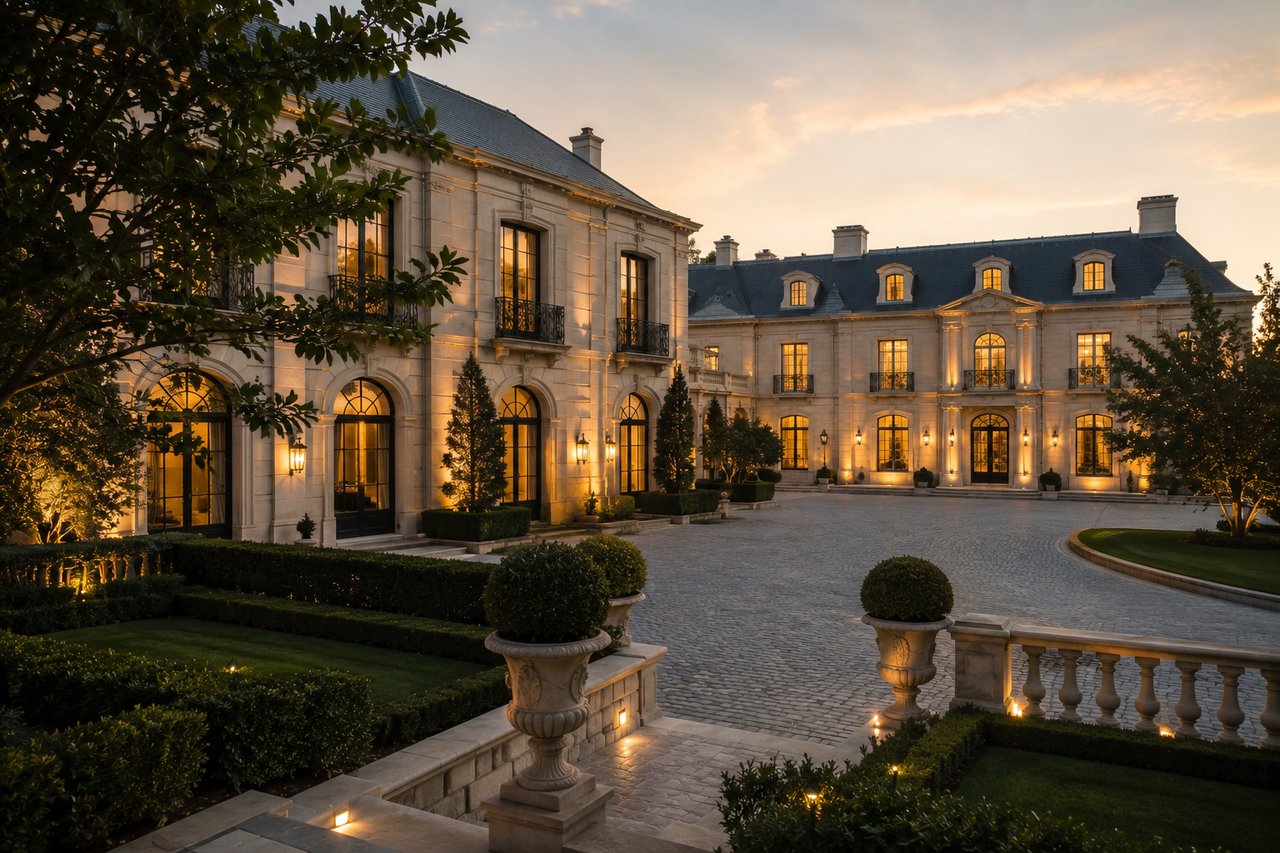
Genuine architectural integrity goes well beyond aesthetics. The finest estate homes maintain proper proportion, contextual awareness, and superior craft — qualities that hold their meaning long after trends have faded. Natural stone, wrought iron, and wood bring both character and longevity to a property. Symmetrical façades, detailed moldings, and grand entrances signal a commitment to design that endures. The seven aspects of integrity — location, setting, design, materials, workmanship, feeling, and association — collectively determine how a property carries its significance across generations.
Quality of Construction and Attention to Detail
Every material choice in an estate home is made with the long view in mind. Cross-laminated timber delivers tighter tolerances with efficient assembly, while natural stone is reserved for high-wear areas where aging only adds richness rather than wear. Custom millwork, stone cladding, and ceiling treatments speak to a level of precision where every joint and proportion is held to an exacting standard. Even utility spaces reflect this thinking — magnesium oxide board offers superior fire and mold resistance where durability matters most.
Outdoor Living and Landscape Integration
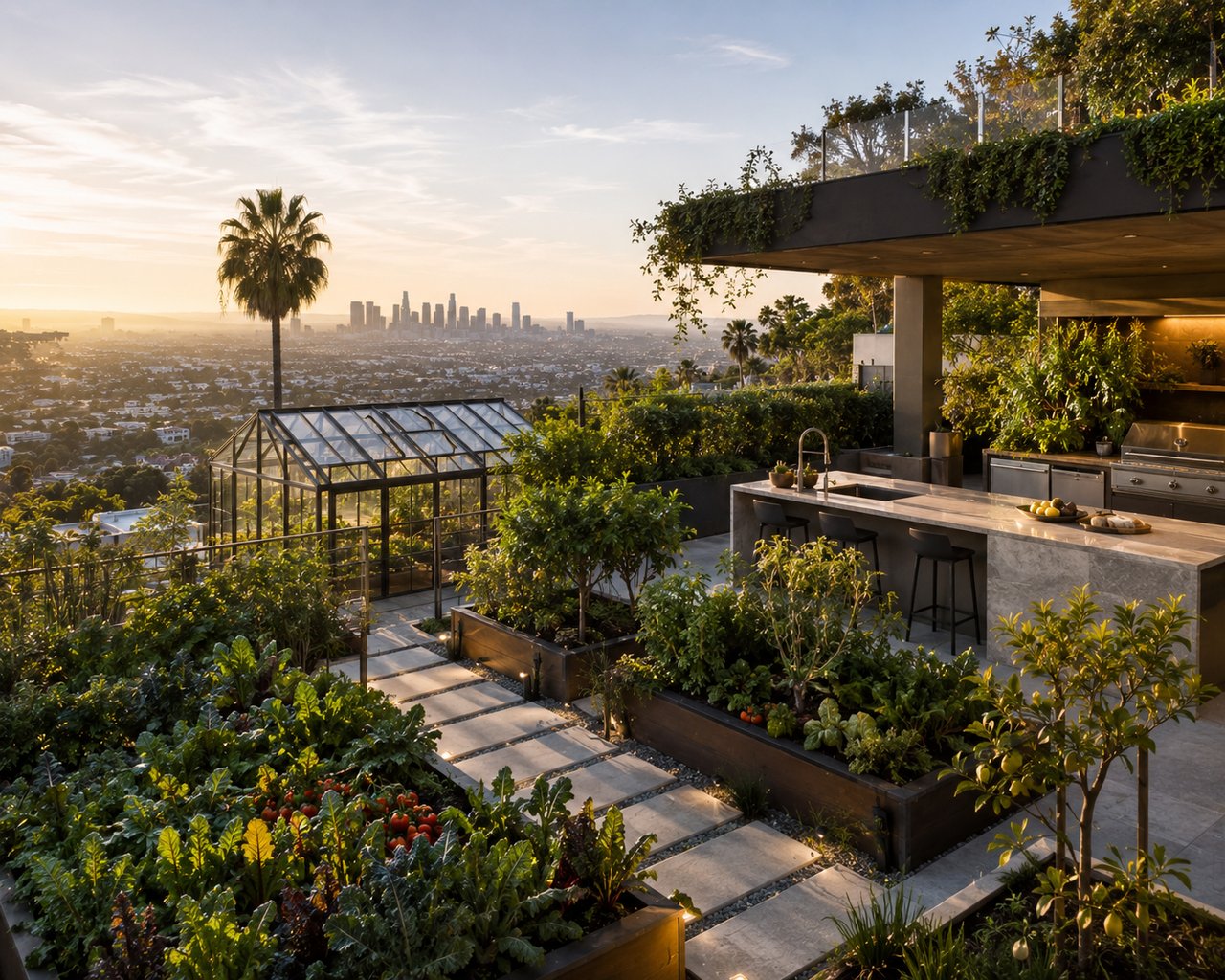
Professional landscaping contributes 15-20% to overall property value — and the best estate homes treat the grounds as an extension of the residence itself. Disappearing doors, continuous flooring, and a consistent design language draw the outdoors in, while expansive glass walls connect living areas to terraces in ways that effectively double the space available for entertaining. Native plantings and natural materials complete the picture, grounding the architecture in its surrounding environment.
Functional Spaces for Family and Entertainment
The most memorable estate homes are built around gathering. Outdoor kitchens with professional grills, covered loggias, and fire features make the property usable well beyond warm-weather months. Dedicated home theaters with custom seating and integrated technology create experiences that feel curated rather than incidental. Details like expandable kitchen islands address the full range of entertaining — from intimate family dinners to larger celebrations.
Legacy and Longevity: Why Estate Homes Matter Across Generations
What Is a Legacy House and Why It Matters
A legacy property is built with intention. Every material, every structural decision is chosen not for how it looks on day one, but for how it holds up in twenty or fifty years. Natural stone develops a patina that enhances beauty over time. Wide-plank hardwood floors gain depth with use. Structural systems go well beyond code-minimum standards, with engineered components and premium framing that outlast trends entirely. A legacy home, in short, is one that grows more valuable across generations — not one that simply impresses at first glance.
Estate Homes as Family Anchors
Multi-generational living surged to 60 million individuals between 1971 and 2021 — a fourfold increase — with 18% of Americans now living in such households. Estate properties are uniquely suited to this way of life. They create spaces where traditions take root, where grandchildren learn skills passed down through the years, and where holidays become rituals the family looks forward to returning to, year after year.
Financial Advantages of Estate Property Ownership
Real estate has long served as a generational wealth vehicle, and estate properties are no exception. Values tend to appreciate steadily over time, with residual worth maintained even through market fluctuations. Mortgage payments build equity rather than simply covering occupancy costs, and ownership ultimately shields heirs from the ever-rising expenses of entering the housing market on their own.
The Emotional Connection to Multi-Generational Homes
Beyond the financial, these properties become part of a family's identity. Shared meals, daily rhythms, and preserved cultural traditions give estate homes a meaning that no price point can fully capture. Children carry forward specific memories — sounds, smells, the particular light of a favorite room — that stay with them for decades. Grandparents remain engaged and purposeful. Families draw closer, both emotionally and practically, within spaces designed to accommodate all of it.
Acquiring Estate Properties: A Strategic Approach for Discerning Buyers
"The siren song of a historic home is an affair that begins with starry-eyed infatuation over irreplaceable craftsmanship, a coveted prime location, and a character that oozes authenticity." — George Smart, Founder and CEO of USModernist
Estate-caliber acquisitions follow their own set of rules. The transaction structures involved differ considerably from a conventional home purchase, and buyers who understand those differences are far better positioned to secure the right property.
What Is an Estate Home Sale and How They Differ
An estate sale house is sold by executors or administrators — typically following a death, a downsizing, or a transition into assisted living — rather than by the owner-occupant. Court approvals and multiple decision-makers shape the process, and properties are generally sold as-is, sometimes with sellers unaware of past maintenance concerns such as leaks or outdated wiring. Probate involvement can extend timelines well beyond a standard closing. For patient buyers, however, that patience is often rewarded with access to properties in well-established neighborhoods that carry genuine craftsmanship and history.
Finding Gilded Age Mansions and Historic Estate Properties
Gilded Age mansions — constructed between the 1870s and early 1900s — are found across states from Massachusetts to Connecticut, with architectural styles ranging from Queen Anne and Italianate to Colonial Revival. Notable examples include the William McKnight House in Springfield at 4,565 square feet, listed at $600,000, and the Lee-Rogers House in Georgia at 8,470 square feet, offered at $1,199,900. Historic property platforms and preservation organizations maintain curated listings for those seeking properties with real architectural significance.
Evaluating True Estate Potential Before Purchase
A thorough title search identifies any liens and confirms ownership clarity before any commitment is made. Inspections and contractor walkthroughs surface renovation requirements that may not be immediately visible, while comparable sales analysis ensures fair market positioning.
The Importance of Discretion in Estate Transactions
Confidentiality is not a courtesy in these transactions — it is a necessity. Financial details, personal motivations, and negotiation strategies all require careful protection, and a seasoned real estate professional upholds that obligation well beyond the closing table.
For those who place great value on where and how they live, the right estate property is one that reflects both their standards and their vision for the future. Christina Pope brings the kind of experience, integrity, and discretion that these acquisitions demand. Whether you are beginning your search or ready to move forward, Christina would be glad to help.
Christina Pope 📞 310-404-9931 ✉️ [email protected]
Conclusion
Estate homes are built for permanence — in materials, in meaning, and in the families they shelter across generations. The finest of these properties rarely surface on the open market, which makes trusted relationships and careful timing essential for buyers who know what they are looking for.
Land, craftsmanship, and privacy will always matter more than trends. The right estate does not simply serve a family well today — it becomes part of who that family is, for decades to come.
Key Takeaways
Understanding what truly defines an estate home helps buyers make strategic investments that transcend temporary luxury trends and create lasting family legacies.
• Estate homes require substantial land (typically several acres minimum) plus auxiliary structures like guesthouses and stables, not just impressive square footage
• True estates feature timeless architectural integrity through superior materials, precise craftsmanship, and design principles that appreciate across generations
• Multi-generational living in estate properties surged to 60 million Americans, creating family anchors that preserve traditions while building generational wealth
• Estate sales differ from standard transactions through probate involvement, as-is conditions, and extended timelines requiring patient, strategic buyers
• Privacy engineering through controlled access, separate guest zones, and secluded locations distinguishes estates from standard luxury homes in exclusive neighborhoods
The distinction between luxury houses and estate homes centers on legacy potential—properties designed to serve families for decades through adaptable spaces, enduring materials, and land holdings that create self-sustaining environments. Strategic buyers prioritize architectural significance and multi-generational functionality over passing trends when acquiring properties meant to anchor family identity across generations.
FAQs
Q1. What makes a house an estate home? An estate home is defined by three key elements: substantial land holdings (typically several acres or more), architectural significance with superior construction quality, and comprehensive grounds that include auxiliary structures like guesthouses, stables, or staff quarters. Unlike standard luxury homes that focus primarily on the main residence, estates encompass the entire property with extensive landscaping, privacy features, and multi-generational design potential that creates a self-sustaining living environment.
Q2. How do estate sales differ from regular home sales? Estate sales occur when properties are sold by executors or administrators following events like death, downsizing, or assisted living transitions rather than by typical owner-occupants. These transactions involve probate court approvals, multiple decision-makers, and extended timelines beyond standard closings. Properties typically sell as-is, meaning sellers may be unaware of past maintenance issues, requiring buyers to conduct thorough inspections and title searches before purchase.
Q3. What devalues a property and how do estate homes avoid this? Estate homes maintain value through timeless architectural principles, superior materials like natural stone and hardwood that develop character with age, and structural systems that exceed code-minimum standards. They avoid devaluation by prioritizing design integrity over passing trends, using materials chosen for how they'll appear decades later, and incorporating privacy features and substantial land holdings that remain desirable across generations.
Q4. What are the defining characteristics of luxury estate properties? Luxury estate properties occupy the top 1-5% of the market and typically exceed 10,000 square feet with at least five bedrooms. They feature superior construction with materials like marble and custom millwork, extensive outdoor living spaces with professional landscaping, privacy engineering through controlled access and separate guest zones, and locations in exclusive, secluded areas. These homes include amenities like home theaters, wellness wings, and entertainment spaces designed for multi-generational use.
Q5. Why do estate homes serve as valuable family anchors across generations? Estate homes function as family anchors by providing spaces where traditions take root and memories are created across multiple generations. With multi-generational living reaching 60 million Americans, these properties offer adaptable layouts that accommodate changing family needs while building generational wealth through steady appreciation and equity accumulation. The emotional connections formed through shared experiences in these spaces, combined with their financial advantages, make them central to family identity for decades.