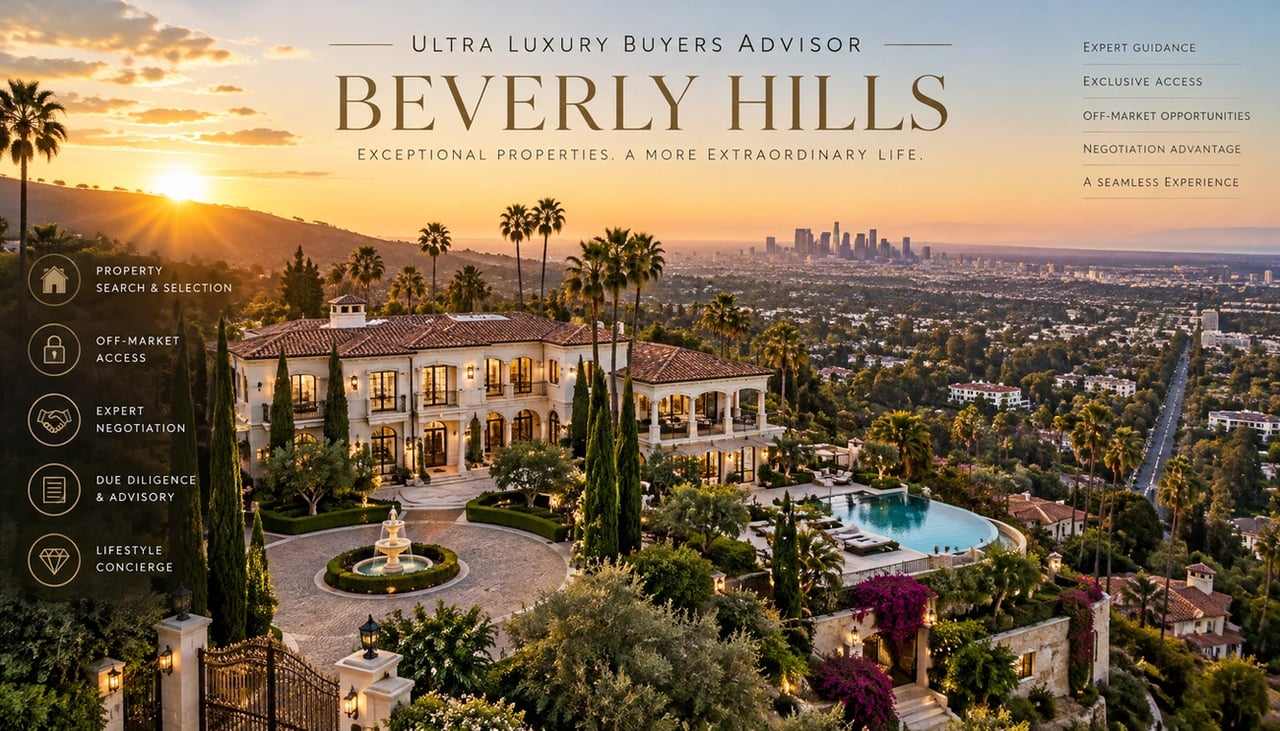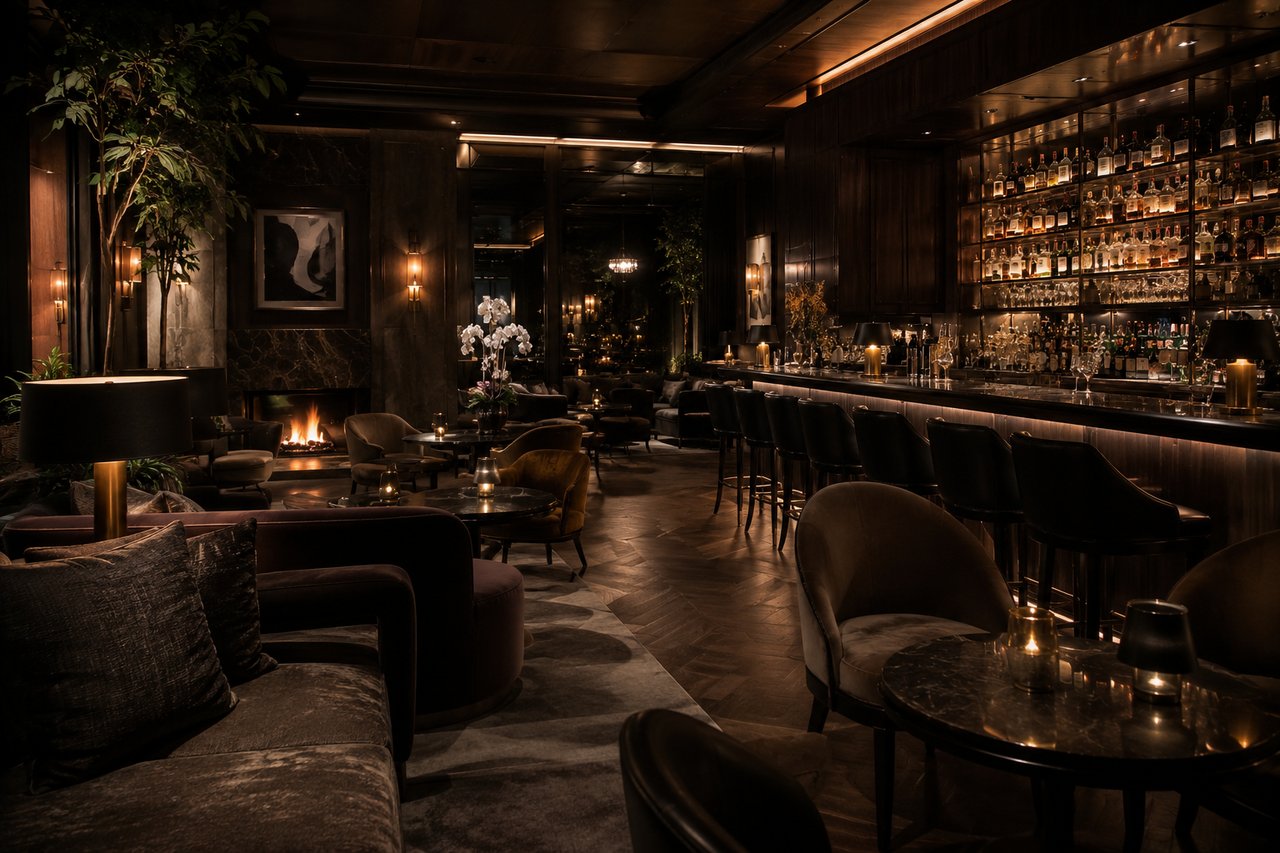
Invitation-only social clubs in Los Angeles have transformed from traditional bastions of old money into coveted spaces for a new generation of global citizens, high-net-worth individuals, and creatives. The private club scene has undergone a transformation in recent years and moved its traditional exclusivity to welcome a younger, more diverse membership base. These invitation-only clubs offer more than amenities. They provide access to curated networks where privacy protocols matter as much as programming. Access to these spaces can be more difficult than admission to LA's most elite private schools, with memberships starting at $3,600 annually.
Why LA's Elite Are Choosing Invitation Club Social Spaces
"The chief use of servants is the evidence they afford of the master’s ability to pay." — Thorstein Veblen, Economist and sociologist
The change toward invitation-only social clubs reflects deeper shifts in how wealthy Los Angeles residents position themselves within the city's social and economic landscape. Property transactions among high-net-worth individuals happen within trusted circles where discretion matters more than visibility. Privacy extends beyond real estate into social spaces. Invitation only clubs serve as extensions of lifestyle decisions that value access over exposure.
The Decline of Public Luxury
Public wealth expansion creates space for everyone. Private wealth expansion reduces it. This tension plays out across Los Angeles' social infrastructure. Wealthy residents face a choice between public luxury available to all or private luxury available to select groups. Invitation-only social clubs have grown in appeal. They offer something public venues cannot deliver: controlled environments where members control who shares their space.
88% of private club members report feeling welcome due to the social atmosphere these spaces provide. Shared values and vetted communities create this sense of belonging rather than open access. Private clubs function as sanctuaries from public exposure and offer trusted environments where members relax without scrutiny. Privacy protocols these spaces maintain have become non-negotiable if you have a need for discretion in your professional and personal lives.
Real Estate Value Meets Social Capital
Luxury residence models have begun incorporating social club elements into their structures. They create hybrid spaces where property ownership intersects with curated networking. Manhattan's residential club model demonstrates this convergence. Referral-only policies serve as the barrier to entry rather than membership fees alone. The value proposition centers on unplugging in exclusive settings and attending catered events with high-achievers without leaving the building.
These residence-based clubs replicate in cities around the world including London, Paris and Shanghai. No city in the United States works better than those with vertical living and layered culture. Los Angeles' invitation club social spaces follow similar patterns. Knowing the right people matters more than financial qualifications alone. Residents host gatherings in appointed common areas with professional event coordination. This allows them to entertain without disrupting their private spaces.
Real estate and social capital intersect to create compounding value. Members gain access to networks that generate personal and professional opportunities within controlled settings designed for meaningful interaction rather than casual encounters.
Generational Wealth Seeks New Expressions
Generation Z has entered the private club conversation earlier than any previous generation. The oldest will turn 29 in 2026. Many possess the financial capacity for membership through entrepreneurship, tech wealth or creator economies. Traditional membership timelines assume people join in their forties. These no longer apply to individuals who built wealth in their twenties.
This demographic change comes with different priorities. Research shows 73% of Gen Z consumers pay more for eco-friendly products, the highest rate among all generations. Their membership decisions weigh environmental practices and diversity in leadership as threshold questions rather than peripheral concerns. Clubs that address these values position themselves favorably with prospects who review organizations through different criteria than their predecessors.
Luxury consumption itself has changed from material to experiential. Spending on experiential luxury rose 5% in 2024. This reflects a preference for exclusive castle stays and restaurants with years-long waitlists over material possessions. Invitation only clubs line up with this trend by offering programming and experiences unavailable elsewhere. Membership transforms from amenity access into lifestyle curation that matches how younger wealth-holders define value.
The Anatomy of an Invitation Only Social Network
Private membership networks in Los Angeles operate through structural mechanisms that maintain both exclusivity and cultural fit. These invitation-only social clubs function as self-regulating ecosystems. Members who have been there for years control entry. Composition remains curated with intention, and acceptance hinges on more than financial capacity alone.
Membership Committees and Selection Criteria
Membership committees serve as the club culture's guardians and standards. These groups consist of longtime members whose responsibility extends beyond approval processes. They supervise how people join and manage recruitment strategies. Committees ensure that candidates and organizational values match.
The vetting process involves multiple layers. Rigorous screening gets into reputation, accomplishments and influential networks before extending invitations. Background checks range from criminal history reviews to deeper looks at financial records, public information and social media presence. Committees often conduct interviews over meals at the club itself. They observe how candidates move through spaces, treat staff and hold conversations.
Clubs may also host informal social events where current members meet candidates in unscripted settings. This allows for organic assessment of fit. Every new member matches the club's legacy and contributes to the existing community through this multi-stage evaluation.
The Role of Current Members in Gatekeeping
Current members function as active gatekeepers through formal sponsorship requirements. Most elite invitation only clubs require candidates to secure one main sponsor and two to five secondary sponsors. All must be existing members in good standing, often for two to five years minimum.
The main sponsor presents the candidate's case to the membership committee. They write detailed accounts of character, family background, values and anticipated contributions to the community. Secondary sponsors provide additional endorsements that reinforce the candidate's suitability. Trust and personal connections become the currency of entry through this referral system.
Clubs post candidate names in member areas for 30 to 90 days after committee evaluation concludes. Any member may register support or objection before formal voting takes place during this posting period. The broader community influences membership decisions through this tradition, not just committee members. Some clubs require unanimous approval, while others operate on majority or supermajority votes.
Industry-Specific vs. Cross-Industry Communities
Invitation only social networks structure themselves around specific industries or across multiple sectors. Industry-specific clubs attract professionals from shared fields and create deep vertical networks within particular domains. These spaces make specialized knowledge exchange and sector-specific opportunities easier.
Cross-industry communities emphasize diversity of professional backgrounds. Members might include entrepreneurs, artists, real estate developers and tech executives within the same network. This model mirrors cross-industry dialog structures where different sectors interact to generate broader views. The value proposition centers on unexpected connections and cross-pollination of ideas unavailable in homogeneous professional groups.
Age-Tiered Membership Models
Progressive invitation club social spaces have implemented tiered membership structures to capture different demographics and usage patterns. These models offer varied access levels based on member needs rather than applying uniform requirements.
Sonnenalp Golf Club exemplifies this approach with tiers geared toward young families and sports-focused members who access restaurants, gyms and pools without golf privileges. This flexibility creates vibrant atmospheres while expanding the membership base beyond traditional demographics. Operators with multiple clubs tailor different properties for distinct audiences more and more. They recognize members often belong to multiple clubs serving different purposes.
Tiered systems represent operational changes, yet they continue to work for clubs seeking both modern appeal and sustainable revenue growth.
From Application to Acceptance: The Entry Process
Applications to LA's invitation only clubs function as full portraits rather than financial profiles. Members fill out detailed documentation covering personal history, educational background, professional trajectory, community involvement and family details. Clubs ask about spouses and children given that membership privileges often extend to entire households. Financial disclosures remain standard practice. Some clubs request tax returns or bank references to confirm candidates can meet obligations without strain. The most exclusive invitation only social clubs have initiation fees that exceed $100,000. Jonathan Club requires approximately $50,000 to initiate, while San Vicente Bungalows charges $4,200 a year plus a $1,800 initiation fee.
What Clubs Look For Beyond Financial Qualifications
Selection committees assess cultural fit, good character, financial stability and genuine interest in contributing to the community. Most invitation club social spaces vet more than wealth alone. They seek people who will enrich club life for other members and future generations. Personal references outside the club supplement sponsor recommendations in many cases. Some clubs require personal statements that explain what draws candidates to membership and how they imagine contributing.
The Importance of Social Media Presence
Social media presence audits are the foundations of private club due diligence now. Search committees begin with LinkedIn before extending investigations to Facebook, Twitter and Instagram. Background checks get into posts, photos, memes, videos, quotes and likes. These create detailed digital profiles that compete with traditional resumes. Content from years past surfaces during screening, and subjective interpretations get applied to material that seemed innocent at the time it spread. Opinions expressed on politics, race relations, economics, entertainment or sports may conflict with employer or colleague viewpoints.
Professional Achievements That Matter
Different invitation only clubs prioritize distinct professional criteria. Some seek members who demonstrate transformation, state-of-the-art thinking and accomplishment in industries of all types. Others focus on cross-socialization and want people who haven't met everyone yet. These members can promote idea-sharing in any discipline. Involvement in club programming matters by a lot. Candidates must attend events, share ideas and bring value to the community.
How Long the Process Actually Takes
Timeline variations span wide across invitation only social clubs. Some move candidates through in several months, while the most exclusive maintain waiting lists that stretch across multiple years. Posting periods alone run 30 to 90 days before voting occurs. San Vicente Bungalows assesses applications monthly, whereas other clubs require candidates to complete multi-step processes. These include inquiry forms, membership prospectus reviews, waitlist placement, tours, sponsor acquisition, interviews, background checks and board receptions.
What You're Really Paying For
Membership fees at invitation only social clubs purchase access to three distinct value layers: physical infrastructure, human networks, and protective systems that operate invisibly until needed.
Amenities That Justify the Cost
Select membership services demonstrate tangible returns through their hotel programs. They provide unpublished rates up to 60% off with VIP status, complimentary breakfast, and upgrades at over one million properties worldwide including Four Seasons, Rosewood, and Ritz Carlton. Members save an average of 23% versus the lowest online rates. They receive approximately $100 per night in value and experiential upgrades. Restaurant benefits include priority access and 15-40% off full bills at Michelin-starred establishments and premier venues.
Physical spaces span 24-hour gym access, rooftop pools, screening rooms, broadcast facilities, and multiple dining venues. The Aster in Hollywood offers daily cultural programming, while NeueHouse Bradbury provides private studios and podcast facilities. The right home makes all the difference if you love to entertain. I'd be delighted to help you find spaces designed for raised living and effortless hosting if you're thinking about a purchase in the near future or beginning your search. Christina Pope  310-404-9931
  [email protected]
The Network Effect of Limited Membership
Network effects define the additional benefits when total connections increase. The value rises as more people use the same product or service. This creates powerful incentives for participation. Restricted membership amplifies this effect in invitation only social clubs. Members access fine-tuned communities where each connection carries weight. Vetting processes ensure that values and professional standing match up.
Events and Programming Exclusive to Members
Clubs are a great way to get cocktail receptions, menu tastings, fashion shows, gallery openings, and speaker series at exclusive happenings including New York Fashion Week, The Emmys, and Miami Art Week. Programming builds loyalty through traditions that members mark on calendars year after year. Select Syndicate makes it possible for qualified accredited investors to access private market opportunities among venture capital firms including Founders Fund and Khosla Ventures.
Privacy Protocols and Member Protection
Advanced security systems, non-disclosure agreements for staff, and phone-free zones have become standard features. Some clubs deploy signal-blocking technology in designated areas. They provide digital detox suites for sensitive conversations without electronic surveillance risk. Controlled access with security personnel monitoring grounds provides environments where high-profile members relax without unwanted attention.
How These Invitation Only Clubs Are Reshaping LA's Social Landscape
"The clubs that are winning in the current environment understand that they’re not selling golf or tennis or dining—they’re selling belongings." — Frank Vain, Chairman, McMahon Group
Effect on Traditional Networking Venues
Private clubs multiplied across major cities since the pandemic's end and changed how people socialize and network. These spaces filled two voids: the loss of third places separate from work and home, and the abundance of empty office space amid work-from-home culture. Manhattan had over 98 million square feet of office space available in March 2024, almost double the amount in March 2020. Professionals gained flexibility but lost water cooler conversations and after-work drinks with colleagues. Invitation only clubs stepped into this void and offered structured opportunities for connection through regular activities and member socials.
The Rise of Wellness-Focused Membership
Los Angeles pioneered wellness-focused private members' clubs from Hollywood to Malibu and created environments for wellbeing and connection. These clubs integrate complete health and longevity services, with wealthy people seeking longevity alongside exclusivity. Advanced diagnostics, customized medicine consultations, genetic testing and hormone optimization represent recession-proof revenue streams. Clubs like Remedy Place and Heimat offer cryotherapy, hyperbaric chambers and functional medicine physicians.
Younger Generations Redefining Exclusivity
Clubs that adapt to generational changes report 60-70% of new members are under 45. Status no longer drives younger adults. Authenticity and connection do. Belonging has replaced exclusivity as the main value proposition. Members under 45 also spend more on additional services, which makes them especially valuable from a revenue standpoint.
The Future of Private Social Spaces in Los Angeles
The global market will nearly double to $59.10 billion by 2033 and grow at 7.2% annually from $31.70 billion in 2024. Digital detoxing transformed from wellness trend into status symbol, with some clubs enforcing strict photography bans and admission fees reaching $2,400. Invitation-only social clubs position themselves as communities with great facilities rather than facilities with members.
Conclusion
Invitation only social clubs have redefined status in Los Angeles. The change moves from traditional exclusivity to curated communities where privacy protocols and authentic connections matter most. These spaces function as extensions of lifestyle decisions, especially when you navigate luxury real estate and high-net-worth circles where most important transactions unfold through trusted networks rather than public listings.
The most meaningful opportunities in Los Angeles operate within relationships built over time. Christina Pope at Sotheby's International Realty offers the discretion, timing and positioning that define how luxury properties and exclusive communities connect for those who understand this landscape.
EliteResidenceInternational.com
Key Takeaways
Los Angeles' invitation-only social clubs have evolved beyond traditional exclusivity into strategic lifestyle assets where privacy, curated networks, and authentic belonging outweigh public visibility and material displays of wealth.
• Membership requires more than money: Getting accepted involves rigorous vetting including sponsor requirements, social media audits, and multi-month evaluation processes, with initiation fees exceeding $100,000 at top clubs.
• Gen Z is reshaping club culture early: The youngest generation enters private clubs in their twenties through tech and creator wealth, prioritizing sustainability, diversity, and experiential luxury over traditional status symbols.
• Privacy has become the ultimate luxury: 88% of members value the controlled environments and discretion these clubs provide, with advanced security protocols, phone-free zones, and NDA-protected spaces becoming standard features.
• Wellness integration drives growth: LA clubs now offer comprehensive health services including cryotherapy, genetic testing, and longevity medicine, positioning wellness as both a membership draw and recession-proof revenue stream.
• The market is exploding: The global private club market will nearly double to $59.10 billion by 2033, with 60-70% of new members under 45, signaling a fundamental shift in how exclusivity and community are defined.
These clubs represent where Los Angeles' most significant real estate transactions and professional opportunities actually happen—within trusted circles where knowing the right people matters more than public credentials alone.
FAQs
Q1. What makes LA's invitation-only social clubs so difficult to join? Entry into these exclusive clubs requires much more than financial capability. Candidates must secure sponsorship from existing members (typically one primary and 2-5 secondary sponsors), undergo rigorous background checks including social media audits, participate in multiple interviews, and demonstrate cultural fit with the club's values. The process can take several months to multiple years, with some clubs maintaining extensive waiting lists and requiring unanimous or supermajority approval from current members.
Q2. How much do memberships at LA's top private clubs actually cost? Membership costs vary significantly across LA's invitation-only clubs. Annual fees start around $3,600 at some venues, while the most exclusive clubs charge initiation fees exceeding $100,000. For example, Jonathan Club requires approximately $50,000 for initiation, and San Vicente Bungalows charges $4,200 annually plus an $1,800 initiation fee. These fees provide access to curated networks, exclusive amenities, and privacy protocols that justify the investment.
Q3. Why are younger generations joining private clubs earlier than previous generations? Generation Z members are entering private clubs in their twenties through wealth accumulated via entrepreneurship, tech ventures, and creator economies. Unlike previous generations who typically joined in their forties, today's younger members prioritize experiential luxury, sustainability, and authentic community over traditional status symbols. Research shows 73% of Gen Z consumers willingly pay more for sustainable products, and clubs addressing these values attract this demographic successfully.
Q4. What amenities and benefits do members receive beyond basic club access? Members gain access to comprehensive facilities including 24-hour gyms, rooftop pools, screening rooms, private studios, and multiple dining venues. Additional benefits include hotel discounts up to 60% off at luxury properties worldwide, 15-40% savings at Michelin-starred restaurants, exclusive programming at events like Fashion Week and The Emmys, and investment opportunities in private markets. Privacy protocols with advanced security, phone-free zones, and NDA-protected spaces provide environments for discreet networking.
Q5. How are invitation-only clubs changing LA's social and professional landscape? These clubs have filled the void left by declining third places and remote work culture, providing structured networking opportunities outside traditional office environments. With 60-70% of new members under 45, clubs now emphasize belonging and authenticity over exclusivity. The integration of wellness services, including longevity medicine and advanced diagnostics, positions these spaces as comprehensive lifestyle hubs where significant real estate transactions and professional opportunities occur within trusted networks rather than public venues.