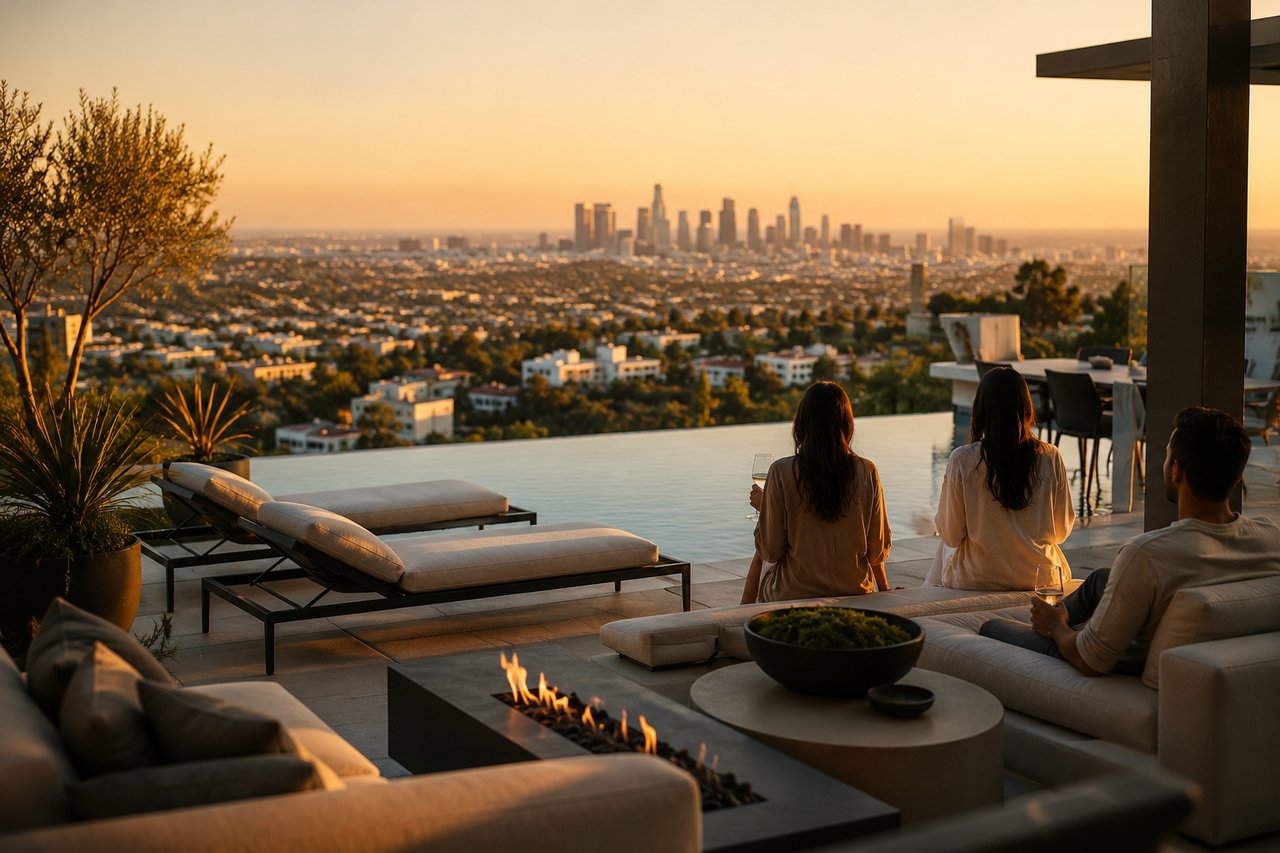
This article looks at why experiences now lead luxury consumer spending in LA, which categories are seeing the strongest growth, who is driving demand, and what it all means for the market heading into 2026.
Why LA's Luxury Goods Spending Is Shifting to Experiences
"McKinsey reports that ~80% of HNWIs have said they expect to “shift a greater proportion of their luxury spending to experiences and wellness”." — McKinsey, Consulting Firm
The Decline of Conspicuous Consumption in 2026
Conspicuous luxury consumption has steadily lost its appeal among affluent consumers. The 2008 recession marked an early turning point, when wealthy buyers began moving away from products that announced their price tags too loudly. That preference for quieter luxury only gathered strength across developed markets in the years that followed.
The numbers tell a clear story. Luxury experiences rose by 3% in 2025, while luxury products fell by 1%. Experience-based goods luxury cars, yachts — declined by 5% as entry-level sales pulled back. Between 2019 and 2023, products accounted for 40% of total growth while experiences contributed just 15%, but since 2023, experiences became the only segment contributing positively to luxury spending expansion.
Dissatisfaction with traditional luxury retail has also played a role. Seventy percent of consumers report disappointment with in-store experiences, and 90% find the experience across brands nearly indistinguishable. When everything feels the same, the appeal of something genuinely different becomes hard to resist.
Privacy and Exclusivity Drive the Experiential Shift
Space and discretion have become the most coveted features in luxury. Affluent travelers now choose private villas over crowded resorts, secluded islands over well-trodden destinations, and bespoke itineraries over anything that resembles a package. What they seek is an environment that protects their personal space — through architecture that enables privacy and service that stays close without hovering.
Research shows that 97% of respondents take trips specifically to reduce stress or disconnect from their daily lives entirely. What began as a pandemic-era response has settled into a lasting lifestyle preference. Discreet entrances, private security, and non-disclosure agreements for staff are no longer exceptional features — for this clientele, they are standard expectations. Some hotels have even begun advertising the absence of mobile signal as a selling point, and guests are booking.
Social Media Visibility Amplifies Luxury Experiences
Social media brought luxury into public view in ways that were previously unimaginable, and in doing so, it raised the stakes for what an experience needs to deliver. Influencers share fashion, travel, and dining moments that feel both aspirational and accessible, drawing followers deeper into the world of experiential luxury.
Brands have taken note. Pop-up events, exclusive previews, and behind-the-scenes access are now designed as much for sharing as for attending — experiential luxury earns its reach through the moments it creates and the stories those moments generate long after the event ends.
The Types of Luxury Experiences Dominating LA in 2026
Private members clubs and invitation-only venues
Invitation-only venues command luxury consumer spending across Los Angeles with a quiet authority that no public retail experience can match. The California Club operates exclusively through member invitations, upholding century-old traditions while remaining a gathering place for the city's most influential figures. Jonathan Club maintains two locations — Santa Monica and downtown LA — with a 2,800-square-foot garden producing over 30 fruits and vegetables for its dining concepts, world-class fitness facilities, and hundreds of curated social events each year. San Vicente Bungalows takes a different approach entirely, enforcing strict no-photo policies and letting its pink and green clubhouse, lush garden patios, and nine intimate guest rooms speak for themselves.
High-end hospitality and boutique hotels
Boutique hotels have become a preferred choice for affluent travelers who value personalized service over spectacle. These properties are built around intimacy rather than scale, and the experiences they offer reflect exactly where luxury consumption is headed.
Fine dining and exclusive culinary events
Resident has redefined private dining experiences for LA's luxury market, bringing Michelin-starred chefs from Eleven Madison Park, The French Laundry, Noma, and Per Se to intimate settings inside luxury residences and members-only clubs. Each event pairs a bespoke menu with storytelling — a combination that stays with guests long after the evening ends. For those who love to entertain, the right home makes all the difference. Christina Pope would be delighted to help identify spaces designed for elevated living and effortless hosting.  310-404-9931
  [email protected]
Wellness retreats and longevity clinics
Longevity clinics have earned a serious place in luxury consumer spending, with programs ranging from $2,000 to $50,000 per week. The Estate, set to open in Los Angeles in late 2025, offers annual memberships at $35,000, granting access to advanced diagnostics including full-body MRIs and DEXA scans. SHA Wellness Clinic, now expanded to Mexico, builds personalized health profiles from nearly 100 biological metrics, weaving together nutrition, natural therapies, and preventive medicine into a singular approach.
VIP sporting and cultural access
On Location serves as the official hospitality partner for some of the world's premier events, curating experiences that go well beyond a seat in the stands. Guests travel with dedicated concierge teams, stay in five-star accommodations, and dine at Michelin-level restaurants. The range is remarkable — from on-field access at the Super Bowl to private museum tours led by Hall of Fame athletes.
How Luxury Consumer Spending Patterns Are Changing in LA
Ultra-high-net-worth individuals lead the market
Among all segments, ultra-high-net-worth individuals hold the strongest influence over where the luxury market moves. The global UHNW population stands at 211,275 individuals with a combined net worth approaching $30 trillion. The United States accounts for 69,560 of them, and Los Angeles ranks among the country's primary wealth centers.
On average, these individuals spend $1.1 million annually on luxury goods and services. Global UHNW spending reached $290 billion in 2024, representing 21% of all individual luxury consumption. Notably, their purchasing patterns held steady even as demand softened among high-net-worth and mass affluent segments.
Millennials and Gen Z prioritize memory-making
Younger affluent consumers bring a different set of priorities to the market. Those under 40 now make up 40% of the luxury consumer base, with Gen Z purchasing their first luxury items at age 15 — three to five years earlier than Millennials did. Millennials, for their part, direct 51% of their increased luxury spending toward experiences, placing memory-making well ahead of material acquisition.
The highest spenders — those exceeding €70,000 annually — are expected to account for 65–80% of luxury growth through 2027. The pattern aligns with the broader finding that 80% of high-net-worth individuals plan to shift more of their spending toward experiences and wellness.
The luxury equation: value versus emotional benefit
A Q1 2026 behavioral study of UHNW individuals identified four core decision-making tensions: time versus money, trust versus brand, experience versus product, and impact versus signaling. The common thread running through each is a desire for purchases that genuinely improve daily life. Emotional value, rather than ownership alone, has become the measure of a worthwhile investment. Experiences deliver on that measure in ways that material goods, on their own, simply cannot.
Christina Pope Sotheby's International Realty 310-404-9931 EliteResidenceInternational.com
Economic Implications for the Luxury Goods Industry in LA
"The proliferation of high-quality counterfeits has eroded the status-signaling power that luxury goods once carried, pushing affluent younger consumers toward experiences as the primary way they construct identity and signal exclusive status." — Bain & Company, Market research firm
Growth projections for experiential luxury spending
The numbers tell a clear story. The global experiential luxury market reached $245.80 billion in 2025 and is projected to reach $598.40 billion by 2034, growing at a 10.4% CAGR. North America alone sustains a 9.2% CAGR through 2034, and 36.2% of executives already identify luxury travel as the segment with the strongest growth potential. Personal luxury goods, by comparison, are expected to grow just 1% to 4% in 2026, reaching €365 billion to €373 billion. BNP Paribas projects 6% organic sales growth for the broader luxury market in 2026, though margins are expected to hold flat.
Traditional luxury brands enter hospitality and experiences
The fashion houses have taken note. Louis Vuitton launched hotels in 2026, joining Armani, Bulgari, Versace, and Ferragamo, who have already established footholds in hospitality. LVMH laid the groundwork with its acquisition of Belmond in 2018, and partnerships between fashion houses and hotels have continued to grow since. The motivation is straightforward — brands are following their clients, seeking to capture experiential spending, broaden revenue, and reinforce their authority as lifestyle names rather than product labels.
Regional market performance and competitive positioning
The US commands 23% of global luxury sector sales, ranking alongside China as a leading contributor to medium-term growth. Within that landscape, Los Angeles holds its own as the third-largest super-prime residential hub globally, with transactions exceeding $10 million. Tech wealth and wellness-driven development are actively reshaping the city's luxury market, filling in where traditional entertainment industry demand once dominated.
Christina Pope—Sotheby's International Realty EliteResidenceInternational.com
Conclusion
Luxury in Los Angeles has always been defined by access—knowing the right people, the right places, and the right timing. What has changed is that the most sought-after experiences no longer come wrapped in packaging. They arrive as memories, moments of genuine privacy, and a sense of life lived on one's own terms. Possessions still matter, but they now play a supporting role to the experiences that truly define how affluent Angelenos choose to live.
For those who love to entertain and create those moments at home, the right home makes all the difference. Christina Pope would be delighted to help you find it.
Christina Pope—Sotheby's International Realty 310-404-9931 [email protected]
Key Takeaways
The luxury market has fundamentally shifted from material possessions to experiential spending, driven by changing values among affluent consumers who now prioritize privacy, emotional resonance, and memory-making over traditional status symbols.
• 80% of high-net-worth individuals now prioritize experiences and wellness over traditional luxury goods, with experiential luxury projected to reach $598 billion by 2034.
• Privacy has become the ultimate luxury status symbol in 2026, replacing conspicuous consumption as affluent consumers seek exclusive, invitation-only venues and discreet experiences.
• Younger luxury consumers are reshaping the market, with Gen Z purchasing their first luxury items at age 15 and Millennials dedicating 51% toward experience-based spending.
• Traditional luxury brands are pivoting to hospitality, with Louis Vuitton, Armani, and Bulgari launching hotels to capture the experiential spending boom.
• Los Angeles leads this transformation through private members clubs, longevity clinics ($2,000-$50,000/week), and exclusive culinary experiences that deliver emotional value beyond ownership.
The luxury equation has evolved: consumers now ask whether purchases improve their lives rather than simply signal status, making experiences the primary way affluent individuals construct identity and create lasting memories.
FAQs
Q1. What is the projected growth for luxury spending in 2026? The luxury market shows divergent trends in 2026. Personal luxury goods are expected to grow modestly between 1% and 4%, reaching €365-373 billion. However, experiential luxury is experiencing much stronger growth, with the global market projected to expand at 10.4% annually, driven by high-net-worth individuals shifting their spending priorities toward experiences, wellness, and exclusive access over traditional material possessions.
Q2. Why are wealthy consumers choosing experiences over material goods? Affluent consumers increasingly prioritize experiences because they deliver lasting emotional value, privacy, and meaningful memories that material possessions cannot replicate. With 80% of high-net-worth individuals now focusing on experiences and wellness, this shift reflects a fundamental change in how luxury is defined—moving away from conspicuous consumption toward personalized, exclusive experiences that enhance quality of life and create authentic connections.
Q3. How are Millennials and Gen Z changing luxury spending patterns? Younger generations are reshaping the luxury market by prioritizing memory-making over material accumulation. Consumers under 40 now represent 40% of the luxury consumer base, with Gen Z purchasing their first luxury items at age 15—three to five years earlier than Millennials. Millennials specifically dedicate 51% of their luxury budget toward experiences, emphasizing personal growth, wellness, and exclusive access rather than traditional status symbols.
Q4. What types of luxury experiences are most popular in Los Angeles? Los Angeles luxury consumers gravitate toward private members clubs with strict no-photo policies, invitation-only venues, exclusive culinary events featuring Michelin-starred chefs, longevity clinics offering advanced diagnostics ($2,000-$50,000 per week), boutique hotels with personalized service, and VIP sporting and cultural access. These experiences emphasize privacy, exclusivity, and emotional resonance over public displays of wealth.
Q5. How are traditional luxury brands responding to the experiential shift? Major luxury brands are entering the hospitality and experiential sectors to capture growing demand. Louis Vuitton is launching hotels in 2026, joining Armani, Bulgari, Versace, and Ferragamo in hospitality ventures. LVMH acquired Belmond in 2018, while numerous partnerships between fashion houses and hotels continue to proliferate. This strategic pivot allows brands to diversify revenue streams, reinforce lifestyle authority, and meet consumer demand for immersive, memorable experiences.