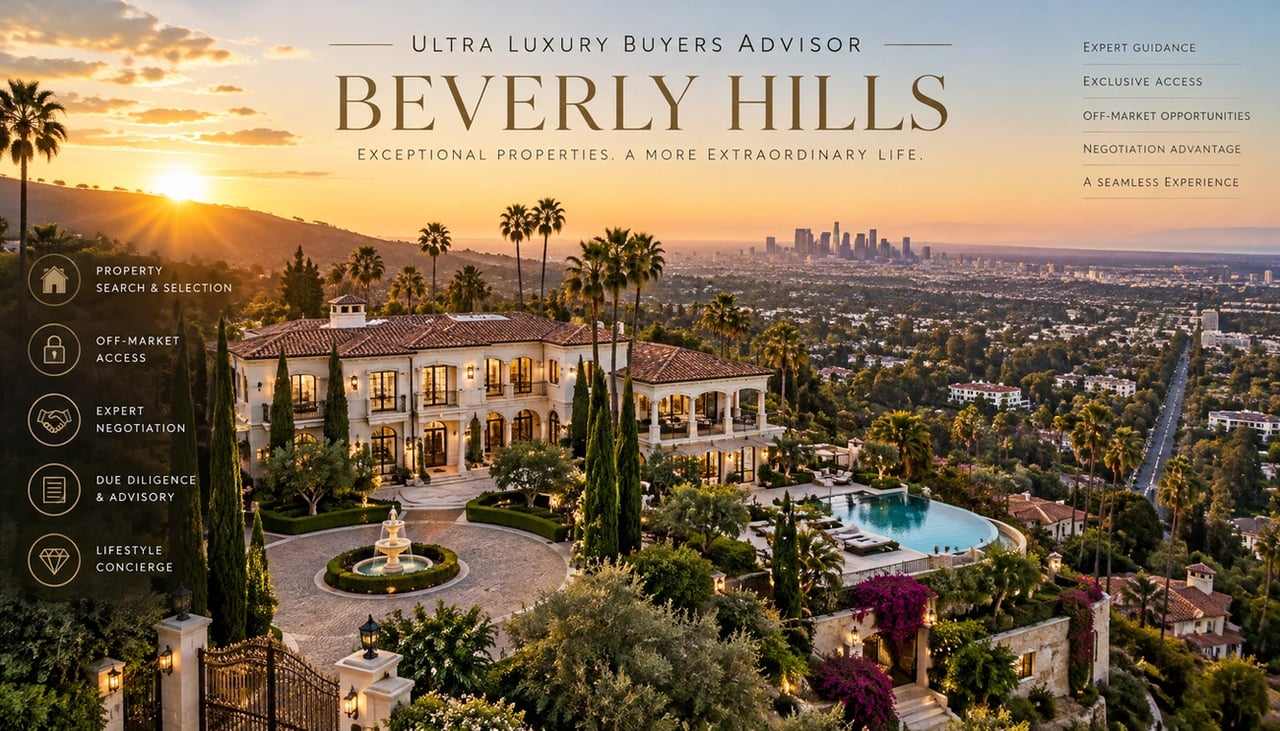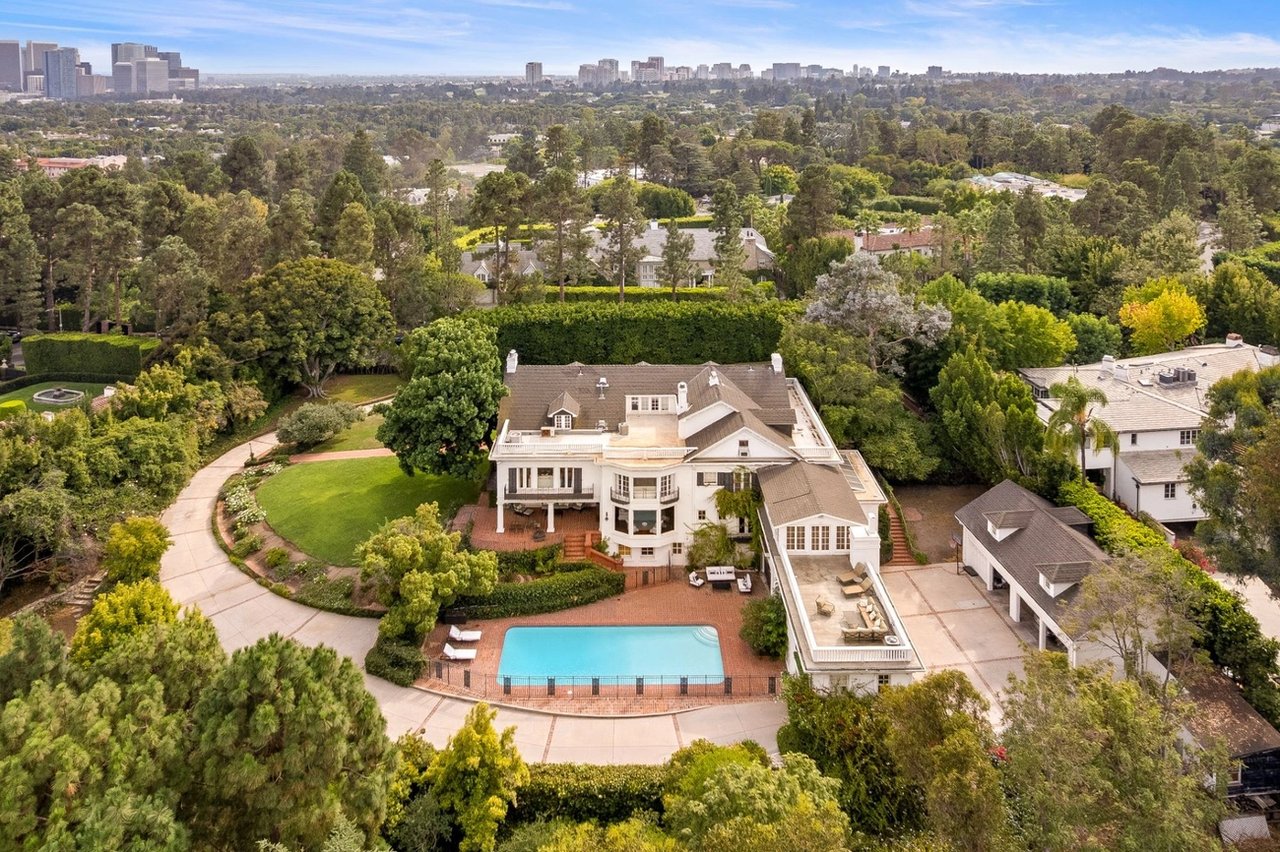
Luxury real estate in Beverly Hills operates differently than most markets. The most important transactions unfold quietly within trusted networks where discretion matters as much as price. To understand why Beverly Hills is so expensive, you need to look beyond public listings to the private dynamics that shape value: finite land supply, global demand, and all-cash transactions that insulate pricing from typical market volatility.
The city's top ten property sales reached $540,000,000 last year. Many of the most sought-after properties in rich neighborhoods in Beverly Hills never appear on public platforms though. Foreign buyers, especially Chinese investors, represent about 18% of luxury deals. This international appeal keeps the market resilient. Beverly Hills ultra-luxury properties start at $20 million. Pricing reflects the lack of available land, architectural pedigree, and prime positioning within an independent municipality that controls its own development density.
Why Beverly Hills Real Estate Commands Premium Pricing
Finite Land Supply in an Independent City
Beverly Hills covers nearly six square miles, and developable residential land has been built upon for generations. New inventory enters through teardowns, estate sales, or off-market transactions, not large-scale development. Land costs for multi-family properties range from $500 to $1,000 per square foot. Commercial properties average $1,000 to $1,500 per square foot. Supply cannot expand when demand rises, so values are driven upward across multiple market cycles.
The city operates independently from Los Angeles and maintains its own municipal services, planning department and governance structure. This autonomy provides control over development density and land use that few cities can match. The built environment has remained consistent in character for decades and creates structural advantages for property values.
Global Buyer Pool and All-Cash Transaction Dynamics
Buyers from the Middle East, Asia and Europe view Beverly Hills as important for asset allocation, currency diversification and wealth preservation. Most sales close without financing at the highest price points. All-cash transactions remove pricing sensitivity to interest rate fluctuations that affects other residential markets and signal true demand rather than leverage-dependent purchasing.
Architectural Pedigree and Historical Significance
Beverly Hills was created in 1906 when Wilbur F. Cook Jr. developed plans for a balanced community with smaller lots at the southern edge and large estates in the northern foothills. Historic resources include architecturally important buildings, street lights, fountains and streets lined with mature palm trees that define the city's heritage. Estates built by notable designers or with important provenance command meaningful premiums above comparable properties.
Municipal Control Over Development Density
Beverly Hills maintains three single-family land use districts ranging from one to six units per acre and five multi-family districts accommodating densities from 22 to 50 units per acre. Maximum allowable height for single-family homes varies from 14 to 32 feet depending on location, slope and roof style. Independent city governance gives Beverly Hills control over zoning in ways that protect character and density.
What International Buyers Actually Value in Beverly Hills Properties
Privacy and Seclusion From Street Level
International buyers prioritize properties that create separation from public view. Beverly Park implements 24-hour guarded gatehouses with visitor screening and individual property gates that establish multiple privacy layers. Trousdale Estates offers homes gated and concealed behind mature landscaping. Properties in Benedict Canyon and Coldwater Canyon provide seclusion through natural terrain and extended driveways. Bel Air delivers superior isolation compared to Beverly Hills, especially in the Flats where properties sit closer together and street activity remains steady.
Location Precision Within Beverly Hills Submarkets
Buyers review neighborhoods based on specific characteristics rather than city boundaries alone. Trousdale Estates attracts those who seek panoramic views, mid-century architecture and raised privacy. The Flats delivers flat, usable lots on tree-lined streets within walking distance of Rodeo Drive and combines privacy with proximity. Beverly Hills Post Office sits above Sunset Boulevard with larger lots and improved seclusion. Beverly Park and Mulholland Estates represent ultra-exclusive gated enclaves with multi-acre properties. Holmby Hills features grand estates with acreage, a rarity in Los Angeles.
Indoor-Outdoor Living and Climate Advantage
Southern California receives over 280 sunny days annually, which makes outdoor spaces functional year-round. Pocket sliding doors and multi-panel glass walls eliminate barriers between interior and exterior zones. Outdoor kitchens with restaurant-grade appliances, covered loggias with radiant heat and architectural fire features create fully realized outdoor rooms. Properties carry the same flooring from living areas onto patios and establish visual continuity.
Access to Elite Schools and Cultural Infrastructure
The Flats sits within Beverly Hills Unified School District, among the highest-performing public districts in Los Angeles County. Hawthorne Elementary, El Rodeo Elementary, Beverly Vista Middle School and Beverly Hills High School serve families in this area. To those who love entertaining, the right home makes all the difference. If you're thinking about a purchase in the near future or beginning your search, I'd be delighted to help you find spaces designed for elevated living and effortless hosting. Christina Pope  310-404-9931
  [email protected]
How Beverly Hills Compares to Other Global Luxury Markets
Price Per Square Foot Against London and New York
Beverly Hills pricing sits below the world's most expensive markets while delivering superior space and lifestyle advantages. New York commands the highest prices at $2,590 per square foot, with London following at $1,920 per square foot. Los Angeles luxury properties range from $1,200 to $1,900 per square foot, positioning Beverly Hills as available relative to Manhattan or Knightsbridge. Buyers receive larger floor plans and private outdoor space with year-round usability that dense urban centers cannot match.
The average Beverly Hills home reached $3,580,741, up 3% in the last year. Mid-luxury properties appreciate 7% to 9% annually over five-year periods and outpace most national markets. Monaco exceeds $50,000 per square meter and Hong Kong averages over $1.25 million for standard properties. Beverly Hills delivers comparable prestige without the extreme density or limited land access that defines those markets.
Wealth Concentration and Economic Stability
Ultra-luxury real estate showed measurable resilience during economic downturns. The 2008 financial crisis saw ultra-luxury real estate decline only 15% before recovering faster, while the S&P 500 plummeted 37% and blue-chip art declined 25%. The 2020 pandemic produced 5% appreciation in luxury properties while Bitcoin crashed 50% and stocks fell 20%. Real estate values have followed inflation with a 0.94 correlation over four decades.
Portfolio Diversification for Ultra-High-Net-Worth Investors
Prime properties in luxury hubs offer diversification from traditional equities and bonds. Real estate holdings in multiple regions reduce reliance on the economic health of a single market. International holdings introduce currency diversification, though exchange rate movements can present challenges. Properties with unique character or historical significance hold sentimental value while contributing to long-term asset bases. Beverly Hills functions as a strategic allocation within global portfolios and balances American economic stability with tangible asset characteristics that perform independently of equity market volatility.
The Private Transaction Model and Off-Market Activity
Why 25% of Luxury Deals Never Reach Public Listings
High-end acquisitions in Beverly Hills follow patterns invisible to the broader market. Cash payments closed 25.4% of transactions in the $1 million to $5 million range between January and May, the highest share in over a decade. Buyers paid cash for 56.7% of purchases at price points above $10 million. These transactions bypass public platforms and circulate through private broker networks where timing and access matter more than widespread exposure.
How Advisor Networks Control Access to Premium Inventory
Luxury real estate agents maintain connections with wealth managers, international affiliates and relocation specialists who expand reach or help with global opportunities. Many valuable listings never reach public MLS systems. Relationships with designers, contractors, attorneys and specialized agents provide access instead. One Beverly Hills brokerage holds nearly $1.3 billion in signed pocket listings within its private portal. Networking drives this market. Relationships built over time through mutual respect access inventory unavailable through traditional channels.
The Role of Discretion in Ultra-Luxury Acquisitions
Privacy protection shapes transaction structure. Elite agents employ pocket listings, private appointment-only showings, vetted buyer pre-qualification and non-disclosure agreements. They limit public-facing property information. Strategic handling of imagery protects sensitive details about security systems and floor plans. The right home makes all the difference for those who love to entertain. Christina Pope can help you find spaces designed for refined living and effortless hosting if you're thinking about a purchase in the near future or beginning your search. 310-404-9931 [email protected]
Building Relationships That Open Off-Market Opportunities
Access depends on long-standing relationships within trusted networks. Buyers must demonstrate serious intent and financial readiness to receive a look. Working with experienced agents provides curated listings unavailable to the general public. Charity galas, gallery openings and private industry events help you meet the people shaping this market. Clients expect confidence and privacy throughout every interaction, so discretion remains paramount.
Conclusion
Beverly Hills remains expensive for structural reasons that extend beyond market trends: finite land supply and municipal independence attract global need through private networks rather than public listings. The properties delivering the most important value rarely appear on traditional platforms. Buyers who understand this market build relationships with advisors who control access to inventory before it reaches broader circulation. The city functions as a long-term asset allocation play. It combines American economic stability with tangible lack that outperforms during periods of volatility.
Key Takeaways
Beverly Hills' premium pricing stems from unique structural advantages that create sustained value for international investors seeking luxury real estate opportunities.
• Beverly Hills' finite 6-square-mile land supply and independent municipal control create scarcity that drives consistent price appreciation over market cycles.
• International buyers pay all-cash for 56.7% of $10M+ properties, insulating the market from interest rate fluctuations and financing constraints.
• 25% of luxury deals never reach public listings, operating through private broker networks that require established relationships for access.
• Properties offer superior space and outdoor living compared to New York ($2,590/sq ft) and London ($1,920/sq ft) while maintaining global prestige.
• Ultra-luxury real estate declined only 15% during 2008 crisis versus 37% for S&P 500, demonstrating resilience as portfolio diversification.
The combination of structural scarcity, global demand, and private transaction dynamics positions Beverly Hills as a strategic long-term asset allocation that performs independently of traditional equity markets while delivering tangible lifestyle advantages unavailable in denser luxury markets worldwide.
FAQs
Q1. Why do Beverly Hills properties cost so much more than similar homes in other cities? Beverly Hills operates as an independent city with only six square miles of land, most of which has already been developed. New inventory comes only from teardowns or estate sales, not new construction. This finite supply, combined with global demand from international buyers and all-cash transactions that aren't affected by interest rates, keeps prices consistently high across market cycles.
Q2. What percentage of luxury home sales in Beverly Hills happen off-market? Approximately 25% of luxury real estate transactions in Beverly Hills never reach public listings. These deals circulate through private broker networks and advisor relationships. At price points above $10 million, over 56% of buyers pay entirely in cash, and many of these high-value properties are sold discreetly through established connections rather than traditional marketing channels.
Q3. How does Beverly Hills real estate pricing compare to other global luxury markets? Beverly Hills offers better value than the world's most expensive markets. New York commands $2,590 per square foot and London averages $1,920 per square foot, while Los Angeles luxury properties range from $1,200 to $1,900 per square foot. Buyers in Beverly Hills receive larger floor plans, private outdoor space, and year-round usability that dense urban centers cannot provide.
Q4. What do international buyers value most when purchasing Beverly Hills properties? International buyers prioritize privacy through gated communities and natural terrain, precise location within specific submarkets like Trousdale Estates or Beverly Park, indoor-outdoor living spaces that take advantage of Southern California's 280+ sunny days annually, and access to top-rated schools within Beverly Hills Unified School District.
Q5. Who can actually afford multi-million dollar homes in Beverly Hills? Beyond athletes and actors, Beverly Hills attracts entertainment industry executives, producers, agents, specialized medical professionals like plastic surgeons and dermatologists, business owners, technology CEOs, real estate investors, and individuals with inherited or generational wealth. Many residents also include international investors from Asia, the Middle East, and Europe who use these properties for wealth preservation and portfolio diversification.