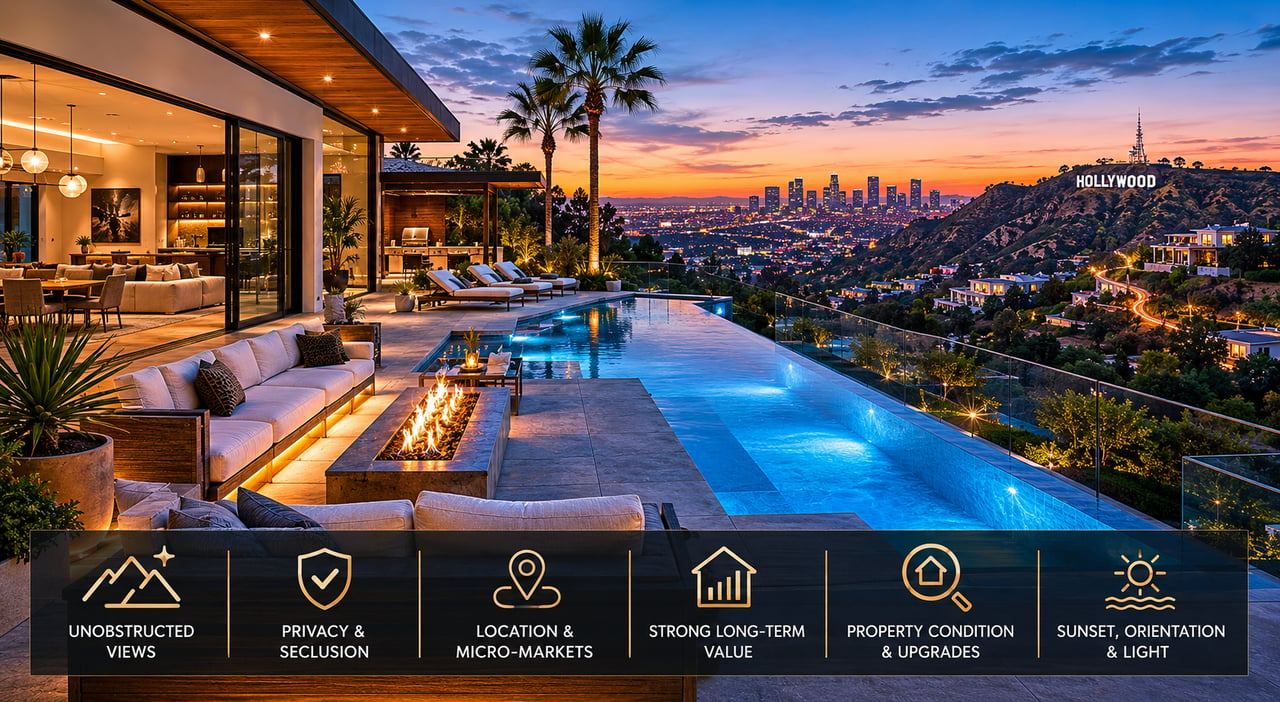
Understanding the Hollywood Hills View Premium in 2026
What defines a true Hollywood Hills house view
View quality in high-end hillside real estate operates on site-specific mechanics rather than broad categorization. Properties within the Hollywood Community Plan area extend up to Mulholland Drive, where topography and orientation change from one parcel to the next. Two homes on the same street can deliver different visual experiences because of slope angle, setback distance, and lot positioning relative to surrounding structures.
A protected panorama carries different market weight than a partial or filtered outlook. The difference matters because view corridors are shaped by elevation, lot orientation, and scenic overlay regulations. Properties with broader, unobstructed sight lines tend to hold value more over time, while narrower views face greater vulnerability to future obstruction from neighboring development. Buyers evaluating Hollywood hills view properties should assess how much of the outlook depends on the home's physical position versus how much could change if adjacent lots are improved.
City lights vs canyon vs ocean vista hierarchy
Not all views carry equal pricing power. Homes overlooking the Los Angeles basin command higher valuations than those facing the San Fernando Valley, with basin-facing properties in areas like Bel-Air averaging around $6.5 million compared to $3.5 million for Valley-facing homes in adjacent zones. This pricing gap reflects both the visual hierarchy and the broader neighborhood positioning that accompanies basin views.
Downtown skyline views deliver a cosmopolitan appeal that strikes a chord with buyers who seek urban connection. Ocean views remain rare in Hollywood Hills but prized when available. Canyon and mountain vistas offer privacy and natural separation from the city grid. Sunset-facing exposures create daily moments that boost both lifestyle value and entertaining potential. Each view type attracts a different buyer profile, and pricing responds.
How view corridors shape pricing differences
Even within the same micro-market, view corridors produce major price variation. Homes with premium views in high-end markets can sell for up to 50% more than similar properties without them. The effect can escalate further in Hollywood Hills when views are paired with architectural features that maximize visibility through glass walls or elevated decks.
The durability of a view matters as much as its current quality. Lot-level details such as driveway access, slope orientation, and how the home faces the hillside all influence both daily experience and future resale strength. A narrower view on a more functional lot with simpler access can outperform a broader view on a difficult site when long-term ownership costs and usability are factored in.
Off-market properties and the discretion advantage
Private transactions account for roughly one in five luxury home sales nationally. Discretion often drives sellers toward office-exclusive listings, no-cooperation agreements, or delayed MLS marketing strategies that limit public exposure in Hollywood Hills. The motivation centers on privacy, controlled timing, and selective buyer access rather than broad market testing.
The tradeoff is measurable. Zillow research found that off-MLS sellers in California received median prices $30,075 lower, or 3.7% less, than MLS-listed sellers, though the gap narrowed to 0.4% in the luxury tier. That cost can be acceptable to sellers who prioritize discretion over maximum competition. Buyers need off-market access and relationships with specialists who operate within these private networks, where inventory moves before reaching public platforms.
Location Tiers and Neighborhood Selection
Neighborhood selection in Hollywood Hills operates on relationships rather than public listings. Properties that matter most change hands through private networks. Access depends on connections with specialists who understand both discretion and market positioning. Buyers who think ahead recognize that location tiers determine not just current lifestyle but future flexibility at the time circumstances change.
Bird Streets and ultra-premium positioning
The Bird Streets sit above the Sunset Strip on named roads that include Blue Jay Way, Oriole Drive and Nightingale Drive. Properties here deliver what professionals call jetliner views that stretch from downtown Los Angeles to the Pacific Ocean. The neighborhood keeps distance from city activity while remaining minutes from Beverly Hills, West Hollywood and entertainment destinations.
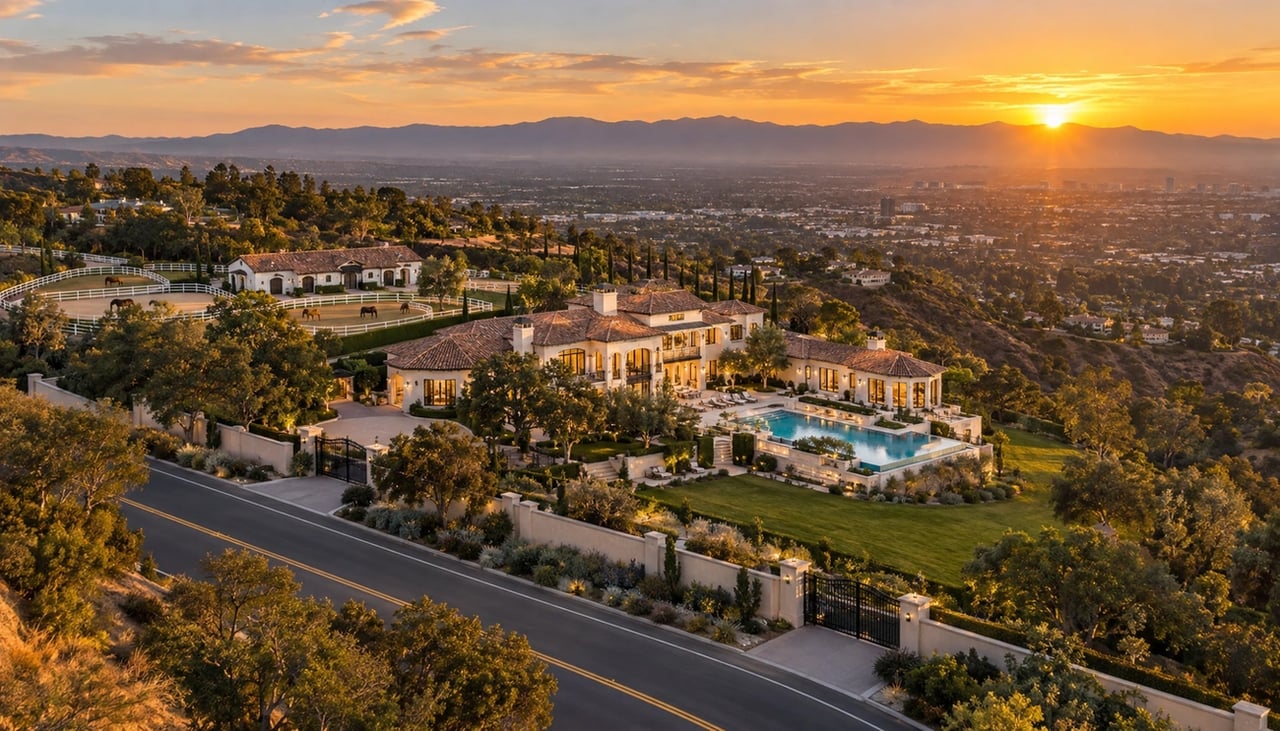
Architectural identity drives much of the value. Glass walls, cantilevered structures, infinity pools and open floor plans designed around panoramic views have become standard features. The steep hillside geography limits buildable lots and keeps supply naturally constrained. Exceptional properties attract both domestic and international buyers seeking privacy paired with accessibility when they reach the market.
Pricing reflects the positioning. Entry opportunities without full views range from $3 million to $6 million. Renovated homes with reliable city or canyon views get $6 million to $20 million. Trophy estates on prime promontories with combined skyline and ocean views go beyond $20 million. Privacy features that include gated entries, landscape buffers and thoughtful setback relationships influence both livability and valuation.
Laurel Canyon and Beachwood Canyon characteristics
Laurel Canyon delivers a different profile. The neighborhood maintains a bohemian character with properties on larger, private lots. Recent market activity showed median sale prices reaching $3.18 million and marked a 79.3% increase year over year. The area attracts buyers who prioritize space and natural setting over ultra-modern design. Contemporary remodels appear alongside mid-century and Spanish architecture.
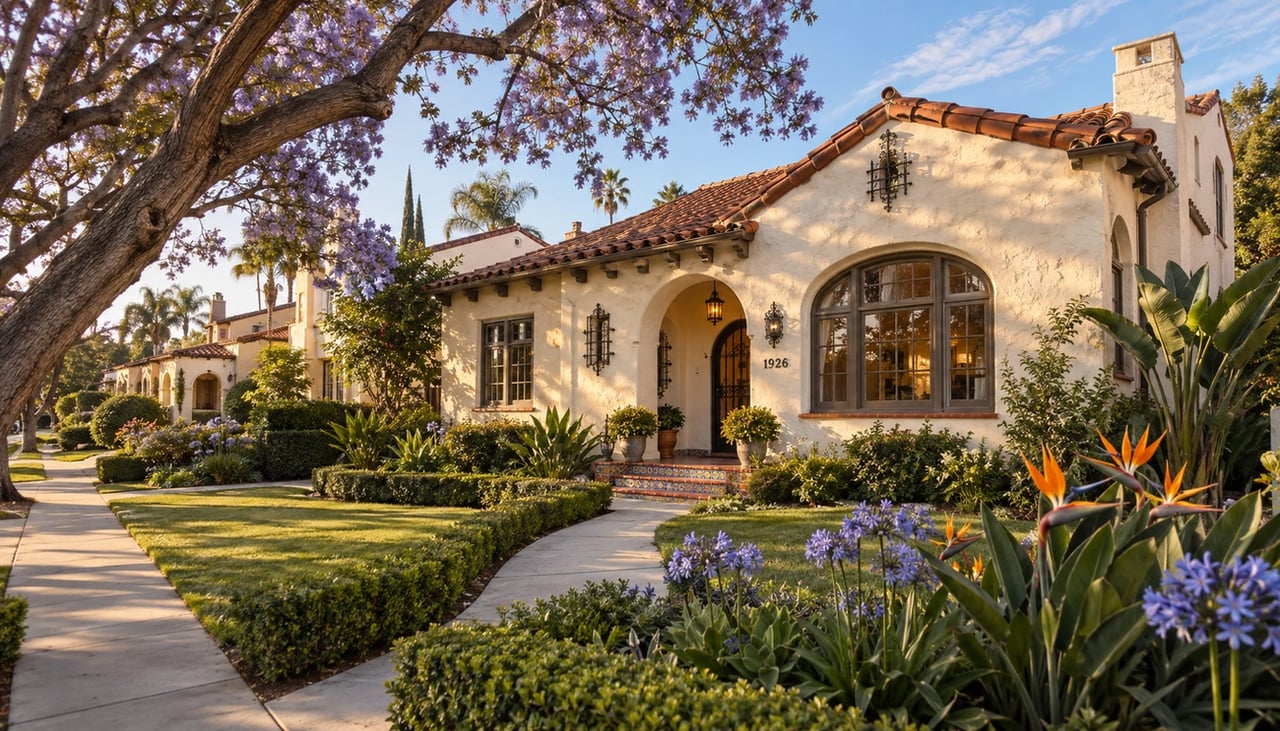
Beachwood Canyon sits near the Hollywood Sign and houses more than 22,000 residents. The neighborhood developed in the 1920s with Storybook house architectural styles inspired by southern France, Italy, Spain and German castles. Tree-lined streets, local cafes and character that's been there for decades draw creative professionals and families seeking hillside living without the Bird Streets' contemporary aesthetic.
Hollywood Hills vista points that command attention
The relationship between home, slope and surrounding landscape defines daily experience more than elevation alone. Properties within the Hollywood Community Plan area benefit from the Mulholland Scenic Parkway Specific Plan. This plan preserves mountain, ocean and city views through low-intensity development and minimized grading.
How proximity to studios affects value
Location near major entertainment activity centers adds measurable value. Hollywood Hills maintains close connections to the Sunset Strip, Hollywood entertainment districts and Warner Bros. Studios Burbank. This positioning provides both retreat and accessibility for buyers in entertainment or creative industries. The proximity creates steady rental demand for investors evaluating long-term positioning.
The Physical Realities of Hillside Ownership
Hillside ownership just needs different operational knowledge than flat-lot residential real estate. Streets, slopes and soil conditions create constraints that determine construction costs, access logistics and maintenance requirements years before most buyers think them over.
Access, parking, and daily navigation
Street width determines what vehicles reach a hillside site. Many streets measure 16-20 feet wide and barely accommodate two lanes. Sometimes they function as one lane. This restricts truck size for deliveries and concrete pours. Overhead utility lines and low-hanging branches add vertical clearance constraints to horizontal ones.
Driveway slope percentages control what equipment can access the building pad and how materials get delivered. Steep or curved driveways may need elevated slabs, bridges or turnaround pads. Parking configurations on hillside lots often include garages tucked under the house, tandem setups, steep driveways with switchbacks or engineered parking pads. Some properties feature street-level parking with the residence above. This adds internal stairs or elevators to daily circulation.
Slope analysis and retaining wall thoughts
Slope percentage shapes foundation requirements and total project cost. Conventional equipment reaches the building pad at 15-20% slope. Standard foundation systems may work based on soil conditions. Equipment access becomes the primary constraint at 30-40% slope. This requires access roads cut into the hillside with excavators. Foundation systems will definitely need caissons or piles drilled to bedrock. Site development alone can exceed the cost of the house itself before any structure goes up beyond 45% slope.
Slope stability analysis requires a factor of safety of 1.5 for static conditions on permanent slopes and 1.25 for pseudo-static seismic conditions. The difference between these factors can mean the difference between a 2:1 slope and a 3:1 slope. On a 30-foot-tall cut, this translates to 15 additional feet of horizontal distance.
Retaining walls resist lateral earth pressure from soil pushing outward against vertical surfaces. Engineered drainage systems relieve hydrostatic pressure through perforated drain pipes, gravel backfill and waterproof membranes. Water accumulation behind a wall raises pressure and can lead to structural failure.
Fire zone requirements and vegetation management
Defensible space is required by law at 100 feet of clearance around structures. Zone 0 extends 0-5 feet from buildings and focuses on intense fuel reduction to protect against ember attacks. Zone 1 extends 30 feet from buildings. It requires removing all dead plants and weeds, trimming trees to maintain a 10-foot gap from others and clearing flammable vegetation from under decks. Zone 2 extends from 30 feet to 100 feet. It requires trimming annual grass to a maximum height of 4 inches and spacing out shrubs and trees horizontally.
Geological inspections and drainage systems
Geotechnical evaluations start by reviewing geologic maps to determine if the site sits within strong bedrock, man-placed fill or areas with expansive soil. Site visits assess past or current instability indicators, drainage problems and foundation conditions. Floor elevation measurements identify potential foundation movement problems.
Water drives slope failures, undermines retaining walls, erodes foundations and accounts for more construction failures than any structural inadequacy. Groundwater characterization through piezometers or observation wells measures water table elevation and seasonal variation. Hillside sites have seasonal perched water tables, springs and seeps that only become apparent when cutting into the slope.
Architecture and Layout That Maximize View Value
Floor plan design on hillside lots determines how effectively a home captures views while managing the structural demands of sloped terrain. Homes designed specifically for slopes save time and money compared to adapting flat-lot plans to hillside conditions. Multi-level configurations that follow natural contours create visually distinctive structures and provide functional advantages like walkout basements and additional indoor-outdoor living zones.
How floor plans should respond to the slope
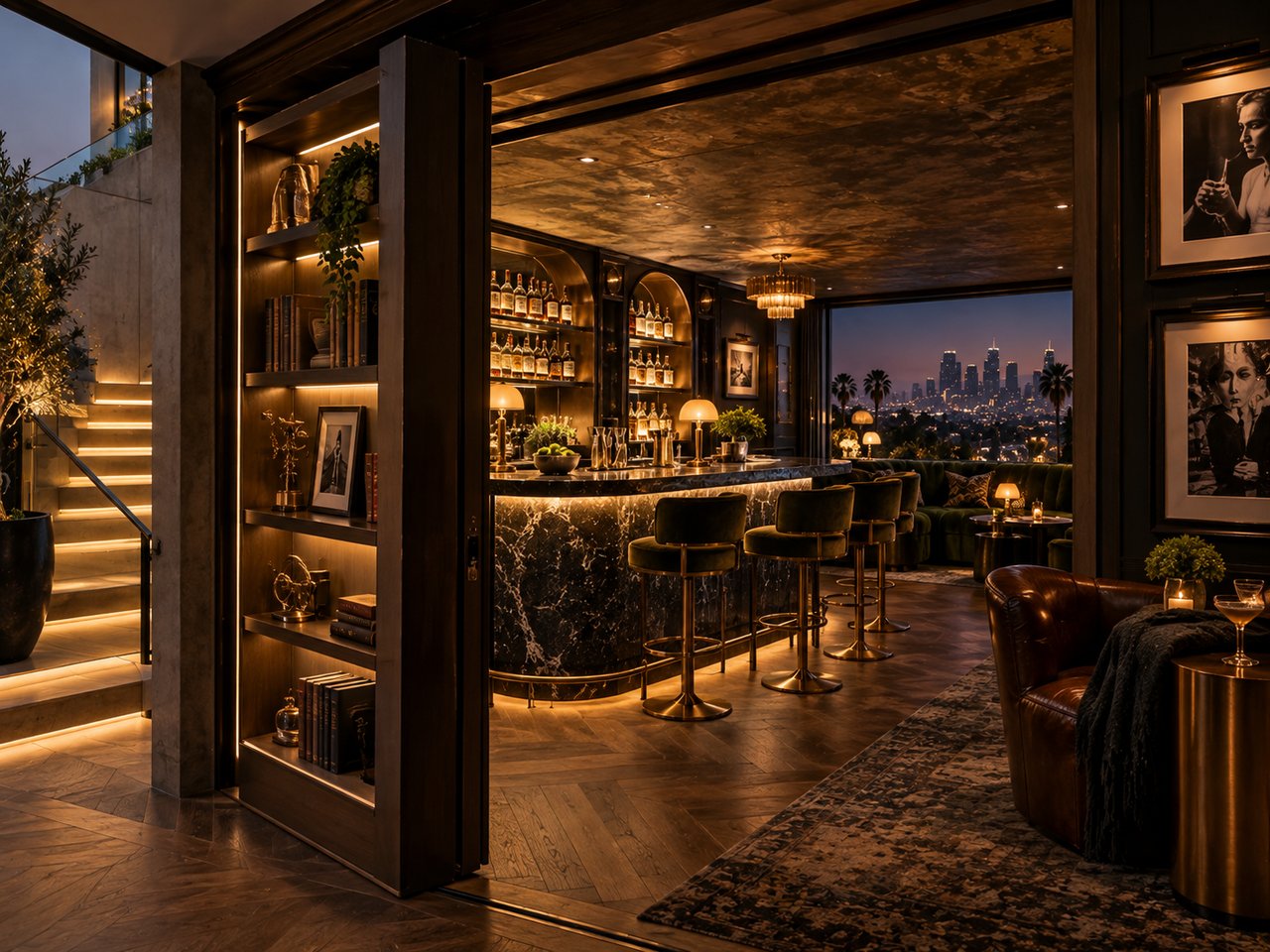
Hillside house plans feature multi-level designs connected by stairs or ramps. Lower levels often contain guest quarters, recreation rooms, wet bars, or drive-under garages. This approach works with the slope rather than fighting it. It reduces excavation costs and creates natural separation between public and private spaces. Walkout basements provide an extra living area with natural light and direct outdoor access, especially valuable for entertaining. One spouse can grill on the lower patio while another mixes drinks in the rec room within earshot. This establishes fluid indoor-outdoor flow.
Indoor-outdoor flow and glass wall positioning
Large glass systems blur boundaries between interior spaces and views. Folding door panels stack perpendicular to openings, but they create more vertical stiles due to panel width limitations. This increases view obstruction when closed compared to sliding systems. Sliding doors accommodate larger panels with fewer vertical posts and deliver less obstructed views. Floor-to-ceiling glazing allows natural light to penetrate deeper into the home while framing outdoor landscapes. Continuous flooring materials extending from interior to exterior strengthen visual flow and make spaces read as unified environments.
Privacy on arrival side vs openness on view side
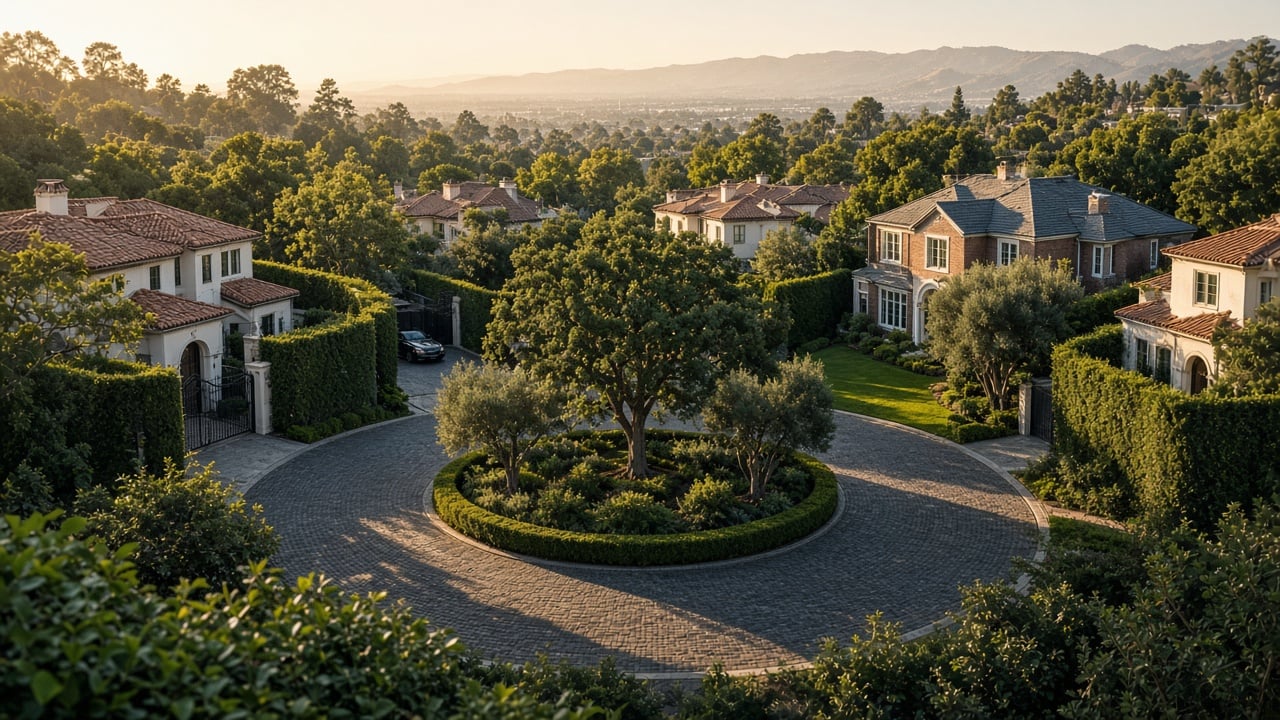
Hillside properties face unique privacy challenges because neighboring homes sit at different elevations. Lower-level spaces can open toward downslope views where elevated neighbors lack sightlines. Upper-level spaces orient toward upslope views where the building's own mass blocks lower neighbors. Solid walls positioned along one property line create genuine privacy on that side and allow the opposite side to open completely through floor-to-ceiling glass toward private courtyards. Interior courtyards pulled inside property boundaries create zones that can be transparent without external visibility.
Split-level vs single-story configurations
Split-level homes establish separation between living and sleeping spaces without walls. This makes them practical for hillside construction where the floor plan fits individual lot topography. They maximize floor space while creating both communal and private rooms. Bedrooms sit on upper floors and main living areas on the entry level. The right home makes all the difference for those who love to entertain. If you're thinking over a purchase in the near future or beginning your search, I'd be delighted to help you find spaces designed for elevated living and effortless hosting. Christina Pope  310-404-9931
  [email protected]
Strategic Buying Considerations for 2026
Luxury real estate in Los Angeles operates through private conversations and timing rather than public visibility. The most important Hollywood Hills view properties transact within trusted networks where discretion carries as much weight as value. Precision matters more than exposure for those who understand this environment.
Market timing and inventory patterns
Hollywood Hills median sale prices reached $2.10 million in Q1 2026 with properties averaging 38 days on market. Active listings numbered around 185 homes with 3.2 months of supply, which established conditions favorable to sellers. The sale-to-list price ratio of 97.4% indicates that well-positioned homes receive close to full asking price. Inventory remains constrained as owners who purchased during 2021-2022 retain interest rates that are low by historical standards and resist trading up.
Pre-listing inspections and due diligence priorities
Access and condition issues terminate deals in ways unique to hillside markets. Buyers withdraw after inspections reveal drainage problems, foundation concerns or retaining wall failures. Pre-listing evaluations reduce transaction failures during escrow by addressing known issues before marketing.
Working with specialists who understand discretion
Hollywood Hills has distinct submarkets with separate buyer profiles and pricing dynamics. Specialists with proven neighborhood expertise provide access to off-market opportunities that never reach public platforms.
Long-term appreciation vs immediate lifestyle value
Properties demonstrate steady appreciation over 10-year periods, with five years representing minimum recommended holding periods. Hollywood Hills real estate beats inflation and outpaces broader market gains due to limited buildable land and restrictive zoning.
Exit strategies and future flexibility
Exit planning shapes the purchase decision from the start. Refinancing unlocks equity without selling and allows capital extraction while you retain control. A 1031 exchange defers capital gains taxes when reinvesting proceeds into like-kind properties. Terminal cap rates and projected net operating income influence exit profitability.
Conclusion
View quality, location hierarchy, and architectural positioning determine long-term value in Hollywood Hills more than listing exposure. Properties with protected sight lines and proper slope engineering hold pricing power when market conditions move. Hillside ownership demands different operational knowledge than conventional residential real estate, especially when you have drainage systems, retaining walls, and fire zone compliance to consider.
The best transactions unfold through private networks where timing and discretion carry weight. Buyers who understand these dynamics position themselves for immediate lifestyle value and future flexibility. Access to off-market opportunities requires relationships with specialists who operate within these trusted circles.
Christina Pope
Sotheby's International Realty
EliteResidenceInternational.com 310-404-9931 [email protected]
Key Takeaways
Smart Hollywood Hills buyers focus on protected views, functional access, and long-term positioning rather than just scenic appeal.
• View hierarchy drives pricing: City basin views command 50% premiums over valley views, with protected panoramas outperforming filtered outlooks • Location tiers matter most: Bird Streets ($6M-$20M+) offer jetliner views while Laurel Canyon ($3M range) provides bohemian character on larger lots • Hillside realities are costly: Slopes over 30% require specialized access, retaining walls, and drainage systems that can exceed home construction costs • Architecture must follow slope: Multi-level designs with glass walls positioned toward views maximize value while managing structural demands • Off-market access is essential: 20% of luxury sales happen privately through specialist networks, requiring established relationships for best opportunities
The most successful buyers understand that Hollywood Hills ownership combines lifestyle investment with operational complexity. Properties with durable views, proper engineering, and strategic positioning deliver both immediate enjoyment and future appreciation in this constrained luxury market.
FAQs
Q1. What price range should buyers expect for Hollywood Hills view properties in 2026? Entry-level luxury homes with views start around $2 million, while prime locations command $6 million to $20 million. Trophy estates in ultra-premium areas like the Bird Streets with panoramic skyline and ocean views exceed $20 million. Properties without full views in desirable neighborhoods range from $3 million to $6 million.
Q2. How much more valuable are homes with views compared to those without? Homes with exceptional views can sell for up to 50% more than comparable properties without them. The premium varies based on view type, with basin-facing properties averaging around $6.5 million compared to $3.5 million for valley-facing homes in similar zones. Protected, unobstructed panoramas command higher valuations than partial or filtered views.
Q3. What are the main physical challenges of owning a hillside property? Hillside ownership involves narrow street access (16-20 feet wide), steep driveways that limit vehicle and equipment access, and significant slope engineering requirements. Properties on slopes over 30% require specialized foundations, retaining walls, and drainage systems. Owners must also maintain 100 feet of defensible space for fire safety and manage ongoing vegetation clearance.
Q4. Which Hollywood Hills neighborhoods offer the best value for different buyer profiles? The Bird Streets provide ultra-premium positioning with jetliner views ranging from $6 million to over $20 million, ideal for buyers seeking modern architecture and maximum privacy. Laurel Canyon offers larger lots with a bohemian character at median prices around $3.18 million, attracting those who prioritize space and natural settings over contemporary design.
Q5. Why do many luxury Hollywood Hills properties sell off-market? Approximately 20% of luxury home sales occur through private networks prioritizing discretion, controlled timing, and selective buyer access over broad market exposure. While off-market sellers may receive slightly lower prices (0.4% less in the luxury tier), many prioritize privacy and strategic timing. Buyers need established relationships with specialists to access these exclusive opportunities before they reach public platforms.