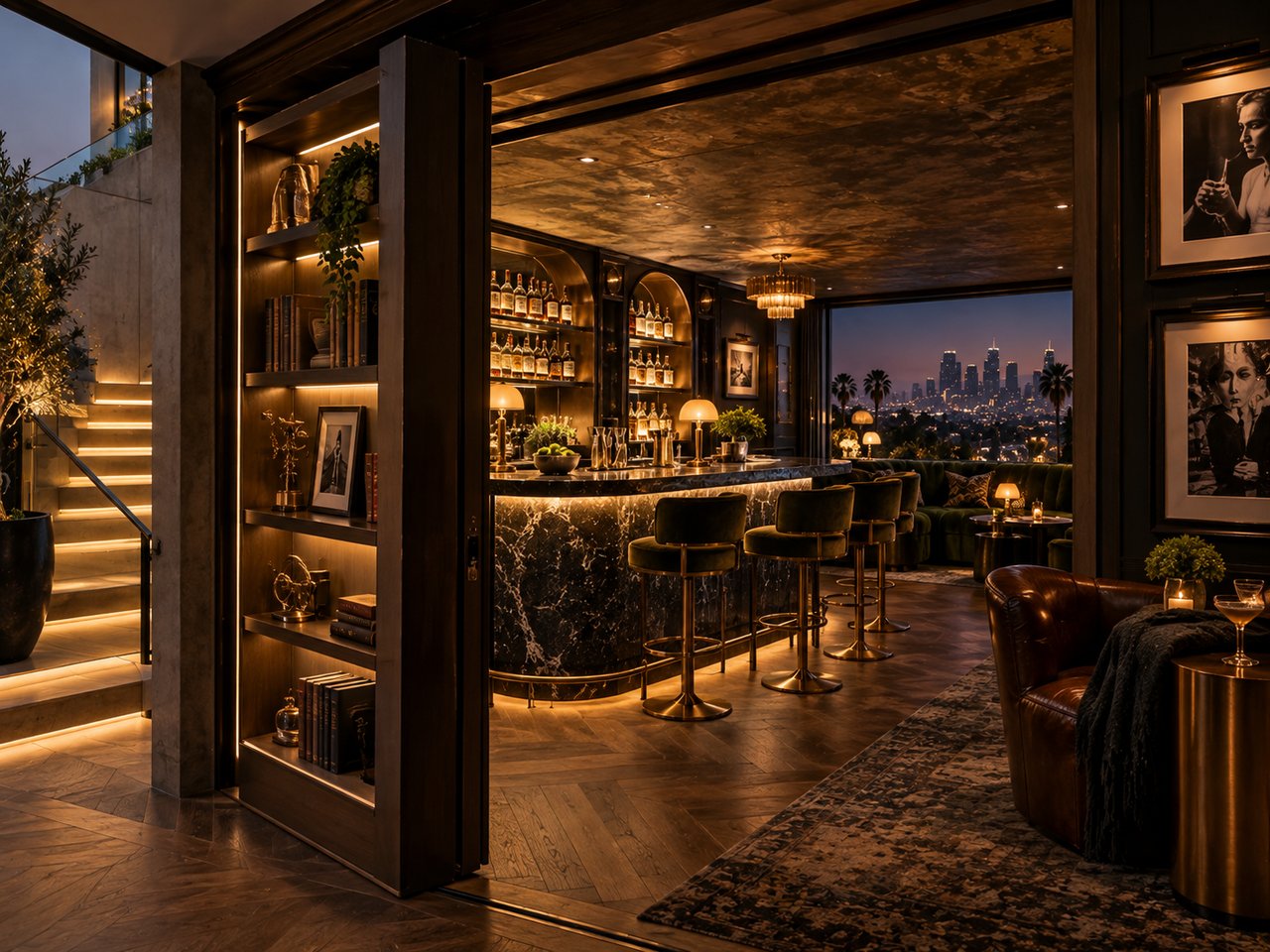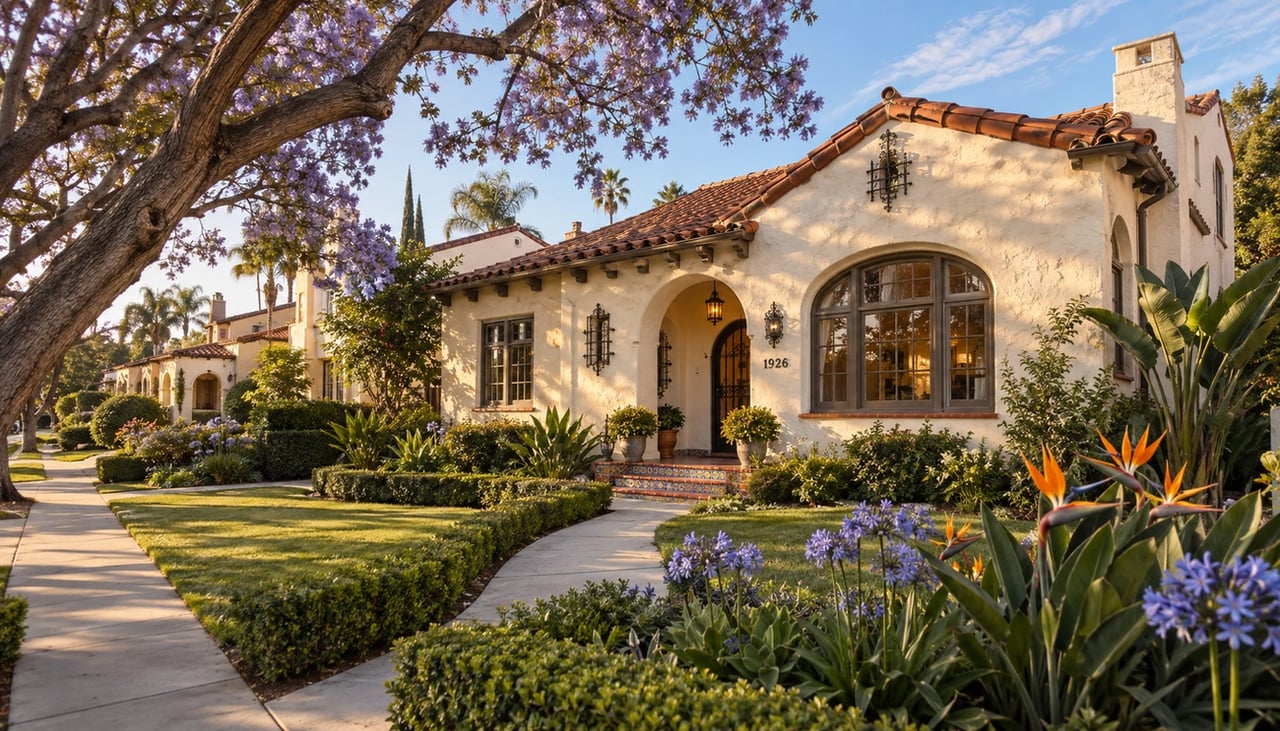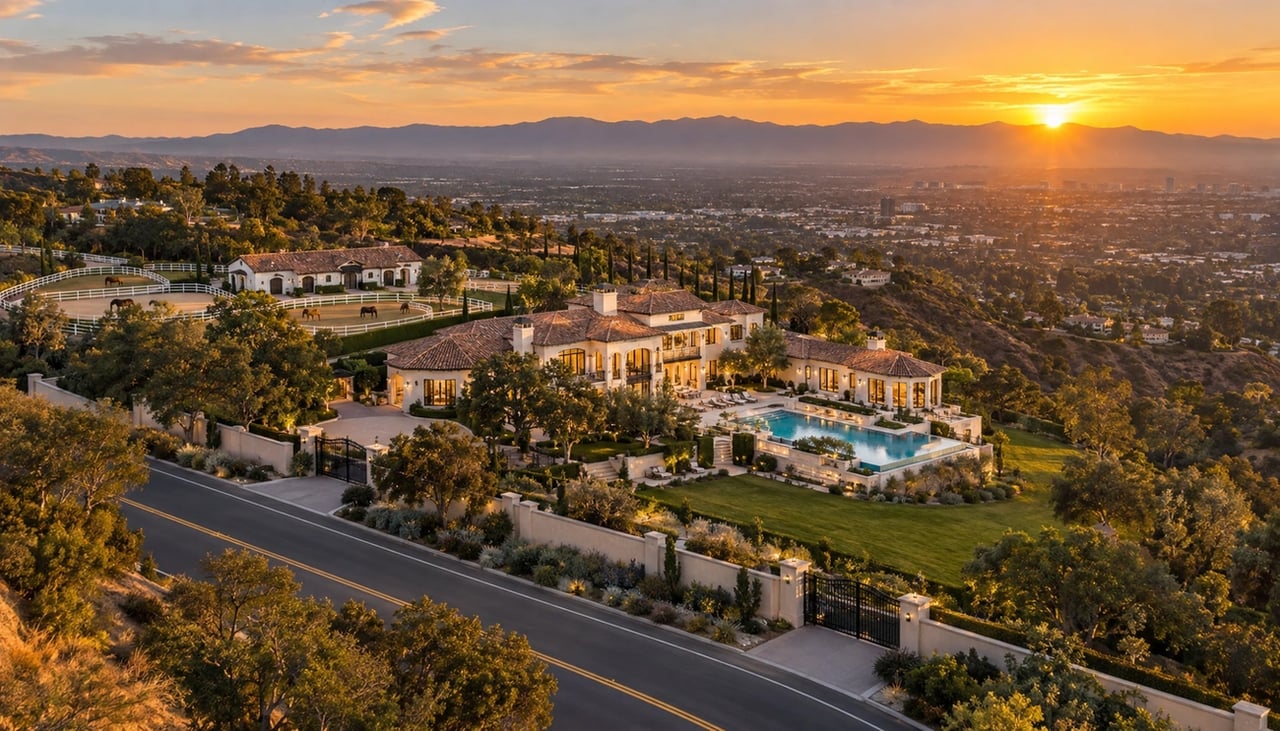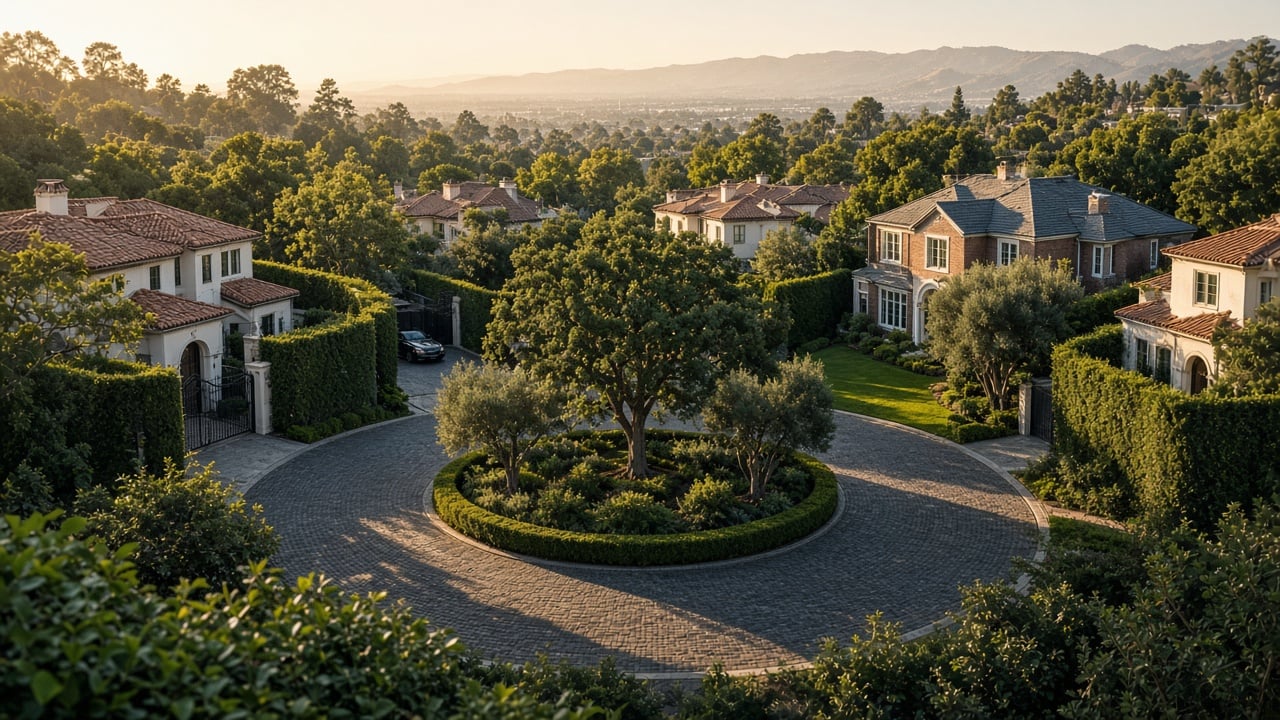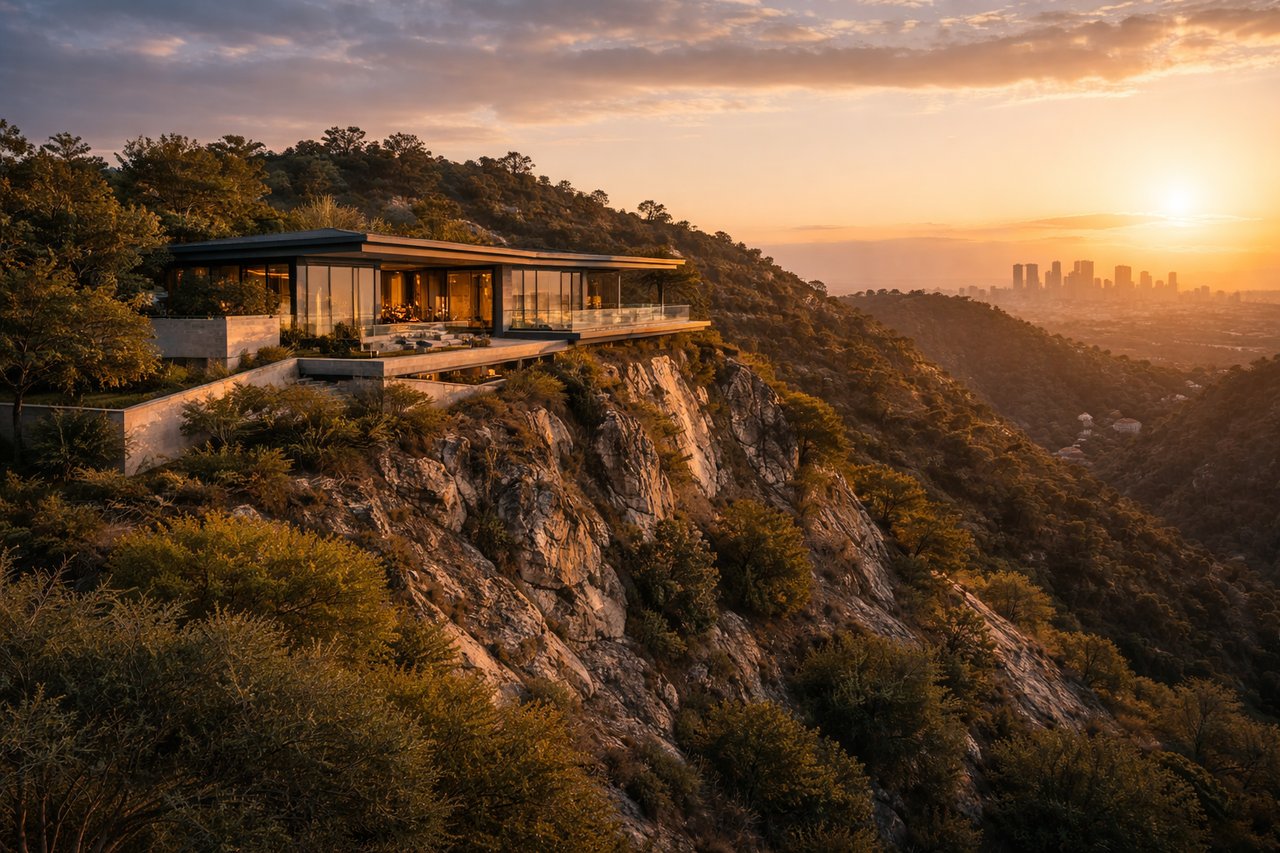
Rich neighborhoods in Los Angeles derive their value from something beyond prestigious addresses: irreplaceable terrain. The most selective buyers understand that geography creates a natural lack of available properties, especially when you have elevation and coastal access combined. Beverly Hills Gateway commands median home values reaching nearly $13 million. Luxury properties in affluent neighborhoods in Los Angeles start around $2 million for condominiums and $3 million for single-family homes. Ultra-luxury estates in the richest part of LA can range from $10 million to over $100 million. This reflects how terrain shapes value retention and market positioning in los angeles luxury real estate.
The Terrain Advantage: What Drives Premium Pricing in Los Angeles
Luxury real estate in Los Angeles operates within a different framework than conventional markets. The biggest transactions unfold through private channels, where discretion carries equal weight to pricing strategy. Terrain represents the permanent variable that outlasts market cycles and architectural trends for those who understand this world.
Elevation and viewshed economics
Higher ground delivers measurable advantages beyond visual appeal. Properties positioned above surrounding structures gain cleaner air with reduced pollution levels, natural privacy through visual separation, and superior water drainage that avoids accumulation issues during seasonal rains. Elevation itself provides flood protection.
The Bird Streets demonstrate how altitude translates to pricing. Properties at lower elevations start around $2 million to $3 million, whereas top-tier holdings reach $70 million or more. The jetliner views from upper elevations capture downtown Los Angeles, the Pacific Ocean, and the Hollywood Sign at once. Research confirms that buyers pay premiums for scenic views, with beach views proving valuable: a 1% increase in beach view area drives house prices up by nearly 2% to 3%. Water view properties show even stronger sensitivity. A 1% marginal increase in water view area associates with a 3.85% increase in prices for waterfront holdings.
Coastal access and waterfront scarcity
Coastlines cannot be expanded, which places a permanent cap on supply. This fixed availability creates upward pressure on long-term values as population growth and housing demand increase. California coastal real estate holds a value of around $1.50 trillion, just under the GDP of Spain.
Beachfront properties in Los Angeles commanded a $17.81 million median sales price and $4,643 per square foot in September 2025. Coastal access protects against market volatility in measurable ways. Homes within one mile of the Orange County coastline sell for 30% to 50% more than similar properties inland. Waterfront properties attract diversified demand from primary homeowners, second-home purchasers, and investors, which helps stabilize pricing during shifting market conditions.
Topographic exclusivity in affluent neighborhoods in Los Angeles
Ridge-line real estate follows different rules than properties at standard elevations. Developers cannot create additional peaks after prime crests reach full development. Buildable land on mountain ridges and plateaus faces absolute supply limitations that no amount of zoning adjustments can overcome.
Flat, usable lots on hillside parcels command premiums because many hillside properties sit on unbuildable land due to steep slopes or terracing. A 2.5-acre property with flat and gently sloped buildable land on hillside terrain becomes a premier trophy asset. Large hillside development sites with flat pads and city or ocean views represent nonexistent inventory.
How terrain creates natural barriers to development
Zoning restrictions in elevated areas protect views and natural character, creating regulatory barriers beyond geography. Strict coastal regulations and limited land keep inventory low, which keeps value high. Properties worth more than $100 million share distinct terrain characteristics that cannot be replicated through construction or investment.
Geographic protection preserves exclusivity through any market cycle. Waterfront development faces stricter zoning, environmental protections, and permitting requirements that limit new construction and preserve existing property value by reducing competitive supply. The terrain itself controls buildability, privacy, and site stability in ways that square footage never captures.
Christina Pope at Sotheby's International Realty and EliteResidenceInternational.com specialize in topographic markets where timing and discretion determine outcomes. They provide guidance on terrain-based acquisition strategies in Los Angeles luxury real estate.
Premium Terrain Categories in Los Angeles Rich Neighborhoods
Terrain categories in Los Angeles rich neighborhoods function as distinct asset classes. Each responds to different buyer priorities and market forces. Understanding these classifications separates informed acquisition from speculative purchasing.
Hillside estates and canyon properties
Hollywood Hills properties capitalize on natural topography and perch on steep terrain that creates living spaces appearing to float above the urban landscape. Beverly Crest positions homes in elevated settings where privacy and sweeping city views define daily living. Benedict Canyon evolved from rural ranch land on flat lower terrain to exclusive hillside estates dotted across steep, arid slopes.
Bird Streets properties demonstrate how elevation creates pricing tiers within a single neighborhood. Lower elevation holdings start between $2 million and $3 million, while premium locations with jetliner views command $70 million or more. These upper-tier properties capture simultaneous sightlines of downtown Los Angeles, the Pacific Ocean and surrounding hillsides.
Beverly Hills Post Office and Trousdale Estates represent hillside terrain at its most valuable. Trousdale features high-end properties designed by notable architects and oriented toward panoramic views across Los Angeles. The BHPO neighborhood adds proximity to world-class shopping and dining while maintaining elevation-based privacy.
Oceanfront and coastal bluff homes
Pacific Palisades maintains median values around $5.50 million. Recent market analysis shows average sale prices reaching $5.87 million. The neighborhood attracts buyers seeking oceanfront living combined with urban proximity. Malibu extends 21 miles along the Pacific Ocean shoreline and houses some of America's most exclusive beachfront properties.
Oceanfront homes sit along the shoreline or close to sand and deliver immediate beach access. Bluff-top properties occupy elevated positions above the coastline. They create dramatic view lines while requiring additional attention to slope stability and erosion. Both categories deliver exceptional value, yet bluff-top holdings demand more thorough due diligence regarding setback issues and future adaptation requirements.
Flat premium lots in well-known areas
Beverly Park houses massive estate properties on flat, usable land within hillside geography. Holmby Hills presents the smallest yet most exclusive community in the Platinum Triangle and features both newly-built mega-mansions and historic estates. These neighborhoods demonstrate how flat, buildable parcels within elevated terrain create premium positioning.
Ridge-line and mountain view properties
Ridge-line holdings capture unobstructed sightlines in multiple directions. Properties positioned on crests gain natural privacy through topographic separation while delivering dramatic vistas that flat-terrain homes cannot replicate.
Valley floor luxury enclaves
Hidden Hills maintains median listing prices exceeding $13.50 million. The community features bridle trails instead of sidewalks, three equestrian arenas and strict architectural standards enforced by the Hidden Hills Community Association. Valley floor positioning delivers expansive flat parcels for equestrian facilities, lawns and park-like grounds.
For discreet guidance on terrain-specific opportunities in affluent neighborhoods in Los Angeles, Christina Pope at Sotheby's International Realty and EliteResidenceInternational.com work within the private channels where timing determines access.
Terrain-Based Value Retention and Market Resilience
Market dynamics in Los Angeles' rich neighborhoods reveal patterns invisible to casual observers. Headlines track general housing trends, but the most discerning buyers focus on terrain-based resilience data that separates temporary fluctuations from structural value protection.
Why hillside homes maintain value during downturns
Elevation-based properties demonstrate measurable stability when broader markets contract. Waterfront and hillside owners hold properties by a lot longer than average homeowners. Lower turnover reduces inventory fluctuations and limits price swings during periods of market uncertainty. Flat-terrain properties rarely replicate the steadier long-term pricing patterns that this ownership behavior contributes to.
The luxury real estate market continues proving its staying power even as mid-tier segments face pressure. Investment volumes stabilize while private buyers step in, especially when you have scarce coastal property. Existing luxury homes gain relative appeal when replacement values climb due to rising construction costs. Ultra-luxury homes now average 319 days on market, yet properties in terrain-limited areas sell faster when priced with accuracy.
Coastal property appreciation patterns
San Clemente oceanfront properties delivered an 8.93% annual appreciation rate over the 12 months leading into 2025 and outperformed 75.55% of U.S. cities. These holdings averaged 6.55% annually in the last decade. Beachfront real estate projections indicate a compound annual growth rate of 7.5% per year through the current decade.
San Diego's coastal luxury sector demonstrates the split between terrain-defined markets and conventional neighborhoods. Homes priced above $6 million now close in approximately 223 days, about 70% faster than the year before. These properties required over 750 days on average before this change. A Del Mar beachfront estate sold for $50 million in late 2025 and established the highest price in county history.
Geographic limitations protecting investment
Waterfront land faces permanent supply constraints. Coastlines cannot be expanded, which places upward pressure on long-term values as population growth and housing just need to increase. Development in these areas encounters stricter zoning and environmental protections. Permitting requirements limit new construction and preserve existing property value by reducing competitive supply.
Waterfront properties attract diversified just needs from primary homeowners, second-home purchasers and investors. This broad buyer base helps stabilize pricing during market conditions that change. Waterfront holdings often experience fewer sharp price corrections than comparable inland homes as a result.
Terrain scarcity in the richest neighborhood in LA
The richest part of LA demonstrates how absolute geographic constraints protect value across market cycles. Terrain appeal remains tied to permanent features rather than temporary market priorities, unlike trend-driven neighborhoods. Buyers assign long-term value to attributes such as views and privacy that persist whatever short-term economic conditions.
Christina Pope at Sotheby's International Realty and EliteResidenceInternational.com provide access to terrain-defined opportunities where timing determines outcomes for those who value precision over visibility in affluent neighborhoods in Los angeles.
Architectural Response to Los Angeles Terrain
Design decisions in Los Angeles rich neighborhoods respond to topographic constraints that would halt development elsewhere. The architectural profession views challenging terrain not as an obstacle but as the catalyst for distinctive residential solutions that command market premiums.
Cantilevered designs for hillside lots
Cantilevered architecture extends portions of a structure beyond its primary support system. Engineered frameworks distribute weight and ensure stability. Affluent homeowners pursue these designs to capture unobstructed views and maximize usable square footage on constrained lots. They create architecturally distinctive properties. A cantilevered addition extends 15 to 20 feet or more beyond the primary structure. It converts unusable slopes into premium living space.
Properties with commanding vistas achieve premium pricing. Comparable holdings with superior views command 15 to 30 percent premiums over similar homes with obstructed sightlines. The engineering rigor required for these projects results in homes built to higher standards than code minimums. Hillside and slope properties represent the most obvious candidates, especially when lots drop away from the street or primary access point. Cantilevered extensions capture views and natural light that ground-level construction cannot reach on steep sites.
Multi-level layouts maximizing views
Architects must involve themselves with the land when dealing with sloped terrain. Three strategies emerged when working with sloped sites: elevating structures on stilts to keep interior layouts horizontal, creating stepped or terraced forms that follow the slope by dividing the program vertically, and using the slope itself as a generator for form by arranging geometry with the incline. Each approach works with topography rather than against it.
Multi-level structures take advantage of panoramic views and maximize natural light throughout all spaces. Architects design vertical transitions through floating staircases and dramatic stair towers framed by oversized windows. Residential elevators and open atriums visually connect multiple floors.
Indoor-outdoor integration by terrain type
Hillside properties offer elevated positioning that provides expansive views and increased privacy. They allow architects to create layered architectural forms. Floor-to-ceiling windows, expansive sliding glass doors, cantilevered balconies and elevated outdoor living spaces maximize terrain advantages. View-oriented primary suites complete the design. Natural light exposure improves mood and curbs insomnia while benefiting general well-being.
Engineering and foundation considerations
Caissons anchor deep into stable soil or bedrock and distribute the home's load evenly. These deep concrete piers drill sometimes 30 to 50 feet underground to reach solid strata. Grade beams connect caissons and create a stable platform that resists movement from seismic or soil shifts. Proper drainage behind retaining walls prevents hydrostatic pressure from compromising structural integrity.
Strategic Acquisition in Terrain-Defined Markets
Acquisition strategy in Los Angeles luxury real estate unfolds through private conversations rather than public listings. Timing and access determine outcomes in markets where the most important transactions never reach MLS platforms.
Timing purchases in elevation-restricted zones
Malibu hillside properties north of Pacific Coast Highway offer privacy, panoramic views, larger outdoor buffers, and lower-density residential settings suited for compound-style estates. Properties in these areas require attention to driveway design and parking access. Evacuation route planning matters in light of high fire severity zones.
Understanding geological surveys and terrain reports
Geotechnical surveys assess soil composition, groundwater levels, and subsurface conditions before acquisition. These investigations identify stability issues, landslides, slope problems, and flooding concerns that could affect seismic activity potential. Soil studies determine whether ground can support foundations and buildings. This protects both investment and structural integrity.
Privacy and security advantages by terrain
Hillside locations deliver natural separation from public activity through elevation and visual distance. Ridge-line properties gain privacy through topographic positioning that flat terrain cannot replicate.
Working with agents specializing in topographic markets
Brokers with insider knowledge uncover properties owners may sell under specific conditions. Their networks match buyers with opportunities unavailable to the general public.
Off-market opportunities in terrain-limited areas
Off-market transactions provide pricing control, reduced competition, and exclusive access with simplified processes. Buyers face smaller pools and fewer bidding wars as a result.
Christina Pope at Sotheby's International Realty and EliteResidenceInternational.com specialize in terrain-defined acquisition where discretion determines access in affluent neighborhoods in Los angeles.
Conclusion
Luxury real estate in Los Angeles operates differently than conventional markets. The most important transactions unfold through private channels where discretion carries as much weight as timing and terrain analysis. So those who understand this world recognize that geography represents the permanent variable and outlasts market cycles and architectural trends.
Elevation, coastal access and topographic exclusivity create a natural lack that no amount of construction can replicate. The richest neighborhoods derive their value from irreplaceable terrain rather than prestigious addresses alone. Christina Pope at Sotheby's International Realty and EliteResidenceInternational.com specialize in these terrain-defined markets. Strategic positioning determines long-term value retention there.
Key Takeaways
Understanding how terrain fundamentally shapes luxury real estate value in Los Angeles can guide strategic investment decisions and reveal why certain properties maintain premium pricing across market cycles.
• Elevation drives premium pricing: Hillside properties command 15-30% premiums over flat terrain, with Bird Streets homes ranging from $2M at lower elevations to $70M+ at peak locations.
• Coastal scarcity creates permanent value: Beachfront properties averaged $17.81M median sales price, with coastlines delivering fixed supply that cannot be expanded regardless of demand.
• Terrain provides natural market protection: Waterfront and hillside owners hold properties significantly longer, creating lower inventory turnover that stabilizes pricing during market downturns.
• Geographic constraints limit competition: Strict zoning, environmental protections, and engineering requirements in elevated areas reduce new construction supply, preserving existing property values.
• Off-market opportunities dominate luxury terrain: The most significant transactions in terrain-limited areas occur through private channels, where timing and insider access determine acquisition success.
When evaluating luxury real estate in Los Angeles, remember that terrain represents the one variable that outlasts architectural trends and market cycles, making geographic positioning the foundation of long-term value retention.
FAQs
Q1. Which Los Angeles neighborhoods have the most expensive luxury homes? Beverly Hills Gateway leads with median home values near $13 million, while other top-tier areas include Bel Air, Holmby Hills, Pacific Palisades, and Hidden Hills. Ultra-luxury estates in these neighborhoods range from $10 million to over $100 million, with beachfront properties commanding a median of $17.81 million and $4,643 per square foot.
Q2. Why do hillside properties maintain their value better than flat terrain homes? Hillside and waterfront property owners hold their homes significantly longer than average homeowners, creating lower inventory turnover that stabilizes pricing during market downturns. Elevation provides natural scarcity that cannot be replicated, along with permanent advantages like superior views, enhanced privacy, and geographic limitations that protect against oversupply.
Q3. How much more do homes with ocean views cost compared to inland properties? Homes within one mile of the Orange County coastline sell for 30% to 50% more than comparable inland properties. Research shows that a 1% increase in beach view area drives house prices up by nearly 2% to 3%, while waterfront properties see even stronger premiums with a 1% increase in water view area associated with a 3.85% price increase.
Q4. What architectural features maximize value on hillside lots? Cantilevered designs extend 15 to 20 feet or more beyond the primary structure, converting unusable slope into premium living space. Multi-level layouts with floor-to-ceiling windows, expansive sliding glass doors, and elevated outdoor spaces maximize views and natural light. Properties with commanding vistas consistently achieve 15% to 30% premiums over similar homes with obstructed sightlines.
Q5. Are there good neighborhoods to view luxury mansions without gates blocking the view? Hancock Park, San Marino, and Pasadena offer excellent opportunities to view impressive estates without extensive gates. Hancock Park features large mansions with elaborate architecture, while San Marino north of Huntington has largely ungated properties. The area around the Rose Bowl in Pasadena and streets near the Gamble House also showcase beautiful homes with good visibility from public roads.