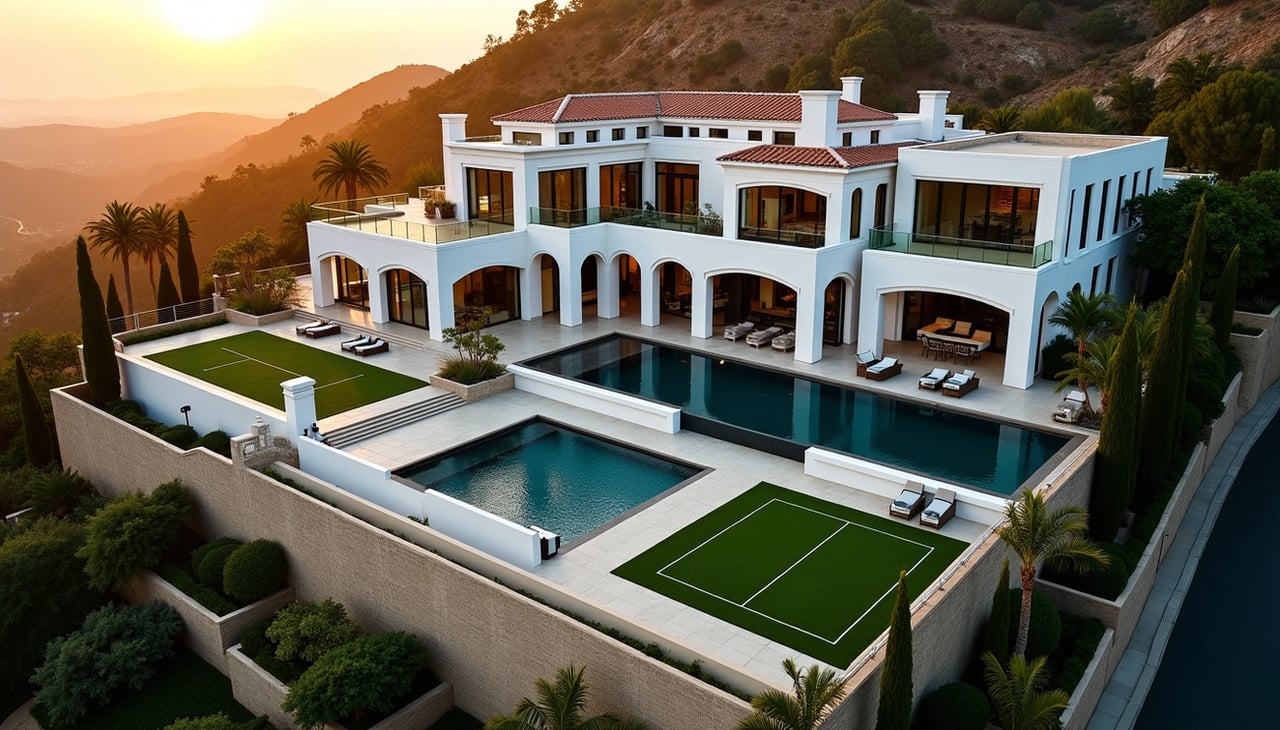
Ultra-luxury living costs in Beverly Hills California operate beyond public scrutiny. The most substantial transactions occur through private channels, where discretion holds equal importance with financial value. A recent Bel Air estate listed at $400 million demonstrates this scale, though many comparable properties never reach public view. Understanding the true cost of Beverly Hills living means examining the complete financial commitment. Annual operating expenses, security systems, and staffing needs frequently equal mortgage obligations. Buyers who value privacy and strategic positioning discover that Beverly Hills living costs include access to exclusive circles, where relationships and timing create opportunities long before properties reach public markets.
The Financial Reality Behind Ultra-Luxury Beverly Hills Living
Purchase prices represent just the beginning of the financial commitment. Recent Bel Air transactions show the range: a nine-parcel assemblage listed at $105 million, while another estate dropped from $139 million to $99.9 million after market adjustment. Beverly Hills itself recorded a median sale price of $9 million in March 2026, with price-per-square-foot reaching $1,450. Construction on premium lots runs $800 to $1,200 per square foot, while land acquisition alone consumes $6 million to $10 million in prime locations.
Estate Purchase Prices from $15M to $100M+
Entry-level estates begin near $15 million for newly constructed properties, yet buyers encounter immediate reassessment under California's property tax structure. Properties exceeding $34.995 million appear regularly in weekly listings, with oceanfront parcels commanding $42 million for 5.47 acres. The market rewards exceptional quality when asset value, timing, and buyer alignment meet, though price adjustments of $40 million reflect shifting buyer expectations.
Annual Operating Budgets for Staff and Maintenance
Operating expenses frequently match acquisition costs over time. Housekeepers earn $30 to $35 per hour, chefs command $50 to $100 hourly, and butlers or nannies require $100,000 annually. A staff of 20 people costs $5,000 daily, totaling $1.8 million per year. A 30,000-square-foot residence needs at least 10 rotating housekeepers, multiple housemen, full-time gardeners, and several chefs. Luxury materials have surged 20% to 40%, while maintenance budgets for properties with multiple pools, elevators, and smart-home systems face continuous cost pressures.
Property Tax Calculations on Promontory Locations
Los Angeles County property taxes average 1.1% of assessed value. A $15 million home generates $165,000 in annual taxes. California's Proposition 13 limits increases to 2% yearly, but ownership transfers trigger full reassessment at current market value. Properties selling above $10 million face an additional 5.5% transfer tax under Measure ULA.
Insurance Premiums for High-Value Estates
High-value home insurance averages $4,636 annually for $1 million in dwelling coverage. Estates valued at $10 million require specialized policies accounting for premium materials, custom finishes, and unique architectural features. California wildfire exposure affects nearly 3 million properties with $1.3 trillion in combined reconstruction costs.
Long-Term Appreciation Patterns in Gated Enclaves
Beverly Hills appreciation consistently outperforms broader Los Angeles patterns. While LA sees 4% to 6% annual appreciation, Beverly Hills often achieves 8% to 10% depending on location and year. The median sale price increased 29.4% year-over-year, with price-per-square-foot rising 35.1% in February 2025.
Security and Privacy Systems That Protect Your Investment
Ultra-luxury security operates on entirely different principles than standard residential protection. Estate-level systems unite video surveillance, access control, intrusion detection, and AI-enabled threat sensors to form intelligent perimeter defense. These configurations deliver real-time alerts for unauthorized access while providing forensic analysis that maps movement patterns throughout the property.
Perimeter Protection and Access Management
Estate boundaries employ infrared cameras, motion detection, and night vision technology for complete coverage. Premium systems distinguish weather disturbances from genuine threats while maintaining sensitivity levels, with select configurations operating maintenance-free after installation. Biometric access through fingerprint or facial recognition removes the security gaps that plague key cards and physical keys. Automated license plate recognition grants seamless entry to registered vehicles while immediately identifying unauthorized ones. Visitor management requires pre-authorization through mobile platforms, with comprehensive logging that flags suspicious patterns automatically.
Acoustic Privacy and Visual Protection
Staff quarters and principal living areas require Sound Transmission Class ratings of 55 or above for adequate separation. Meeting these standards requires decoupled wall systems, resilient mounting channels, dense insulation, and specialized drywall applications. Standard residential construction achieves only STC 33 to 38, insufficient for estates where privacy forms the foundation of daily operations.
Staff Housing and Service Flow Design
Staff quarters connect to service areas through dedicated pathways that avoid principal circulation routes. Detached staff buildings linked by covered walkways offer optimal separation, while vertical designs place staff floors away from primary bedroom levels. Hidden service corridors allow efficient staff movement between work zones without visibility from main living areas.
Community Security Coordination
Gated community systems merge individual estate protection with shared infrastructure through unified control centers. RFID technology, QR codes, and automated gates facilitate resident access while preserving security verification. Community entry surveillance coordinates with private estate monitoring to establish comprehensive coverage throughout the enclave.
Resort-Level Amenities That Define Private Estate Value
Bel Air's premier estates feature amenities that rival commercial resort facilities, yet remain under complete private control. These installations deliver daily value that justifies their substantial operating costs.
Professional Fitness and Wellness Facilities
Private fitness centers feature equipment from elite training brands including Eleiko, Black Iron Strength, Technogym, Matrix, Watson, Power Plate, and Jacob's Ladder. Wellness facilities extend far beyond standard gym equipment to encompass custom saunas (both infrared and standard), cold plunges, steam rooms, massage rooms, and meditation spaces built to the same exacting standards.
Multi-Feature Pool Systems
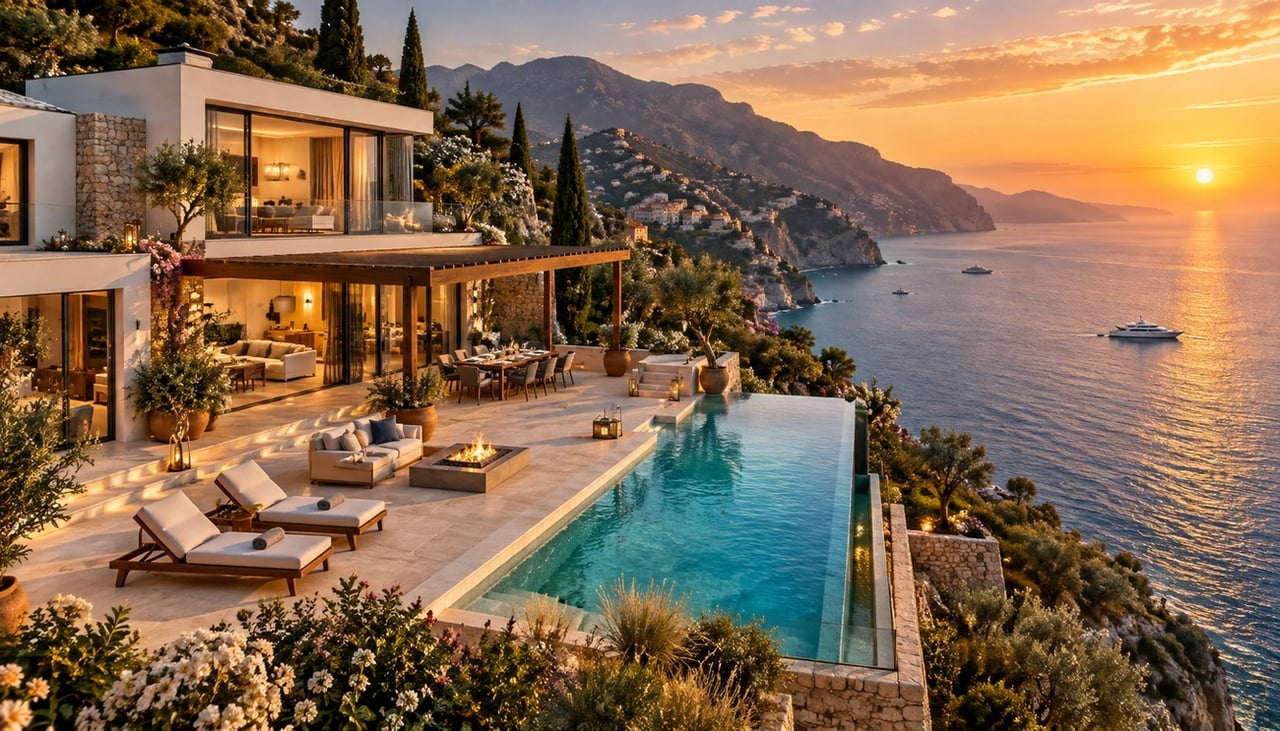
Pool complexes incorporate waterfalls, deck jets, bubblers, and spillover spas that maintain constant water movement and ambient sound. Infinity edges and vanishing-edge configurations create seamless visual flow with the surrounding landscape.
Professional-Grade Sports Installations
Regulation tennis courts provide multiple surface options including DecoTurf hard courts, red clay, and lawn configurations, complete with stadium lighting for evening play. Synthetic putting greens utilize tour-level turf designed for 15 to 20 years of use while conserving up to 55,000 gallons of water annually per 1,000 square feet.
Private Entertainment Complexes
Home theaters employ Barco projectors with screens from 160 to 220 inches, featuring installations with 9,000-lumen laser technology. Game rooms house bowling alleys, arcade systems with over two dozen games, golf simulators, and soundproof nightclub areas with full bar service.
How the hidden market works for buyers at this level
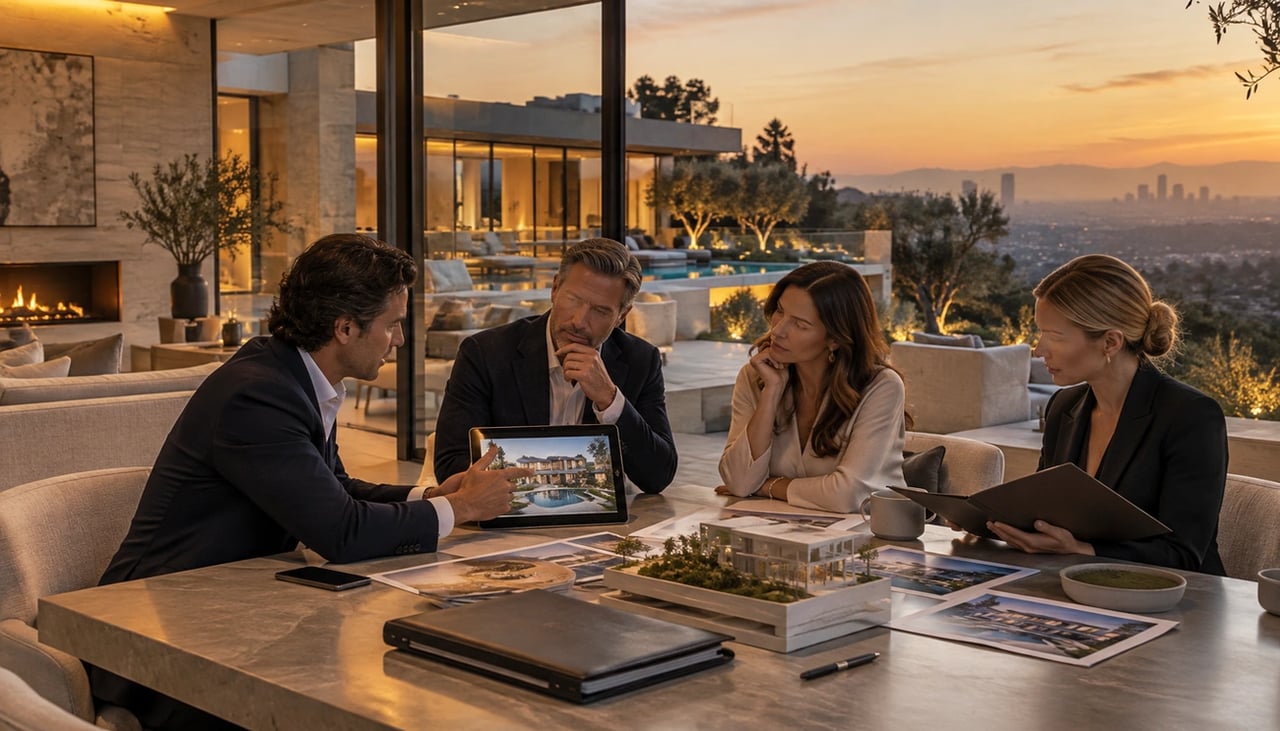
Luxury real estate in Los Angeles functions through personal relationships and careful timing rather than public marketing campaigns. The most substantial transactions happen within established circles where reputation carries equal weight with financial capability.
The role of trusted broker relationships in deal access
Off-market properties require brokers to activate personal networks and contact colleagues directly. Buyers must establish credibility since agents risk their professional standing when presenting opportunities. Quick response determines continued access; failing to reply within 24 hours ends the relationship. Networks built on mutual respect, confidentiality, and proven results create opportunities where relationships matter more than advertising. Christina Pope at Sotheby's International Realty maintains these essential connections. Call 310-404-9931 or email [email protected].
Why discretion matters more than public exposure
High-net-worth sellers want complete control over who sees properties and when details become available. Online photos create permanent records that sellers cannot retract. Security risks emerge when public listings show floor plans and access points. Financial privacy protects sellers from unwanted attention during sensitive negotiations.
Timeline differences between off-market and listed properties
Off-market deals focus on price stability rather than quick closings. Properties with maintenance needs or tenant situations work better through private channels. Publicly listed homes above $10 million averaged 154 days to sell.
Investment protection through private transactions
Private sales eliminate renegotiation risks and deal collapse. Buyers evaluate properties based on income potential rather than surface-level appeal.
Conclusion
Beverly Hills ultra-luxury level living costs extend well beyond acquisition prices. Staff expenses, security infrastructure, and ongoing maintenance create the true financial commitment. The most valuable opportunities exist within private circles before properties reach public view. Christina Pope at 310-404-9931 or [email protected] provides access to these exclusive opportunities. Success depends on strategic positioning where relationships and timing matter more than public exposure.
Key Takeaways
Ultra-luxury living in Beverly Hills extends far beyond purchase prices, with annual operating costs often matching mortgage payments through staff, security, and maintenance expenses.
• Estate purchases range from $15M-$100M+, but annual operations cost $1.8M+ for full staff of 20 people • Multi-layer security systems with biometric access and AI threat detection justify premium costs through privacy protection • Resort-level amenities like professional fitness centers, infinity pools, and private theaters create daily utility value • Off-market transactions dominate ultra-luxury sales, requiring trusted broker relationships for exclusive property access • Property taxes average 1.1% of assessed value, with additional 5.5% transfer tax on sales above $10M
The hidden market operates on discretion and timing rather than public exposure. Success depends on establishing credibility within trusted circles where access outweighs marketing, and responsiveness within 24 hours determines continued deal flow opportunities.
FAQs
Q1. What are the total annual costs of maintaining an ultra-luxury estate in Beverly Hills beyond the purchase price? Annual operating expenses for ultra-luxury estates often rival mortgage payments. A full staff of 20 people costs approximately $1.8 million per year, with housekeepers earning $30-$35 per hour, chefs commanding $50-$100 hourly, and butlers or nannies requiring $100,000 annually. Additionally, property taxes average 1.1% of assessed value (around $165,000 annually for a $15 million home), specialized insurance premiums for high-value estates, and maintenance budgets for pools, elevators, and smart-home systems that face continuous inflation pressure of 20-40% for luxury materials.
Q2. How do security systems in Bel Air's gated estates differ from standard residential protection? Ultra-luxury security operates through multi-layer integrated systems combining video surveillance, access control, intrusion alarms, and AI-enabled threat detection sensors. Perimeter monitoring includes infrared cameras, motion detectors, and night vision capabilities, while biometric scanners using fingerprint or facial recognition eliminate key vulnerabilities. License plate recognition automates entry for registered vehicles, and digital visitor management platforms require pre-authorization with every entry logged. These systems coordinate with community-level security protocols through centralized dashboards to create overlapping coverage zones.
Q3. Why do most ultra-luxury properties in Beverly Hills sell off-market rather than through public listings? High-net-worth sellers prioritize discretion and control over who views properties and when information circulates. Security concerns arise since public listings reveal layouts and entry points, while financial privacy prevents speculation about net worth during negotiations. Off-market transactions reduce retrading likelihood and deal failure, with buyers accessing opportunities through trusted broker relationships built on credibility and responsiveness. Properties listed publicly above $10 million averaged 154 days to sell, while private sales prioritize price certainty and strategic timing.
Q4. What types of resort-level amenities are typically built into private Bel Air estates? Private estates feature professional fitness centers with equipment from elite brands like Eleiko, Technogym, and Matrix, along with custom saunas, cold plunges, steam rooms, and meditation spaces. Pool complexes include waterfalls, deck jets, infinity edges, and spillover spas. Sports facilities range from regulation tennis courts with multiple playing surfaces and stadium lighting to synthetic putting greens that save up to 55,000 gallons of water annually. Entertainment spaces include private theaters with 160-220 inch screens and 9,000-lumen laser projectors, plus game rooms with bowling alleys, arcade installations, and golf simulators.
Q5. How much do property values typically appreciate in Beverly Hills gated enclaves compared to broader Los Angeles? Beverly Hills appreciation consistently exceeds broader Los Angeles patterns, with the area often achieving 8-10% annual appreciation compared to LA's 4-6%. Recent data shows the median sale price increased 29.4% year-over-year, with price-per-square-foot rising 35.1% in February 2025. The median sale price reached $9 million in March 2026, with price-per-square-foot at $1,450. This premium appreciation reflects the strategic positioning and exclusivity of gated enclaves, where location and timing determine long-term investment value.