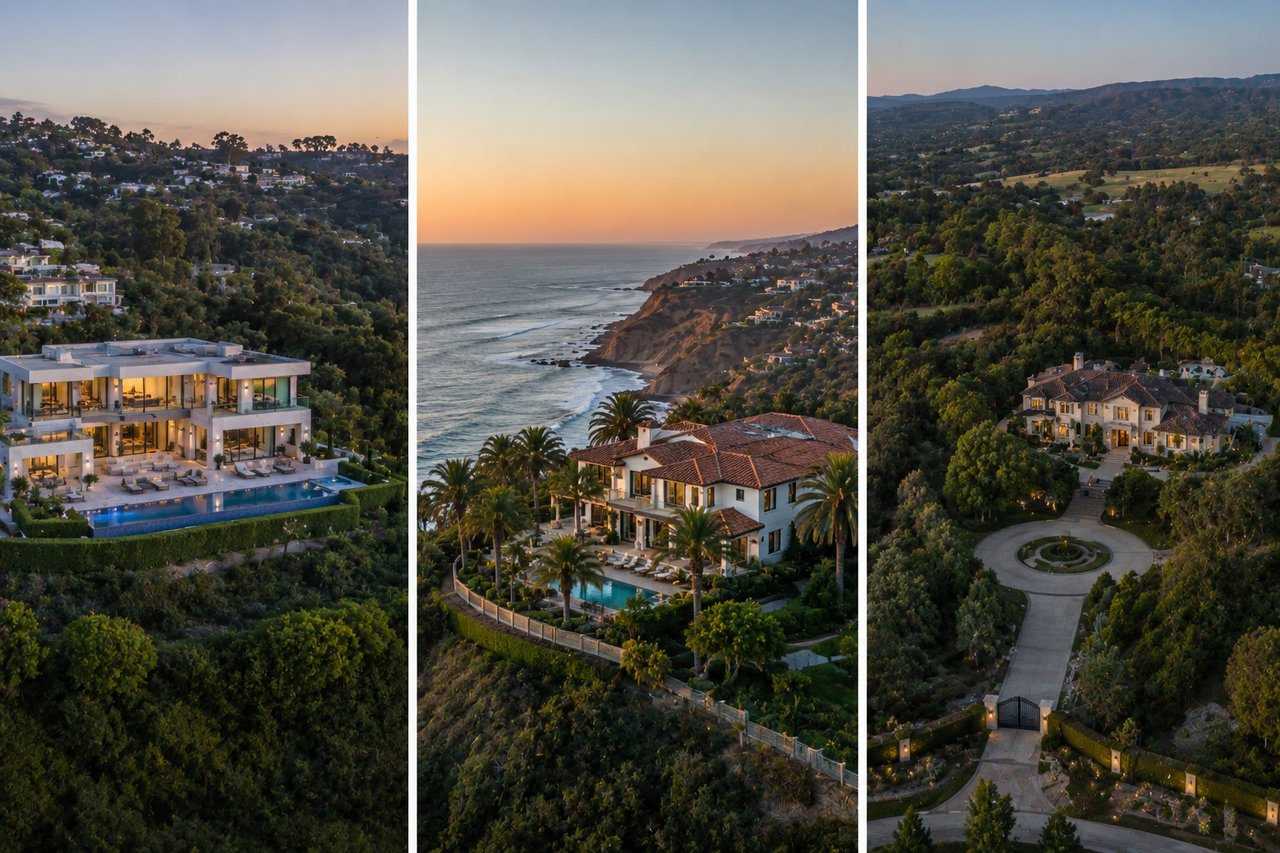
Geographic Privacy: How Location Shapes Seclusion in Each Community
Pacific Palisades: Village Density vs Hillside Isolation
Pacific Palisades presents a privacy paradox. The Alphabet Streets feature lots ranging from 5,000 to 7,500 square feet on tree-lined blocks north of Sunset, where neighbors share fence lines and morning coffee conversations happen across driveways. Pacific Palisades architects master the art of creating seclusion within these intimate confines, relying on strategic screening and thoughtful orientation rather than raw acreage.
Marquez Knolls tells a different story. These properties climb toward the Santa Monica Mountains with elevation-based privacy and designs that celebrate natural topography. Castellammare winds along Pacific Coast Highway with Italianate street names, where bluff-top and mesa parcels command premiums for both sweeping views and natural separation from street-level activity. The canyon neighborhoods Rustic Canyon and Temescal offer something rarer: leafy, tucked-away settings with meandering streets, mature trees, and no sidewalks or streetlights. These organic barriers create privacy that feels effortless. Luxury homes in Pacific Palisades CA span this entire spectrum, from walkable village charm to hillside sanctuary, each shaped by slope, vegetation, and deliberate infrastructure choices.
Malibu: 27-Mile Coastal Stretch and Natural Barriers
Malibu's geography does the heavy lifting. Twenty-seven miles of coastline houses approximately 16,000 residents, creating population density that naturally favors seclusion. The coastal stretch contains fewer than 50 luxury accommodation properties, a scarcity born from geographic constraints that limit development and preserve breathing room between estates. Distance becomes privacy here pure and simple.
Bluff-top properties claim the high ground, literally positioning homes above beach-level foot traffic and coastal access points. The geography segments naturally: Malibu Colony guards its mile-long stretch west of the lagoon, Point Dume offers clifftop isolation, and hillside estates overlook the coast from elevated positions that maximize both view and separation from public thoroughfares.
Hidden Hills: Gated City Design and Controlled Access Points
Hidden Hills operates as an incorporated city serving approximately 2,000 residents across roughly 700 homes. Three gated entrances control all vehicular access, eliminating through traffic and restricting entry to authorized residents and pre-cleared guests. The community prohibits sidewalks and streetlights, preserving a rural character that discourages pedestrian activity beyond property lines.
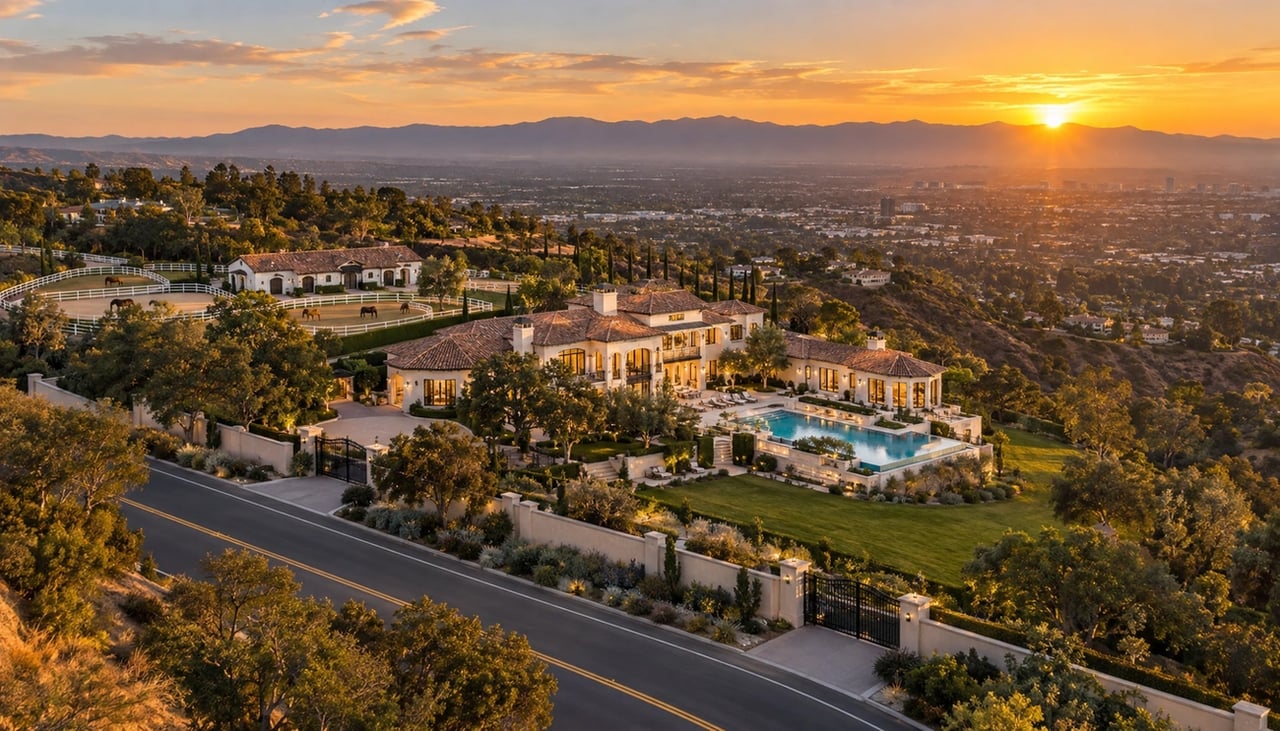
Parcels span an acre or more, establishing mandatory separation between residences that cannot be reduced through subdivision or density increases. This gated city structure differs fundamentally from neighborhood-level security—the entire municipality functions as a controlled-access zone with 24-hour monitoring and no public thoroughfares.
Distance Between Properties: Square Footage to Acreage
The numbers reveal everything. Pacific Palisades village parcels measure 5,000 to 7,500 square feet in high-density areas, while Riviera and hillside tracts expand to larger footprints with varied slopes. Malibu beachfront lots compress to 30-foot widths in areas like the Colony, where homes extend to lot line edges for maximum oceanfront footage. Hidden Hills mandates minimum acre-plus parcels, with some properties featuring 10,000 to 20,000 square feet or more in buildable area. This acreage requirement creates physical buffers that smaller coastal or village lots cannot replicate, regardless of architectural privacy measures.
Security Infrastructure: Gates, Guards, and Community Protection Models
Three distinct security philosophies emerge across these communities. Hidden Hills operates municipal-level access control, Malibu deploys estate-specific protection, and Pacific Palisades relies on neighborhood cooperation. Each model creates privacy through different mechanisms that extend well beyond geographical advantages.
Hidden Hills: Double-Gated Entry and 24/7 Patrol Systems
Three gated entrances control all vehicular access to Hidden Hills, each equipped with Flock Safety camera technology. Automated license plate recognition cameras document every vehicle entry, building investigative databases accessible to Lost Hills Sheriff's Station and authorized California law enforcement agencies. The monitoring system operates continuously, though no deputies maintain permanent stations within Hidden Hills boundaries. Emergency response times span 5 to 7 minutes for high-priority incidents, making executive protection teams the first line of defense during that critical window. Double-gated access points feature round-the-clock staffing, with residents managing guest authorization through digital systems. Professional security services cost $20 to $80 per hour, with most arrangements settling between $35 and $55 hourly.
Malibu Colony and Point Dume: Celebrity-Grade Security Protocols
Malibu's exclusive enclaves employ security personnel with law enforcement and tactical training. Community security focuses on access control, visitor screening, badge management, and surveillance systems that prevent unauthorized entry. Estate protection addresses organized burglary operations, home invasions, and paparazzi infiltration across Carbon Beach, Malibu Colony, and Serra Retreat. Post-fire security measures include a $260,000 monthly contract with private firm Covered 6 for enhanced neighborhood patrols. Four marked patrol units coordinate deployment schedules with sheriff's deputies to combat looting attempts.
Pacific Palisades: Neighborhood Watch vs Private Security
LAPD's Neighborhood Watch program anchors Pacific Palisades security, with Senior Lead Officers tracking crime patterns and coordinating directed patrols. Block Captains connect residents with officers assigned to Basic Car areas, maintaining 24-hour patrol coverage through three 8-hour shifts. Private security firms—Gates Security, Elite Security, ACS Security, SSA Security Group, and Nastec—serve specific neighborhoods rather than community-wide deployment. Selected homeowner associations fund supplemental patrol services through membership dues.
Property-Level Security: Surveillance, Safe Rooms, and Smart Systems
Luxury homes in Pacific Palisades CA feature ballistic-rated safe rooms with reinforced walls, blast-resistant doors, and independent air filtration systems. These spaces double as walk-in closets, home offices, or libraries during everyday use. Smart security integration includes biometric access through fingerprint and facial recognition, paired with high-definition surveillance cameras providing motion detection and real-time mobile alerts. Emergency sensors monitor smoke, carbon monoxide, and water leaks, while AI-powered analysis identifies behavioral anomalies.
Public Access and Coastal Commission Considerations
Coastal property ownership comes with regulatory realities that separate Malibu and Pacific Palisades from Hidden Hills entirely. Public access requirements affect daily privacy in beachfront communities, while inland gated cities control every visitor and pedestrian.
California Coastal Act: Beach Access Laws in Malibu
The California Coastal Act declares areas below the mean high tide line public property. Private landowners cannot block beach access without permits, creating constant enforcement issues in Malibu. The California Coastal Commission received civil penalty authority in 2014, imposing fines up to $11,250 per day for access violations. The Commission issued its first major penalty in 2016 against a Beverly Hills plastic surgeon who blocked a required public easement for nine years, resulting in a $4,185,000 fine. The property owners had advertised their home as a vacation rental with "private beach" for over $1,000 nightly while illegally restricting a five-foot wide public accessway. This enforcement precedent means heightened scrutiny of Malibu beachfront estates, where three-mile stretches lack nearby public access points.
Pacific Palisades Beaches: Will Rogers State Beach vs Private Coves
Will Rogers State Beach extends 1.75 miles along Pacific Palisades shoreline, operated by Los Angeles County with volleyball courts, bike paths, and open public access. This beach occupies the entire waterfront of the Pacific Palisades district, eliminating coastal privacy buffers for nearby luxury homes in Pacific Palisades CA. Sunset Point Beach sits below Gladstones Restaurant where Sunset Boulevard meets Pacific Coast Highway, drawing quieter crowds but remaining publicly accessible.
Hidden Hills: Zero Public Thoroughfares and Visitor Restrictions
Hidden Hills prohibits all public thoroughfares. Visitors cannot enter to access properties outside Hidden Hills without prior written Association approval. Guests must proceed directly to the resident's property without stopping elsewhere or sightseeing within community boundaries. The Association retains authority to bar any visitor deemed a security threat after formal hearing.
Paparazzi and Celebrity Privacy: Real-World Challenges by Location
Malibu photographs of A-list celebrities command $6,000 to $100,000 per image, creating persistent paparazzi presence. Photographers congregate at beaches, shopping areas, and school drop-off zones despite designated paparazzi-free zones. Some paparazzi speed through residential neighborhoods, run stop signs, and employ telephoto lenses to capture images from public vantage points. Hidden Hills presents serious obstacles for paparazzi. Three guard-gated entry points prevent photographers from accessing celebrity properties, though some occasionally congregate outside elementary schools adjacent to gate perimeters.
Property Features and Privacy-First Architecture
Architectural privacy across these three communities depends on deliberate design decisions that go far beyond simple square footage. Lot configuration, natural screening, and structural placement work together to determine how successfully luxury homes in Pacific Palisades CA protect residents from unwanted visibility and external sight lines.
Lot Sizes: 1-3 Acre Estates vs Beachfront Parcels
Hidden Hills estates span 1 to 3 acres with natural buffers that separate each property substantially. Cul-de-sac locations and private drives offer peak seclusion, while approximately 70% of the community features oversized lots that support architectural concepts impossible elsewhere in Los Angeles. Malibu's Paradise Cove provides multi-acre parcels exceeding those found in Point Dume or Malibu Colony. Beach-level properties occupy narrower footprints, yet bluff-top homes achieve privacy through vertical distance from shoreline foot traffic.
Setbacks and Natural Screening: Trees, Hedges, and Topography
Natural privacy screening through mature trees and hedges reduces noise, manages wind and sun exposure, supports local wildlife, and enhances air quality. Recent surveys show 65% of homeowners actively pursue outdoor privacy improvements. Poor landscaping decisions can decrease property values by 30%, while well-planned privacy landscaping enhances both curb appeal and market value. Layered plantings combine trees, shrubs, and perennials at varying heights to create multi-dimensional screens. Staggered arrangements in offset or zigzag patterns provide superior coverage compared to straight-line installations.
Pacific Palisades Architects: Designing for Hillside Privacy
Pacific Palisades architects employ frosted-glass walls, mature perimeter landscaping, and strategic building setbacks to minimize sight lines. High walls, tiered garden levels, and carefully positioned fencing enable residents to enjoy their properties without external intrusion while preserving aesthetic appeal. Hillside construction incorporates stepped building forms, precise grading strategies, and structural envelopes that complement natural terrain. Wildland-Urban Interface compliance features ignition-resistant materials, ember-resistant ventilation, and protected glazing systems without fortress-like aesthetics.
For those who love to entertain, the right home makes all the difference. If you're considering a purchase in the near future or beginning your search, I'd be delighted to help you discover spaces designed for elevated living and effortless hosting. Christina Pope  310-404-9931
  [email protected]
Luxury Homes in Pacific Palisades CA: Walls, Gates, and Entry Protocols
Upper Riviera properties feature private gates, extensive landscaping, and generous setbacks that deliver maximum discretion. Rivas Canyon estates showcase large lots with substantial setbacks, lengthy private driveways, and mature tree coverage that creates intimate, enclosed settings. Castellammare homes position themselves at elevation for both view advantage and privacy, frequently incorporating controlled access systems. Rustic Canyon maintains dense woodland character and minimal traffic, with residences tucked among established sycamore and eucalyptus groves.
Malibu's Bluff-Top Advantage: Elevation Over Beach-Level Exposure
Bluff-top residences occupy coastal cliff positions with steep slopes creating natural separation from beaches below. Elevated positioning provides sweeping ocean views and spectacular sunsets while maintaining distance from shoreline crowds and pedestrian activity. Ocean breezes and surf sounds preserve coastal atmosphere without the sand tracking and high activity levels of ground-level beachfront properties. This elevation factor drives strong buyer demand and premium pricing compared to inland ocean-view alternatives.
Daily Privacy: How Lifestyle Routines Affect Anonymity
Privacy extends far beyond property lines and security systems. Daily life patterns create exposure points that even the most secluded estates cannot eliminate. Luxury real estate in Los Angeles thrives on discretion, where visibility often matters more than headlines suggest.
Shopping and Dining: Village Visibility vs Coastal Seclusion
Palisades Village anchors neighborhood commerce with over 40 boutiques and restaurants across a walkable campus. Valet parking starts at $20 for the first hour. This centralized hub draws residents regularly, establishing predictable patterns where familiar faces become recognizable fixtures. Malibu Country Mart operates as a celebrity magnet, frequently hosting Lady Gaga, Alessandra Ambrosio, and Jennifer Garner among retailers including M.Fredric and Brandy Melville. Hidden Hills residents maintain separation by driving to Calabasas Commons for groceries and shopping, preserving the buffer their gated community provides.
School Drop-offs and Community Events: Recognition vs Anonymity
School schedules create unavoidable exposure windows. First Presbyterian Nursery School in Santa Monica became a paparazzi target when photographers pursued children of Ben Affleck, Jennifer Garner, and Meg Ryan. The chaos included illegal parking and swarming drop-off zones. Parents described physical injuries and conditions resembling shark feeding frenzies. These routines demonstrate how family commitments can override even the most carefully planned privacy measures.
Luxury Homes for Sale in Pacific Palisades CA: Turnkey Privacy Solutions
Properties positioned between Riviera Country Club, Palisades Village, and Will Rogers State Beach deliver access to premier attractions. Gated estates offer private driveways, landscaped motor courts, and canyon-backed lots that create natural buffers from daily traffic patterns.
Service Providers and Staff: Managing Household Access Across Communities
Ultra-luxury homes require estate managers, butlers, private chefs, housekeepers, security personnel, and maintenance staff. Each household team member signs strict non-disclosure agreements protecting family privacy. Security teams blend physical presence with digital monitoring systems, maintaining invisibility within normal household flow.
For those who love to entertain, the right home makes all the difference. If you're considering a purchase in the near future or beginning your search, I'd be delighted to help you discover spaces designed for elevated living and effortless hosting. Christina Pope 310-404-9931 [email protected]
Comparison Table
Privacy Comparison: Pacific Palisades vs Malibu vs Hidden Hills
Luxury real estate decisions happen behind closed doors. The most significant transactions unfold through trusted relationships, where reputation matters more than marketing. Buyers who prioritize privacy understand that location determines lifestyle, and the right choice requires examining specifics rather than assumptions.
| Attribute | Pacific Palisades | Malibu | Hidden Hills |
|---|---|---|---|
| Average Home Price (2026) | $3.97 million | $5.65 million | $9.35 million |
| Population Density | Village-scale density in core areas | ~16,000 residents across 27 miles of coastline | ~2,000 residents across ~700 homes |
| Typical Lot Sizes | 5,000-7,500 sq ft (village areas); larger in hillside/canyon areas | 30-foot widths in Colony; multi-acre parcels in Paradise Cove | Minimum 1+ acre; many 1-3 acres; 70% oversized lots |
| Geographic Privacy Model | Hillside isolation vs village proximity; canyon neighborhoods with mature trees, no sidewalks/streetlights | 27-mile coastal stretch with natural barriers; elevation advantage on bluff-tops; fewer than 50 luxury properties | Incorporated gated city; no sidewalks or streetlights; rural character with mandatory separation |
| Security Infrastructure | LAPD Neighborhood Watch; private security options (Gates Security, Elite Security, ACS, SSA, Nastec); some HOA patrols | Gated enclaves (Colony, Point Dume) with trained security personnel; $260,000/month private patrol contract post-fire | Three gated entrances with 24/7 monitoring; Flock Safety cameras at all access points; double-gated structure |
| Public Access | Will Rogers State Beach (1.75 miles, fully public); Sunset Point Beach publicly accessible | California Coastal Act applies; areas below mean high tide line are public; ongoing access enforcement challenges | Zero public thoroughfares; no through traffic; visitor restrictions require prior approval |
| Controlled Entry Points | None (public streets) | Gated communities within Malibu (Colony, Serra Retreat, etc.) | Three gated entrances only; entire city is controlled-access zone |
| Primary Privacy Advantages | Hillside/canyon seclusion with mature vegetation; architectural screening; varied topography; Rustic/Rivas Canyon cocoon-like settings | Natural coastal barriers; elevation separation; 27-mile spread limits density; bluff-top positioning above beach activity | Complete access control; mandatory acreage buffers; no public roads; 5-7 minute sheriff response times |
| Primary Privacy Challenges | Village center visibility (Palisades Village); public beaches along entire waterfront; walkable density in core neighborhoods | Coastal Commission access mandates; paparazzi presence ($6K-$100K per celebrity photo); public beach access requirements; narrow beachfront lots | School drop-off zones outside gates attract paparazzi; residents must leave for shopping/dining in Calabasas |
| Paparazzi Exposure Level | Moderate (school zones, village center) | High (beaches, shopping areas, school zones; photographers congregate despite restrictions) | Low (gated access prevents property access; occasional presence near schools outside gates) |
| Architectural Privacy Features | Frosted-glass walls, mature landscaping, setback footprints, high walls, tiered gardens, hillside stepped forms | Bluff-top elevation provides natural buffer from beach crowds; vertical separation from shoreline | Long private driveways, extensive landscaping, deep setbacks, cul-de-sac positioning |
Christina Pope
Sotheby's International Realty 310-404-9931 | [email protected]
EliteResidenceInternational.com
Conclusion
Hidden Hills provides complete access control and mandatory acreage separation, though residents give up walkability and coastal proximity. Malibu harnesses natural barriers and elevation, yet Coastal Commission requirements and paparazzi activity create persistent visibility issues. Pacific Palisades offers hillside privacy with village amenities, achieving canyon-level seclusion in specific neighborhoods without gated restrictions.
Your decision comes down to priorities: total isolation versus coastal living, and whether gated security outweighs lifestyle flexibility. Christina Pope specializes in privacy-focused properties across these exclusive communities, guiding clients through Sotheby's International Realty with the discretion these purchases require.
310-404-9931 | [email protected]
EliteResidenceInternational.com
Key Takeaways
For luxury homebuyers prioritizing privacy in 2026, these three elite Los Angeles communities offer distinctly different seclusion models, each with unique advantages and trade-offs.
• Hidden Hills provides maximum privacy through complete access control - Three gated entrances, mandatory 1+ acre lots, and zero public thoroughfares create unmatched seclusion at $9.35M average.
• Malibu leverages natural coastal barriers and elevation advantage - 27-mile coastline with bluff-top positioning offers privacy through geography, but Coastal Commission access laws create ongoing challenges.
• Pacific Palisades balances hillside isolation with village accessibility - Canyon neighborhoods provide cocoon-like privacy without gates, while maintaining walkable amenities at $3.97M average.
• Security infrastructure varies from municipal control to private estate protection - Hidden Hills operates city-wide monitoring, Malibu deploys celebrity-grade protocols, Pacific Palisades relies on neighborhood watch systems.
• Daily lifestyle routines significantly impact anonymity levels - School drop-offs, shopping patterns, and service provider access create predictable exposure points that geography alone cannot eliminate.
The optimal choice depends on whether total isolation outweighs coastal access and whether gated security justifies lifestyle constraints. Each community represents a different philosophy: controlled municipal privacy, natural geographic barriers, or architectural seclusion within accessible neighborhoods.
FAQs
Q1. Which neighborhood in Pacific Palisades offers the highest level of luxury and prestige? The Riviera stands out as the most prestigious neighborhood in Pacific Palisades, featuring stunning estates, a world-renowned country club, and properties positioned at elevation for maximum discretion. Upper Riviera homes typically sit behind private gates with extensive landscaping and long setbacks that provide superior privacy compared to other Pacific Palisades areas.
Q2. How much do ultra-luxury homes in Pacific Palisades cost compared to other elite LA communities? Pacific Palisades luxury homes average $3.97 million in 2026, making them more accessible than Malibu at $5.65 million and significantly less expensive than Hidden Hills at $9.35 million. These price differences reflect varying privacy models, lot sizes, and security infrastructure rather than just location prestige.
Q3. What makes Hidden Hills more private than Calabasas for luxury homebuyers? Hidden Hills operates as a fully gated city with only three controlled entry points, mandatory 1+ acre lots, and zero public thoroughfares, while Calabasas contains both gated and non-gated areas with public streets. Hidden Hills' complete access control, 24/7 monitoring, and visitor restrictions create superior privacy for buyers prioritizing maximum seclusion.
Q4. Do Malibu beachfront homeowners have to allow public beach access? Yes, California Coastal Act mandates that areas below the mean high tide line remain public property. The California Coastal Commission can impose fines up to $11,250 per day for blocking required public access, as demonstrated by a $4.185 million penalty against homeowners who illegally restricted a public easeway while advertising their property as having a "private beach."
Q5. What architectural features provide the best privacy in Pacific Palisades hillside homes? Pacific Palisades architects design privacy through frosted-glass walls, mature perimeter landscaping, setback building footprints, high walls, tiered gardens, and stepped hillside forms that work with natural topography. Canyon neighborhoods like Rustic and Rivas Canyon utilize long private driveways, deep setbacks, and dense tree coverage to create cocoon-like seclusion without requiring gated infrastructure.